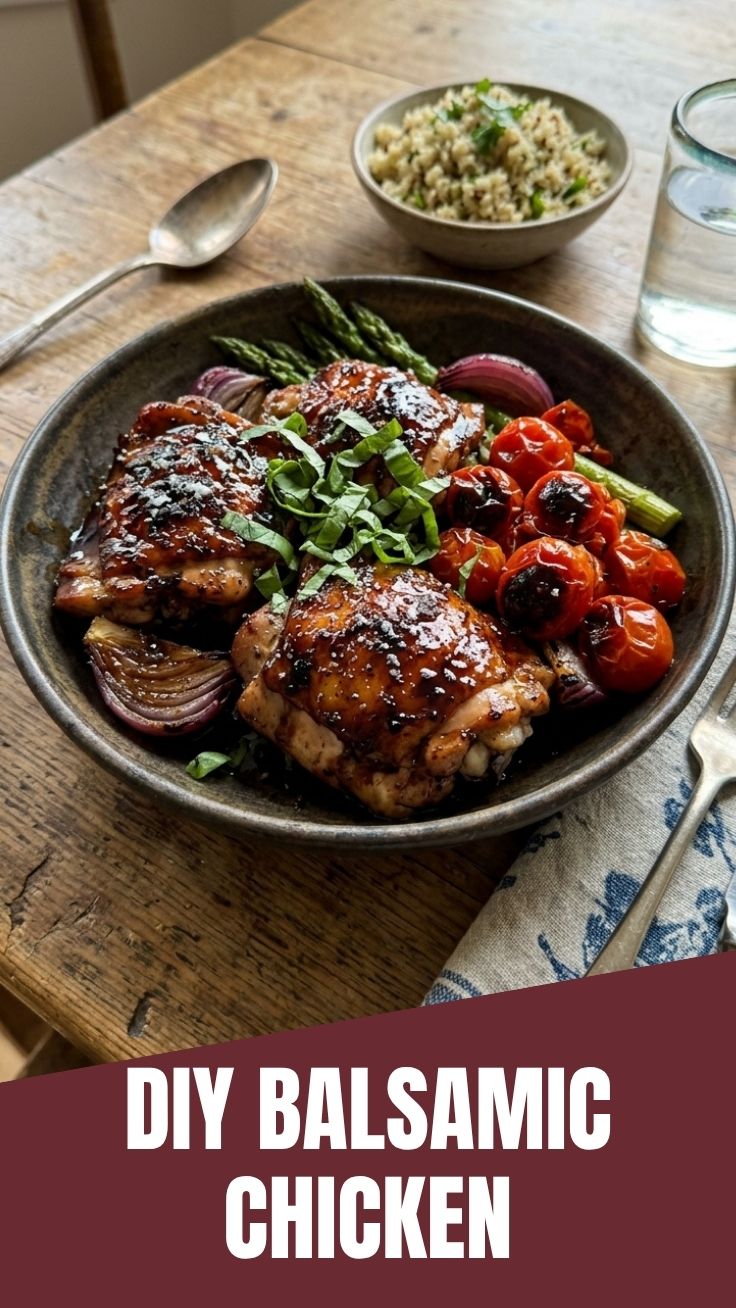
Have you ever craved a dinner that feels restaurant-worthy but comes together in a single pan? This Balsamic Chicken recipe delivers exactly that—tender, juicy chicken enveloped in a sweet and tangy sauce that’s perfect for busy weeknights or casual entertaining. Preparing it at home not only saves money but also gives you full control over the quality of ingredients, ensuring a meal that’s both delicious and nutritious. The secret to the dish’s irresistible depth lies in the rich, syrupy balsamic glaze, which reduces into a glossy coat that clings beautifully to every bite. By mastering a few simple techniques, you’ll transform everyday chicken into a standout centerpiece.
Ingredients & Kitchen Tools
For the Chicken and Marinade
– 4 boneless, skinless chicken breasts (or 6 thighs) – Thighs stay moister; breasts are leaner. Pound to even thickness (½ inch) for consistent cooking.
– ¼ cup balsamic vinegar – Use high-quality vinegar for a smoother, less harsh flavor.
– 2 tablespoons olive oil – Adds richness and helps the balsamic cling.
– 3 cloves garlic (minced) – Fresh garlic provides the best aroma; avoid pre-chopped.
– 1 teaspoon dried oregano – Earthy and herbaceous; substitute with 1 tablespoon fresh.
For the Pan Sauce and Finish
– ½ cup chicken broth (low-sodium) – Balances the vinegar’s acidity.
– 2 tablespoons honey or brown sugar – Cuts acidity and aids caramelization.
– ¼ cup balsamic glaze (store-bought or homemade) – The signature sweet-tart finish.
– 2 tablespoons unsalted butter – Adds silkiness; omit for dairy-free.
– Salt and black pepper to taste
– Fresh parsley or basil (optional) – For garnish.
Substitutions
– Chicken: Boneless thighs, bone-in breasts, or even tofu for a vegetarian twist.
– Sweetener: Maple syrup or coconut sugar.
– Balsamic glaze: Simmer ½ cup balsamic vinegar with 2 tablespoons honey until syrupy.
Essential Tools
– Large heavy-bottomed skillet (cast iron or stainless steel preferred)
– Meat mallet or rolling pin (for pounding)
– Tongs
– Small bowl for marinade
– Measuring spoons and cups
Prep Time & Cooking Schedule
– Prep Time: 10 minutes (plus 20 minutes optional marinating)
– Cook Time: 18–22 minutes
– Resting Time: 5 minutes
Total active time from fridge to plate: about 30 minutes. Marinate the chicken while you set up your other ingredients to maximize flavor absorption.
Step-by-Step Instructions
1. Pound and Marinate – Place chicken between two sheets of plastic wrap. Pound to an even ½-inch thickness. In a small bowl, whisk balsamic vinegar, olive oil, minced garlic, and oregano. Pour over chicken, turning to coat. Let sit at room temperature for 15–20 minutes (or refrigerate up to 2 hours).
2. Sear the Chicken – Heat 1 tablespoon olive oil in your skillet over medium-high heat until shimmering. Remove chicken from marinade (reserve the liquid) and pat dry. Sear 4–5 minutes per side until golden brown and cooked through (internal temperature 165°F). Transfer to a plate and tent with foil. The key to perfect Balsamic Chicken is achieving a deep crust without burning the sugars—adjust heat if needed.
3. Build the Sauce – In the same skillet, pour in the reserved marinade plus chicken broth and honey. Bring to a boil, scraping up browned bits. Let simmer 3–4 minutes until slightly thickened. Remove from heat and stir in balsamic glaze and butter until melted and glossy.
4. Finish and Serve – Return chicken to the pan, spoon sauce over the top, and let rest 5 minutes. Garnish with fresh herbs. Serve over rice, pasta, or with crusty bread to soak up every drop.
Nutritional Benefits & Advantages
This dish is a balanced protein powerhouse. A single serving (one breast with sauce) provides roughly 35g of protein, supporting muscle repair and satiety. Balsamic vinegar and the balsamic glaze contribute antioxidants like polyphenols, which may help combat oxidative stress. Using chicken broth instead of cream keeps the sauce lower in saturated fat, while olive oil offers heart-healthy monounsaturated fats. The dish is naturally low-carb and can be made gluten-free by ensuring your broth is certified and skipping flour-based thickeners.
Tips Variations & Cooking Advice
– Flavor Twists: Add a tablespoon of Dijon mustard to the sauce for tanginess, or toss in sliced mushrooms during the last 3 minutes of simmering.
– Cooking Method: For a hands-off approach, sear the chicken then transfer everything to a 375°F oven for 15–20 minutes.
– Dietary Adaptations: Use coconut aminos instead of honey for a lower-sugar option, and skip the butter for a dairy-free version.
– Portion Changes: Double the batch—this recipe scales beautifully for meal prep.
Common Mistakes to Avoid
– Skipping the Dry Pat: Patting chicken dry before searing ensures a proper crust. Wet chicken steams instead of browns.
– Crowding the Pan: Cook in batches if your skillet is small; overcrowding lowers temperature and prevents browning.
– Boiling the Glaze Too Long: Once you add the balsamic glaze, reduce heat to low. High heat can make it bitter.
– Not Resting: Cutting into the chicken immediately releases juices, leaving it dry. Let it rest as directed.
Storage & Meal Prep Tips
– Refrigeration: Store leftover Balsamic Chicken in an airtight container for up to 4 days. Keep sauce separate if possible to prevent sogginess.
– Freezing: Cool completely, transfer to a freezer-safe bag, and freeze for up to 3 months. Thaw overnight in the fridge.
– Reheating: Warm gently in a skillet over medium-low heat with a splash of broth to revive the sauce’s consistency. Avoid microwaving on high, which can toughen the chicken.
Conclusion
With just a handful of ingredients and about half an hour, you can create a dish that’s both elegant and approachable. This Balsamic Chicken recipe proves that a few smart techniques—like a proper sear and a quick glaze finish—yield restaurant-quality results at home. The balsamic glaze is the true star, lending a caramelized sweetness that elevates the entire meal. Give it a try this week, and don’t forget to share your creation or tag us in your photos—we’d love to see how it turns out.
FAQs
Can I use balsamic vinegar instead of the pre-made glaze?
Yes, but you’ll need to simmer the vinegar with a sweetener (honey or sugar) for 5–8 minutes until it reduces by half to achieve a similar thickness.
How do I prevent the chicken from drying out?
Pounding to even thickness, not overcooking (use a meat thermometer), and resting are your best defenses. Brining the chicken in salt water for 30 minutes also helps.
Is this recipe gluten-free?
It can be! Use certified gluten-free chicken broth and skip any flour-based thickening. The sauce naturally thickens from the vinegar and honey reduction.
Can I make the sauce ahead of time?
Absolutely. Cook the sauce without the chicken, cool, and refrigerate. When ready to serve, reheat and add seared chicken to finish.
What are the best side dishes for this meal?
Creamy polenta, roasted vegetables, a simple arugula salad, or garlic rice pair beautifully with the tangy-sweet sauce.
Best way to grow 5-Star Balsamic ChickenBalsamic Chicken
Ingredients
Equipment
Method
- Whisk together balsamic vinegar, olive oil, honey, minced garlic, oregano, salt, and pepper in a bowl.
- Place chicken breasts in a shallow dish and pour half of the balsamic mixture over them, ensuring they are well-coated; marinate for at least 30 minutes, or ideally for 2-4 hours in the refrigerator.
- Preheat your oven to 400°F (200°C) and heat a large oven-safe skillet over medium-high heat on the stovetop.
- Sear the marinated chicken breasts in the hot skillet for 3-5 minutes per side until golden brown.
- Transfer the skillet to the preheated oven and roast for 15-20 minutes, or until the chicken reaches an internal temperature of 165°F (74°C).
- While the chicken is roasting, pour the remaining balsamic mixture into a small saucepan and bring to a simmer, cooking for 5-7 minutes until it thickens into a glaze.
- Remove chicken from the oven and let it rest for a few minutes before slicing.
- Drizzle the balsamic glaze over the chicken and serve immediately with your favorite side dishes.