The Foolproof Guide to Perfectly Flaky Baked Tilapia Every Time
Ever wondered why restaurant Baked Tilapia always turns out moist and flavorful, while your attempts at home often end up dry or bland? The secret isn’t a special oven—it’s technique, timing, and a few clever tricks. This article will transform how you approach mild, firm white fish, ensuring a budget-friendly, nutritious, and delicious dinner that rivals any seafood spot. Whether you’re a busy parent or a health-conscious cook, mastering this simple dish will save you time and money. We’ll explore why this specific method works, drawing from the best tilapia recipes to perfect your own.
Ingredients & Kitchen Tools
Ingredients:
– 4 tilapia fillets (6 oz each): Look for fresh, firm fillets with a mild scent. Thaw frozen fillets in the fridge overnight.
– 3 tbsp unsalted butter, melted: Adds richness. Substitute with olive oil or ghee for dairy-free.
– 2 cloves garlic, minced: Fresh is best; use ½ tsp garlic powder if needed.
– 1 tbsp fresh lemon juice (about ½ lemon): Adds acidity to balance the fat.
– 1 tsp lemon zest: Intensifies citrus flavor without extra liquid.
– ½ tsp paprika: For color and subtle smokiness.
– ½ tsp dried oregano: A classic Mediterranean herb.
– Salt and black pepper to taste.
– Optional garnish: Fresh parsley, lemon wedges, or capers.
Kitchen Tools:
– Baking dish (9×13-inch): Glass or ceramic works best for even heat distribution.
– Small bowl for mixing the butter sauce.
– Measuring spoons and citrus zester or grater.
– Fish spatula or thin metal spatula for lifting cooked fillets.
– Instant-read thermometer (recommended): For perfect doneness.
Prep Time & Cooking Schedule
– Prep Time: 10 minutes (mincing garlic, zesting lemon, mixing butter sauce)
– Cooking Time: 12–15 minutes at 400°F (200°C)
– Resting Time: 2–3 minutes after baking (do not skip—this allows juices to redistribute)
– Total Time: Approximately 25–27 minutes
Plan accordingly: Start preheating your oven while prepping. Tilapia cooks quickly, so have your sides (rice, roasted vegetables, or salad) ready before the fish goes in the oven.
Step-by-Step Instructions
1. Preheat and Prep: Preheat your oven to 400°F (200°C). Pat tilapia fillets completely dry with paper towels. This is critical for browning—excess moisture steams the fish instead of baking it. Season both sides lightly with salt and black pepper.
2. Make the Lemon Butter Sauce: In a small bowl, combine melted butter, minced garlic, lemon juice, lemon zest, paprika, and oregano. Whisk until well blended. Taste—the sauce should be tangy, buttery, and aromatic.
3. Arrange and Coat: Place the seasoned fillets in a single layer in your baking dish. Pour the lemon butter sauce evenly over the fillets, ensuring each piece is coated. For extra flavor, let the fillets sit in the sauce for 5 minutes while the oven finishes preheating.
4. Bake to Perfection: Bake uncovered for 12–15 minutes. Flaky perfection usually occurs at 13 minutes for standard 6 oz fillets. Check for doneness: the fish should flake easily with a fork and reach an internal temperature of 145°F. Pro tip: Thicker fillets need 15 minutes; thinner ones (¾ inch or less) may be done in 10.
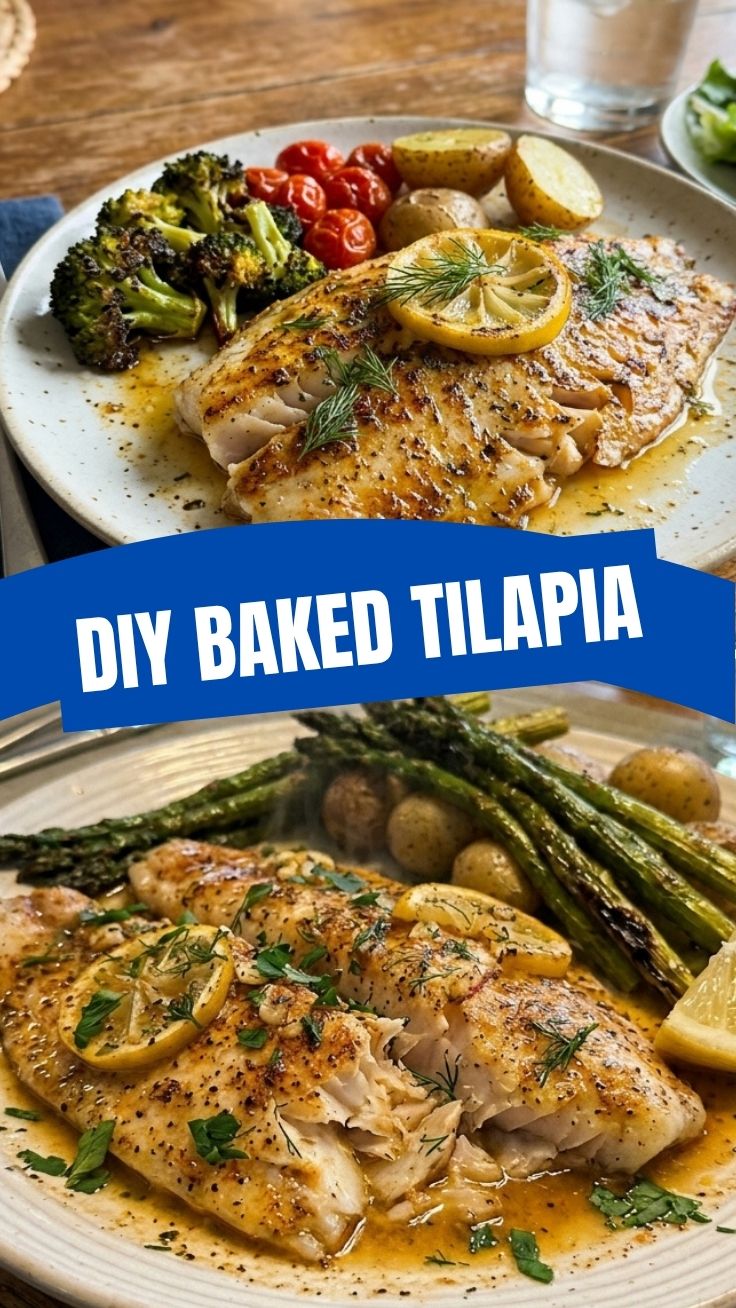
5. Rest and Serve: Remove from the oven and let rest for 2–3 minutes. This step allows the juices to settle, preventing dry fish. Garnish with fresh parsley and extra lemon wedges. This foolproof method yields moist, flavorful results every time, making it one of the easiest tilapia recipes to master. Serve immediately alongside steamed broccoli or rice for a complete meal featuring perfect Baked Tilapia.
Nutritional Benefits & Advantages
Tilapia is an excellent source of lean protein—about 23 grams per 4-ounce serving—with only 100 calories and less than 2 grams of fat. It’s rich in selenium (a powerful antioxidant) and niacin (vitamin B3), which supports metabolism and brain function. While lower in omega-3s than salmon, tilapia offers a good amount of vitamin B12 and phosphorus for bone health. This baked preparation adds minimal fat (butter can be reduced or replaced) and no breading, making it ideal for low-carb, keto, and gluten-free diets.
Tips Variations & Cooking Advice
– Flavor variations: Swap oregano for dill and thyme alongside the lemon. Add a pinch of red pepper flakes for heat, or top with sliced tomatoes and olives for a Greek-inspired version.
– Method swaps: Use an air fryer at 375°F for 8–10 minutes, or grill fillets in a foil packet with lemon slices and herbs for 10–12 minutes.
– Dietary adaptations: For dairy-free, use melted coconut oil or avocado oil. For low-sodium, skip added salt and rely on herbs and lemon.
– Seasoning adjustments: If you’re not a fan of mild fish, increase paprika to 1 teaspoon or add ¼ teaspoon cayenne pepper.
Common Mistakes to Avoid
1. Overcooking: This is the #1 killer of baked fish. Check doneness at 10 minutes if your fillets are thin. Use a thermometer (145°F) or look for opaque, flaky flesh.
2. Skipping the pat-dry step: Wet fillets steam instead of bake, leading to mushy texture. Blot thoroughly with paper towels.
3. Crowding the pan: Overlapping fillets prevent even cooking. Leave space between pieces; use two dishes if needed.
4. Adding sauce too early: The butter sauce can boil and make the fish greasy. Pour it on just before baking, not during marinating, unless marinating refrigerated for a max of 20 minutes.
5. Skipping the rest: Cutting into fish immediately after baking releases all the juices. Let it sit for 2–3 minutes.
Storage & Meal Prep Tips
– Refrigeration: Store leftover baked tilapia in an airtight container for up to 3 days. Keep it separate from strong-smelling foods to prevent odor absorption.
– Freezing: Fully cooled fillets can be frozen in a single layer on a baking sheet, then transferred to a freezer-safe bag. Use within 2 months for best quality.
– Reheating: The best method is in a 350°F oven for 8–10 minutes, covered with foil to retain moisture. Avoid microwaving, which turns the fish rubbery. Alternatively, reheat gently in a skillet with a splash of lemon juice or water over medium-low heat.
– Meal prep idea: Bake 4 fillets on Sunday. Use for salads, tacos, or quick lunches—just flake cold fish over greens or reheat briefly.
Conclusion
Mastering a simple, reliable method for cooking mild white fish opens doors to countless quick, healthy meals. By focusing on proper drying, a balanced lemon-butter sauce, and precise timing, you can consistently produce restaurant-quality results at home. Whether you’re exploring tilapia recipes for taco nights or building a repertoire of heart-healthy dinners, this Baked Tilapia technique is your foundation. Try it tonight—adjust the herbs to your taste, and don’t forget that lemon wedge. We’d love to hear your variations, so share your results or questions in the comments below!
FAQs
1. Can I use frozen tilapia fillets without thawing?
Yes, but increase baking time by 5–7 minutes and pat dry after thawing to remove excess water. For best results, thaw in the fridge overnight.
2. Why is my baked tilapia dry?
Typically, you’re either overcooking it or skipping the pat-dry step (which causes steaming). Use a thermometer and pull the fish at 145°F.
3. Can I substitute lemon with lime or orange?
Absolutely. Lime works beautifully for a Mexican twist, while orange adds sweetness. Reduce the amount slightly (use ½ orange juice instead of 1 tbsp) to avoid overwhelming the fish.
4. How do I prevent the fish from sticking to the pan?
Coat the baking dish with cooking spray or a thin layer of oil before adding the fish. Glass or ceramic dishes are naturally less sticky than metal pans.
5. Can I add cheese on top?
Yes, sprinkle 2–3 tbsp grated Parmesan or crumbled feta over the fillets during the last 3–4 minutes of baking. This adds a salty, creamy finish—just watch the cooking time to avoid burning.
Quick way to grow 3 perfect Baked Tilapia
Ingredients
Equipment
Method
- Preheat your oven to 400°F (200°C) and line a baking sheet with parchment paper.
- Pat the tilapia fillets dry with paper towels, then place them on the prepared baking sheet.
- Drizzle olive oil over both sides of each fillet, then season generously with salt and black pepper.
- Squeeze fresh lemon juice over the fish and place lemon slices on top of each fillet.
- Bake for 12-15 minutes, or until the fish is opaque and flakes easily with a fork.
- Carefully remove the baked tilapia from the oven and serve immediately with your favorite side dishes.