The Ultimate Guide to Perfect Homemade Falafel: Crispy, Flavorful, and Nutrient-Packed
Have you ever wondered why restaurant falafel sometimes tastes dry or crumbly, while the best versions are light, fluffy, and packed with herbaceous flavor? The secret lies in technique, ingredient ratios, and one essential rule: never use canned beans. When you master Falafel (Homemade), you unlock a versatile, protein-rich dish that rivals any takeout. This guide will walk you through every step, from selecting the right Chickpea variety to achieving that golden, crispy exterior without deep-frying. By cooking at home, you control the oil quality, sodium levels, and freshness—making this both a healthier and more rewarding choice.
—
Ingredients & Kitchen Tools
For the Falafel Base:
– 1 cup dried Chickpea (soaked overnight, not canned)—soaking rehydrates and softens for perfect texture
– ½ cup fresh parsley (packed)—adds brightness and color
– ¼ cup fresh cilantro—optional but boosts herbaceousness
– ½ medium onion, roughly chopped—provides moisture and savory depth
– 3–4 garlic cloves—adjust to taste
– 1 tsp ground cumin—warm, earthy flavor
– 1 tsp ground coriander—citrusy undertone
– ½ tsp baking powder—key for fluffiness
– ½ tsp salt
– ¼ tsp black pepper
– 2–3 tbsp chickpea flour or all-purpose flour—binder (gluten-free option: use chickpea flour only)
– Oil for frying (avocado, vegetable, or canola) or baking spray
Kitchen Tools:
– Food processor (essential for paste consistency)
– Large mixing bowl
– Baking sheet lined with parchment paper (if baking)
– Skillet or deep pan (if frying)
– Slotted spoon or spider strainer
– Measuring spoons and cups
– Chef’s knife and cutting board
Optional Substitutions:
– Swap parsley for mint or dill for a different herb profile
– Use red onion instead of yellow for milder sweetness
– Replace cumin/coriander with curry powder for fusion twist
—
Prep Time & Cooking Schedule
| Stage | Time |
|——-|——|
| Soaking chickpeas | 8–12 hours (overnight) |
| Prep & mixing | 15 minutes |
| Resting mixture | 30 minutes (optional, for firmer texture) |
| Cooking | 8–12 minutes (frying) or 20–25 minutes (baking) |
| Total active time | ~30 minutes |
Planning Tip: Soak chickpeas the night before. If you’re short on time, a quick soak (boil dried chickpeas for 2 minutes, then let sit covered for 1 hour) works, but overnight gives best results. The resting step helps the mixture firm up, preventing falafel from falling apart during cooking.
—
Step-by-Step Instructions
1. Soak and Drain – Rinse dried chickpeas and soak in plenty of cold water for 8–12 hours. Drain thoroughly—excess moisture makes falafel mushy.
2. Process the Base – In a food processor, combine drained chickpeas, parsley, cilantro, onion, and garlic. Pulse in short bursts until you get a coarse, crumbly paste—avoid overprocessing into hummus consistency.
3. Season and Bind – Transfer mixture to a bowl. Add cumin, coriander, salt, pepper, and baking powder. Mix by hand. Sprinkle in 2 tablespoons chickpea flour—this is where the Falafel (Homemade) texture is decided. If mixture still feels sticky, add another tablespoon. Aim for a texture that holds together when pressed but isn’t wet.
4. Rest – Cover and refrigerate for 30 minutes (up to overnight). This allows chickpea starches to absorb moisture, making the mixture easier to shape.
5. Shape – Using slightly wet hands, form small balls (about 1.5 inches) or patties. Wet hands prevent sticking.
6. Cook
– For frying: Heat 2 inches of oil to 350°F (175°C). Fry falafel in batches for 3–4 minutes per side until deep golden brown. Drain on paper towels. Maintain oil temperature—too hot burns outside, too cold absorbs grease.
– For baking: Preheat oven to 375°F (190°C). Place falafel on parchment-lined baking sheet, brush lightly with oil, and bake 20–25 minutes, flipping halfway. For extra crispiness, finish under broiler for 2 minutes.
7. Serve immediately – Crispiness fades as they cool, so best eaten fresh.
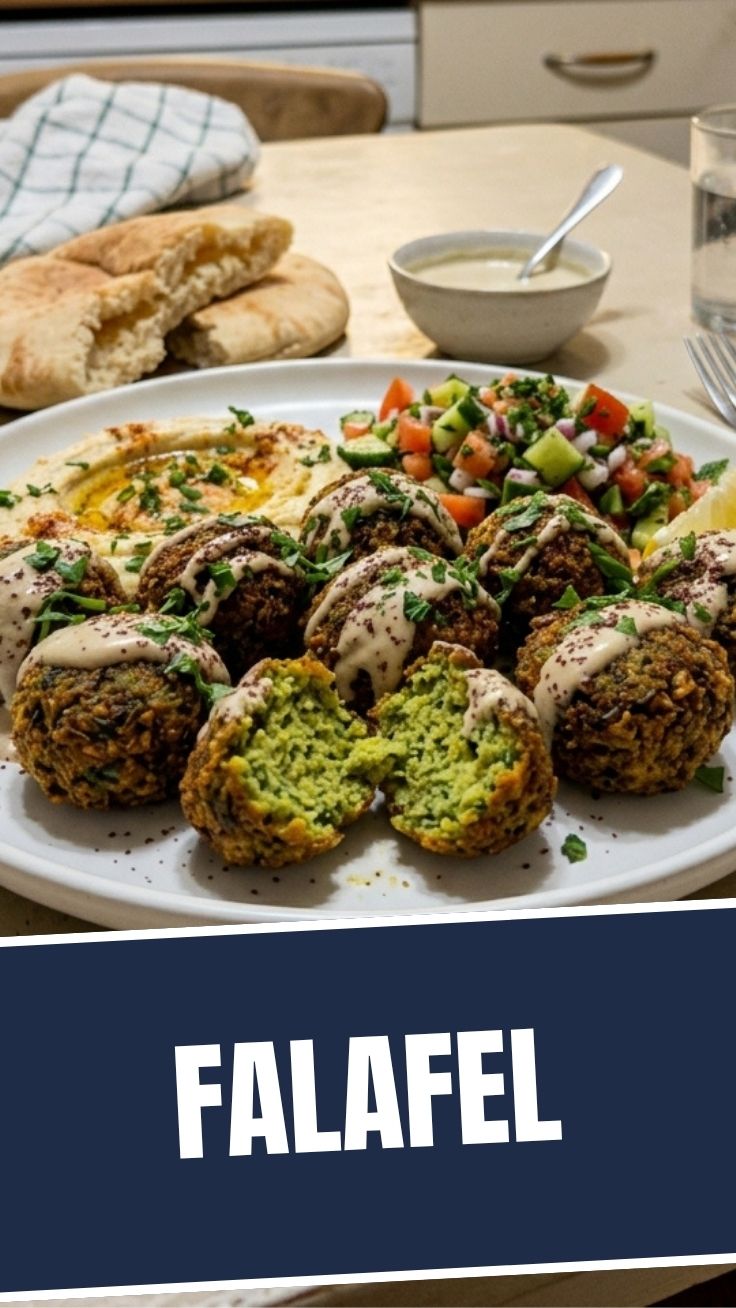
Temperature Check: A correctly cooked falafel will be golden brown, crisp on the outside, and light green inside. If the interior is dense or gray, it may have been overprocessed or undercooked.
—
Nutritional Benefits & Advantages
A single serving (4–5 pieces) provides approximately 200–250 calories, 10g protein, 8g fiber, and is packed with iron, folate, and magnesium. The Chickpea base offers plant-based protein and slow-digesting carbohydrates, making falafel a satisfying option for vegetarians and vegans. When baked instead of fried, this Falafel (Homemade) becomes heart-healthy without sacrificing crunch. Plus, homemade versions contain zero preservatives and about 40% less sodium than store-bought or restaurant versions.
—
Tips Variations & Cooking Advice
– Herb Swap: Replace parsley with kale or spinach for a milder flavor (reduce moisture slightly).
– Spice Kick: Add ½ tsp cayenne or smoked paprika for heat.
– Alternative Cooking: Air-fry at 375°F for 12–15 minutes, shaking halfway.
– Gluten-Free Adaptation: Use chickpea flour only (avoid wheat flour). Ensure baking powder is gluten-free.
– Portion Changes: Make smaller bite-sized falafel for appetizers or larger patties for burgers.
– Flavor Boost: Mix in 1 tsp lemon zest or 2 tbsp sesame seeds for nuttiness.
—
Common Mistakes to Avoid
– Using Canned Chickpeas: They’re too cooked and moist, causing falafel to fall apart. Always start with dried, soaked chickpeas.
– Overprocessing: Paste should be coarse, not smooth. Overworking releases chickpea starch, resulting in dense, gummy texture.
– Skipping Resting Time: The mixture firms up during resting, preventing crumbling.
– Wrong Oil Temperature: If oil is too cool, falafel absorbs grease; too hot, they burn. Use a thermometer for precision.
– Not Draining Soaked Chickpeas: Excess water thins the mixture. Pat dry with paper towels after draining.
—
Storage & Meal Prep Tips
– Refrigeration: Store cooked falafel in an airtight container with paper towels to absorb moisture. Consume within 3–4 days.
– Freezing (Uncooked): Shape falafel balls, freeze on baking sheet until solid, then transfer to freezer bag. Cook from frozen—add 2–3 minutes to cooking time.
– Freezing (Cooked): Cool completely, freeze in single layer, then store in zip-top bag for up to 3 months.
– Reheating: Reheat in a 350°F oven for 10 minutes (flip halfway) or air-fryer at 375°F for 5 minutes. Avoid microwaving—it makes them soggy.
Meal Prep Tip: Cook a large batch, refrigerate or freeze portions. Pair with pita, tahini sauce, and fresh veggies for quick weekday lunches.
—
Conclusion
Mastering Falafel (Homemade) transforms a takeout favorite into a reliable, nutritious kitchen staple. The key takeaway is that proper technique—especially using dried and soaked Chickpea, balancing moisture and binders, and controlling cooking temperature—determines success. Whether you fry, bake, or air-fry, the result is a deeply satisfying, protein-rich dish that suits any diet. Try this recipe, share your batch with friends, or explore pairing it with homemade hummus or fresh tabbouleh. Drop your questions and results in the comments—I’d love to hear how your falafel turned out!
—
FAQs
1. Can I use chickpea flour instead of dried chickpeas?
Yes, but the texture will differ significantly. Mix 1 cup chickpea flour with ¾ cup water, let rest 30 minutes, then proceed. The result will be denser and less fluffy—still tasty, but not traditional.
2. Why did my falafel fall apart while frying?
Three common causes: (1) too much moisture—pat chickpeas dry after soaking; (2) mixture too loose—add more chickpea flour; (3) oil temperature too low—maintain 350°F.
3. Can I make this recipe oil-free?
Bake at 375°F for 25 minutes without oil. The exterior won’t be as crispy, but they’ll hold together. For best texture, brush lightly with oil halfway through.
4. How do I scale the recipe for a crowd?
Double or triple the ingredients. Keep baking powder ratio the same. Cook in batches (don’t overcrowd the pan) and keep finished falafel warm in a 200°F oven.
5. Can I use black beans or lentils instead of chickpeas?
Texture will differ, but yes. For lentils, cook until tender and drain thoroughly. Black beans work best if mashed lightly. Adjust flour quantity as needed—these legumes have different moisture levels.
Falafel (Homemade)
Ingredients
Equipment
Method
- Soak dried chickpeas in water for at least 12 hours or overnight, then drain and rinse them thoroughly.
- Combine the soaked chickpeas, parsley, cilantro, onion, garlic, flour, baking powder, and spices in a food processor.
- Process the mixture until it forms a coarse meal, avoiding over-processing to maintain some texture.
- Scoop spoonfuls of the falafel mixture and gently shape them into small patties or balls.
- Heat vegetable oil in a deep pan or pot to about 350-375°F (175-190°C), ensuring enough oil for deep frying.
- Carefully place the falafel into the hot oil, frying in batches to avoid overcrowding the pan, and cook for 3-5 minutes per side until golden brown and crispy.
- Remove the cooked falafel with a slotted spoon and place them on a paper towel-lined plate to drain excess oil.
- Serve the falafel warm in pita bread with fresh vegetables, tahini sauce, or as part of a mezze platter.