The Ultimate Guide to Making Fresh, Restaurant-Quality Salsa at Home
Have you ever wondered why the Salsa at your favorite Mexican restaurant tastes so vibrant, while the jarred versions fall flat? The secret isn’t a guarded family recipe—it’s freshness. Preparing your own homemade salsa at home gives you complete control over flavor, heat, and texture, saving you money and eliminating preservatives. Whether you’re a kitchen novice or a seasoned cook, this guide will teach you how to create a perfectly balanced, restaurant-grade salsa that rivals any takeout. From roasting techniques to seasoning secrets, you’ll discover why this homemade Salsa is a game-changer for your weeknight dinners. And just like the energetic rhythms of Salsa dance, this recipe is meant to be vibrant, lively, and full of personality.
Ingredients & Kitchen Tools
Fresh Produce
– Roma tomatoes (6 medium) – Less watery than other varieties, giving a thicker salsa
– White onion (½ large) – Provides sharpness; red onion works as a milder substitute
– Fresh cilantro (½ cup packed) – Use stems too; they’re packed with flavor
– Jalapeño peppers (2 medium) – For moderate heat; remove seeds for milder salsa
– Garlic cloves (3) – Fresh garlic is non-negotiable for authentic taste
– Lime juice (2 tablespoons) – Fresh-squeezed only; bottled juice lacks brightness
Pantry Staples
– Salt (1 teaspoon) – Kosher or sea salt preferred
– Ground cumin (½ teaspoon) – Adds warmth and depth
– Sugar (¼ teaspoon) – Balances acidity; optional but recommended
Kitchen Tools
– Cutting board and chef’s knife – A sharp knife prevents bruising ingredients
– Food processor or blender – Pulse in short bursts for chunky texture
– Large mixing bowl – Glass or stainless steel works best
– Fine-mesh strainer – Optional, for draining excess liquid if needed
– Spoon or spatula – For scraping down sides
Substitutions
– Tomatoes: Canned fire-roasted tomatoes (14 oz) work in winter; drain them first
– Peppers: Serrano peppers double the heat; bell peppers yield zero heat
– Onion: Shallots or green onions add a milder touch
– Cilantro: Fresh parsley is a decent substitute for those who dislike cilantro
Prep Time & Cooking Schedule
Total time: 20 minutes (hands-on prep: 15 minutes, resting time: 5 minutes)
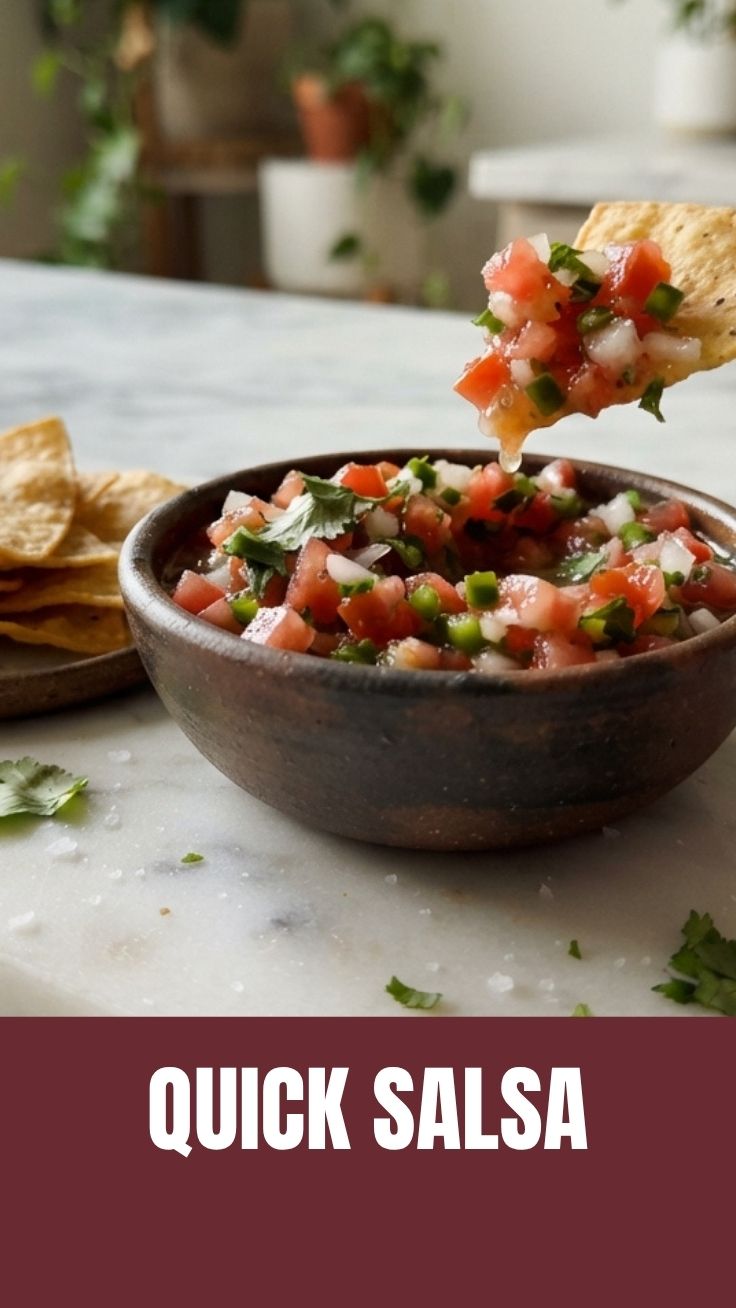
This salsa requires no actual cooking, but a brief resting period is essential. After chopping and mixing, let the salsa sit for at least 5 minutes at room temperature. This allows the flavors to meld and the salt to draw out the tomato juices, creating that perfect saucy consistency. For optimal flavor, refrigerate for 1–2 hours before serving—the salsa improves dramatically as the ingredients marry.
Timing tip: Make this first when cooking Mexican dishes; it needs resting time while you prepare the main course.
Step-by-Step Instructions
1. Roast the aromatics – Place the jalapeños and garlic cloves (skin on) in a dry skillet over medium heat. Turn every 2–3 minutes until charred spots appear (about 8 minutes total). This step tames the raw heat and adds smoky depth. Remove skins from garlic once cool enough to handle.
2. Prep the tomatoes – Cut Roma tomatoes in half lengthwise. For a smoky twist, you can char them cut-side down on the same skillet for 3 minutes. If using canned tomatoes, skip this step.
3. Build the base – In your food processor, combine the roasted jalapeños, garlic, and half the cilantro. Pulse 5–6 times until finely chopped. Do not over-process—you want tiny specks, not a paste.
4. Add tomatoes and onion – Add the tomatoes and chopped white onion. Pulse 4–5 times for a chunky consistency. Scrape down the sides with a spatula.
5. Season and finish – Add the remaining cilantro, lime juice, salt, cumin, and sugar. Pulse 2–3 more times to incorporate. Taste and adjust seasoning. If your Salsa tastes flat, add a pinch of salt or another squeeze of lime.
6. Rest and serve – Transfer to a bowl and let rest for 5 minutes. Stir once more before serving. Just like a lively Salsa dance, this salsa needs a moment to find its rhythm before being enjoyed.
Texture cue: The salsa should have visible chunks—not a puree. If it looks soupy, drain off some liquid or add another chopped tomato.
Nutritional Benefits & Advantages
This homemade salsa is a nutritional powerhouse, offering:
– Low calories (15–20 per 2-tablespoon serving) – Perfect for guilt-free dipping
– High vitamin C – From tomatoes and lime juice; supports immune health
– Antioxidants – Lycopene in tomatoes is linked to heart health and cancer prevention
– Hydration – Tomatoes are 95% water, aiding digestion
– No added sugars or preservatives – Jarred salsas often contain high fructose corn syrup
Compared to store-bought options, this version has 75% less sodium and zero artificial flavors. For those following Mediterranean or plant-based diets, salsa aligns perfectly as a versatile condiment.
Tips Variations & Cooking Advice
Flavor Twists
– Smoky salsa: Add ½ teaspoon smoked paprika or chipotle pepper in adobo
– Fruity salsa: Fold in ½ cup diced mango or pineapple after blending
– Herb-forward: Add fresh basil or oregano alongside cilantro
– Roasted version: Roast all tomatoes, onions, and garlic at 425°F for 20 minutes before blending
Dietary Adaptations
– Low-FODMAP: Use green tops of scallions instead of onion; omit garlic
– Keto-friendly: This recipe is naturally low-carb (3g net carbs per serving)
– Oil-free: Unlike many recipes, this one needs no oil
Cooking Methods
– Hand-chopped (pico de gallo style): Finely dice all ingredients by hand for a chunky, rustic texture
– Blended: Process everything together for a smooth, restaurant-style salsa
– Grilled: Grill tomatoes and jalapeños for 10 minutes for intense char flavor
Common Mistakes to Avoid
1. Using unripe tomatoes – Hard, pale tomatoes yield watery, flavorless salsa. Choose deep red, heavy-for-their-size specimens.
2. Over-processing the salsa – This creates a thin, mushy puree. Use short pulses and stop while it’s still chunky.
3. Skipping the salt – Salt isn’t just for flavor; it draws out moisture from tomatoes, creating the perfect consistency without added liquid.
4. Using bottled lime juice – The acidic, metallic taste ruins the freshness. Fresh limes are non-negotiable.
5. Adding cilantro stems to the food processor – Stems are flavorful but can become stringy if processed too long. Chop them finely by hand instead.
Storage & Meal Prep Tips
Refrigeration: Store in an airtight container for up to 5 days. The flavor actually improves after 24 hours as the ingredients meld.
Freezing: Spoon into freezer-safe bags or containers, leaving ½ inch headroom. Freeze for up to 3 months. Thaw overnight in the refrigerator and stir well before serving. Note: the texture will be slightly softer after freezing, so this works best for cooked dishes rather than fresh dips.
Reheating: This is a cold salsa, so avoid heat. If serving with warm dishes, simply bring the salsa to room temperature for 20 minutes before serving.
Meal prep idea: Make a double batch on Sunday. Use half as a dip for chips, and the remainder to top tacos, scrambled eggs, grilled chicken, or baked potatoes throughout the week.
Conclusion
Homemade salsa is a revelation: it’s faster than ordering takeout, cheaper than premium grocery brands, and infinitely more customizable. By mastering this simple recipe, you’ve unlocked a versatile condiment that elevates everything from breakfast burritos to weeknight tacos. The vibrant, fresh Salsa you just prepared brings the authentic taste of Mexico to your table, proving that the best flavors come from simple, quality ingredients. And much like the joyful steps of Salsa dance, this recipe is meant to be shared and enjoyed with others. Try it out, tweak it to your liking, and share your creation on social media—your homemade salsa might just become your signature dish. For more fresh, flavorful recipes, explore our collection of sauces and dips that transform everyday meals into something special.
FAQs
1. Can I use canned tomatoes instead of fresh?
Absolutely. Choose fire-roasted diced tomatoes for the best flavor. Drain them slightly to avoid watery salsa. This substitution works particularly well during winter when fresh tomatoes are less flavorful.
2. How do I make my salsa spicier without making it too liquid?
Replace one jalapeño with a serrano pepper or habanero (remove seeds for controlled heat). You can also add ½ teaspoon of cayenne pepper or crushed red pepper flakes while pulsing.
3. My salsa is too watery. How can I fix it?
Drain off excess liquid using a fine-mesh strainer, or add another finely chopped tomato to absorb moisture. Alternatively, stir in 1 tablespoon of tomato paste to thicken without altering flavor.
4. Can I make salsa without a food processor?
Yes! Finely dice all ingredients by hand using a sharp knife. This yields a more rustic pico de gallo style. The key is uniform ¼-inch dice for consistent texture and flavor distribution.
5. Why does my salsa taste bland even after I added salt?
Blandness often comes from under-seasoned tomatoes or insufficient acidity. Try adding another squeeze of lime juice and a pinch of salt. If still flat, add ¼ teaspoon of ground cumin or a dash of hot sauce for depth.
Best way to grow Salsa with 8 secret tipsSalsa
Ingredients
Equipment
Method
- Choose the right tomato varieties suitable for salsa, such as Roma or beefsteak, which have less water content.
- Select chili peppers with varying heat levels like jalapeños, serranos, or poblanos to achieve your desired salsa spice profile.
- Plant onions that are known for their strong flavor, such as yellow or white onions, to add a robust base to your salsa.
- Ensure cilantro is planted in a location with partial shade to prevent bolting and maintain its fresh flavor.
- Implement proper soil drainage and consistent watering to promote healthy growth for all salsa ingredients.
- Utilize companion planting techniques, such as planting marigolds near tomatoes, to deter pests naturally.
- Harvest your ingredients at their peak ripeness to maximize flavor and freshness for your homemade salsa.
- Rotate your crops annually to maintain soil health and prevent disease buildup, ensuring a bountiful harvest each season.