The Ultimate Falafel Bowl: A Fresh, Flavor-Packed Mediterranean Meal You Can Make at Home
Have you ever craved a meal that’s both hearty and healthy, bursting with vibrant flavors and satisfying textures? If you’ve ever ordered a Falafel Bowl at a restaurant, you know the magic of crispy chickpea fritters paired with cool, creamy sauces and fresh vegetables. But why settle for takeout when you can create an even better version in your own kitchen? Preparing this dish at home not only saves money but also gives you complete control over the ingredients, ensuring a fresher, more personalized experience. This bowl is a celebration of Mediterranean Food, offering a balanced, nutrient-dense meal that’s perfect for lunch or dinner. Let’s dive into how you can master this recipe with ease.
Ingredients & Kitchen Tools
Ingredients
– For the Falafel: 1 can (15 oz) chickpeas, drained and rinsed; 1/2 cup fresh parsley; 1/4 cup fresh cilantro; 1 small onion, roughly chopped; 3 cloves garlic; 1 tsp ground cumin; 1 tsp ground coriander; 1/2 tsp salt; 1/4 tsp black pepper; 2 tbsp all-purpose flour (or chickpea flour for gluten-free); 1/2 tsp baking powder; Oil for frying (vegetable or avocado oil).
– For the Bowl Base: 2 cups cooked quinoa or brown rice; 1 cup cherry tomatoes, halved; 1 cucumber, diced; 1/2 red onion, thinly sliced; 1/2 cup Kalamata olives; 1/4 cup crumbled feta cheese (optional).
– For the Sauce: 1/2 cup plain Greek yogurt (or dairy-free alternative); 2 tbsp tahini; 1 tbsp lemon juice; 1 clove garlic, minced; Salt to taste.
– Optional Substitutions: Swap quinoa for couscous or mixed greens; use sunflower seeds instead of pine nuts; replace feta with vegan cheese.
Kitchen Tools
– Food processor or blender
– Large skillet or deep fryer
– Mixing bowls
– Measuring cups and spoons
– Spatula
– Paper towels for draining
Prep Time & Cooking Schedule
– Prep Time: 20 minutes (includes chopping vegetables and mixing falafel mixture)
– Cook Time: 15 minutes (frying falafel)
– Resting Time: 30 minutes (chilling falafel mixture in the fridge)
– Total Time: 1 hour 5 minutes
Planning Tip: The falafel mixture needs to rest for at least 30 minutes to firm up, so start this step first. While it chills, you can cook the quinoa or rice and prepare the vegetables and sauce. This schedule ensures everything comes together seamlessly.
Step-by-Step Instructions
1. Prepare the Falafel Mixture: In a food processor, combine chickpeas, parsley, cilantro, onion, garlic, cumin, coriander, salt, and pepper. Pulse until the mixture is coarse but holds together when pressed. Avoid over-processing into a paste. Transfer to a bowl, stir in flour and baking powder, then cover and refrigerate for 30 minutes.
2. Shape and Fry the Falafel: Heat 1 inch of oil in a skillet over medium heat (350°F). Form the chilled mixture into 1-inch balls or patties. Fry in batches for 3-4 minutes per side until golden brown and crispy. Drain on paper towels.
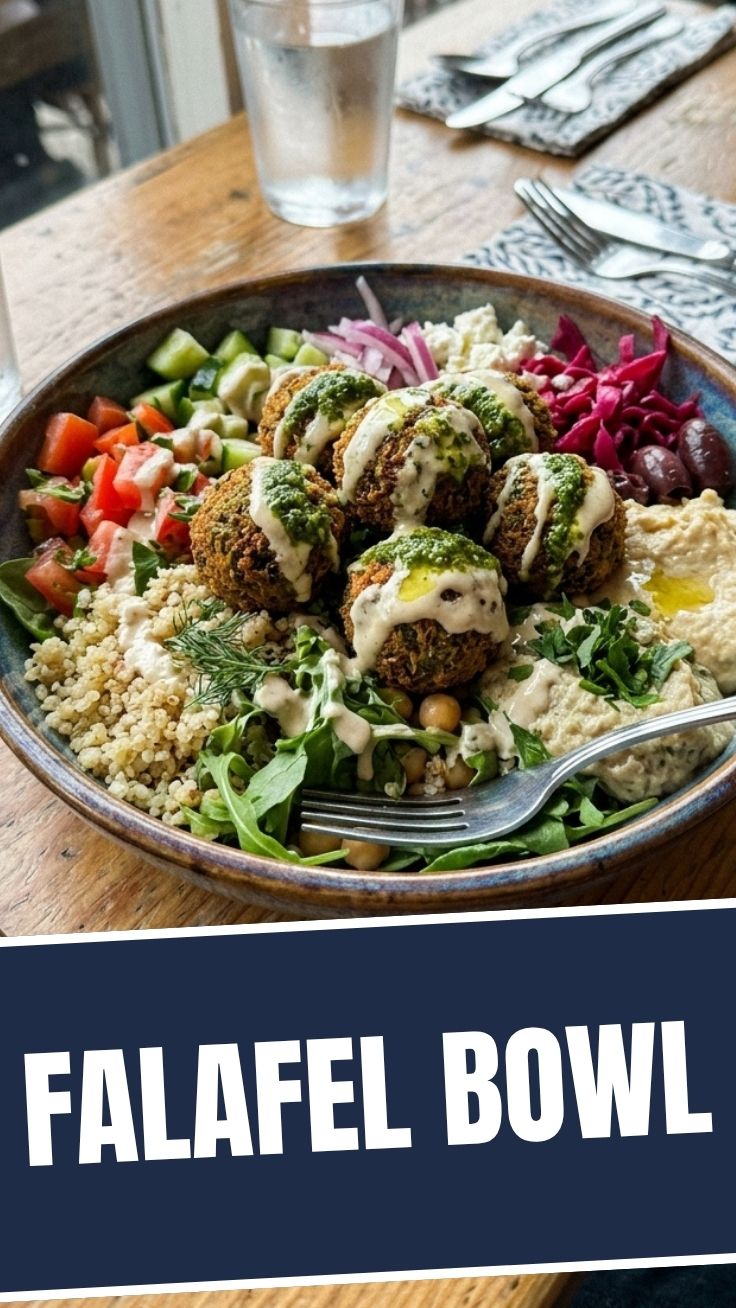
3. Assemble the Bowl: Divide cooked quinoa or rice among bowls. Top with cherry tomatoes, cucumber, red onion, olives, and feta. Arrange 4-5 falafel on each bowl.
4. Make the Sauce: Whisk together yogurt, tahini, lemon juice, garlic, and salt. Drizzle over the bowl.
5. Serve Immediately: Enjoy warm or at room temperature. For extra freshness, add a squeeze of lemon and a sprinkle of sumac.
Pro Tip: For perfectly crispy falafel, ensure the oil is hot enough before frying. Test by dropping a small piece of mixture into the oil—it should sizzle immediately. This Falafel Bowl is a cornerstone of Mediterranean Food, offering a harmonious blend of textures and flavors.
Nutritional Benefits & Advantages
This bowl is a powerhouse of nutrition. Chickpeas are rich in plant-based protein and fiber, supporting digestion and satiety. Quinoa provides complete protein and essential amino acids, while fresh vegetables deliver vitamins A, C, and K. The tahini sauce adds healthy fats and calcium. Together, these ingredients create a balanced meal that’s low in saturated fat and high in antioxidants. It’s also naturally vegetarian and can be easily adapted for vegan or gluten-free diets.
Tips Variations & Cooking Advice
– Flavor Variations: Add roasted red peppers or pickled turnips for tang. Swap cumin for smoked paprika for a smoky twist.
– Cooking Methods: Bake falafel at 375°F for 20 minutes, flipping halfway, for a lighter version. Air-fry at 375°F for 12 minutes.
– Dietary Adaptations: Use gluten-free flour (chickpea or rice flour) for the falafel. Replace yogurt with a dairy-free alternative like coconut yogurt.
– Portion Changes: Double the recipe for meal prep; falafel freeze well for up to 3 months.
Common Mistakes to Avoid
– Over-processing the Falafel Mixture: This leads to dense, gummy falafel. Pulse until just combined.
– Skipping the Resting Time: The mixture needs to chill to hold its shape during frying. Don’t rush this step.
– Using Cold Oil: If the oil isn’t hot enough, falafel will absorb excess oil and become greasy. Maintain a steady 350°F.
– Overcrowding the Pan: Fry in small batches to ensure even cooking and crispiness.
Storage & Meal Prep Tips
– Refrigeration: Store assembled bowls (without sauce) in airtight containers for up to 3 days. Keep sauce separate.
– Freezing: Freeze cooked falafel on a baking sheet, then transfer to a freezer bag for up to 3 months. Reheat in the oven or air fryer.
– Reheating: For crispy falafel, reheat in a 375°F oven for 10 minutes or in an air fryer. Avoid microwaving, which makes them soggy.
– Meal Prep: Cook quinoa and falafel in advance. Chop vegetables and store in separate containers. Assemble bowls fresh for best texture.
Conclusion
This Falafel Bowl is more than just a meal—it’s a vibrant, customizable experience that brings the essence of Mediterranean Food to your table. By making it at home, you control the quality, flavor, and nutrition, all while saving money. Whether you’re a seasoned cook or a beginner, this recipe is forgiving and rewarding. Try it tonight, share your creations on social media, and explore more Mediterranean-inspired dishes on our site. Your taste buds will thank you!
FAQs
1. Can I use canned chickpeas for falafel?
Yes, canned chickpeas work perfectly. Just ensure they are drained and rinsed well to remove excess sodium and starch.
2. How do I prevent falafel from falling apart?
Chill the mixture for at least 30 minutes and avoid over-processing. Adding a binding agent like flour or breadcrumbs also helps.
3. Can I make this bowl gluten-free?
Absolutely! Use gluten-free flour (chickpea or rice flour) for the falafel and serve over quinoa or rice instead of couscous.
4. What’s the best oil for frying falafel?
Use a neutral oil with a high smoke point, such as vegetable, canola, or avocado oil. Olive oil can burn at high temperatures.
5. How long do leftovers last?
Assembled bowls (without sauce) last 3 days in the fridge. Cooked falafel can be frozen for up to 3 months.
Proven way to grow any Falafel Bowl using 7 stepsFalafel Bowl
Ingredients
Equipment
Method
- In a food processor, combine chickpeas, parsley, cilantro, garlic, onion, flour, cumin, coriander, salt, and pepper.
- Pulse until the mixture is well combined but still slightly chunky, then form into small patties or balls.
- Heat vegetable oil in a deep pan or pot over medium-high heat for frying.
- Carefully fry the falafel in batches for 3-5 minutes per side until they are golden brown and crispy.
- Remove the cooked falafel and place them on a paper towel-lined plate to drain excess oil.
- To prepare the tahini dressing, whisk together tahini, lemon juice, water, minced garlic, salt, and pepper until smooth.
- Assemble the bowls by layering quinoa or rice, mixed greens, cherry tomatoes, cucumber, red onion, falafel, and a drizzle of tahini dressing.