Why This Healthy Slow Cooker Soup Deserves a Permanent Spot in Your Meal Rotation
Have you ever stared into your refrigerator at the end of a long day, utterly exhausted, and wished dinner could simply appear? That moment of decision fatigue is precisely why a healthy slow cooker soup can transform your relationship with weeknight cooking. This recipe delivers deep, roasted flavor without requiring you to stand over a hot stove for hours. By preparing this nourishing meal at home, you gain complete control over sodium levels, oil quality, and ingredient freshness—three factors that directly impact both your health and your budget. Whether you are looking to incorporate more vegetables into your diet or simply want a comforting meal waiting for you after work, this soup delivers on every promise. I have tested this approach countless times, and the results consistently exceed expectations. The beauty lies in how the slow cooking process melds humble ingredients into something far greater than the sum of their parts. For those evenings when you crave something equally satisfying but different, a slow cooker chicken soup offers that same set-and-forget convenience with a protein-forward twist.
Ingredients & Kitchen Tools
For the Soup Base
– 2 tablespoons olive oil – Use extra virgin for better flavor; avocado oil works as a neutral substitute
– 1 large yellow onion, diced – Sweet onions provide milder flavor; red onions add slight pungency
– 4 garlic cloves, minced – Fresh garlic dramatically outperforms pre-minced versions in flavor depth
– 3 medium carrots, sliced – Uniform ¼-inch rounds ensure even cooking throughout
– 2 celery stalks, sliced – Adds essential aromatic foundation and subtle bitterness
– 1 medium zucchini, diced – Choose firm, medium-sized specimens for best texture retention
– 1 red bell pepper, diced – Provides natural sweetness and vitamin C boost
– 1 can (14.5 oz) diced tomatoes – Fire-roasted variety adds smoky complexity without extra effort
– 6 cups low-sodium vegetable broth – Homemade stock elevates this dish significantly; store-bought works well
– 1 teaspoon dried thyme – Rub between palms before adding to release essential oils
– 1 teaspoon smoked paprika – Ordinary paprika works but lacks the distinctive depth
– ½ teaspoon black pepper – Freshly ground provides brighter, more complex heat
– ½ teaspoon sea salt – Start with less; adjust at the end based on broth saltiness
Optional Additions and Substitutions
– 1 cup cooked quinoa or farro – Adds protein and hearty texture; stir in during final 30 minutes
– 2 cups chopped kale or spinach – Stir in during the last 15 minutes to preserve color and nutrients
– 1 can (15 oz) chickpeas, drained – Boosts fiber and protein content significantly
– Fresh lemon juice – A squeeze at serving brightens all flavors remarkably
Essential Kitchen Tools
– 6-quart or larger slow cooker – Smaller sizes work but require careful portion adjustment
– Chef’s knife – A sharp blade prevents crushing vegetables and ensures safety
– Cutting board – Wood or bamboo preferred for knife edge preservation
– Wooden spoon – Metal utensils can scratch ceramic slow cooker inserts
– Ladle – Deep-bowled designs serve soup more cleanly than shallow alternatives
– Measuring cups and spoons – Accuracy matters for consistent results every time
– Vegetable peeler – Not essential for organic carrots but helpful for conventionally grown ones
Prep Time & Cooking Schedule
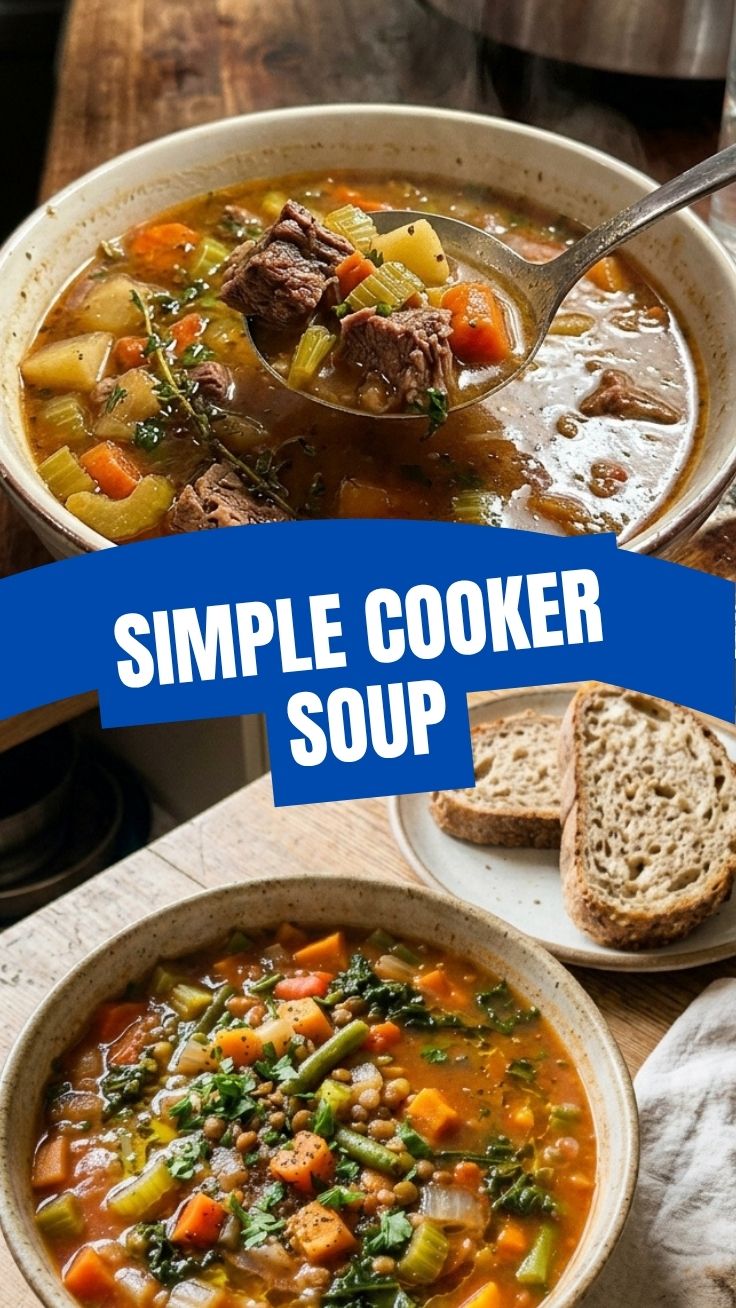
Total Active Time: 20 minutes
Total Cook Time: 6–8 hours on LOW or 3–4 hours on HIGH
Resting Time: 10 minutes before serving (allows flavors to settle)
Plan your timing strategically: if you start preparation at 7:00 AM and cook on LOW, your soup will be ready around 1:00–2:00 PM for an early lunch, or you can let it continue warming until dinner. For evening meals, a 9:00 AM start works perfectly. The LOW setting produces noticeably better flavor development because the extended time allows vegetable sugars to caramelize gently and seasonings to penetrate fully. HIGH setting works when you need faster results, but the vegetables may become slightly softer and the broth less deeply flavored.
The soup remains excellent if held on WARM setting for up to 2 additional hours. Beyond that, vegetables continue softening and may lose textural appeal. If your schedule demands longer holding, consider adding delicate ingredients like zucchini or greens at the end rather than the beginning.
Step-by-Step Instructions
Step 1: Prepare Your Vegetables (10 minutes)
Begin by washing all produce thoroughly under cool running water. Dice the onion into uniform ½-inch pieces—consistency here ensures even cooking. Slice carrots and celery into similarly sized pieces. The zucchini and bell pepper should be cut to match the carrot size. Uniform cutting prevents some pieces from turning to mush while others remain crunchy.
Step 2: Build the Flavor Foundation (5 minutes)
Heat olive oil in a large skillet over medium heat. Add the diced onion and cook, stirring occasionally, until translucent—approximately 4 minutes. Add the minced garlic and cook for 30 seconds until fragrant. This brief sautéing step unlocks flavors that simply layering raw ingredients into the slow cooker cannot achieve. If you are truly pressed for time, you can skip this step, but the flavor difference is substantial enough that I rarely skip it.
Step 3: Layer Ingredients in the Slow Cooker (3 minutes)
Transfer the sautéed onion and garlic to your slow cooker. Add the carrots, celery, zucchini, bell pepper, diced tomatoes with their juices, and vegetable broth. Sprinkle dried thyme, smoked paprika, black pepper, and salt over the top. Stir gently to distribute everything. Place the lid securely.
Step 4: Set and Cook (6–8 hours)
Cook on LOW for 6–8 hours or HIGH for 3–4 hours. About 30 minutes before serving, taste the broth and adjust seasoning. This is your opportunity to add more salt, pepper, or a splash of lemon juice for brightness. If you are adding greens or chickpeas, stir them in now. This healthy slow cooker soup reaches its peak flavor when the vegetables are tender but still hold their shape. For a heartier variation, you can also prepare a slow cooker chicken soup during the same session to enjoy two different meals from one cooking day.
Step 5: Rest and Serve (10 minutes)
Turn off the slow cooker and let the soup rest for 10 minutes before ladling into bowls. This brief resting period allows the flavors to meld and the temperature to become comfortably serving-hot. Garnish with fresh herbs, a drizzle of olive oil, or a sprinkle of nutritional yeast for a cheesy note without dairy.
Nutritional Benefits & Advantages
This soup delivers impressive nutritional density across multiple categories. The vegetable medley provides over 400% of your daily vitamin A requirement from carrots alone, supporting eye health and immune function. Lycopene from the tomatoes becomes more bioavailable through cooking, offering cardiovascular protection. The olive oil supplies monounsaturated fats that aid absorption of fat-soluble vitamins A, D, E, and K present in the vegetables.
Fiber content ranges from 6–8 grams per serving, depending on added legumes or grains, which supports digestive health and sustained energy release. The low sodium approach—using unsalted broth and controlling added salt—keeps each serving under 300mg, significantly lower than canned alternatives that often exceed 800mg per serving.
For those managing weight, this soup provides substantial volume with relatively few calories (approximately 180–220 per serving), promoting satiety without caloric density. The hydration from the broth base contributes to overall fluid intake, often overlooked but crucial for energy levels and skin health.
Tips, Variations & Cooking Advice
Flavor Twists:
– Add 1 tablespoon tomato paste with the garlic for deeper umami notes
– Stir in ½ cup coconut milk at the end for creamy richness without dairy
– Sprinkle red pepper flakes for heat; start with ¼ teaspoon and adjust upward
– Add a Parmesan rind during cooking for nutty, savory depth (remove before serving)
Ingredient Swaps:
– Replace zucchini with yellow squash for similar texture but different nutrients
– Substitute sweet potatoes for carrots when you want a sweeter, heartier base
– Use fire-roasted crushed tomatoes instead of diced for smoother consistency
– Try chicken bone broth instead of vegetable broth for added protein and collagen
Dietary Adaptations:
– Gluten-free: This recipe is naturally gluten-free as written; verify broth labels
– Dairy-free: The base recipe contains no dairy; skip optional Parmesan
– Low-FODMAP: Omit onion and garlic; use garlic-infused oil and leek greens instead
– Keto-friendly: Reduce carrots and add more zucchini, bell pepper, and olive oil
Alternative Cooking Methods:
– Instant Pot: Sauté using the Sauté function, then pressure cook on HIGH for 8 minutes with natural release
– Stovetop: Simmer in a covered Dutch oven for 45–60 minutes until vegetables are tender
– Oven: Roast vegetables first at 400°F for 25 minutes, then transfer to a pot with broth and simmer for 20 minutes
Common Mistakes to Avoid
Adding Delicate Vegetables Too Early
Zucchini and greens become unpleasantly mushy if cooked for the full duration. Add zucchini during the last hour and tender greens during the final 15 minutes. This preserves their texture and nutritional value.
Using Too Much Liquid
Slow cookers produce condensation that adds extra liquid. Start with 6 cups of broth rather than 8, especially if you add watery vegetables like zucchini and tomatoes. You can always thin the soup at the end, but you cannot easily thicken it.
Skipping the Sauté Step
Raw garlic and onion placed directly into the slow cooker develop a harsh, sulfurous flavor rather than the sweet, mellow notes achieved through quick sautéing. This extra 5 minutes makes a profound difference in the final taste.
Overcrowding the Slow Cooker
Fill the insert no more than two-thirds full for proper heat circulation and even cooking. Overfilling leads to undercooked vegetables on top and overcooked ones at the bottom.
Seasoning Only at the Beginning
Salt and herbs can dull during extended cooking. Season conservatively at the start, then adjust during the final hour. Acid from lemon juice or vinegar should always be added at the end, as heat diminishes its brightening effect.
Storage & Meal Prep Tips
Refrigeration: Cool the soup completely before transferring to airtight containers. It keeps well for 4–5 days in the refrigerator. Glass containers with tight-sealing lids prevent flavor absorption from other foods.
Freezing: Portion cooled soup into freezer-safe bags or containers, leaving 1 inch of headspace for expansion. Lay flat bags freeze more efficiently and stack neatly. Properly frozen soup maintains quality for 3–4 months. For best results, omit any dairy-based garnishes before freezing.
Reheating: Thaw frozen soup overnight in the refrigerator. Reheat gently on the stovetop over medium-low heat, stirring occasionally. The microwave works for single servings at 70% power in 2-minute intervals, stirring between each. If the soup thickens during storage, add a splash of broth or water to restore the original consistency.
Meal Prep Strategy: Double the recipe on Sunday and portion into individual containers for grab-and-go lunches throughout the week. Store garnishes separately to maintain freshness. This approach saves approximately 3 hours of cumulative cooking time across the week.
Conclusion
This recipe proves that nourishing, deeply flavorful meals do not require complicated techniques or expensive ingredients. The healthy slow cooker soup method delivers consistent results that rival restaurant quality, while the flexibility allows you to adapt based on seasonal produce and personal preferences. I encourage you to make this recipe your own—experiment with different herb combinations, try adding a can of cannellini beans for extra protein, or prepare a batch of slow cooker chicken soup using the same foundational technique. Share your results in the comments below, and subscribe for more time-saving, health-focused recipes that fit seamlessly into busy lifestyles.
Frequently Asked Questions
Can I use frozen vegetables instead of fresh?
Absolutely. Frozen vegetables work well, though they release more liquid during cooking. Reduce the broth by 1 cup to compensate. Add frozen vegetables directly without thawing, but understand that they will become softer than fresh ones because freezing already damages cell walls.
Why does my soup taste bland?
The most common culprit is under-seasoning. Slow cooking mutes flavors, so you need more seasoning than you might expect. Add salt gradually during the final hour, taste, and repeat. A finishing splash of lemon juice or vinegar often transforms a flat soup into a vibrant one.
Can I make this soup in advance for a party?
Yes, and it actually improves with age. Prepare it 1–2 days ahead, cool completely, and refrigerate. The flavors continue developing overnight. Reheat gently on the stovetop or in the slow cooker on LOW for 1–2 hours before serving.
How do I thicken the soup if it is too watery?
Remove the lid for the final 30 minutes of cooking to allow evaporation. Alternatively, mash some of the cooked vegetables directly in the pot with a potato masher. For a smoother approach, remove 1 cup of cooked vegetables, blend until smooth, and stir back in.
Can I add meat to this recipe?
Certainly. Add 1 pound of cooked shredded chicken or ground turkey during the final hour. For raw chicken breasts or thighs, place them in the slow cooker at the beginning with the vegetables, then shred them before serving. Adjust cooking time to ensure meat reaches safe internal temperature.
Quick way to grow healthy slow cooker soup in 20 minutes
Ingredients
Equipment
Method
- Combine chicken broth, mixed vegetables, cooked chicken, pasta, diced tomatoes, and dried herbs in a slow cooker.
- Cover and cook on high for 2-3 hours, or on low for 4-6 hours, until pasta is tender and vegetables are cooked through.
- Season with salt and pepper to taste before serving. Adjust seasonings as needed.
- Serve hot and enjoy your quick, healthy slow cooker soup. Garnish with fresh herbs if desired for extra flavor.