Master the Art of Texas BBQ Brisket: Your Ultimate Home-Cooked Guide
Ever wondered how those melt-in-your-mouth, smoky slices of beef, celebrated across Texas, are truly made? Preparing the quintessential BBQ Brisket (Texas Style) at home might seem daunting, but with the right guidance, it’s an incredibly rewarding culinary journey. Imagine the aroma filling your kitchen, the anticipation building as you transform a humble cut of beef into a masterpiece. This blog post isn’t just a recipe; it’s your comprehensive guide to achieving tender, flavorful smoked brisket, bringing the authentic taste of the Lone Star State right to your dining table. Forget expensive restaurant bills – we’re empowering you to become a BBQ pitmaster in your own backyard!
Ingredients & Kitchen Tools
- 1 whole packer brisket (12-16 lbs): Look for USDA Prime or Choice grade with good marbling. The “packer” includes both the flat and the point.
- Coarse black pepper (1/2 cup): Essential for the classic Texas bark. Freshly ground is best.
- Coarse salt (1/4 cup): Kosher or sea salt for optimal adherence and flavor.
- Granulated garlic (2 tbsp): Adds a subtle, aromatic depth.
- Smoker: Offset, pellet, or electric – choose your weapon!
- Wood chunks/chips: Oak, post oak, or hickory are traditional for Texas brisket. Don’t use too much; a little goes a long way.
- Instant-read thermometer: Crucial for monitoring internal temperature accurately.
- Butcher paper (unwaxed): For wrapping the brisket during the stall. Helps retain moisture.
- Heavy-duty aluminum foil: An alternative to butcher paper if unavailable.
- Large cutting board: For carving, preferably with a juice groove.
- Sharp carving knife: A long, thin blade for clean slices.
- Water pan (optional): To maintain humidity in your smoker, especially in dry climates.
- Spray bottle (optional): For spritzing with apple cider vinegar or water during the cook.
Prep Time & Cooking Schedule
- Prep Time: 30-60 minutes (trimming and seasoning)
- Cooking Time: 10-18 hours (depending on brisket size and smoker temperature)
- Resting Time: 2-4 hours (crucial for tenderness)
This recipe requires significant time commitment, often an overnight cook. Plan to start your brisket 12-18 hours before you intend to serve it, allowing ample time for the cook and the indispensable resting period. A good rule of thumb is 1-1.5 hours per pound at 250°F (120°C) after trimming, but always cook to temperature, not time.
Step-by-Step Instructions
1. Trim the Brisket: Start by trimming excess hard fat off your whole packer brisket, leaving about ¼ inch of fat cap on both sides. This fat will render and keep the meat moist. Remove any silver skin from the lean side.
2. Season Generously: In a bowl, mix your coarse salt, coarse black pepper, and granulated garlic to create a simple yet classic Texas-style rub. Apply it liberally and evenly over the entire brisket, pressing it gently to ensure it adheres. Let it sit at room temperature for 30 minutes to an hour while you preheat your smoker.
3. Preheat Your Smoker: Set your smoker to a consistent temperature of 250-275°F (120-135°C). Add your chosen wood chunks; you want a clean, thin blue smoke, not thick white smoke, which can impart a bitter flavor.
4. Smoke the Brisket (Unwrapped): Place the seasoned brisket, fat cap up (or toward the primary heat source), directly on the smoker grates. Close the lid and maintain your temperature. Smoke for approximately 5-8 hours, or until the bark has set and the internal temperature reaches 165-175°F (74-80°C). You can spritz the brisket every 1-2 hours with apple cider vinegar or water to keep it moist and promote a better bark. This initial phase is where the magic happens, infusing that deep, smoky flavor into your BBQ Brisket (Texas Style).
5. Hit the Stall & Wrap: Once the brisket reaches 165-175°F, it will often enter the “stall”—a period where its temperature plateaus due to evaporative cooling. This is the perfect time to wrap it. Tightly wrap the smoked brisket in butcher paper (or foil), adding a splash of beef broth or apple juice for extra moisture if desired. Return the wrapped brisket to the smoker.
6. Continue Cooking: Continue smoking until the internal temperature reaches 200-205°F (93-96°C) and the brisket is “probe tender” – meaning an instant-read thermometer slides into the meat with very little resistance, like pushing it into warm butter. This can take another 4-8 hours.
7. Rest, Rest, Rest: This is arguably the most critical step! Once probe tender, remove the wrapped brisket from the smoker. Place it in a cooler (without ice) or an oven set to its lowest “keep warm” setting (around 150-170°F / 65-77°C) for a minimum of 2 hours, and ideally 3-4 hours. This allows the collagen to break down further and the juices to redistribute, resulting in incredibly tender and moist meat.
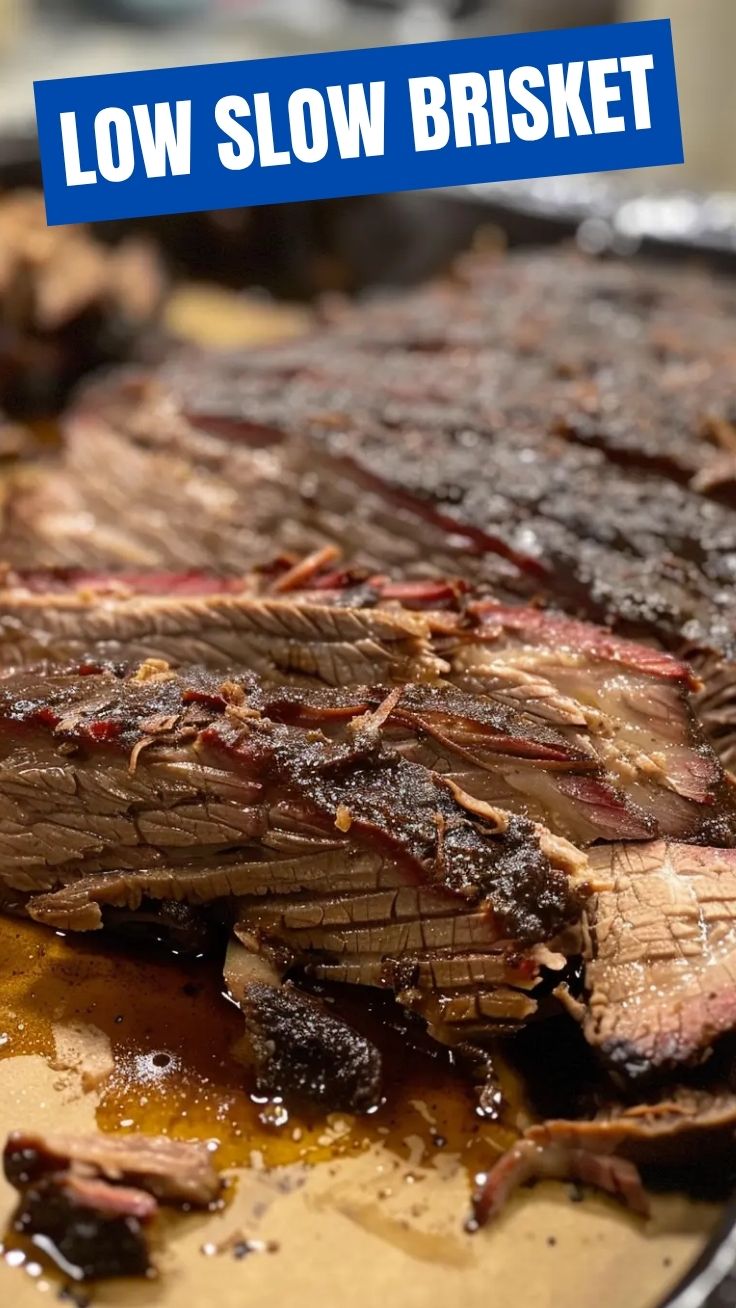
8. Slice and Serve: Unwrap the brisket and discard any excess fat rendered in the paper. Separate the flat from the point. Slice the flat against the grain into pencil-thick slices. For the point, you can cube it for burnt ends or slice it against its own grain, which runs differently from the flat. Serve immediately and enjoy your hard work!
Nutritional Benefits & Advantages
Brisket, especially when prepared with a simple rub like this, offers significant nutritional benefits. It’s a rich source of protein, essential for muscle building and repair. It also provides important iron for oxygen transport and zinc for immune health. While it does contain saturated fat, trimming excess fat before smoking helps manage intake. The slow smoking process can also reduce the need for excessive added sugars often found in commercial BBQ sauces, making it a more wholesome choice.
Tips, Variations & Cooking Advice
- Wood Choice: While oak is king, experimenting with a small amount of cherry or pecan can add a subtle sweetness to the smoke profile.
- Fat Side Up or Down?: This is a debated topic. Fat side up allows rendered fat to baste the meat, while fat side down can protect the lean side from direct heat. Experiment to see what works best in your smoker.
- The “Boat” Method: Instead of fully wrapping in butcher paper, some pitmasters create a “boat” by folding the paper around the brisket, leaving the top exposed to maintain bark crispness while still retaining moisture.
- Burnt Ends: The point of the brisket is perfect for burnt ends. After separating, cube the point, toss with extra rub and a touch of BBQ sauce, and return to the smoker for another 1-2 hours until caramelized and tender.
- Monitoring Temperature: Always rely on a good instant-read thermometer and potentially a leave-in probe for consistent internal temperature monitoring.
Common Mistakes to Avoid
- Rushing the Rest: Skipping or shortening the rest period is the biggest mistake. It leads to dry, tough brisket. Be patient!
- Over-Trimming Fat: While excess fat should go, too little fat can result in dry meat. That ¼ inch layer is important.
- Too Much Smoke: Using too much wood or having thick, white smoke will make your brisket taste acrid and bitter. Aim for a light, thin blue smoke.
- Cooking to Time, Not Temperature: Every brisket is different. Always cook until it’s probe tender, not just until a certain amount of time has passed.
- Incorrect Slicing: Slicing with the grain will make the brisket stringy and tough. Always slice against the grain for maximum tenderness.
Storage & Meal Prep Tips
Leftover Brisket? You’re in for a treat!
- Refrigeration: Store leftover BBQ Brisket (Texas Style) in an airtight container for up to 3-4 days. For best results, slice only what you intend to eat immediately to preserve moisture.
- Freezing: For longer storage, slice the brisket and vacuum seal or wrap tightly in plastic wrap then foil. It can be frozen for up to 3 months. Thaw in the refrigerator overnight.
- Reheating: To maintain moisture, reheat slices wrapped in foil in a preheated oven at 250-275°F (120-135°C) until warm, or gently steam in a covered dish with a splash of beef broth. Avoid microwaving if possible, as it can dry out the meat. Reheating slowly ensures the texture remains tender.
Conclusion
Crafting authentic BBQ Brisket (Texas Style) at home is a journey of patience, precision, and passion, but the reward is undeniably worth every minute. From that initial robust rub to the final, tender slice of smoked brisket, you’ve mastered the techniques to create a true culinary masterpiece. Don’t be afraid to experiment, learn from every cook, and most importantly, enjoy the process. We encourage you to try this recipe, share your mouth-watering results in the comments, and embark on your own path to becoming a backyard BBQ legend!
FAQs
Q1: What’s the best wood for Texas-style brisket?
A1: Post oak is traditional, but red oak and hickory are excellent and widely available alternatives that impart a classic smoky flavor without being overpowering.
Q2: My brisket stalled longer than expected. What should I do?
A2: This is normal! The stall can last several hours. Resist the urge to increase the smoker temperature drastically, as this can dry out the meat. Continue to maintain a consistent temperature, and trust the process. Wrapping it earlier can sometimes help push through the stall faster.
Q3: How do I know when my brisket is perfectly rested?
A3: The resting period is crucial. You’ll know it’s ready when the internal temperature has dropped slightly (to around 140-150°F / 60-65°C) and the meat has had ample time to reabsorb its juices, feeling incredibly relaxed and tender to the touch (through the wrapping).
Q4: Can I make this in an electric smoker?
A4: Yes, an electric smoker can yield great results. Ensure you use wood chips designed for electric smokers and follow the temperature guidelines. The main difference might be a slightly less intense smoke flavor compared to an offset smoker.
Q5: What’s the difference between the flat and the point?
A5: The flat is the leaner, often rectangular portion, ideal for slicing. The point is the fattier, more marbled section that sits on top of the flat. It’s perfect for pulled brisket or making burnt ends.
Proven way to grow your BBQ Brisket (Texas Style) in 3 steps
Ingredients
Equipment
Method
- Trim the brisket to remove excess hard fat, leaving about 1/4 inch of fat cap for moisture.
- Combine all dry rub ingredients: black pepper, kosher salt, smoked paprika, garlic powder, and onion powder.
- Generously apply the rub all over the brisket, ensuring it's evenly coated, then let it rest in the refrigerator for at least 4 hours, or preferably overnight.
- Preheat your smoker to a consistent 250°F (120°C) with your preferred wood (oak or hickory are recommended for Texas-style brisket).
- Place the brisket fat-side up on the smoker, inserting a probe thermometer into the thickest part of the flat.
- Maintain the smoker temperature and cook until the internal temperature reaches 165-170°F (74-77°C), which typically takes 6-8 hours; spritz every 2-3 hours with basting liquid to keep it moist.
- Once the brisket forms a good bark and reaches the target temperature, wrap it tightly in butcher paper or aluminum foil and return it to the smoker.
- Continue cooking until the internal temperature is between 200-205°F (93-96°C) and the brisket is probe-tender, which usually takes an additional 4-6 hours.
- Remove the brisket from the smoker and let it rest, still wrapped, in an insulated cooler or oven (turned off) for 2-4 hours to allow juices to redistribute.
- Unwrap the brisket and slice it against the grain, serving immediately with your favorite BBQ sides.