The Ultimate Homemade Greek Salad: A Fresh and Vibrant Mediterranean Classic
Have you ever wondered why a simple combination of vegetables and feta cheese can taste so incredibly satisfying? The answer lies in the quality of fresh ingredients and the perfect balance of flavors. Making a traditional Greek Salad at home is not only remarkably easy but also allows you to control every ingredient for maximum freshness and authenticity. This vibrant dish, which is a cornerstone of Mediterranean cuisine, is perfect for a light lunch, a side dish, or a refreshing dinner. Preparing it from scratch ensures you get the highest quality produce, a perfect tangy dressing, and none of the preservatives found in store-bought versions.
Ingredients & Kitchen Tools
Required Ingredients
– 3 large ripe tomatoes (preferably Roma or vine-ripened) – The foundation of the salad, providing sweetness and juiciness.
– 1 large English cucumber – Adds a cool, crisp texture.
– 1 medium red onion – Thinly sliced for a mild, sharp bite.
– 1 green bell pepper – For a mild, grassy crunch.
– 200g (7 oz) feta cheese – Use a block, not pre-crumbled, for the best creamy texture and salinity.
– ½ cup Kalamata olives – Rich, briny flavor that defines the dish.
– 3 tablespoons extra-virgin olive oil – The heart of the dressing; use the best quality you can find.
– 1 tablespoon red wine vinegar – For a bright, tangy finish.
– 1 teaspoon dried oregano – Essential for that authentic, herbaceous aroma.
– Salt and freshly ground black pepper – To taste.
Kitchen Tools
– Large mixing bowl – For assembling the salad.
– Sharp chef’s knife and cutting board – For precise dicing and slicing.
– Small bowl or jar – For whisking or shaking the dressing.
– Salad servers or tongs – For gentle tossing.
Optional Substitutions
– Swap Kalamata olives for green olives if you prefer a milder brininess.
– Use cherry tomatoes instead of larger tomatoes for a sweeter, more concentrated flavor.
– Substitute red wine vinegar with fresh lemon juice for a citrusy twist.
Prep Time & Cooking Schedule
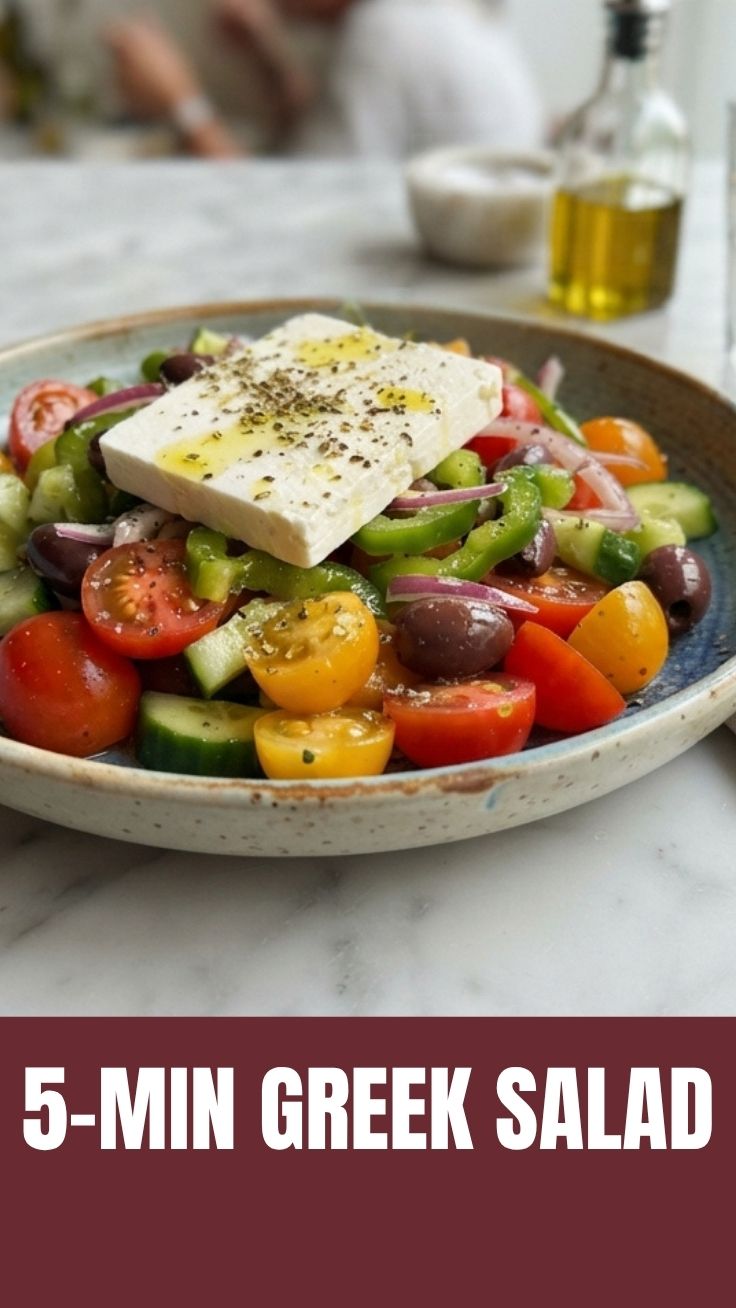
– Prep Time: 15 minutes
– Cook Time: 0 minutes (no cooking required)
– Resting Time: 10 minutes (optional, for flavors to meld)
– Total Time: 25 minutes
This recipe is incredibly quick and requires no heat whatsoever. Most of your time will be spent on washing, dicing, and arranging the ingredients. The optional 10-minute resting time allows the salt to draw out the tomatoes’ juices, creating a natural, flavorful base for the dressing. This is a perfect weeknight meal that can be on the table in under half an hour.
Step-by-Step Instructions
1. Prepare the Vegetables: Start by washing all your produce. Core the tomatoes and cut them into large, bite-sized chunks. Avoid over-chopping them, as you want substantial pieces that hold their shape. Peel the cucumber, slice it lengthwise, and cut it into half-moons. Thinly slice the red onion into rings or half-rings. Seed and dice the green bell pepper into small cubes.
2. Combine the Base: In your large mixing bowl, gently combine the tomatoes, cucumber, red onion, and bell pepper. Be careful not to crush the tomatoes. Once the vegetables are assembled, this is the perfect moment to add the first mention of our focus keyword and related keyword. The vibrant mix of vegetables is what gives a Greek Salad its signature crunch, and the olives provide a briny contrast that is so characteristic of Mediterranean cooking.
3. Create the Dressing: In your small bowl or jar, whisk together the extra-virgin olive oil, red wine vinegar, dried oregano, and a pinch of salt and pepper. Taste it; it should be tangy and herbaceous. Adjust the acidity or seasoning as needed.
4. Assemble and Finish: Add the Kalamata olives to the bowl with the vegetables. Pour the dressing over the top and toss gently to coat everything evenly. Do not overmix.
5. Add the Feta: This is a crucial step. Do not crumble the feta into the salad. Instead, place the block of feta on top of the dressed vegetables or cut it into thick slabs. This allows each person to take a piece and eat it with their fork, ensuring a perfect bite of creamy, salty cheese with every forkful.
6. Serve Immediately (or Rest): For the best texture, serve the salad immediately. If you have time, let it rest for 10 minutes at room temperature to allow the flavors to meld beautifully.
Nutritional Benefits & Advantages
This salad is a powerhouse of nutrition and a staple of the heart-healthy Mediterranean diet. The fresh vegetables are rich in vitamins A, C, and K, as well as antioxidants like lycopene from the tomatoes. The extra-virgin olive oil is a fantastic source of healthy monounsaturated fats, which are linked to reduced inflammation and improved heart health. Feta cheese provides calcium and protein, while Kalamata olives offer iron and vitamin E. This meal is naturally gluten-free, low-carb, and packed with fiber, making it incredibly satiating without being heavy. A single serving is typically around 250-300 calories, depending on the amount of olive oil used.
Tips, Variations & Cooking Advice
– Flavor Variations: Add a pinch of crushed red pepper for heat, or include fresh mint or basil leaves for an extra layer of freshness.
– Ingredient Swaps: For a dairy-free version, omit the feta and add avocado for creaminess. For a more filling meal, add grilled chicken, chickpeas, or canned tuna.
– Portion Changes: This recipe serves 2 as a main course or 4 as a side. Scale it up easily by doubling the ingredients.
– Dietary Adaptations: This is naturally vegetarian, gluten-free, and low-carb. To make it vegan, simply skip the feta (or use a vegan feta alternative).
Common Mistakes to Avoid
– Using Pre-Crumbled Feta: This feta is often coated in anti-caking agents, making it dry and less flavorful. Always buy a block of feta in brine.
– Overdressing or Overmixing: A light drizzle is enough. Too much dressing will make the salad soggy. Mix gently with your hands to avoid crushing the tomatoes.
– Skipping the Salt on the Tomatoes: A pinch of salt on the tomatoes before dressing draws out their juices, creating a natural, flavorful base. Do not skip this step.
– Adding the Feta Too Early: If you crumble the feta into the salad too early, it will dissolve into a messy, salty paste. Keep it in large pieces until serving.
Storage & Meal Prep Tips
– Storage: Store any leftover salad in an airtight container in the refrigerator for up to 24 hours.
– Refrigeration vs. Freezing: Do not freeze. The vegetables will become mushy and watery upon thawing.
– Freshness: The salad is best eaten fresh. After 24 hours, the vegetables will release water and become softer, though it’s still safe to eat.
– Reheating: This is a cold dish; do not reheat it.
– Meal Prep Hack: You can prepare the chopped vegetables and dressing separately up to 2 days in advance. Store the vegetables in the fridge and the dressing at room temperature. Assemble just before serving to maintain the best crunch.
Conclusion
In summary, making a fresh Greek Salad at home is a simple, rewarding, and incredibly healthy culinary experience. By using five-star ingredients and following these easy steps, you can create a dish that is far superior to anything you can buy pre-made. The symphony of crisp vegetables, salty feta, and bright oregano is a true celebration of Mediterranean cuisine. We encourage you to try this recipe, share your beautiful creation on social media, and explore more authentic dishes on our blog.
FAQs
1. Can I use lemon juice instead of red wine vinegar?
Yes, absolutely. Fresh lemon juice is a fantastic substitute that adds a brighter, slightly different acidity. Use about 1.5 tablespoons of lemon juice for every 1 tablespoon of vinegar.
2. Why is my salad watery?
This usually happens if you salt the tomatoes too early or if the tomatoes are overripe. Salt the tomatoes just before adding the dressing, and consider using firmer tomatoes like Roma or vine-ripened.
3. How do I keep the feta from becoming too salty?
Soak the block of feta in cold water for 10-15 minutes before using it. This helps remove some of the excess brine. Alternatively, look for “low-sodium” feta.
4. Can I add lettuce or other greens?
While a traditional Greek Salad does not include lettuce, you can certainly add chopped Romaine or mixed greens for extra volume and crunch. Just be aware it will deviate from the classic style.
5. How long does the dressing last?
The homemade dressing (without the vegetables) can be stored in an airtight container at room temperature for up to 1 week, or in the refrigerator for up to 2 weeks. Shake well before using.
Proven way to grow the perfect Greek Salad
Ingredients
Equipment
Method
- Chop the cucumber, wedge the tomatoes, thinly slice the red onion, and slice the green bell pepper. Combine all the prepared vegetables, Kalamata olives, and crumbled feta cheese in a large salad bowl.
- In a small bowl, whisk together the extra virgin olive oil, red wine vinegar, dried oregano, salt, and black pepper to create the dressing.
- Pour the dressing over the salad ingredients and gently toss to ensure everything is evenly coated.
- Serve immediately as a refreshing side dish or a light meal.