The Ultimate Guide to Making Restaurant-Quality Hummus at Home
Have you ever wondered why store-bought hummus never quite captures that silky, melt-in-your-mouth texture you get at your favorite Mediterranean restaurant? The secret isn’t a guarded family recipe—it’s technique. When you master this hummus recipe, you unlock a world of flavor that’s fresher, healthier, and more customizable than anything you’ll find in a plastic tub. Plus, preparing it at home means you control every ingredient, from the quality of your olive oil to the amount of garlic. This creamy hummus will become your go-to for everything from quick weeknight snacks to impressive party platters.
Ingredients & Kitchen Tools
For the hummus base:
– 1 can (15 oz) chickpeas (or 1½ cups cooked) – The star ingredient. Look for low-sodium or cook dried beans for best flavor control.
– ⅓ cup tahini – Well-stirred, high-quality sesame paste is non-negotiable for authentic taste.
– 3 tablespoons fresh lemon juice – Bottled won’t cut it; fresh is brighter and less acidic.
– 2 tablespoons extra-virgin olive oil – Plus more for drizzling. Use a fruity, peppery variety.
– 1 small garlic clove – Start with one; you can always add more.
– ½ teaspoon salt – Adjust to taste.
– ¼ teaspoon cumin – Optional but adds warmth and depth.
– 2–4 tablespoons ice-cold water – The secret to fluffy texture.
Kitchen tools:
– Food processor or high-speed blender
– Fine-mesh strainer (for rinsing chickpeas)
– Small bowl (for peeling chickpeas, optional)
– Rubber spatula
– Airtight storage container
Optional substitutions:
– Swap tahini for Greek yogurt for a lighter, tangier version (though it won’t be traditional)
– Use roasted garlic instead of raw for a mellower, sweeter flavor
– Replace olive oil with avocado oil for a neutral taste
Prep Time & Cooking Schedule
– Prep time: 10 minutes (plus 5 minutes if peeling chickpeas)
– Cook time: 0 minutes (no cooking required if using canned)
– Total time: 15 minutes
– Resting time: 30 minutes (optional, for flavors to meld)
Best timing: Make this hummus recipe at least 30 minutes before serving. The flavors deepen and the texture relaxes, making it even more luscious. If you’re planning ahead, prepare it the night before—it’s one of those rare dishes that tastes better the next day.
Step-by-Step Instructions
1. Prepare the chickpeas. Drain and rinse your canned chickpeas thoroughly. For the silkiest creamy hummus, peel the skins off by gently pinching each chickpea between your thumb and forefinger. This step takes 5 minutes but makes a world of difference in texture.
2. Warm the chickpeas. Place the peeled chickpeas in a microwave-safe bowl with 1 tablespoon of water and heat for 90 seconds. Warm chickpeas blend more smoothly than cold ones, reducing graininess.
3. Blend the tahini first. In your food processor, combine the tahini and lemon juice. Process for 1 minute until thick and pale. This aerates the tahini, creating a lighter base.
4. Add the aromatics. Add the garlic, salt, and cumin. Process for 30 seconds, scraping down the sides.
5. Add the chickpeas. Add the warm chickpeas and process for 1 minute. Scrape down the sides again.
6. Stream in the water. With the processor running, slowly drizzle in 2 tablespoons of ice-cold water. Watch as the mixture transforms from a thick paste into a fluffy, cloud-like consistency. Add more water, one tablespoon at a time, until you reach your desired texture.
7. Finish with olive oil. With the processor running, add the olive oil and process for 30 seconds. Taste and adjust salt, lemon, or garlic. This hummus recipe is forgiving—trust your palate.
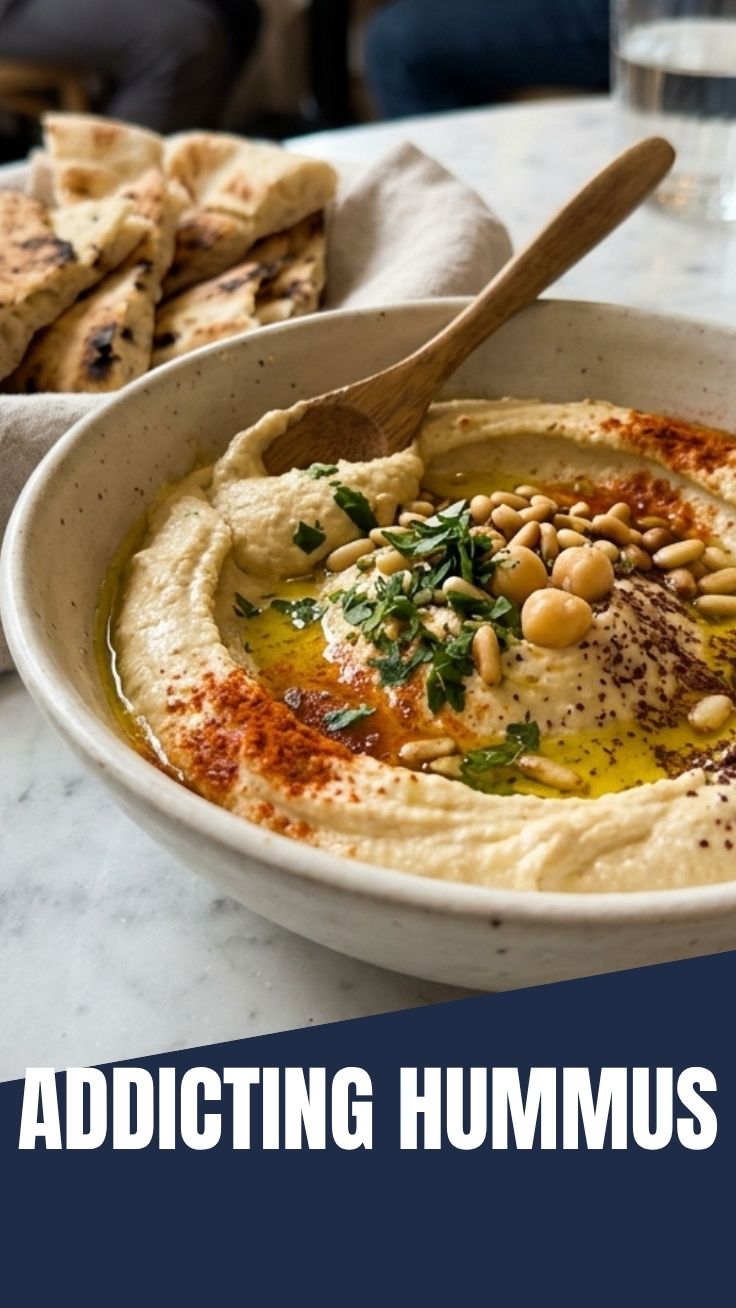
8. Serve or store. Transfer to a bowl, create a well with the back of a spoon, drizzle with olive oil, and sprinkle with paprika or sumac.
Nutritional Benefits & Advantages
This creamy hummus isn’t just delicious—it’s a nutritional powerhouse. Chickpeas provide plant-based protein and fiber, supporting digestive health and keeping you full longer. Tahini contributes calcium, iron, and healthy fats, while olive oil adds heart-healthy monounsaturated fats. A ¼-cup serving contains approximately:
– 120 calories
– 6g protein
– 10g healthy fats
– 5g fiber
– 4g carbohydrates
The combination of protein and fiber makes hummus an excellent blood sugar stabilizer, perfect for diabetics or anyone watching their energy levels. Plus, it’s naturally vegan, gluten-free, and dairy-free, making it accessible to almost any dietary preference.
Tips Variations & Cooking Advice
Flavor variations:
– Roasted red pepper: Blend in ½ cup jarred roasted red peppers for a smoky, sweet twist
– Spicy harissa: Stir in 1–2 tablespoons harissa paste for North African heat
– Sun-dried tomato: Add ¼ cup oil-packed sun-dried tomatoes for umami richness
– Herb-infused: Blend in fresh basil, parsley, or cilantro for a garden-fresh finish
Texture adjustments:
– For extra fluffiness, add ½ teaspoon baking soda to the water when warming chickpeas (this softens their skins)
– For a thinner hummus, increase water to 5–6 tablespoons
– For a thicker dip, reduce water or add an extra ¼ cup chickpeas
Dietary adaptations:
– Low-fat: Reduce olive oil to 1 tablespoon and replace tahini with Greek yogurt or silken tofu
– Low-sodium: Use no-salt-added chickpeas and adjust salt to taste
– Nut-free: This recipe is naturally nut-free, but double-check your tahini for cross-contamination if serving allergies
Common Mistakes to Avoid
1. Skipping the tahini step. Don’t be tempted to dump everything in at once. Blending tahini with lemon juice first creates a lighter, more emulsified base.
2. Using cold chickpeas. Cold chickpeas resist blending, leaving you with a grainy texture. Always warm them first.
3. Overloading on garlic. Raw garlic intensifies as it sits. Start with one clove and add more after tasting.
4. Adding too much liquid at once. Drizzle water slowly. You can always add more, but you can’t take it out.
5. Forgetting to scrape the sides. A rubber spatula is your best friend. Scrape down after every 30 seconds of processing for even consistency.
6. Serving immediately. Patience pays off. Let your hummus rest for at least 30 minutes to allow flavors to meld and texture to settle.
Storage & Meal Prep Tips
Refrigeration: Store in an airtight container for up to 5–7 days. Press plastic wrap directly onto the surface before sealing to prevent a skin from forming.
Freezing: Hummus freezes beautifully for up to 3 months. Portion into freezer-safe containers, leaving ½ inch headspace for expansion. Thaw overnight in the refrigerator.
Reheating: Bring to room temperature before serving. If you prefer it warm, microwave in 15-second bursts, stirring between each, or place the container in a bowl of warm water for 10 minutes.
Reviving leftovers: If your hummus thickens after refrigeration, stir in 1–2 teaspoons of warm water or lemon juice to restore its creamy texture.
Conclusion
Mastering this hummus recipe transforms a simple dip into a culinary staple that’s endlessly versatile and genuinely satisfying. The key takeaways are simple: warm your chickpeas, blend your tahini first, add ice water slowly, and let it rest. Whether you’re dipping vegetables, spreading on sandwiches, or serving alongside grilled meats, this creamy hummus will elevate every meal. I encourage you to try this recipe this week—experiment with the variations, share photos of your beautiful bowl, and discover why homemade hummus is so much more than a store-bought shortcut. Let me know in the comments how it turns out!
FAQs
Can I use dried chickpeas instead of canned?
Absolutely. Soak 1 cup dried chickpeas overnight, then simmer for 1–2 hours until tender. Reserve the cooking water to use instead of plain water for even more flavor.
Why is my hummus bitter?
Bitterness usually comes from tahini. Make sure your tahini is fresh and well-stirred. If it’s still bitter, balance with extra lemon juice, salt, or a pinch of sugar.
Can I make hummus without a food processor?
Yes, but it requires elbow grease. Use a potato masher or immersion blender. For smooth results, push the mixture through a fine-mesh strainer or use a mortar and pestle.
How long does homemade hummus last?
Properly stored in the refrigerator, it stays fresh for 5–7 days. If it develops an off smell or mold, discard it.
Can I add more protein to hummus?
Blend in 2 tablespoons of hemp seeds, a scoop of unflavored protein powder, or an extra ¼ cup of chickpeas. Adjust water accordingly for the right consistency.
Proven way to grow creamy Hummus in 3 steps Hummus
Ingredients
Equipment
Method
- Combine the chickpeas, tahini, lemon juice, garlic, and salt in a food processor, blending until smooth.
- With the food processor running, gradually add 2-4 tablespoons of cold water until the hummus reaches your desired creamy consistency.
- Transfer the hummus to a serving bowl, drizzle with olive oil, and sprinkle with paprika before serving.