Why Homemade Chicken Shawarma Beats Takeout Every Time
Have you ever wondered why restaurant Chicken Shawarma tastes so impossibly good—yet seems impossible to replicate at home? The secret isn’t a special oven or years of training. It’s the marinade, the technique, and understanding how heat transforms simple ingredients into something extraordinary. When you make this iconic Middle Eastern street food in your own kitchen, you control the quality of every spice, the freshness of the garlic sauce, and the perfect level of char. Plus, you save money and impress everyone at the table. Let’s break down exactly how to achieve that authentic, juicy, and boldly spiced result that rivals your favorite takeout spot—starting with the most critical step: the marinade that delivers true Chicken Shawarma flavor.
Ingredients & Kitchen Tools
For the Marinade & Chicken
– Boneless, skinless chicken thighs (1.5 lbs) – Thighs stay juicier than breasts during high-heat cooking
– Plain full-fat yogurt (¼ cup) – The acidity tenderizes; Greek yogurt works too
– Lemon juice (2 tablespoons) – Fresh only; bottled lacks brightness
– Olive oil (3 tablespoons) – Helps carry fat-soluble spices
– Ground cumin (1½ teaspoons) – Earthy backbone of shawarma spice
– Paprika (1½ teaspoons) – Sweet or smoked; adds color and depth
– Turmeric (½ teaspoon) – Golden hue and anti-inflammatory benefits
– Garlic (4 cloves, minced) – Non‑negotiable for boldness
– Salt and black pepper – To taste
For Serving (Optional but Recommended)
– Warm pita bread or flatbread
– Garlic sauce (toum) or tahini
– Sliced cucumbers, tomatoes, pickled turnips
– Fresh parsley or mint
Kitchen Tools
– Mixing bowls – One large for marinade, one small for sauce
– Measuring spoons – Precision matters for spice balance
– Chef’s knife and cutting board
– Cast iron skillet or heavy grill pan – Retains high heat for char
– Tongs – For flipping without piercing the meat
– Instant-read thermometer – Target 165°F internal for safety; 175°F for shreddable texture
Optional substitutions: Swap yogurt for coconut cream (dairy-free); use chicken breasts but reduce cook time by 3–4 minutes; replace cumin with coriander for a milder flavor.
Prep Time & Cooking Schedule
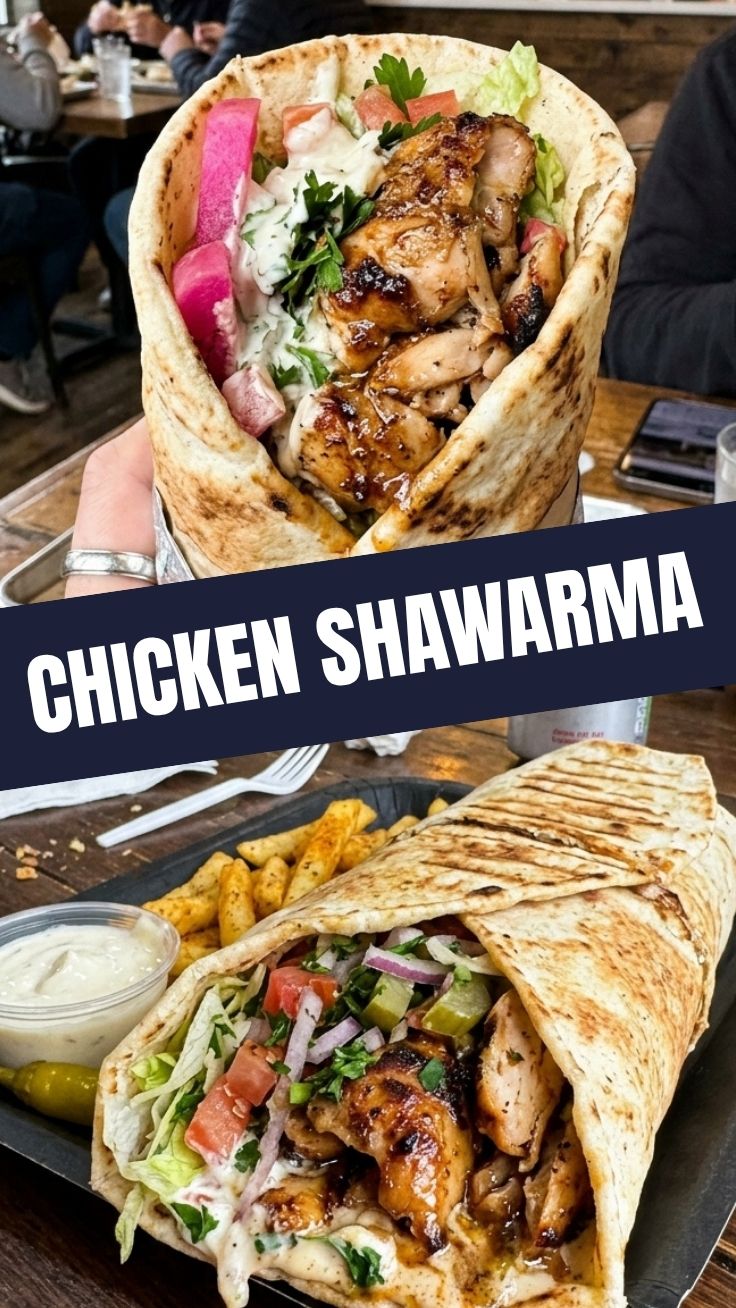
– Marinating time: 2 hours minimum (overnight for best depth) – plan ahead
– Prep time: 15 minutes (mix marinade, slice vegetables, measure spices)
– Cook time: 12–14 minutes over medium-high heat
– Resting time: 5 minutes after cooking (rethermalization improves juiciness)
– Total time from start to plate: 2 hours 30 minutes (if marinating 2 hours)
Context to help you plan: The marinade does the heavy lifting. Prep it the night before; the next day you’ll have dinner on the table in under 20 minutes. If you’re short on time, use a quick 30‑minute marinade—just don’t skip the yogurt step; it’s what keeps the meat tender during high‑heat searing.
Step-by-Step Instructions
1. Make the marinade: In a large bowl, whisk together yogurt, lemon juice, olive oil, cumin, paprika, turmeric, garlic, salt, and pepper. The paste should be thick but spreadable.
2. Marinate the chicken: Add chicken thighs, turning to coat every surface. Cover and refrigerate for at least 2 hours (or overnight).
3. Preheat your pan: Place a cast iron skillet over medium-high heat for 3 minutes. You want it ripping hot—water droplets should dance on the surface. This ensures a deep, caramelized sear that mimics a spit‑roasted texture.
4. Cook the chicken: Place thighs in a single layer—don’t crowd the pan. Cook 6–7 minutes per side. Look for a Grilled appearance with dark brown spots, not burnt black. Flip only once to preserve crust.
5. Rest and slice: Transfer to a cutting board, tent with foil, and let rest 5 minutes. Then slice against the grain into thin strips.
6. Serve immediately: Pile onto warm pita with garlic sauce and fresh vegetables.
> Pro tip on temperature control: If your pan starts smoking heavily, reduce heat slightly. You want sizzle, not smoke detector activation. For texture cues: the chicken should feel firm but give slightly when pressed; an internal temp of 170°F means perfectly cooked thighs that will shred beautifully.
This method produces authentically spiced Chicken Shawarma that rivals any restaurant version, thanks to the marinade that penetrates deeply and the high‑heat sear that creates that unmistakable charred exterior—a true Grilled masterpiece.
Nutritional Benefits & Advantages
Chicken thighs provide more iron and zinc than breasts, plus vitamin B6 for energy metabolism. The marinade’s turmeric offers curcumin, a potent anti‑inflammatory compound, while garlic supports immune function. Using yogurt as a base adds probiotics and calcium without heavy cream. When served with fresh vegetables and whole‑wheat pita, this meal delivers lean protein, fiber, and healthy fats in a balanced, satisfying package. One serving (about 4 ounces of cooked chicken with sides) contains roughly 350–400 calories, 28g protein, and 15g fat—making it a smart choice for muscle maintenance and satiety.
Tips, Variations & Cooking Advice
– Flavor twist: Add 1 teaspoon of ground allspice or cinnamon for a warmer profile
– Ingredient swap: Use beef flank steak or lamb shoulder; increase cook time by 2–3 minutes per side
– Alternative cooking methods: Oven‑broil on a rimmed baking sheet (6–8 minutes per side, rack 6 inches from heat); or use an air fryer at 400°F for 10–12 minutes, shaking halfway
– Dietary adaptations: Dairy‑free? Omit yogurt and use 2 tablespoons extra olive oil plus 1 tablespoon apple cider vinegar; gluten‑free? Serve over rice or in lettuce wraps
– Portion adjustments: Double the marinade recipe for larger crowds; leftovers keep well for meal prep
Common Mistakes to Avoid
– Skipping the marinade rest: Yogurt needs time to break down proteins; 2 hours minimum is non‑negotiable
– Cooking cold chicken: Let marinated chicken sit at room temperature 15 minutes before cooking—cold meat seizes on the pan
– Overcrowding the skillet: Steam replaces sear; cook in batches if needed
– Flipping too often: Each flip resets crust formation; flip exactly once when deep golden brown
– Slicing immediately: Resting allows juices to redistribute; skipping this yields dry strips
– Underseasoning the marinade: Shawarma relies on bold spice; taste the raw marinade (yes, it’s safe) and adjust salt before adding chicken
Storage & Meal Prep Tips
Refrigeration: Store sliced chicken in an airtight container with pan juices for up to 4 days. Keep garlic sauce and vegetables separate to avoid sogginess.
Freezing: Freeze cooked, unsliced thighs in a single layer on a baking sheet, then transfer to freezer bags. Thaw overnight in the fridge. Reheating: For best texture, reheat in a dry skillet over medium heat for 2–3 minutes per side—this restores the Grilled crust. Microwaving works but softens the exterior; use 30‑second bursts at 50% power. Meal prep idea: Marinate chicken on Sunday, cook and slice Monday morning, portion into containers with rice and veggies for grab‑and‑go lunches all week.
Conclusion
Making Chicken Shawarma at home isn’t just about saving money—it’s about mastering a technique that transforms ordinary thighs into something spectacular. The marinade, the high‑heat sear, the careful resting—each step builds flavor and texture that store‑bought versions can’t touch. Whether you serve it in warm pita, over rice, or in a salad, this recipe delivers consistent, crowd‑pleasing results every time. Give it a try this weekend; the aroma alone will convince you. And if you nail that perfect Grilled char? You’ll never order takeout again. Share your results in the comments—I’d love to see how yours turns out.
FAQs
Q: Can I use chicken breast instead of thighs?
A: Yes, but reduce cook time to 4–5 minutes per side and check internal temp at 160°F (carryover cooking will bring it to 165°F). Breasts dry out faster, so don’t skip the rest step.
Q: What if I don’t have a cast iron skillet?
A: Use a stainless steel pan or a nonstick skillet. Avoid nonstick over high heat for prolonged periods; medium-high is fine. For outdoor cooking, a Grilled version on a charcoal grill adds authentic smokiness.
Q: How can I make the garlic sauce (toum) at home?
A: Blend 1 head of peeled garlic cloves, 1 teaspoon salt, 2 tablespoons lemon juice, and 1 cup neutral oil (drizzle slowly while blending). It emulsifies into a creamy, pungent sauce that keeps for 2 weeks refrigerated.
Q: The chicken came out dry—what went wrong?
A: Most likely overcooked or not marinated long enough. Use a thermometer and pull at 170°F for thighs. Also check that your marinade had enough yogurt (acidity) and at least 2 hours of rest time.
Q: Can I cook this in an air fryer?
A: Absolutely. Preheat air fryer to 400°F, cook thighs in a single layer for 10–12 minutes, flipping halfway. No oil spray needed; the marinade provides enough fat. Rest before slicing.
Best way to grow perfect Chicken Shawarma 7 minutes
Ingredients
Equipment
Method
- Slice the chicken breast thinly and toss it with shawarma seasoning, olive oil, and lemon juice.
- Heat a large skillet or frying pan over medium-high heat.
- Add the seasoned chicken to the hot pan and spread it in a single layer.
- Cook for 3-4 minutes per side, stirring occasionally, until the chicken is cooked through and lightly browned.
- Remove from heat and serve immediately in pitas, wraps, or over rice.