The Ultimate Mediterranean Bowl: Why This Greek Salad Recipe Deserves a Permanent Spot in Your Meal Rotation
Have you ever taken a bite of something so fresh, so vibrant, and so perfectly balanced that you instantly felt transported to a sun-drenched taverna overlooking the Aegean Sea? That’s the magic of a well-made Greek Salad. While it may seem simple—just vegetables, olives, and feta—achieving that restaurant-quality harmony of briny, tangy, and crisp flavors requires technique. Preparing this dish at home not only saves money but also lets you control every element, from the ripeness of your tomatoes to the quality of your olive oil. This comprehensive guide will walk you through a foolproof Greek Salad Recipe that delivers consistent, crave-worthy results every time.
Ingredients & Kitchen Tools
Essential Ingredients
– 6 large ripe Roma tomatoes – Cut into wedges; use in-season tomatoes for maximum sweetness.
– 1 large English cucumber – Halved lengthwise, then sliced into half-moons; no need to peel.
– 1 medium red onion – Thinly sliced into rings; soak in cold water for 10 minutes to reduce sharpness.
– 1 green bell pepper – Seeded and sliced into rings; adds crunch and mild sweetness.
– 1 cup Kalamata olives – Pitted; their brine adds essential saltiness.
– 8 oz block feta cheese – Never pre-crumbled; slice into thick slabs or cubes for authentic texture.
– 3 tbsp extra-virgin olive oil – Use a fruity, high-quality oil; it’s the backbone of the dressing.
– 2 tbsp red wine vinegar – Balances richness; substitute lemon juice for a brighter tang.
– 1 tsp dried oregano – Rub between palms to release oils before sprinkling.
– Sea salt and black pepper – To taste; go light on salt due to feta and olives.
– Optional: Fresh parsley, capers, or a pinch of dried mint for complexity.
Kitchen Tools
– Large mixing bowl – Wide enough for tossing without spilling.
– Chef’s knife and cutting board – For precise vegetable prep.
– Small jar or bowl – For whisking the vinaigrette.
– Serving platter – A shallow, wide dish helps ingredients stay visible and not steam.
Prep Time & Cooking Schedule
– Prep Time: 15 minutes
– Chill Time (optional): 10–15 minutes for flavors to meld
– Total Time: 15–30 minutes
This salad is best served immediately after assembling to maintain crisp texture. However, you can prep the vegetables up to 2 hours ahead and store them in the refrigerator in a sealed container—just add the dressing, feta, and olives right before serving. If you plan to serve it as part of a larger meal, chop everything first, then assemble while your main dish rests.
Step-by-Step Instructions
1. Prepare the vegetables: Cut tomatoes into wedges about 1-inch thick. Slice cucumber into half-moons, not too thin—you want a sturdy bite. Halve the bell pepper, remove seeds, and slice into rings. Thinly slice the red onion, then soak in ice water for 10 minutes to remove harshness. Drain and pat dry.
2. Make the dressing: In a small jar, combine the olive oil, red wine vinegar, oregano, salt, and pepper. Shake vigorously until emulsified. Taste and adjust—you want a tangy, peppery vinaigrette that balances the creamy feta.
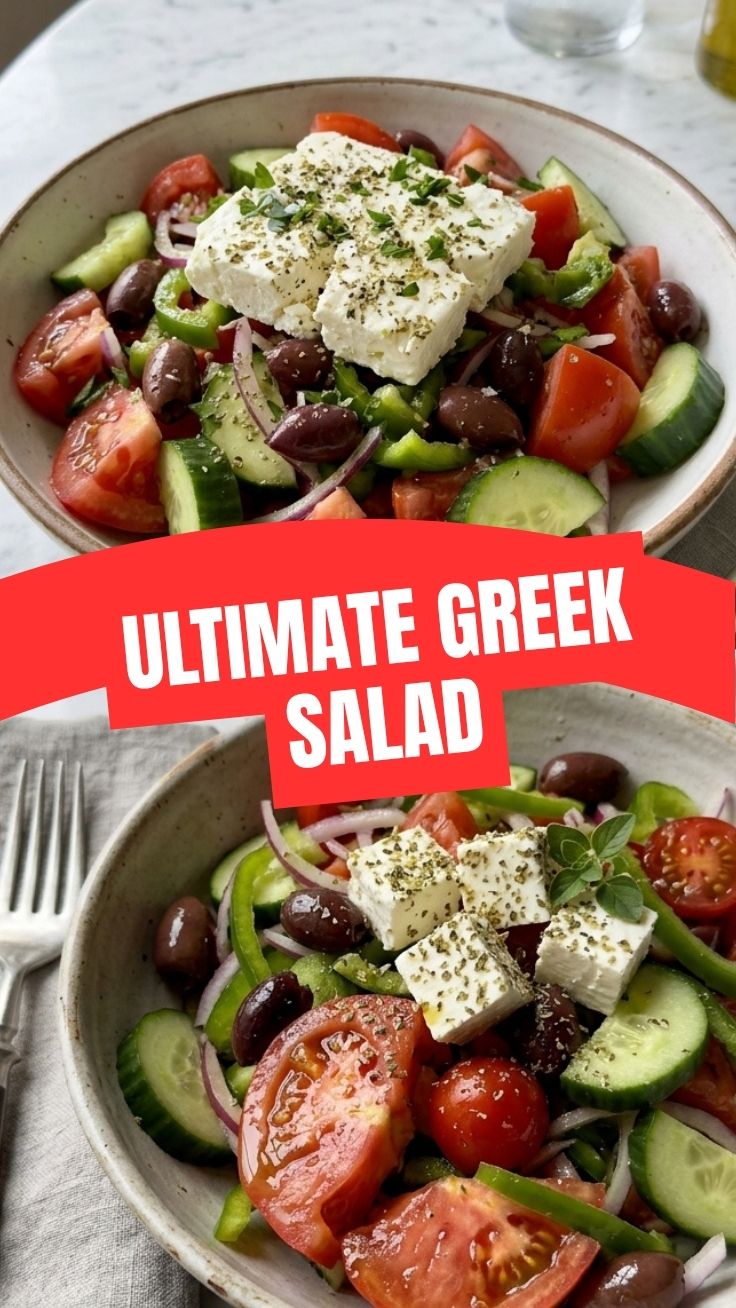
3. Assemble the salad: On a large platter or in a wide bowl, arrange the tomatoes, cucumber, peppers, and onions in a single layer—don’t pile them high or they’ll sweat. Scatter the Kalamata olives evenly. Place the feta slabs on top or tuck them between vegetables.
4. Dress and finish: Drizzle the vinaigrette over everything. Do not toss—this dish is meant to be layered. Sprinkle a final pinch of oregano and a crack of black pepper. The beauty of this authentic Greek Salad lies in its simplicity: each ingredient shines on its own. If you want to elevate it, follow a Greek Salad Recipe that suggests adding a handful of fresh parsley for color.
5. Rest (optional): Let the salad sit at room temperature for 10 minutes. This allows the feta to soften slightly and the vegetables to absorb the dressing without becoming soggy.
Nutritional Benefits & Advantages
This Mediterranean staple is a powerhouse of nutrition. Tomatoes provide lycopene, a potent antioxidant linked to heart health, while cucumbers offer hydration and vitamin K. Feta cheese is lower in fat and calories than most aged cheeses but still delivers calcium and protein. Kalamata olives contribute healthy monounsaturated fats and anti-inflammatory compounds. The olive oil-based dressing further supports cardiovascular health and aids the absorption of fat-soluble vitamins from the vegetables. It’s naturally gluten-free, low-carb, and vegetarian—ideal for anyone following a Mediterranean, keto, or plant-forward diet.
Tips, Variations & Cooking Advice
– Make it a meal: Add grilled chicken, shrimp, or chickpeas for extra protein.
– Dairy-free version: Substitute feta with marinated tofu or vegan feta made from cashews.
– Herb swap: Replace oregano with dried thyme or a mix of fresh mint and dill.
– Vinegar alternatives: Use lemon juice or white balsamic for a milder acidity.
– Texture hack: For a heartier salad, add ½ cup of cooked or canned chickpeas that have been rinsed and patted dry.
– Chill effect: If you refrigerate leftovers, drain excess liquid and refresh with a squeeze of lemon before serving—never reheat.
Common Mistakes to Avoid
– Over-dressing: This salad needs only enough vinaigrette to lightly coat. Too much liquid makes vegetables soggy within minutes.
– Using pre-crumbled feta: It’s often coated in anticaking agents and lacks the creamy, salty punch of a block. Always slice fresh.
– Chopping too small: Large, chunky pieces hold up better and prevent the salad from becoming a watery mess.
– Skipping the onion soak: Raw red onion can be overpowering. Soaking mellows it without losing crunch.
– Adding dressing too early: If you’re not serving immediately, combine dressing and feta at the last minute to preserve texture.
Storage & Meal Prep Tips
Store leftover salad without the dressing or feta if possible—combine them only for the meal. In an airtight container, undressed vegetables stay fresh in the refrigerator for up to 2 days. Once dressed, the salad is best eaten within 4 hours. Do not freeze, as the cucumbers and tomatoes will become limp and watery. For meal prep, chop all vegetables and store in separate containers, then assemble and dress each portion as desired. Refresh wilted leftovers by adding a few ice cubes to a bowl of cold water, submerging the vegetables for 5 minutes, then patting dry.
Conclusion
This vibrant dish proves that great cooking doesn’t require complexity—just quality ingredients and careful technique. By following the steps above, you can recreate the authentic flavors of a Greek taverna in your own kitchen. Whether you stick to the classic version or customize it with proteins and herbs, this Greek Salad will quickly become a staple in your repertoire. And remember, the perfect Greek Salad Recipe is one that adapts to your taste—so feel free to experiment with fresh mint, a dash of sumac, or a handful of arugula. Give it a try, share your creations, and explore more Mediterranean-inspired dishes on our site.
FAQs
1. Can I use cherry tomatoes instead of Roma?
Yes, but halve them instead of wedging. Cherry tomatoes are sweeter and hold their shape better, making them ideal for meal prep.
2. How do I prevent the salad from becoming watery?
Salt the tomatoes lightly and let them sit on a paper towel for 10 minutes before assembling. This draws out excess moisture.
3. Can I make this salad in advance for a party?
Absolutely! Keep the vegetables, dressing, feta, and olives separate, then combine just before serving. For a crowd, layer ingredients on a platter without tossing.
4. What’s the best substitute for Kalamata olives?
Castelvetrano or Niçoise olives work well. If using green olives, reduce salt in the dressing since they’re brinier.
5. How do I make this vegan?
Replace feta with a plant-based alternative, marinated tofu, or a creamy tahini dressing. Omit or replace olives with capers for brininess.
Best way to grow with a perfect Greek Salad: 5 fresh twists
Ingredients
Equipment
Method
- In a large bowl, combine the diced cucumber, chopped tomatoes, thinly sliced red onion, and pitted Kalamata olives.
- Crumble the feta cheese over the vegetables.
- In a small bowl, whisk together the extra virgin olive oil, red wine vinegar, and dried oregano.
- Pour the dressing over the salad and toss gently to combine.
- Season with salt and black pepper to taste and serve immediately, or chill for a short period to enhance flavors.