Why This Classic Greek Salad Will Become Your Go-To Summer Dish
Have you ever bitten into a tomato that tasted like sunshine? That’s the magic of a properly made Greek Salad—a dish so simple yet so profoundly satisfying that it has survived thousands of years of culinary evolution. What makes this Mediterranean staple extraordinary isn’t complexity, but rather the quality of its few ingredients and the harmony they create together. Preparing a Mediterranean Salad at home transforms your kitchen into a Greek island taverna, where every forkful delivers crisp cucumbers, briny olives, and creamy feta in perfect balance. The best part? You’re saving money while controlling exactly what goes into your bowl—no hidden preservatives, no wilted produce, just pure, vibrant freshness.
—
Ingredients & Kitchen Tools
Fresh Produce
– 4 large ripe tomatoes – Use vine-ripened for maximum sweetness; Roma or beefsteak work well
– 1 English cucumber – Less watery than regular cucumbers and doesn’t require peeling
– 1 red onion – Mild and sweet; soak slices in cold water 10 minutes to reduce sharpness
– 1 green bell pepper – Adds crunch; substitute with banana peppers for heat
– ½ cup Kalamata olives – Authentic Greek olives with rich, fruity flavor; substitute with Castelvetrano
Cheese & Dressing
– 200g block feta cheese – Always buy in brine, not pre-crumbled; sheep’s milk feta is traditional
– 3 tablespoons extra virgin olive oil – Greek varieties like Koroneiki offer peppery notes
– 2 tablespoons red wine vinegar – Substitute with lemon juice for brighter acidity
– 1 teaspoon dried oregano – Greek oregano is more aromatic; rub between palms before adding
Optional Additions
– Capers – For extra brininess
– Fresh mint leaves – Authentic Greek island variation
Kitchen Tools
– Large mixing bowl
– Sharp chef’s knife
– Cutting board
– Measuring spoons
– Salad servers
—
Prep Time & Cooking Schedule
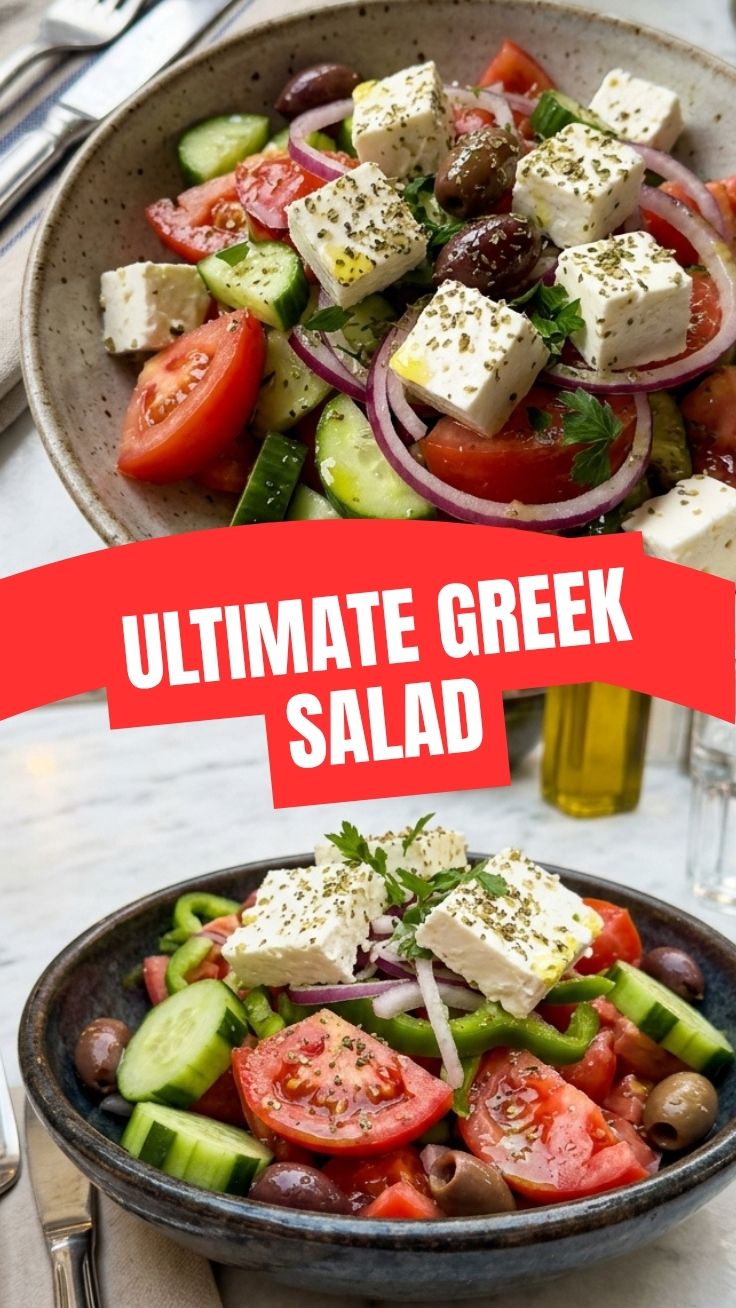
Active prep time: 15 minutes | Total time: 15 minutes | Resting time: 10 minutes
Unlike complicated recipes requiring hours of labor, this Greek Salad comes together in under 30 minutes from start to table. The resting period is crucial—it allows the tomatoes to release their juices and mingle with the olive oil and vinegar, creating a natural dressing that coats every ingredient. Plan to serve immediately after resting, as the vegetables begin softening after 30 minutes.
—
Step-by-Step Instructions
1. Prepare the vegetables – Cut tomatoes into wedges or rustic chunks, not perfect cubes. Slice cucumber in half lengthwise, then cut into half-moons about ½-inch thick. Thinly slice red onion into rings, and cut bell pepper into bite-sized pieces.
2. Assemble in layers – Place cut vegetables in a large bowl without tossing yet. Arranging ingredients in layers rather than mixing prevents bruising the tender tomatoes.
3. Add olives and feta – Scatter Kalamata olives over vegetables. Cut feta into ½-inch slabs (never crumble) and arrange on top. This presentation is essential for an authentic Greek Salad experience.
4. Season and dress – Sprinkle dried oregano generously over everything. Drizzle extra virgin olive oil and red wine vinegar directly over the feta and vegetables. Add a pinch of sea salt—remember the feta and olives are already salty.
5. Rest and serve – Let the Mediterranean Salad sit at room temperature for 10 minutes before serving. This resting period allows flavors to meld and tomatoes to release their juices. Do not toss until just before serving.
Pro tip: For the best texture, add feta immediately before serving if preparing ahead. The cheese absorbs too much moisture if left sitting.
—
Nutritional Benefits & Advantages
This salad is a nutritional powerhouse packed into a single bowl. Tomatoes provide lycopene—a powerful antioxidant linked to reduced heart disease risk—which becomes more bioavailable when paired with olive oil. Feta cheese offers calcium and protein while being lower in fat than many aged cheeses. The Mediterranean diet, which heavily features this style of salad, has been scientifically associated with lower inflammation and improved cognitive function.
A typical serving contains approximately 280 calories, 18g healthy fats, 8g protein, and 12g carbohydrates, making it suitable for low-carb and gluten-free diets. The high water content in cucumbers and tomatoes promotes hydration, while red onions provide quercetin, a flavonoid with anti-inflammatory properties.
—
Tips, Variations & Cooking Advice
Flavor variations:
– Add chopped fresh dill or mint for herbal brightness
– Sprinkle with sumac for tangy, lemony notes
– Include chopped roasted red peppers for sweetness
Dietary adaptations:
– Vegan version: Replace feta with marinated tofu or cashew cheese
– Dairy-free: Use vegan feta alternatives; coconut-based options work well
– Low-sodium: Rinse olives in cold water and use reduced-salt feta
Ingredient swaps:
– Substitute green bell pepper with cubanelle or Italian frying peppers
– Replace red wine vinegar with balsamic for sweeter notes
– Try Manzanilla olives in place of Kalamata for milder flavor
Serving suggestions: Serve alongside grilled lamb chops, stuffed into pita bread with hummus, or as a topping for grilled fish.
—
Common Mistakes to Avoid
Mistake #1: Using pre-crumbled feta
Pre-crumbled feta contains anti-caking agents that prevent proper melting and creaminess. Always buy block feta stored in brine.
Mistake #2: Overdressing
A Greek salad should glisten, not swim. Start with less oil and vinegar—you can always add more, but you cannot remove excess.
Mistake #3: Cutting vegetables too small
Rustic chunks preserve texture and prevent the salad from becoming watery. Tomatoes should be cut into at least 1-inch pieces.
Mistake #4: Refrigerating before serving
Cold temperatures dull the flavors of olive oil and tomatoes. Always serve at room temperature for optimal taste.
Mistake #5: Skipping the resting period
Even 5 minutes allows ingredients to begin melding. Without resting, the salad tastes disjointed.
—
Storage & Meal Prep Tips
Refrigeration: Store undressed components separately in airtight containers for up to 3 days. Combine and dress only before serving.
Dressed leftovers: Transfer to an airtight container and refrigerate up to 24 hours. Expect vegetables to soften slightly—this is delicious as a next-day grain bowl topping.
Freezing: Not recommended—the high water content in vegetables creates mushy textures upon thawing.
Make-ahead preparation: Chop vegetables up to 24 hours in advance, but store feta separately and dress only when ready to serve. For meal prep, consider storing dressing in a small container and adding just before eating.
—
Conclusion
This classic Greek Salad proves that extraordinary food doesn’t require complicated techniques or exotic ingredients—just quality components handled with respect. By preparing this Mediterranean Salad at home, you gain control over ingredient quality, portion sizes, and freshness while saving money compared to restaurant versions. The combination of crisp vegetables, creamy feta, briny olives, and fruity olive oil creates a dish that’s simultaneously simple and profound. Try this recipe tonight and taste why it has remained a beloved staple for thousands of years. Share your creation on social media or tag us—we’d love to see your interpretation!
—
Frequently Asked Questions
Can I use lemon juice instead of red wine vinegar?
Absolutely. Fresh lemon juice adds brighter acidity and pairs beautifully with oregano. Use 1½ tablespoons lemon juice to replace 2 tablespoons vinegar.
How do I reduce the onion’s sharpness?
Soak sliced onions in ice water for 10–15 minutes, then drain and pat dry. Alternatively, use sweet Vidalia onions.
Why does my salad become watery?
This happens when tomatoes are over-chopped or the salad sits too long after dressing. Cut tomatoes into large chunks and add dressing no more than 15 minutes before serving.
Can I add protein to make it a meal?
Yes! Grilled chicken, shrimp, chickpeas, or canned tuna transform this into a complete meal. Add protein just before serving.
Is this salad traditionally served with lettuce?
No—authentic Greek salads traditionally contain no lettuce whatsoever. The vegetables, feta, and olives are the star.
Greek Salad
Ingredients
Equipment
Method
- Choose a sunny location in your garden that receives at least 6-8 hours of direct sunlight daily for optimal growth.
- Prepare your soil by enriching it with compost or organic matter to improve drainage and provide essential nutrients.
- Plant your chosen Greek salad ingredients such as tomatoes, cucumbers, and bell peppers, ensuring proper spacing.
- Water regularly, especially during dry spells, and consider mulching to retain moisture and suppress weeds.