Unlock the Secret to Perfect Pad Thai at Home: Your Ultimate Guide
Have you ever wondered why restaurant-style Pad Thai tastes so irresistibly complex, yet seems deceptively simple to make? The truth is, many home cooks struggle to replicate that perfect balance of sweet, sour, and savory—but it doesn’t have to be that way. Preparing this iconic Thai stir-fry at home not only saves money but allows you to customize every ingredient for your dietary needs and flavor preferences. In this comprehensive guide, we’ll walk you through every step to achieve restaurant-quality Pad Thai in your own kitchen, ensuring the noodles are perfectly coated and never clumpy.
Ingredients & Kitchen Tools
For the Pad Thai:
– 8 oz (225g) dried rice stick noodles (medium width) – these are the essential noodles for authentic texture
– 1/2 lb (225g) shrimp or chicken (or firm tofu for vegetarian)
– 3 cloves garlic, minced
– 2 large eggs
– 1 cup bean sprouts
– 1/2 cup chopped green onions
– 1/4 cup crushed peanuts
– 2 tbsp vegetable oil
– Lime wedges for serving
For the Sauce:
– 3 tbsp tamarind paste
– 2 tbsp fish sauce (or soy sauce for vegan)
– 1.5 tbsp palm sugar (or brown sugar)
– 1 tbsp rice vinegar
– 1/2 tsp chili flakes (adjustable)
Kitchen Tools:
Large wok or non-stick skillet • Mixing bowls • Measuring spoons • Tongs or spatula • Colander • Chef’s knife • Cutting board
Optional Substitutions:
– Tamarind paste can be replaced with lime juice + brown sugar (ratio 2:1)
– Rice stick noodles can be substituted with soba or udon, though texture will change
– Add 1 tbsp dried shrimp for extra umami
Prep Time & Cooking Schedule
– Prep Time: 20 minutes (includes soaking noodles, chopping vegetables, making sauce)
– Cooking Time: 8–10 minutes
– Total Time: 30 minutes
– Tip: Soak noodles in warm water for 15 minutes until pliable but not mushy. Meanwhile, prepare all ingredients and set them near the stove—this dish cooks very fast.
Step-by-Step Instructions
1. Prepare the noodles: Soak dried rice stick noodles in warm water (not boiling) for 15–20 minutes until they bend easily. Drain and set aside. Do not oversoak or they become mushy.
2. Make the sauce: In a small bowl, whisk together tamarind paste, fish sauce, palm sugar, rice vinegar, and chili flakes until sugar dissolves. Taste and adjust—should be sweet, sour, and salty in balance. This is the heart of Pad Thai.
3. Cook the protein: Heat 1 tbsp oil in a wok over high heat. Add shrimp or chicken and stir-fry for 2 minutes until cooked. Remove and set aside.
4. Scramble the eggs: Lower heat to medium. Crack eggs into the wok and scramble quickly until just set but still moist. Push to one side.
5. Stir-fry the noodles: Add remaining oil. Increase heat to high and toss in drained noodles along with 2 tablespoons of water. Stir-fry for 1 minute, then pour sauce over noodles. Toss continuously for 2–3 minutes until noodles are evenly coated and begin to caramelize slightly.
6. Combine everything: Return cooked protein to the wok. Add bean sprouts and green onions. Toss for 30 seconds—sprouts should remain crunchy.
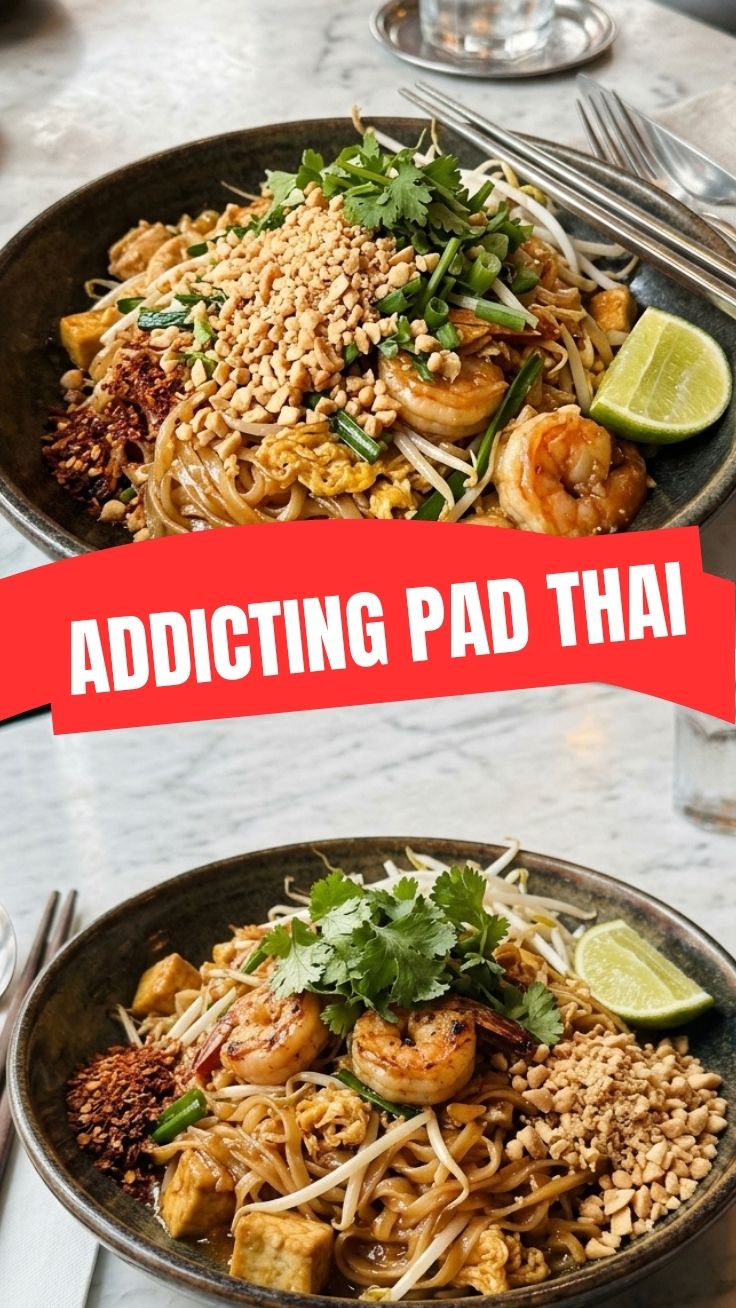
7. Serve: Plate immediately, top with crushed peanuts and extra bean sprouts. Serve with lime wedges. The key to perfect Pad Thai is working quickly and keeping ingredients moving.
Nutritional Benefits & Advantages
This homemade version empowers you to control sodium and sugar levels, cutting up to 40% of the calories found in restaurant versions. Rice noodles are naturally gluten-free and provide steady energy without blood sugar spikes. Shrimp offers lean protein and omega-3 fatty acids, while bean sprouts deliver vitamin C and fiber. Peanuts add healthy monounsaturated fats and vitamin E. By preparing at home, you avoid MSG and preservatives often found in takeout.
Tips Variations & Cooking Advice
– Flavor variation: Add 1 tsp of tamarind for extra sourness, or swap sugar with honey for floral notes
– Protein swap: Use tofu or tempeh for a vegan version—press tofu first to remove moisture
– Gluten-free: Ensure fish sauce and tamarind paste are certified GF; most are naturally gluten-free
– Spice level: Add fresh Thai bird chilies for authentic heat, or skip entirely for mild version
– Texture tip: If noodles stick together, rinse with warm water and drain before adding to wok
– Authentic touch: Garnish with banana flower slices or pickled radish for traditional presentation
Common Mistakes to Avoid
1. Overcooking noodles: Soak 15 minutes max, then cook briefly in wok—they continue cooking from residual heat
2. Sauce too watery: Reduce liquid in sauce; noodles should glisten, not swim in sauce
3. Underseasoning: Taste sauce before adding—should be strong enough to balance noodles and protein
4. Crowding the wok: Cook in batches if needed; overcrowding causes steaming instead of stir-frying
5. Skipping tamarind: This unique ingredient provides authentic sourness—substituting only lime creates one-dimensional flavor
Storage & Meal Prep Tips
– Refrigeration: Store leftovers in an airtight container for up to 3 days. Noodles absorb moisture, so reheat quickly.
– Freezing: Not recommended—noodles become mushy upon thawing due to starch retrogradation.
– Reheating: Use a hot wok with 1 tsp oil for 1–2 minutes, or microwave covered with a damp paper towel for 60 seconds.
– Prep ahead: Soak noodles and make sauce up to 2 days in advance. Store sauce in fridge and bring to room temperature before cooking.
– Portion control: This recipe serves 2 as a main or 4 as an appetizer. Double easily for crowds.
Conclusion
Now you have all the tools to recreate this Thai street food classic at home with confidence. Remember, the magic of Pad Thai lies in the balance of sweet, sour, and salty—and the perfect chewiness of rice noodles. We encourage you to experiment with protein choices and spice levels to make it your own. Share your creation on social media and tag us—we’d love to see your golden, peanut-crusted masterpiece. For more authentic Thai recipes, explore our related content on curries and soups.
FAQs
Can I use regular pasta instead of rice noodles?
Technically yes, but the texture and taste will differ significantly. Rice stick noodles are essential for authentic Pad Thai. If substituting, use linguine and adjust cooking time.
Why is my Pad Thai too dry?
You likely oversoaked or under-sauced the noodles. When reheating, add 1 tablespoon of water or broth per serving and toss vigorously.
Is tamarind paste necessary?
While not strictly mandatory, tamarind provides the characteristic tanginess. A mix of lime juice and brown sugar (2:1 ratio) can mimic it, but flavor won’t be identical.
Can I make this vegan?
Absolutely! Use firm tofu instead of shrimp/chicken, replace fish sauce with soy sauce or tamari, and ensure sugar is vegan. The dish remains deliciously satisfying.
How do I prevent noodles from clumping?
Soak them just until pliable, rinse with cool water, toss with a little oil before adding to wok. Also, ensure your wok is very hot and you don’t overcrowd it.
Proven way to grow pad thai sauce in 5 steps. Pad Thai.
Ingredients
Equipment
Method
- Start by preparing your tamarind paste by soaking dried tamarind in warm water and extracting the pulp, or use a pre-made paste.
- Cultivate palm sugar by tapping palm trees for sap and boiling it down until crystallized.
- Prepare fish sauce by fermenting anchovies or other fish with salt for several months.
- Create rice vinegar by fermenting cooked rice, allowing it to turn into alcohol and then into acetic acid.
- Finally, if using, grow chili peppers, dry them, and then crush them into flakes for a bit of heat.