The Ultimate Guide to the Perfect Smoked Brisket: A Texas BBQ Tradition Worth Mastering at Home
Have you ever wondered what separates a mediocre brisket from a transcendent, melt-in-your-mouth experience that leaves your guests speechless? The answer isn’t just in the cut of meat or the hours of patience—it’s in the technique, the seasoning, and the love of the craft. Preparing a Smoked Brisket at home is more valuable than you might think: it saves you the premium restaurant markup, allows you to control every variable from wood choice to rub composition, and delivers a sense of accomplishment that few other dishes can match. To truly understand this art, you need to immerse yourself in the traditions of Texas BBQ, where smoke, heat, and time converge to create something magical. This guide will walk you through every step, ensuring your smoked brisket rivals any pitmaster’s output.
Ingredients & Kitchen Tools
For the Brisket:
– 1 whole packer brisket (12–16 lbs) – Choose Choice or Prime grade; avoid Select as it lacks intramuscular fat.
– 1/4 cup coarse kosher salt – essential for deep seasoning; table salt is too fine and may over-salt.
– 1/4 cup coarse black pepper – the classic Texas 50/50 rub base; freshly cracked preferred.
– Optional: garlic powder, paprika, cayenne (1-2 tbsp each) – for a custom rub; Texas purists often skip these.
Kitchen Tools & Utensils:
– Offset smoker or pellet grill – charcoal/wood offsets offer authentic flavor; pellet grills provide ease.
– Instant-read digital thermometer (dual-probe preferred) – meat and ambient temp monitoring is non-negotiable.
– Large cutting board with juice groove – prevents cross-contamination and collects precious juices.
– Butcher paper or aluminum foil – for the Texas Crutch step; paper preserves bark better than foil.
– Spray bottle (apple juice, apple cider vinegar, or water) – keeps brisket surface moist during the stall.
– Sharp slicing knife + carving fork – a dull blade shreds the fibers instead of slicing cleanly.
Optional Substitutions:
– For a lower-sodium version, use 2 tbsp salt + 2 tbsp MSG (like Accent) to round flavor without excess sodium.
– If you lack a smoker, a charcoal kettle grill with a snake method or a Weber Smokey Mountain works brilliantly.
Prep Time & Cooking Schedule
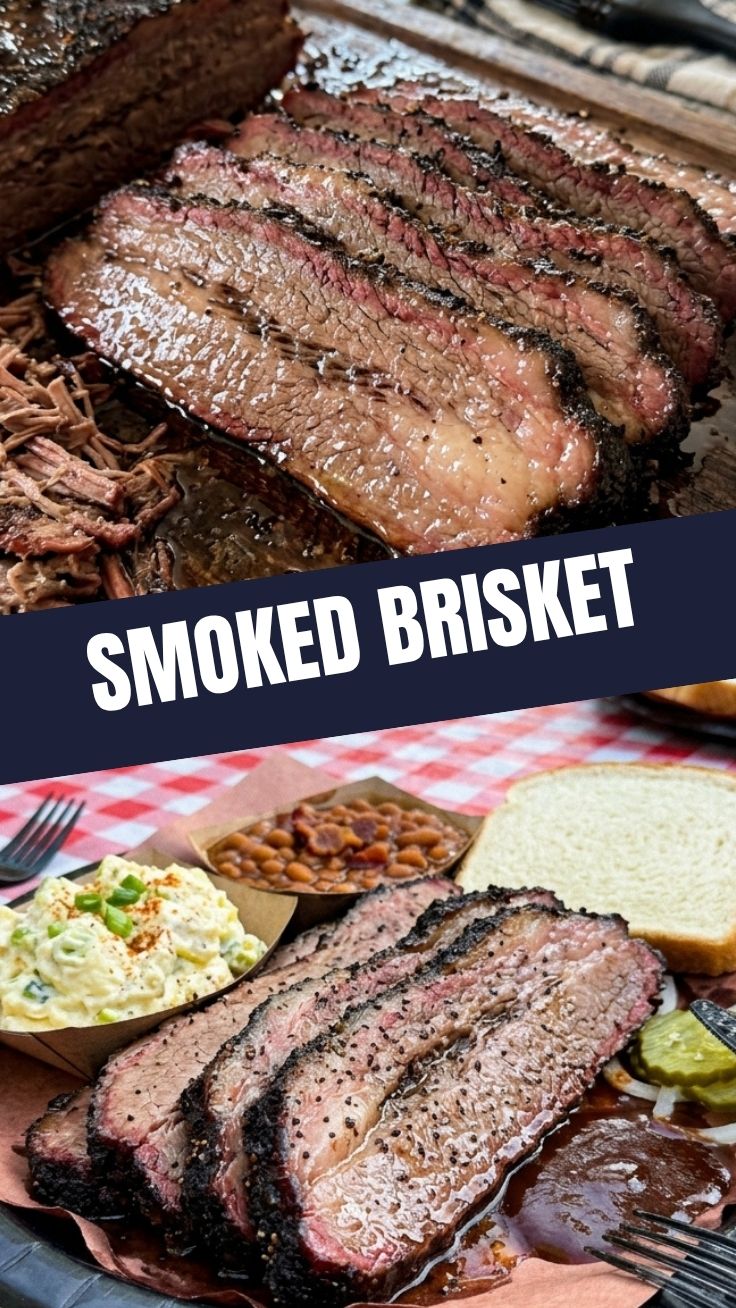
Understanding the timeline is crucial for a stress-free experience. Here’s the optimal schedule:
| Stage | Time Required | Details |
|——-|—————|———|
| Trimming & Seasoning | 45 minutes | Remove excess fat cap to 1/4 inch, score the fat, apply rub generously. |
| Resting after Seasoning | 1–12 hours (overnight) | Wrap in plastic and refrigerate – the longer, the more the salt penetrates. |
| Smoking (main cook) | 10–16 hours | At 225–250°F, plan on 1 to 1.5 hours per pound. |
| The Stall | 2–4 hours | Internal temp stalls around 150–165°F; wrap brisket to power through. |
| Resting Post-Cook | 1–3 hours | Wrap tightly in towels and place in an empty cooler. |
Context to Help You Plan:
Start at 8 PM the night before for trimming and seasoning. Set your alarm for 5 AM to fire up the smoker. The brisket will likely finish between 6 PM and 10 PM. Rest it for at least 1 hour (better 2–3) before slicing. This gives you a perfect dinnertime window.
Step-by-Step Instructions
1. Trim the Brisket
Place the brisket fat-side down. Remove the hard fat “deckle” from the flat end. Trim the fat cap to an even 1/4-inch thickness—too thin and the meat dries out; too thick and the bark doesn’t form. Round any sharp corners to prevent edges from burning. Pat dry with paper towels.
2. Season Generously
Mix equal parts kosher salt and coarse black pepper (your 50/50 base). Apply a liberal layer—it should look like a sandy beach, not a dusting. Add optional spices if desired. Wrap in plastic and refrigerate for at least 1 hour, ideally overnight. This step is where you connect deeply with the traditions of Texas BBQ: patience here pays off in crust formation.
3. Set Up Your Smoker
Preheat your smoker to 225–250°F using oak, hickory, or mesquite wood. Oak is the classic choice for Texas BBQ because it burns clean and adds a mild, sweet smoke. Place a water pan inside to stabilize temperature and humidity.
4. Start Smoking (Fat Side Up)
Place brisket fat-side up on the grate away from direct heat. Insert the thermometer probe into the thickest part of the flat. Maintain 225–250°F. After 3 hours, begin spritzing every 45–60 minutes with apple juice.
5. The Stall – Wrap to Power Through
When internal temp hits 155°F (usually around hour 6–7), remove brisket. Lay it on a large sheet of pink butcher paper or double-layer foil. Add a few spoonfuls of spritz liquid, wrap tightly, and return to smoker. Increase temp to 275°F if you need to accelerate.
6. Probe for Doneness
Start checking at an internal temp of 195°F. Insert a skewer or toothpick—it should slide in with zero resistance, like room-temperature butter. The final temp will land between 200–205°F. This is when your smoked brisket becomes a masterpiece.
7. Rest and Slice
Remove from smoker, keep wrapped, and place in a preheated cooler (or a room-temperature cooler) for 1–3 hours. This redistributes juices. Slice against the grain on the flat, and against the grain but at a 45° angle on the point for maximum tenderness.
Nutritional Benefits & Advantages
While brisket is a rich, indulgent cut, it offers real nutritional value when consumed mindfully:
– High-Quality Protein: A 3-ounce serving provides about 28g of complete protein, supporting muscle repair and satiety.
– Rich in B Vitamins, Zinc, and Iron: Beef brisket is a strong source of vitamin B12 (for nerve function), zinc (immune support), and heme iron (highly absorbable for energy production).
– Collagen and Gelatin: The tough connective tissue in brisket breaks down into gelatin during the long cook, which supports joint health and gut integrity.
– Control Over Additives: Homemade brisket contains no preservatives, artificial smoke flavor, or excess sodium compared to store-bought BBQ.
Dietary Advice: Pair with a vinegar-based coleslaw (fermented cabbage supports digestion) and skip sugary sauces. The dish fits well into low-carb (<7g carbs per serving) and keto diets, and when trimmed properly, the fat profile is 40–50% monounsaturated (similar to olive oil).
Tips Variations & Cooking Advice
Flavor Variations:
– Espresso Rub: Add 2 tbsp finely ground espresso to the 50/50 rub. The bitterness deepens the beefy flavor without a coffee taste.
– Korean BBQ Twist: Swap salt/pepper for gochujang, soy sauce, brown sugar, and sesame oil. Smoke over hickory.
– Herbaceous: Add dried rosemary, thyme, and granulated onion to the base rub. Use cherry or apple wood.
Cooking Method Variations:
– Oven-Finish Smoking: Smoke for 6 hours (until 165°F), then wrap and finish in a 300°F oven. Retains bark while saving fuel.
– Sous-Vide + Smoke: Cook sous-vide at 155°F for 36 hours, then finish in a hot smoker (300°F) for 2 hours for bark. Risky for texture—use only if you prefer uniform doneness.
Dietary Adaptations:
– Gluten-Free: All standard rubs are naturally GF. Verify wood chunks (some are seasoned with wheat flour).
– Dairy-Free: Plain brisket is dairy-free. Avoid butter injection.
– Low-Sodium: Use 50/50 salt and MSG; trim all visible fat to reduce overall sodium from salty fat.
Common Mistakes to Avoid
– Overtrimming the Fat Cap: Trimming to less than 1/4 inch or removing the fat entirely guarantees a dry brisket. The fat self-bastes during the long cook. Fix: Use a ruler as a guide.
– Temperature Swaying: Gauge fluctuations over 50°F (e.g., from 225°F to 300°F) can cause uneven cooking and rubbery texture. Fix: Use a digital temperature controller or charcoal arrangement to hold steady.
– Skipping the Rest: Slicing immediately loses 20% more moisture than resting even 30 minutes. Fix: Minimum 60-minute rest in a cooler.
– Slicing with the Grain: This creates long, stringy, tough pieces. Fix: Learn to identify grain direction after resting—it shifts from point to flat.
Storage & Meal Prep Tips
Refrigeration:
– Store leftover brisket (whole or sliced) in an airtight container with a splash of beef broth. It stays tender for 4–5 days.
– For moisture preservation, wrap tightly in plastic wrap, then foil—dries out far less than containers.
Freezing:
– Vacuum-sealed brisket lasts 6–9 months without freezer burn. If no vacuum sealer, wrap in freezer paper and then heavy-duty foil.
– Portion into meal-sized bags before freezing to avoid thawing the whole batch.
Reheating Instructions:
– Oven (Best): 275°F for 20–30 minutes in a covered dish with 1/4 cup beef broth. Fluff with fork before serving.
– Sous-Vide: 165°F for 45 minutes from frozen.
– Air Fryer: 350°F for 3–5 minutes per side for crispy bark.
– Never Microwave Directly: It will turn brisket to shoe leather. Use a damp paper towel and 30-second pulses on 40% power if necessary.
Conclusion
Mastering a smoked brisket is a journey that rewards patience, precision, and a willingness to learn from each cook. By following this guide—especially respecting the rest period, nailing your temperature, and understanding the cut—you’re set up to deliver a centerpiece that rivals the best Texas BBQ joints. The key takeaways are simple: season aggressively, keep your smoker steady, wrap through the stall without panic, and rest longer than you think you need. Now it’s your turn to fire up the smoker, get your hands dirty, and create something unforgettable. Share your brisket photos, ask questions below, or tag us with your results—I’d love to see your masterpiece.
FAQs
Q: How long does it take to smoke a brisket at 225°F?
A: Plan on 1 to 1.5 hours per pound for the cook at 225°F, plus 1–3 hours resting time. For a 14-pound packer, total time from smoker start to slicing is a minimum of 12–15 hours.
Q: What is the stall, and how do I get through it?
A: The stall happens when evaporative cooling causes internal temperature to plateau (around 150–165°F) for 2–4 hours. Wrap the brisket tightly in butcher paper or foil (the “Texas Crutch”) to push through it—this speeds cooking and preserves moisture.
Q: What’s the best wood for Texas-style brisket?
A: Oak is the gold standard—it burns hot and clean, with a mild, sweet smoke that doesn’t overpower the beef. Post oak, white oak, or live oak are all fantastic. Hickory works too but can turn bitter if used heavily.
Q: Should I slice against the grain even on the point?
A: Yes, but the point has a different grain direction than the flat. After resting, separate the point from the flat. For the flat, slice perpendicular. For the point, rotate 90 degrees and slice against the grain. The point’s grain runs diagonally.
Q: Can I use a gas or electric smoker successfully?
A: Absolutely. As long as you add wood chunks (use a smoker box for gas) and maintain a steady 225–250°F, you’ll get excellent results. Pellets in a pellet grill are even easier—just be sure to add a smoke tube for deeper flavor.
Quick way to grow 3lbs Smoked Brisket
Ingredients
Equipment
Method
- Trim excess fat from the brisket, leaving about 1/4 inch fat cap. Pat the brisket dry thoroughly with paper towels.
- In a small bowl, combine smoked paprika, garlic powder, onion powder, black pepper, kosher salt, and brown sugar (if using) to create your rub. Apply the rub generously all over the brisket, ensuring it's evenly coated. Allow the brisket to rest at room temperature for 30 minutes while you prepare your smoker.
- Preheat your smoker to 275°F (135°C). Add wood chips to the smoker box or directly onto the coals, ensuring a consistent smoke. Place a water pan filled with water in the smoker to maintain moisture.
- Place the brisket fat-side up directly on the smoker grates. Smoke the brisket for approximately 2.5 to 3 hours, or until the internal temperature reaches 165°F (74°C).
- Spritz the brisket with apple cider vinegar every 45 minutes to keep it moist and help develop a good bark.
- Once internal temperature reaches 165°F (74°C), remove the brisket from the smoker and wrap it tightly in butcher paper or foil. This helps to tenderize the meat without overcooking it.
- Return the wrapped brisket to the smoker and continue cooking until the internal temperature reaches 200-205°F (93-96°C) and it is probe tender. This usually takes another 30-60 minutes.
- Remove the brisket from the smoker and let it rest, still wrapped, for at least 30 minutes before slicing. This resting period is crucial for juices to redistribute, ensuring a tender and moist brisket.