Why This Chilled Soup Will Transform Your Summer Meals
Ever wondered why a bowl of cold soup can be so refreshing on a scorching day? The answer lies in the vibrant, raw ingredients that make up Gazpacho (Classic), a staple of Spanish recipe culture. This iconic Andalusian dish is not just a soup—it’s a celebration of summer’s bounty. Preparing it at home allows you to control the quality of produce, adjust seasoning to your palate, and avoid the sodium-laden commercial versions. Plus, it takes only minutes of active work, making it a lifesaver for busy weeknights. In this post, we’ll dive deep into the essentials: from ingredient selection to storage secrets, ensuring you master this timeless classic.
—
Ingredients & Kitchen Tools
Before you begin, gather the following. Each item plays a role in achieving the perfect balance of sweetness, acidity, and texture.
Ingredients
– Ripe tomatoes (1.5 kg / about 6 large) – Choose heavy, fragrant ones. Overripe is best; they provide natural sweetness and body.
– Cucumber (1 medium, peeled) – Adds refreshing coolness. English or Persian cucumbers work well.
– Red bell pepper (1 medium) – For sweetness and color. Avoid green; they are too bitter raw.
– Garlic (1–2 cloves, depending on heat preference) – Use fresh cloves. Remove the germ if you want milder flavor.
– Day-old bread (100 g, crust removed) – A rustic baguette or whole wheat works. Soaking it thickens the soup (optional for a lighter version).
– Sherry vinegar (2–3 tablespoons) – Essential for authentic tang. Substitute red wine vinegar if needed.
– Extra-virgin olive oil (¼ cup, plus more for drizzling) – Use a fruity Spanish variety for best flavor.
– Salt (1 teaspoon, or to taste) – Sea salt or kosher.
– Cold water (½ cup, or as needed) – To adjust consistency.
Kitchen Tools
– Blender or food processor – A high-speed blender yields silkiest results.
– Chef’s knife and cutting board – For rough chopping.
– Mixing bowl and fine-mesh strainer – For removing seeds and skin if desired (optional for a smoother soup).
– Large bowl or pitcher – For chilling.
– Ladle and serving bowls – Glass or ceramic retain cold well.
—
Prep Time & Cooking Schedule
– Active prep time: 15 minutes
– Resting/chilling time: At least 1 hour (ideally 2–4 hours or overnight)
– Total time: 1 hour 15 minutes minimum
Gazpacho requires no cooking, but the resting step is non-negotiable. Chilling allows the flavors to meld and the texture to thicken. Plan this soup a day ahead for potlucks or picnics.
—
Step-by-Step Instructions
1. Prepare the vegetables. Roughly chop tomatoes (peeling optional), cucumber, and bell pepper. Remove tomato cores and pepper seeds. Mince the garlic.
2. Soak the bread (if using). In a small bowl, cover the crustless bread with cold water for 2 minutes, then squeeze dry.
3. Blend the base. In a blender, combine tomatoes, cucumber, bell pepper, garlic, soaked bread, sherry vinegar, and salt. Pulse until smooth but still slightly chunky if you prefer texture. For a silky result, blend on high for 1 minute.
4. Emulsify the olive oil. With the blender running on low, slowly stream in the olive oil. This creates a creamy emulsion. Stop if the mixture warms up (it should stay cold).
5. Adjust consistency and seasoning. Add cold water a few tablespoons at a time until it reaches a pourable yet thick consistency. Taste – it should be bright, tangy, and savory. Add more salt or vinegar as needed. This is the moment to remember that a true Gazpacho (Classic) is balanced around acidity and olive oil richness, just like any authentic Spanish recipe demands.
6. Chill thoroughly. Transfer to a bowl, cover, and refrigerate for at least 1 hour. The soup thickens as it rests.
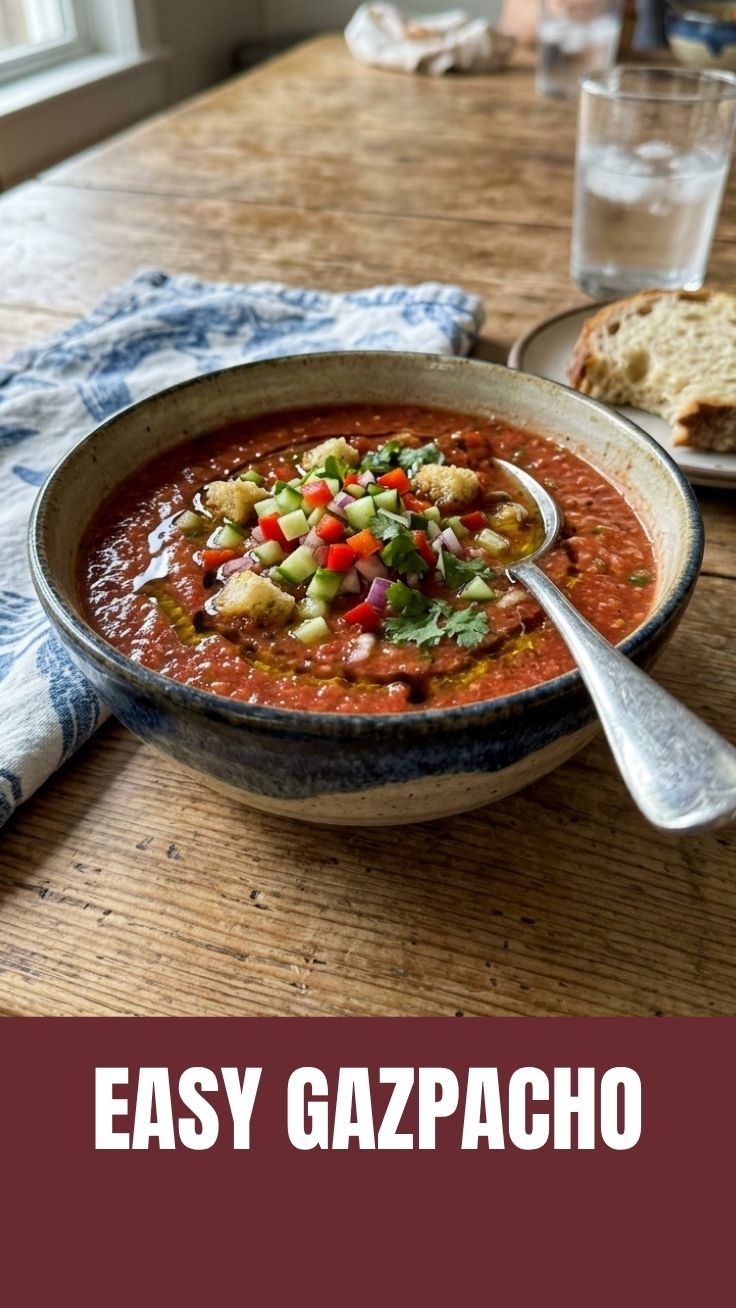
7. Serve very cold. Ladle into chilled bowls. Garnish with diced cucumber, bell pepper, croutons, and a drizzle of olive oil.
Pro tip: If you prefer a smoky depth, roast the bell pepper and tomato before blending (allow to cool completely). This variation is called “Roasted Gazpacho” and adds a rustic layer.
—
Nutritional Benefits & Advantages
– Low calorie, high hydration: A serving has about 150 calories, yet provides over 90% water content – perfect for hot climates.
– Rich in lycopene: Cooked tomatoes have more, but raw tomato gazpacho still delivers a significant dose of this antioxidant linked to heart health.
– Vitamin C powerhouse: Bell peppers and tomatoes supply over 100% of daily needs per bowl.
– Healthy fats: The extra-virgin olive oil promotes satiety and helps absorb fat-soluble vitamins (A, E, K).
– Gut-friendly: Raw vegetables provide prebiotic fiber. The garlic also supports immune function.
—
Tips Variations & Cooking Advice
– Texture tweaks: For an ultra-smooth soup, pass through a fine-mesh strainer after blending. For a chunkier version, reserve some diced vegetables as garnish.
– Vegan & gluten-free: Many classic versions already are vegan. Use gluten-free bread (corn tortilla or omit bread entirely) to make it gluten-free.
– Spice it up: Add a serrano pepper or a pinch of cumin for a Moroccan twist.
– Fruit variations: Swap half the tomato for ripe watermelon or strawberries for a sweet-savory version.
– Herb infusion: Blend in fresh basil, mint, or cilantro for a fragrant layer.
– Portion control: This recipe makes about 1.5 liters (4–6 servings). Halve or double easily – just maintain the oil and vinegar ratios.
—
Common Mistakes to Avoid
– Using underripe tomatoes: They lack sweetness and create a sour, watery soup. Always taste a slice before blending.
– Skipping the chilling step: Warm gazpacho is bland and unappealing. Cold temperature suppresses bitterness and amplifies flavor.
– Over-blending the olive oil: If you blend at high speed for too long, the emulsion can break, leaving an oily slick. Stream it in slowly while blending on low.
– Adding too much garlic: Raw garlic intensifies overnight. Start with one clove, taste after chilling, and add more only if needed.
– Not salting enough: Salt pulls moisture from vegetables and rounds out acidity. Add at least 1 teaspoon initially, then adjust after chilling.
—
Storage & Meal Prep Tips
– Refrigeration: Store in an airtight container for up to 4 days. The flavor actually improves after 24 hours.
– Freezing: Yes, you can freeze gazpacho for up to 3 months. Portion into freezer bags, leaving headspace. Thaw in the refrigerator overnight and stir well before serving – expect a slightly thinner texture. Blend briefly with ice cubes to re-emulsify.
– Meal prep: Prep the base (step 3) and refrigerate without oil. Add oil and water just before serving. This keeps the soup freshest.
– Do not reheat: Gazpacho is served cold. If you accidentally let it warm up, just re-chill or add ice cubes.
—
Conclusion
Mastering Gazpacho (Classic) is about celebrating simplicity – the harmony of ripe produce and quality oil. This Spanish recipe proves that no heat is needed to create a deeply satisfying dish. By following these steps, you’ll have a refreshing, nutrient-packed meal that rivals any restaurant version. I encourage you to try it this week, adjust the ingredients to what you have on hand, and share your results in the comments. For more Mediterranean summer ideas, explore our chilled soups and tapas collection.
—
FAQs
Q: Can I use canned tomatoes for gazpacho?
A: Yes, but choose fire-roasted or whole peeled San Marzano for best flavor. Drain them slightly to avoid excess liquid. The result will be less bright than fresh.
Q: Why is my gazpacho too watery?
A: Usually from underripe tomatoes or over-dilution. Fix it by adding a peeled and grated raw potato (blended) or extra soaked bread. Simmering is not recommended as it changes the raw character.
Q: How do I make it spicier?
A: Add a deseeded jalapeño or a pinch of cayenne with the vegetables. For more heat, add a drop of hot sauce to each serving.
Q: Can I make it ahead for a party?
A: Absolutely. Make it 1–2 days in advance. It stays fresh and flavorful. Just stir well and adjust seasoning before serving.
Q: Is gazpacho a healthy meal?
A: Yes, it’s low in calories, packed with vitamins, and hydrating. Pair with a protein like grilled chickpeas or shrimp for a full meal.
Gazpacho (Classic)
Ingredients
Equipment
Method
- Roughly chop the tomatoes, cucumber, bell pepper, red onion, and garlic, then combine all these ingredients in a large bowl with the stale bread, olive oil, red wine vinegar, cold water, salt, and pepper.
- Allow the mixture to marinate in the refrigerator for at least 30 minutes, or preferably for a few hours, to let the flavors meld.
- Transfer the marinated vegetable mixture to a blender and process until completely smooth, then strain the gazpacho through a fine-mesh sieve into a clean bowl to remove any solids.