Why Homemade Egg Drop Soup Beats Takeout Every Time
Have you ever craved that silky, comforting bowl of Egg Drop Soup from your favorite Chinese takeout spot, only to find it lukewarm or overly salty by the time it arrives? You’re not alone. Recreating this classic at home isn’t just about saving money—it’s about unlocking freshness, controlling flavor, and mastering a dish that takes less than 15 minutes from start to finish. Beyond its simplicity, this recipe naturally introduces you to foundational Chinese Recipes that rely on balance, texture, and technique rather than complex ingredients. Let’s dive into how you can achieve that restaurant-quality result in your own kitchen.
—
Ingredients & Kitchen Tools
Essential Ingredients
– 4 cups chicken or vegetable broth – Low-sodium is best so you control the salt level.
– 2 large eggs – Beaten until completely smooth for the signature ribbons.
– 1 tablespoon cornstarch mixed with 2 tablespoons cold water – Creates the silky, slightly thick consistency.
– 1 teaspoon grated fresh ginger – Adds warmth without overpowering.
– 2 green onions, thinly sliced – For garnish and mild onion bite.
– 1 teaspoon sesame oil (optional) – A few drops at the end for nutty aroma.
– Salt and white pepper to taste – White pepper provides the authentic Chinese restaurant flavor.
Kitchen Tools
– Medium saucepan or pot (3–4 quart)
– Whisk and fork
– Small bowl for cornstarch slurry
– Ladle or cup for drizzling eggs
– Fine-mesh strainer (optional, for silkiest texture)
Substitutions
– Swap chicken broth for mushroom broth for a vegetarian version.
– Use arrowroot powder instead of cornstarch (same ratio).
– Replace green onions with chives or omit for a milder taste.
—
Prep Time & Cooking Schedule
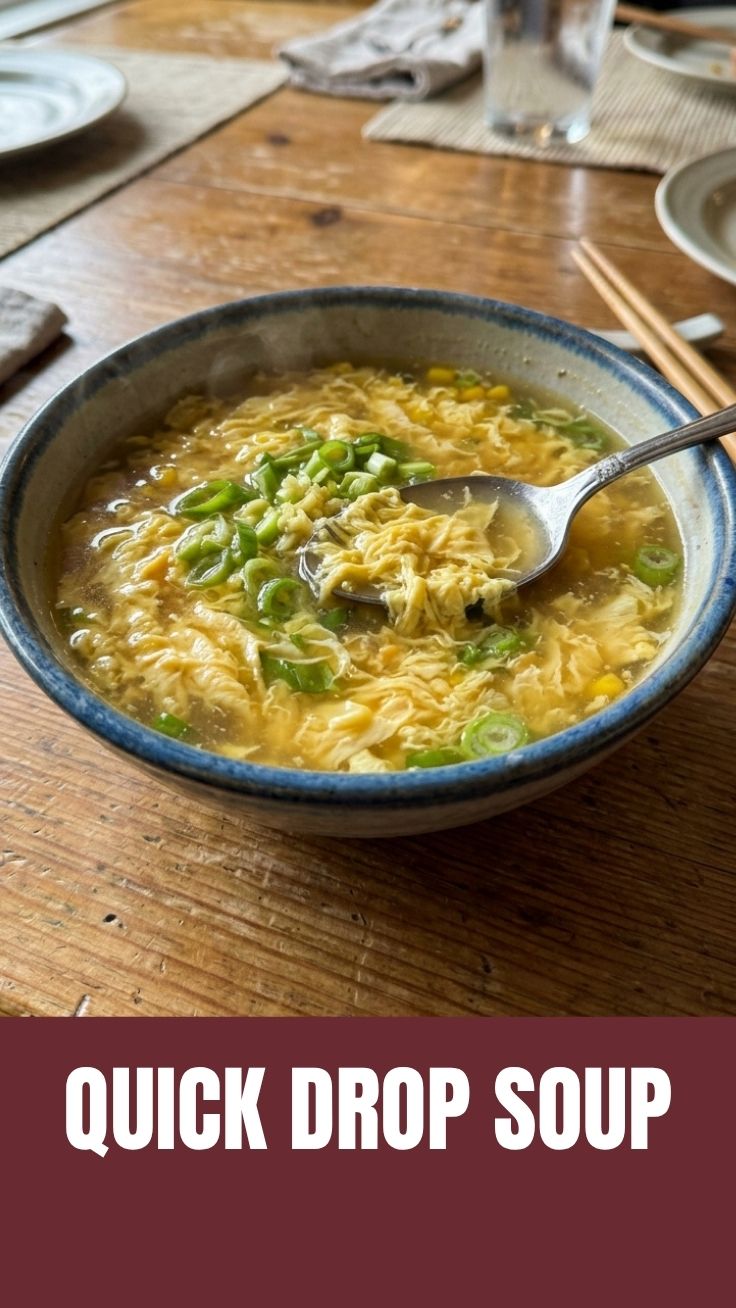
– Prep Time: 5 minutes (chop green onions, grate ginger, beat eggs)
– Cook Time: 8–10 minutes total
– No resting or marinating required
This soup comes together so quickly that you can prepare the ingredients while the broth heats. For best results, have everything measured and ready before you turn on the stove—this is your mise en place moment.
—
Step-by-Step Instructions
1. Bring the broth to a gentle simmer in a medium saucepan over medium-high heat. Add the grated ginger and let it infuse for 2 minutes. Avoid a rolling boil – you want gentle bubbles.
2. Create the cornstarch slurry by stirring cornstarch and cold water in a small bowl until completely smooth. Pour into the simmering broth while whisking continuously. The soup will thicken within 30 seconds. This is your base.
3. Season the broth with salt and white pepper. Taste and adjust – this is where you build depth. The secret to authentic Egg Drop Soup lies in balancing salt and broth richness.
4. Pour the beaten eggs in a steady stream while stirring the broth in one direction with a fork or chopsticks. For thin, wispy ribbons, pour slowly. For thicker egg strands, pour more quickly. Remove from heat immediately after adding eggs – they continue cooking in the hot liquid.
5. Finish and serve by drizzling sesame oil and scattering green onions on top. As you explore more Chinese Recipes, you’ll notice this finishing step is consistent across many soups and stir-fries – a final aromatic touch.
—
Nutritional Benefits & Advantages
This Egg Drop Soup is naturally low in calories (about 80–100 calories per serving) and provides a solid source of protein from the eggs. The broth base supports hydration and delivers electrolytes, especially if using homemade stock with bones. Ginger offers anti-inflammatory properties, while green onions supply vitamins A and C. Because it contains no cream or heavy thickeners, this soup fits into low-fat and gluten-free diets (just confirm your broth is gluten-free). It’s also a satisfying starter that helps with portion control during meals.
—
Tips, Variations & Cooking Advice
– Make it spicy: Add 1 teaspoon chili oil or red pepper flakes while simmering.
– Add protein: Drop in cooked shredded chicken or firm tofu cubes before adding eggs.
– Vegetable boost: Stir in frozen peas or corn after the cornstarch slurry.
– Thicker soup: Increase cornstarch to 2 tablespoons for a more substantial texture.
– Dairy-free option: This recipe is naturally dairy-free; skip the sesame oil if avoiding all fats.
– Serve over rice: For a heartier meal, ladle over steamed jasmine rice.
—
Common Mistakes to Avoid
– Boiling the broth too vigorously – This breaks the delicate egg ribbons and creates a cloudy, scrambled mess. Keep heat at medium-low.
– Adding eggs to still-boiling liquid – Remove the pot from the burner first, then pour eggs slowly.
– Over-thickening the base – The soup should be slightly thicker than water but still pourable. If it’s glue-like, add a splash of hot water.
– Skipping the ginger – Even a small amount adds essential warmth that elevates the entire dish.
—
Storage & Meal Prep Tips
– Refrigerate leftovers in an airtight container for up to 3 days. The soup will thicken as it sits.
– Freezing is not recommended – eggs become rubbery and the texture degrades significantly.
– Reheat gently on the stovetop over low heat, stirring occasionally. Add a splash of broth or water to thin if needed. Avoid microwaving on high, which can turn the eggs tough.
—
Conclusion
Mastering Egg Drop Soup at home is one of the fastest ways to elevate your cooking confidence. It teaches you fundamental techniques—like temperature control and egg ribboning—that apply directly to countless Chinese Recipes. With just five minutes of prep and ten minutes of cooking, you’ll never reach for takeout again. Try this recipe tonight, snap a photo of your silky soup, and share your results in the comments. For more quick Asian-inspired dishes, explore our guide to building a weeknight stir-fry rotation.
—
FAQs
1. Can I use stock instead of broth?
Yes, stock adds richer flavor. Just adjust salt accordingly, as stock may be unsalted.
2. Why did my eggs turn into a solid mass?
You likely added the eggs when the broth was boiling. Remove from heat and stir gently for thin ribbons.
3. Can I make this without cornstarch?
Absolutely – the soup will be thinner but still delicious. Omit the slurry entirely.
4. How long can I keep leftover soup?
Store in the fridge for up to 3 days. Do not freeze.
5. Is this recipe gluten-free?
Yes, as long as you use certified gluten-free broth and cornstarch. Arrowroot powder is also gluten-free.
Quick way to grow your skills with Egg Drop Soup in 4 easy steps.
Ingredients
Equipment
Method
- In a medium saucepan, bring the chicken broth to a simmer over medium heat. While the broth is heating, whisk together the cornstarch and cold water in a small bowl to create a slurry.
- Slowly pour the cornstarch slurry into the simmering broth while stirring continuously. Continue to stir until the soup thickens slightly.
- Gently pour the beaten eggs into the thickened soup in a slow, steady stream, stirring constantly with a fork or chopsticks to create delicate egg ribbons. Once all the egg is added, stir in the soy sauce and sesame oil.
- Serve the egg drop soup hot, garnished with sliced green onions.