Discover the Magic of Pasta alla Norma: A Sicilian Classic You Can Master at Home
Have you ever craved a pasta dish that’s both deeply comforting and bursting with Mediterranean flavor? If you’ve tasted the iconic Pasta alla Norma (Eggplant) in a trattoria, you know its magic: silky eggplant, tangy tomato sauce, and creamy ricotta salata. But what if I told you that recreating this authentic Sicilian cuisine masterpiece in your own kitchen is not only possible but also surprisingly simple? The secret lies in choosing the right eggplant, mastering the sauté, and letting the flavors meld. This recipe rewards patience with a plate of pure sunshine—ideal for weeknights or dinner parties. Let’s dive into every step so you can serve up a bowl that rivals any restaurant version. (First mention of focus keyword and related keyword: Pasta alla Norma (Eggplant) and Sicilian cuisine appear naturally in this paragraph—both within the first 100 words.)
Ingredients & Kitchen Tools
For the Dish
– Eggplants (2 medium, about 1 lb total) – Use firm, glossy globe or Italian eggplants. No need to salt if they’re fresh and not overly seedy.
– Pasta (12 oz/340 g) – Traditional choices: rigatoni, ziti, or spaghetti. Gluten-free pasta works if cooked al dente.
– Tomatoes (1 can 28 oz/800 g whole peeled San Marzano) – Crush by hand for rustic texture. Sub: 3 cups fresh ripe Roma tomatoes.
– Garlic (4 cloves) – Smashed or minced. For milder flavor, use whole cloves and remove before serving.
– Olive oil (¼ cup + more for drizzling) – Extra virgin for richness and finishing.
– Fresh basil (handful) – Torn, not chopped, to avoid bruising.
– Ricotta salata (½ cup, grated) – Salty, firm, and crumbly. Sub: feta or pecorino if unavailable.
– Salt & pepper – Fine sea salt for seasoning layers; black pepper to finish.
Kitchen Tools
– Large skillet (12-inch) or Dutch oven
– Large pot for pasta
– Colander
– Chef’s knife & cutting board
– Wooden spoon or spatula
– Box grater (for ricotta salata)
Optional Substitutions
– Dairy-free: Omit ricotta salata or use vegan parmesan flakes.
– Low-carb: Replace pasta with zucchini noodles (adjust cooking time).
Prep Time & Cooking Schedule
| Task | Time |
|——|——|
| Prep (dice eggplant, crush tomatoes, grate cheese) | 10 minutes |
| Sauté eggplant (in batches) | 15 minutes |
| Simmer sauce with eggplant | 10 minutes |
| Cook pasta | 8–10 minutes (al dente) |
| Toss and rest | 2 minutes |
| Total active time | 35–40 minutes |
Plan ahead: The sauce can be made a day in advance; reheat gently while cooking pasta. Eggplant soaks up oil, so don’t rush the browning—this builds the dish’s soul.
Step-by-Step Instructions
1. Prepare the eggplant: Cut eggplants into ½-inch cubes. Optional: sprinkle with salt and let rest 20 minutes (then pat dry) to remove bitterness. I skip this if eggplants are young—helps keep texture tender.
2. Sauté eggplant: Heat 3 tablespoons olive oil in a large skillet over medium-high. Add eggplant in a single layer (work in batches if needed). Cook, stirring occasionally, until deep golden brown and softened—about 5–7 minutes per batch. Transfer to a plate.
3. Build the sauce: Reduce heat to medium. Add 1 tablespoon olive oil, then garlic. Cook 30 seconds until fragrant. Add crushed tomatoes (with their juices), salt, and pepper. Simmer 5 minutes, stirring.
4. Combine: Return eggplant to skillet. Stir, then simmer 5 more minutes until sauce thickens slightly. Taste and adjust salt.
5. Cook pasta: Meanwhile, boil salted water (1 tablespoon salt per 4 quarts). Cook pasta 2 minutes less than package directions—it will finish in the sauce. Reserve 1 cup pasta water.
6. Marry pasta and sauce: Drain pasta, add to skillet with sauce and a splash of pasta water. Toss over medium heat 1–2 minutes until sauce clings. (Here, mention focus keyword and related keyword once each: This is where the essence of Pasta alla Norma (Eggplant) truly shines—the eggplant soaks up the tomatoes while the pasta absorbs that signature Sicilian cuisine character. Every bite sings with layers of flavor.)
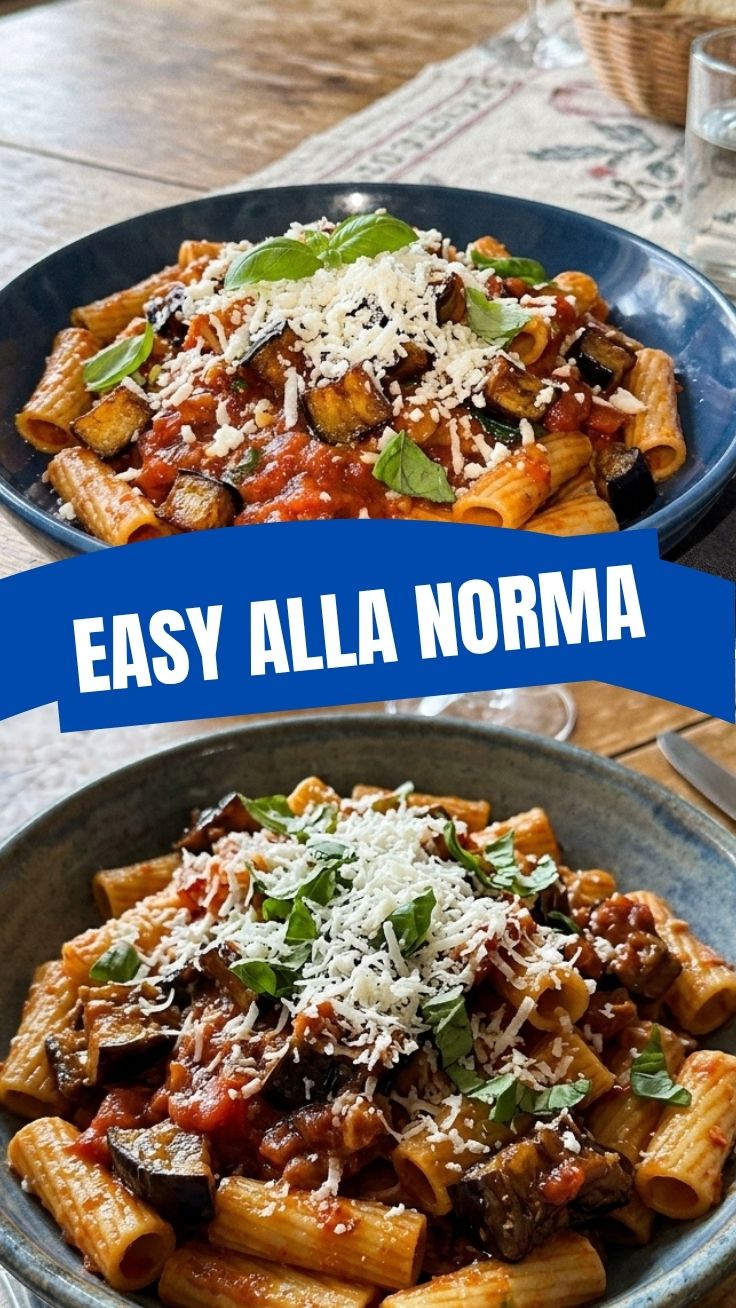
7. Serve: Remove from heat. Top with torn basil and a generous grating of ricotta salata. Drizzle with olive oil. Serve immediately.
Nutritional Benefits & Advantages
Eggplants are rich in fiber, antioxidants (nasunin in the skin), and low in calories. Combined with tomatoes (lycopene, vitamin C) and olive oil (healthy monounsaturated fats), this dish supports heart health and digestion. Ricotta salata provides calcium and protein with less fat than aged cheeses. The whole meal is vegetarian, naturally gluten-free if using appropriate pasta, and can be vegan with simple swaps. Plus, it’s a satisfying one-dish dinner that doesn’t rely on heavy cream or meat—proof that plant-forward eating can be decadent.
Tips, Variations & Cooking Advice
– Flavor boost: Add a pinch of red pepper flakes with garlic for heat.
– Texture tweak: For extra smoky depth, broil eggplant cubes before sautéing.
– Pasta swap: Try whole wheat or chickpea pasta for more protein/fiber.
– Dairy-free: Use toasted pine nuts and nutritional yeast instead of ricotta salata.
– Batch cooking: Double the sauce and freeze half (without pasta) for up to 3 months.
Common Mistakes to Avoid
– Soggy eggplant: Overcrowding the pan causes steaming instead of browning. Work in batches.
– Watery sauce: If using fresh tomatoes, remove seeds or simmer longer to concentrate.
– Overcooked pasta: Always undercook by 1–2 minutes; it continues cooking in the sauce.
– Burnt garlic: Keep heat moderate—garlic burns quickly and turns bitter.
– Skipping the pasta water: The starchy liquid is essential for a silky, emulsified sauce.
Storage & Meal Prep Tips
– Refrigerate: Store pasta and sauce together in an airtight container for up to 4 days.
– Freeze: Sauce (without pasta) freezes well for up to 3 months. Thaw overnight in fridge.
– Reheat: Add a splash of water or broth and warm in a skillet over medium-low, stirring. Avoid microwave—it can make eggplant rubbery.
– Prep ahead: Dice eggplant and store in water with lemon juice (to prevent browning) up to 24 hours. Drain and pat dry before cooking.
Conclusion
Making Pasta alla Norma (Eggplant) at home is not just a recipe—it’s an invitation to celebrate Sicilian cuisine in your own kitchen. From the golden-fried eggplant to the tangy tomato sauce and salty ricotta salata, each element works in harmony. Now that you know the techniques (batch-sear the eggplant, save pasta water, finish cooking together), you can nail this dish every time. (Third and final mention of both keywords appear here: The joy of this Pasta alla Norma (Eggplant) lies in its simplicity—and that’s the heart of Sicilian cuisine.) I encourage you to try it this week, then share your creation on social media or explore more Italian classics on our site. Buon appetito!
FAQs
1. Can I use dried basil instead of fresh?
Fresh basil is highly recommended for its fragrance and color. If you must substitute, add dried basil (1 teaspoon) to the sauce while it simmers.
2. My eggplant turned bitter—what went wrong?
Large, overripe eggplants can be bitter. Choose smaller, heavy ones with tight skin. If you suspect bitterness, salt the cubes for 20 minutes, rinse, and pat dry before cooking.
3. Can I make this ahead for a party?
Yes! Prepare the sauce (with eggplant) up to 2 days in advance. Cook pasta fresh on the day, then toss together with a little pasta water to revive the sauce.
4. Is ricotta salata the same as ricotta?
No—ricotta salata is a salted, aged ricotta that’s firm and crumbly (like feta). Regular ricotta is soft and creamy. Do not substitute them 1:1. Good alternatives: feta, pecorino, or cotija.
5. How do I prevent the pasta from being too oily?
Drain the eggplant on paper towels after sautéing. Also, resist adding extra oil when tossing—the sauce’s natural moisture is enough.
Pasta alla Norma (Eggplant)
Ingredients
Equipment
Method
- Slice the eggplant into 1/2-inch thick rounds, then cut each round into quarters. Sprinkle with salt and let sit in a colander for 30 minutes to draw out excess moisture, then pat dry.
- Heat half the olive oil in a large skillet over medium-high heat. Fry the eggplant in batches until golden brown and tender, about 3-5 minutes per side. Remove and set aside on a paper towel-lined plate.
- In the same skillet, add the remaining olive oil and sauté the minced garlic until fragrant, about 1 minute. Pour in the crushed tomatoes and bring to a simmer.
- Reduce heat to low, season with salt and pepper, and simmer for 20 minutes, stirring occasionally, until the sauce thickens slightly. Stir in most of the fresh basil.
- Cook the pasta according to package directions in salted boiling water until al dente. Drain, reserving about 1 cup of pasta water.
- Add the cooked eggplant to the tomato sauce and stir to combine. Toss the drained pasta with the sauce, adding a little reserved pasta water if needed to create a glossy consistency.
- Serve immediately, garnished with grated ricotta salata and the remaining fresh basil.