Why This Caprese Pasta Salad Will Become Your Go‑To Summer Dish
Have you ever wished for a meal that tastes like a fresh Italian garden but comes together in under 30 minutes? That’s exactly what this Caprese Pasta Salad delivers—a vibrant bowl of tender pasta, juicy tomatoes, creamy mozzarella, and fragrant basil, all tied together with a sweet‑tangy balsamic glaze. Preparing it at home not only saves you money but lets you control the quality of every ingredient, from the ripeness of the tomatoes to the saltiness of the cheese.
This dish is more than a pasta salad; it’s a celebration of simplicity inspired by the classic Caprese salad. By turning those iconic flavors into a hearty pasta dish, you get a meal that works as a quick lunch, a picnic star, or a side for grilled meats. The balance of fresh basil, creamy mozzarella, and sweet balsamic makes every forkful irresistible. Learn why preparing it at home is valuable—you’ll never reach for a store‑bought version again.
Ingredients & Kitchen Tools
Pasta (8 oz / 225 g): Use short shapes like fusilli, farfalle, or penne to catch the dressing and cheese.
Cherry or grape tomatoes (2 cups): Halved; they’re sweeter and hold up better than large slicing tomatoes.
Fresh mozzarella pearls (8 oz / 225 g): Bite‑sized bocconcini work perfectly; if using a large ball, dice it.
Fresh basil leaves (½ cup, packed): Tear or chiffonade just before serving to preserve flavor.
Balsamic glaze (3–4 tbsp): Store‑bought or homemade by simmering balsamic vinegar until syrupy.
Extra‑virgin olive oil (3 tbsp): A fruity oil enhances the dressing.
Garlic (1 small clove, minced) – optional, for a savory kick.
Salt and black pepper to taste.
Tools: Large pot for boiling, colander, large mixing bowl, sharp knife, cutting board, measuring spoons.
Optional substitutions: Gluten‑free pasta (rice or chickpea), dairy‑free mozzarella, or a drizzle of honey if you skip the glaze.
Prep Time & Cooking Schedule
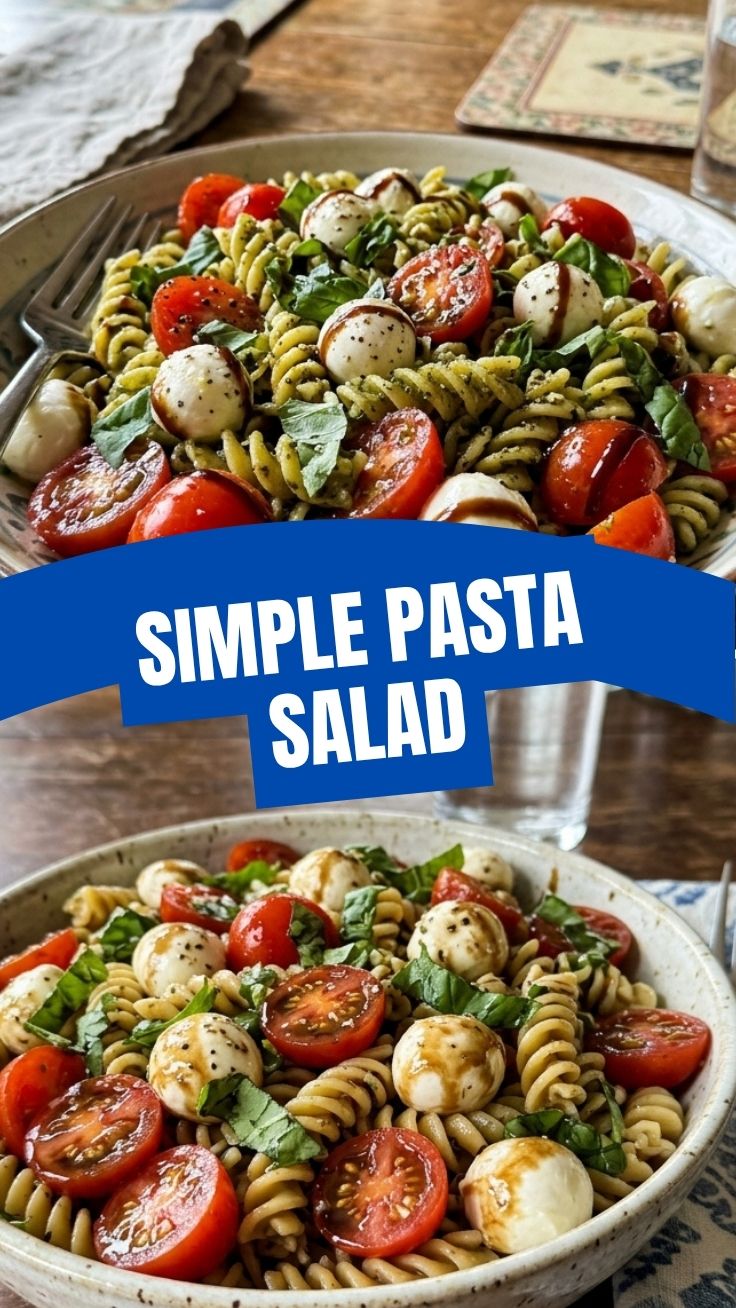
– Prep time: 10 minutes (halve tomatoes, tear basil, drain mozzarella)
– Cook time: 10–12 minutes (pasta al dente)
– Resting time: 5 minutes (allow flavors to meld after tossing)
– Total active time: ~22 minutes
Why these times matter: Cooking pasta just until al dente ensures it doesn’t turn mushy when dressed. Resting briefly lets the balsamic glaze soak into the pasta without making it soggy. Plan ahead—this salad tastes even better after 30 minutes in the fridge.
Step‑by‑Step Instructions
1. Cook the pasta – Bring a large pot of generously salted water to a rolling boil. Add pasta and cook until al dente according to package directions (typically 9–11 minutes). Texture cue: The pasta should be tender but still offer a slight resistance when bitten.
2. Drain and cool – Pour pasta into a colander, then rinse briefly with cool water to stop the cooking. Shake off excess water and transfer to a large mixing bowl. Temperature control: Do not let the pasta sit in cold water for more than 30 seconds; a quick rinse is enough.
3. Prepare the fresh ingredients – While the pasta cooks, halve the cherry tomatoes, tear the basil leaves, and drain the mozzarella pearls. If your mozzarella is in brine, pat it dry with paper towels to avoid watering down the dressing.
4. Combine and dress – Add the tomatoes, mozzarella, and basil to the cooled pasta. Drizzle with olive oil and 2 tbsp of balsamic glaze. Toss gently with a large spoon or spatula to coat everything evenly. Seasoning adjustment: Start with half the glaze, taste, then add more—some glazes are sweeter than others.
5. Season and finish – Add minced garlic (if using), a pinch of salt, and a few cracks of black pepper. Give it one final toss. For best texture, let the salad rest for 5 minutes. During this rest, the flavors meld beautifully—this is the moment your Caprese Pasta Salad truly comes together, much like the way a classic Caprese salad relies on simple, high‑quality ingredients to shine.
6. Serve – Transfer to a serving platter or individual bowls. Drizzle additional balsamic glaze on top for a glossy finish. Garnish with extra basil leaves.
Nutritional Benefits & Advantages
This salad packs a nutritional punch. Tomatoes are rich in lycopene (a powerful antioxidant) and vitamin C. Fresh mozzarella provides protein and calcium, while olive oil delivers heart‑healthy monounsaturated fats. Basil adds anti‑inflammatory compounds and a burst of flavor without sodium. Pasta offers complex carbohydrates for steady energy. The dish is naturally vegetarian and can be made vegan by swapping dairy mozzarella for a cashew‑based version. Because it’s served at room temperature, you avoid the excess fats and sodium often found in creamy pasta salads.
Tips, Variations & Cooking Advice
– Flavor twist: Add a handful of toasted pine nuts or walnuts for crunch.
– Ingredient swap: Use sun‑dried tomatoes (rehydrated) instead of fresh cherry tomatoes in winter.
– Alternative method: Grill the cherry tomatoes in a hot pan for 2 minutes before adding—they develop a smoky sweetness.
– Portion change: Double the vegetables to make it a lighter “more veg, less pasta” salad.
– Dietary adaptation: For a gluten‑free version, use chickpea or lentil pasta; for dairy‑free, opt for vegan mozzarella or omit the cheese and add marinated artichoke hearts.
Common Mistakes to Avoid
– Overcooking the pasta – Mushy pasta ruins the texture. Set a timer and test a piece a minute before the package suggests.
– Using cold mozzarella straight from the fridge – Bring it to room temperature for best creaminess and flavor cohesion.
– Skipping the salt in the pasta water – Unsalted pasta leads to a bland salad. The water should taste like the sea.
– Adding all the balsamic glaze at once – Different brands vary in sweetness and thickness. Add gradually; you can always add more.
– Dressing the salad while pasta is hot – Hot pasta absorbs too much liquid, making the salad greasy. Cool it to warm/room temperature first.
Storage & Meal Prep Tips
– Refrigerate leftovers in an airtight container for up to 3 days. The basil may darken—that’s okay; it still tastes fine.
– Freezing is not recommended because mozzarella and fresh basil become watery and rubbery when thawed.
– Reheating – Enjoy the salad cold, or bring it to room temperature for 15 minutes. If you prefer it warm, microwave in 20‑second bursts, but note the tomatoes will soften.
– Meal prep: Cook pasta and chop tomatoes up to a day ahead. Store separately, then toss with dressing and cheese just before serving to prevent sogginess.
Conclusion
This vibrant dish proves that a handful of quality ingredients can create something memorable. The Caprese Pasta Salad offers a satisfying meal that’s as perfect for a busy weeknight as it is for a backyard barbecue. By embracing the spirit of a classic Caprese salad—ripe tomatoes, creamy mozzarella, and fresh basil—you get a recipe that’s endlessly adaptable and always delicious. Try it once, and you’ll find yourself making excuses to serve it again. Share your results in the comments or explore more inspired Italian‑style recipes on our site.
FAQs
1. Can I use a different type of pasta?
Yes – any short pasta works. Avoid long strands like spaghetti because they don’t hold the bits of tomato and cheese as well.
2. How do I prevent the mozzarella from becoming rubbery?
Use fresh mozzarella (not low‑moisture pizza cheese) and add it just before serving. If making ahead, keep the cheese separate until the last minute.
3. What if I don’t have balsamic glaze?
Make your own: simmer ½ cup balsamic vinegar with 1 tbsp brown sugar over medium heat until reduced by half (about 5 minutes). Let cool before using.
4. Can this salad be served warm?
Absolutely – just skip the cool rinse after draining the pasta. Toss everything while the pasta is still warm; the cheese will soften beautifully.
5. How long will it last in the fridge?
Up to 3 days in an airtight container. The basil may wilt, but you can freshen it with a few new leaves before serving.
Quick way to grow your Caprese Pasta Salad Caprese Pasta Salad
Ingredients
Equipment
Method
- Cook the pasta according to package directions, then drain and rinse with cold water to cool.
- While the pasta cooks, halve the cherry tomatoes and slice the mozzarella balls.
- Prepare the balsamic glaze by simmering balsamic vinegar and honey in a small saucepan until thickened.
- In a large bowl, combine the cooked pasta, halved cherry tomatoes, sliced mozzarella, and fresh basil leaves.
- Drizzle the balsamic glaze over the pasta salad and toss gently to combine.
- Serve immediately or chill for later enjoyment.