Celebrate Dad with the Ultimate Father’s Day Grilled Steak (Ribeye): A Recipe for Unforgettable Flavor
Are you ready to truly impress Dad this Father’s Day? Forget the crowded restaurants and predictable gifts. This year, imagine the look on his face as he savors a perfectly cooked, juicy Father’s Day Grilled Steak (Ribeye), prepared with love right in your own backyard. There’s something incredibly special and personal about a home-cooked meal, especially when it’s a show-stopping dish tailored to perfection. Mastering the art of grilling a superb ribeye isn’t just about food; it’s about creating memories and sharing a deeply satisfying culinary experience. Dive into this guide and discover how to craft an unforgettable meal that celebrates the amazing dads in your life, complete with expert tips for maximizing flavor and tenderness. Preparing a sensational grilled ribeye at home allows for unparalleled control over quality and taste, transforming a simple meal into a gourmet delight.
Ingredients & Kitchen Tools
To achieve grilling perfection for your Father’s Day Grilled Steak (Ribeye), gather these essential items:
- Ribeye Steaks (2 x 1.5-inch thick, bone-in or boneless): The star of the show. Aim for well-marbled cuts for maximum flavor and tenderness.
- Coarse Sea Salt (e.g., Kosher salt): Essential for seasoning, helping to tenderize and draw out moisture.
- Freshly Ground Black Pepper: Adds a sharp, aromatic kick.
- Olive Oil (Extra Virgin): For coating the steaks, preventing sticking and promoting even searing.
- Garlic Cloves (4-6, smashed): Infuses the steak with subtle, aromatic flavor.
- Fresh Rosemary Sprigs (2-3): Earthy and piney notes that beautifully complement red meat.
- Fresh Thyme Sprigs (2-3): Delicate herbaceous flavors that enhance the steak’s richness.
- Unsalted Butter (2-4 tablespoons): For basting during the final stages of cooking, adding richness and a golden crust.
Kitchen Tools:
- Grill (Charcoal or Gas): Your primary cooking apparatus. Ensure it’s clean and well-maintained.
- Tongs: For safely flipping steaks without piercing them (which can release juices).
- Meat Thermometer (Instant-Read): Crucial for achieving perfect doneness.
- Cutting Board (Large, with a juice groove): For prep and resting the cooked steak.
- Small Saucepan (Optional, for butter basting): To melt butter with herbs and garlic.
- Aluminum Foil: For tenting the steak during resting.
- Paper Towels: For patting steaks dry.
Prep Time & Cooking Schedule
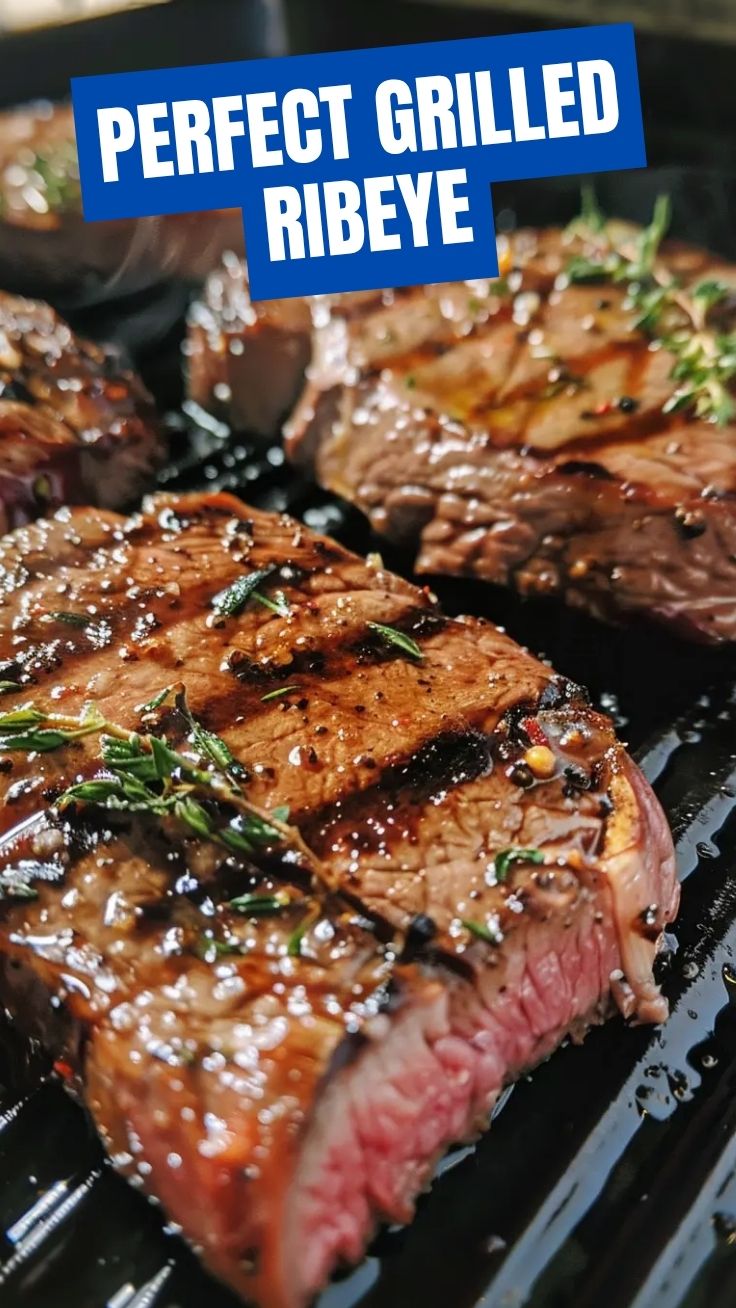
- Prep Time: 20 minutes (plus 30-60 minutes for bringing steaks to room temperature)
- Marinating Time (Optional, with rub): 1-2 hours or overnight in the refrigerator (if using a dry rub)
- Grill Preheat Time: 10-15 minutes
- Cook Time: 8-15 minutes (depending on thickness and desired doneness)
- Resting Time: 10 minutes
Planning Ahead: For the best results, remove your ribeye steaks from the refrigerator about 30-60 minutes before grilling. This allows them to come to room temperature, ensuring more even cooking. Season them generously during this time. Preheat your grill while the steaks rest to achieve the ideal searing temperature.
Step-by-Step Instructions
1. Bring to Temperature & Season: Remove the Father’s Day Grilled Steak (Ribeye) from the refrigerator at least 30 minutes before cooking. Pat the steaks thoroughly dry with paper towels. This is crucial for a good sear. Drizzle lightly with olive oil, then generously season both sides with coarse sea salt and freshly ground black pepper. Don’t be shy with the seasoning!
2. Preheat Your Grill: For a gas grill, preheat to high heat (500-550°F / 260-290°C). For a charcoal grill, arrange coals for direct high heat, aiming for a similar temperature.
3. Sear the Steaks: Place the seasoned ribeye recipes directly over the hottest part of the grill. Sear for 2-3 minutes per side to develop a beautiful crust.
4. Reduce Heat & Finish Cooking: If you’re using a gas grill, reduce the heat to medium-low. If using a charcoal grill, move the steaks to a cooler part of the grate or raise the grill rack. Insert a meat thermometer into the thickest part of the steak, avoiding the bone.
5. Baste (Optional, but Recommended): In the last few minutes of cooking, melt butter in a small saucepan with smashed garlic, rosemary, and thyme. Use tongs to hold the steak, then spoon the infused butter over it, coating thoroughly. This adds incredible flavor and a golden finish.
6. Cook to Desired Doneness: Continue grilling, flipping every 1-2 minutes, until the internal temperature reaches your desired doneness:
* Rare: 125-130°F (52-54°C)
* Medium-Rare: 130-135°F (54-57°C)
* Medium: 135-140°F (57-60°C)
* Medium-Well: 140-145°F (60-63°C)
7. Rest the Steaks: Once the desired temperature is reached, immediately remove the steaks from the grill. Place them on a clean cutting board and tent loosely with aluminum foil. Let them rest for at least 10 minutes (preferably 15). This allows the juices to redistribute, ensuring a tender and moist steak.
8. Slice and Serve: Slice against the grain, serve immediately, and prepare for rave reviews!
Nutritional Benefits & Advantages
Ribeye steaks, while known for their rich flavor and marbling, also offer significant nutritional benefits. They are an excellent source of high-quality protein, essential for muscle repair, growth, and overall bodily function. A typical serving provides a substantial amount of iron, vital for oxygen transport and preventing anemia, and zinc, which plays a crucial role in immune function and wound healing. Furthermore, ribeye contains B vitamins like B12, necessary for nerve function and energy metabolism. The marbling, while contributing to the steak’s tenderness and taste, also provides monounsaturated fats, which in moderation can be part of a balanced diet. Grilling as a cooking method often results in less added fat compared to pan-frying, making it a healthier option for enjoying this delicious cut.
Tips, Variations & Cooking Advice
- Flavor Variations: Experiment with different dry rubs. Smoked paprika, chili powder, and a touch of brown sugar can add a smoky-sweet dimension. For an Asian twist, try a marinade with soy sauce, ginger, and sesame oil (but keep marinating time shorter, about 30 minutes, to avoid overwhelming the beef).
- Ingredient Swaps: No rosemary and thyme? Fresh oregano or marjoram can offer similar aromatic notes. If you don’t have fresh garlic, garlic powder can be used, but use sparingly.
- Alternative Cooking Methods: If grilling isn’t an option, a cast-iron skillet on the stovetop can achieve a fantastic sear. Heat the skillet to smoking hot, sear for 2-3 minutes per side, then transfer to a preheated oven (400°F/200°C) to finish cooking to your desired doneness.
- Portion Changes: Adjust steak size and quantity based on your guest count. Remember that thicker steaks will require slightly longer cooking times at the same temperature.
- Dietary Adaptations: For a gluten-free meal, ensure any rubs or marinades are certified gluten-free. Ribeye is naturally dairy-free (if you omit the butter basting).
Common Mistakes to Avoid
- Grilling Cold Steaks: Putting cold steaks directly on the grill leads to uneven cooking—burnt outside, raw inside. Always let them come to room temperature.
- Not Patting Steaks Dry: Moisture on the surface prevents a good sear, leading to a steamed rather than crusty exterior. Use paper towels generously.
- Under-Seasoning: Beef needs a generous amount of salt and pepper to truly shine. Season from a height for even distribution.
- Overcooking: The biggest sin with a beautiful ribeye. Use an instant-read thermometer and pull the steaks off earlier than your target temperature to account for carryover cooking.
- Not Resting the Steaks: Cutting into a steak immediately after grilling causes all the delicious juices to run out, resulting in a dry steak. Resting allows juices to redistribute.
- Flipping Too Frequently: Resist the urge to constantly flip. Let the steak develop a proper crust on each side before turning.
Storage & Meal Prep Tips
Storage: Leftover grilled ribeye can be stored in an airtight container in the refrigerator for 3-4 days. To maintain freshness and prevent drying out, slice the steak before storing or wrap it tightly in plastic wrap or foil.
Freezing: For longer storage, freeze cooked steak for up to 3 months. Wrap individual slices or portions tightly in plastic wrap, then an additional layer of aluminum foil, or place in a freezer-safe bag, removing as much air as possible. Label with the date.
Reheating: To maintain texture and flavor, avoid microwaving.
- Oven Method: Preheat oven to 250°F (120°C). Place steak on a wire rack over a baking sheet and heat for 15-20 minutes, or until warmed through.
- Skillet Method: Heat a lightly oiled cast-iron skillet over medium-low heat. Add sliced steak and warm gently for 2-3 minutes per side.
- Sous Vide (Best Method): If you have a sous vide, reheat cooked steak at 130°F (54°C) for 30-45 minutes. This is ideal for bringing it back to a perfect medium-rare without overcooking.
Conclusion
Grilling the perfect Father’s Day Grilled Steak (Ribeye) is more than just cooking; it’s an art form that yields incredible rewards. With the right techniques and a little confidence, you can create a culinary masterpiece that will be the highlight of any celebration. From selecting the perfect cut to mastering the sear and the all-important rest, every step contributes to a succulent, flavorful experience. This year, make it truly special by preparing this exceptional dish. We encourage you to try mastering these ribeye recipes and share your grilling triumphs with us! Your dad, and your taste buds, will thank you.
FAQs
Q1: How do I choose a good ribeye steak?
A1: Look for good marbling (streaks of fat within the muscle)—this renders down during cooking to keep the steak juicy and flavorful. A good thickness (1.25-1.5 inches) is also ideal for achieving a nice sear without overcooking the interior.
Q2: Can I use a marinade instead of just salt and pepper?
A2: Absolutely! Marinades can add layers of flavor, but be mindful of their ingredients. Acidic marinades (lemon juice, vinegar) can “cook” the meat if left for too long. For a robust ribeye, a simple dry rub or a quick, oil-based marinade is often best to let the beef’s natural flavor shine.
Q3: My steak always comes out tough. What am I doing wrong?
A3: Common culprits include overcooking, not letting the steak come to room temperature before grilling, and not resting it after cooking. Overcooked meat loses moisture and becomes tough, while skipping the rest means all the internal juices escape when sliced.
Q4: How do I get those perfect grill marks?
A4: Start with a very hot, clean grill. Place the steak on the grates, let it sear undisturbed for 2-3 minutes, then turn it 45 degrees to create a crosshatch pattern. After another 2-3 minutes, flip the steak and repeat on the other side.
Q5: What’s the best way to tell if my steak is done without a thermometer?
A5: While a thermometer is most accurate, you can use the “poke test.” Gently press the center of the steak with your finger:
* Rare: Feels very soft and squishy.
* Medium-Rare: Soft with a slight springiness.
* Medium: Firm with a yielding center.
* Well-Done: Feels very firm, little to no give.
However, for a pricey cut like ribeye, an instant-read thermometer is highly recommended for precision.
Best way to grow a Father's Day Grilled Steak (Ribeye)
Ingredients
Equipment
Method
- Pat the ribeye steaks dry with paper towels and season generously with kosher salt and freshly ground black pepper on both sides.
- Let the steaks sit at room temperature for at least 30 minutes to an hour before grilling; this helps them cook more evenly.
- Preheat your grill to high heat (around 450-500°F or 230-260°C) and clean the grill grates thoroughly.
- Lightly brush the steaks with olive oil just before placing them on the hot grill.
- Sear the steaks for 2-3 minutes per side to get a good crust, then reduce heat to medium-high.
- Continue grilling, flipping every 2-3 minutes, until desired doneness is reached (e.g., 130-135°F for medium-rare, 140-145°F for medium).
- Remove the steaks from the grill and let them rest on a cutting board, loosely tented with foil, for 5-10 minutes.
- Slice against the grain and serve immediately.