Why This Is the Best Baked Salmon Recipe You’ll Ever Make
Have you ever wondered why restaurant-quality salmon tastes so much better than what you make at home? The secret isn’t complicated techniques or expensive equipment—it’s understanding how to balance moisture, seasoning, and temperature. When you learn to prepare baked salmon properly, you unlock a versatile, nutrient-dense meal that takes under 30 minutes from start to finish. Whether you’re a seasoned home cook or a complete beginner, mastering this dish will transform your weeknight dinners. In this comprehensive guide, I’ll walk you through every detail to ensure your salmon comes out tender, flaky, and packed with flavor—no dry, bland fillets ever again.
—
Ingredients & Kitchen Tools
– Salmon fillets (4 pieces, 6 oz each): Look for wild-caught if possible; skin-on helps retain moisture.
– Garlic (4 cloves, minced): Fresh garlic provides the best aroma; avoid pre-minced jars.
– Olive oil (3 tablespoons): Use extra virgin for flavor or light olive oil for a neutral taste.
– Lemon (1 whole): Freshly squeezed juice brightens the dish; zest adds extra citrus notes.
– Dijon mustard (1 tablespoon): Adds tangy depth and helps create a golden crust.
– Honey or maple syrup (1 tablespoon): Balances acidity and promotes caramelization.
– Salt (1 teaspoon): Use kosher salt for even seasoning.
– Black pepper (½ teaspoon): Freshly ground is always superior.
– Fresh dill or parsley (2 tablespoons, chopped): For garnish and freshness.
– Baking sheet or shallow baking dish.
– Parchment paper or aluminum foil (for easy cleanup).
– Small mixing bowl for the glaze.
– Instant-read thermometer (recommended for perfect doneness).
Optional substitutions: Use butter instead of olive oil for richer flavor; replace Dijon with whole-grain mustard; swap salmon for Arctic char or trout.
—
Prep Time & Cooking Schedule
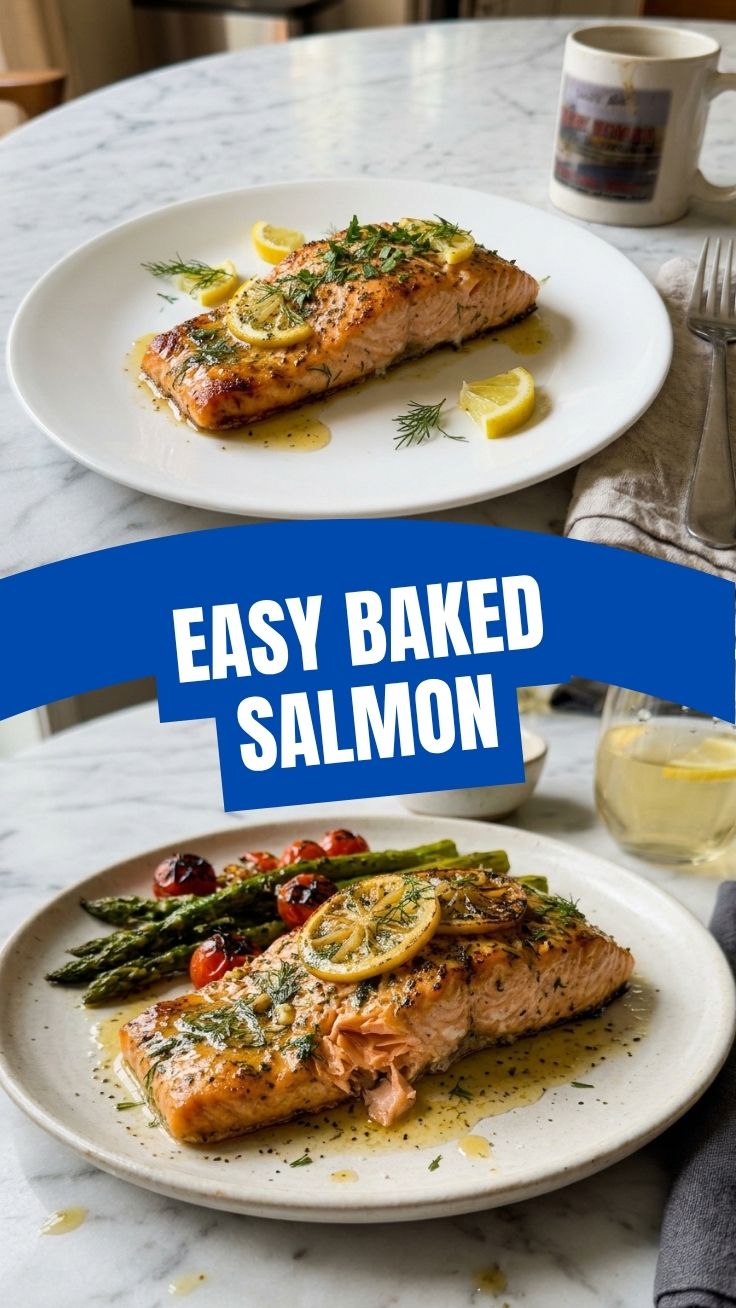
– Prep time: 10 minutes (pat dry fillets, mix glaze, preheat oven)
– Cook time: 12–15 minutes (depending on thickness)
– Rest time: 3–5 minutes (crucial for juiciness)
– Total time: 25–30 minutes
Planning tip: Start preheating your oven to 400°F (200°C) as soon as you begin prepping. Line your baking sheet while the oven heats, so everything is ready to go. For weeknight efficiency, assemble the glaze while the salmon comes to room temperature (about 10 minutes out of the fridge).
—
Step-by-Step Instructions
1. Preheat and prep: Set oven to 400°F (200°C). Line a baking sheet with parchment paper. Pat salmon fillets dry with paper towels—this ensures the glaze sticks and helps achieve a beautiful sear.
2. Make the glaze: In a small bowl, whisk together olive oil, minced garlic, lemon juice (reserve zest for garnish), Dijon mustard, honey (or maple syrup), salt, and pepper. This garlic-lemon-dijon emulsion creates a balanced baked salmon coating that caramelizes beautifully while locking in moisture.
3. Season and coat: Place fillets skin-side down on the prepared sheet. Brush the glaze generously over the tops and sides. For extra flavor, let them sit for 5 minutes while the oven finishes preheating.
4. Bake to perfection: Slide the sheet into the center rack. Cook for 12–15 minutes, depending on fillet thickness (1 inch thick = about 12 minutes). The fish should flake easily with a fork and register 125°F–130°F (52°C–54°C) at the thickest part for medium, or 135°F–140°F for well-done. For a Cedar Plank Salmon variation, soak a cedar plank for 1 hour first, then place the glazed fillets directly on the plank and bake at 375°F for 20–25 minutes.
5. Rest and serve: Remove from oven and let rest for 3 minutes. This allows juices to redistribute. Garnish with fresh dill or parsley, lemon zest, and an extra squeeze of lemon.
Pro tip: If your fillets are uneven in thickness, fold the thin tail end under itself to ensure even cooking.
—
Nutritional Benefits & Advantages
Salmon is a nutritional powerhouse, offering exceptional health advantages:
– Omega-3 fatty acids: A 6-ounce serving provides about 2.5 grams of EPA and DHA, supporting heart health and reducing inflammation.
– High-quality protein: 34 grams per serving, ideal for muscle repair and satiety.
– Vitamin D: One serving covers over 70% of your daily needs, crucial for bone health and immunity.
– B vitamins: Especially B12 and B6, which boost energy and brain function.
– Selenium: An antioxidant mineral that protects cell health.
– Low in mercury: Salmon is among the safest seafood choices.
This baked preparation preserves these nutrients far better than frying, as no oils degrade at high temperatures, and the gentle heat protects heat-sensitive vitamins.
—
Tips Variations & Cooking Advice
Flavor variations:
– Asian-inspired: Swap Dijon for soy sauce, add ginger and sesame oil.
– Mediterranean: Top with cherry tomatoes, olives, and crumbled feta before baking.
– Spicy chipotle: Mix adobo sauce from chipotles with lime and honey.
– Herb crust: Press panko breadcrumbs mixed with fresh herbs onto the glaze.
Cooking method swaps:
– Air fryer: Cook at 375°F for 8–10 minutes for extra-crispy edges.
– Pan-seared then baked: Sear skin-side in a cast-iron skillet for 3 minutes, then transfer to oven for 6–8 minutes.
– Grilled: Place on foil or a grill pan over medium heat for 10 minutes.
Dietary adaptations:
– Gluten-free: This recipe is naturally gluten-free; just ensure your Dijon mustard is certified.
– Dairy-free: Already dairy-free as written; skip butter alternatives.
– Keto: Replace honey with a sugar-free maple syrup or omit sweetener entirely.
—
Common Mistakes to Avoid
1. Overcooking: The #1 mistake. Salmon stays juicy when pulled at 125°F; carry-over cooking adds 5°F. Use a thermometer every time.
2. Skipping the dry: Patting fillets dry removes excess moisture that would steam the fish instead of roasting it.
3. Crowding the pan: Leave at least 1 inch between fillets for hot air to circulate properly.
4. Soggy skin: If keeping skin on, place it directly on the hot pan and avoid flipping—crisp skin needs direct heat.
5. Uneven glazing: Brushing glaze only on top leaves the sides dry; coat all visible surfaces.
—
Storage & Meal Prep Tips
– Refrigeration: Store leftovers in an airtight container for up to 4 days. Remove skin first to prevent sogginess.
– Freezing: Wrap cooked fillets individually in plastic wrap, then foil, and freeze for up to 3 months. Thaw overnight in the fridge.
– Reheating: The best method is gentle: warm in a 300°F oven for 8–10 minutes, or microwave on 50% power in 30-second bursts. Avoid high heat to prevent dryness.
– Meal prep: Bake extra fillets and flake them over salads, grain bowls, or pasta throughout the week. The glaze keeps well refrigerated for up to 5 days.
—
Conclusion
Mastering baked salmon at home is one of the most rewarding kitchen skills you can develop. It’s fast, healthy, and endlessly adaptable—from simple garlic-lemon to sophisticated Cedar Plank Salmon variations. The key takeaways are simple: dry your fillets, season generously, use a thermometer, and always let the fish rest. Once you’ve nailed the basic technique, you can confidently experiment with flavors, cooking methods, and accompaniments. I encourage you to try this recipe tonight, share a photo of your results, and explore more seafood dishes on the blog. Your perfect salmon dinner is just 25 minutes away.
—
FAQs
1. Can I use frozen salmon fillets?
Absolutely. Thaw them overnight in the refrigerator, then pat very dry before glazing. Frozen fillets release more moisture, so extend cooking time by 2–3 minutes.
2. What if I don’t have Dijon mustard?
Substitute whole-grain mustard, stone-ground mustard, or simply omit it. Add an extra teaspoon of lemon juice and a pinch of salt to maintain the acidity balance.
3. How do I tell if salmon is done without a thermometer?
The fish should flake easily when pressed gently with a fork. The center will be slightly translucent for medium, or opaque for well-done. Flaking at the thickest part indicates it’s ready.
4. Can I add vegetables to the same pan?
Yes! Toss asparagus, broccoli florets, or sliced bell peppers with olive oil and salt. Arrange around the salmon on the baking sheet—they’ll cook in the same time frame.
5. Why did my salmon turn out dry despite following the recipe?
Two likely causes: either the fillets were too thin (less than ¾ inch) or they were overcooked by even one minute. Check your oven’s actual temperature with an oven thermometer; many run 15–25°F hotter than displayed.
Baked Salmon
Ingredients
Equipment
Method
- Preheat your oven to 400°F (200°C) and line a baking sheet with parchment paper.
- Place the salmon fillets on the prepared baking sheet, drizzle with olive oil, and season with salt and pepper.
- Bake for 12-15 minutes, or until the salmon is cooked through and flakes easily with a fork.
- Remove from the oven, squeeze fresh lemon juice over the salmon, and serve immediately.