Is Your Banana Bread Always Dry? Here’s the Secret to a Perfectly Moist Loaf Every Time
There’s nothing quite like the warm, comforting aroma of freshly baked banana bread filling your kitchen. It turns humble, overripe bananas into a golden, tender loaf that feels like a hug in every slice. But all too often, home bakers end up with a dry, dense, or sunken result. Why does that happen, and how can you guarantee a moist, flavorful outcome every single time? The answer lies in choosing the right ingredients, respecting your oven temperature, and following a reliable method. When you master this Banana Bread at home, you gain full control over sweetness, texture, and nutrition. Plus, with a proven banana bread recipe as your foundation, you can customize it endlessly without losing that signature moist crumb. Let’s break down everything you need to know—from ingredients and tools to troubleshooting and storage—so you can bake with confidence.
Ingredients & Kitchen Tools
Ingredients
– 3 large ripe bananas (spotty brown peels are ideal for maximum sweetness and moisture)
– 1/3 cup melted unsalted butter (or coconut oil for a dairy‑free option)
– 3/4 cup granulated sugar (reduce to 1/2 cup if your bananas are very sweet; coconut sugar works too)
– 1 large egg (at room temperature for better emulsion)
– 1 teaspoon vanilla extract (pure, not imitation, for deeper flavor)
– 1 teaspoon baking soda (ensure it’s fresh for proper lift)
– Pinch of salt (enhances all flavors)
– 1 1/2 cups all‑purpose flour (spoon and level for accuracy; gluten‑free 1:1 blend works)
– Optional mix‑ins: 1/2 cup chopped walnuts, pecans, or chocolate chips
Kitchen Tools
– 9×5‑inch loaf pan (glass or metal; dark metal may brown faster)
– Large mixing bowl and medium bowl
– Fork or potato masher (for mashing bananas)
– Whisk or wooden spoon
– Rubber spatula (for scraping sides)
– Cooling rack (prevents soggy bottom)
– Measuring cups and spoons
Prep Time & Cooking Schedule
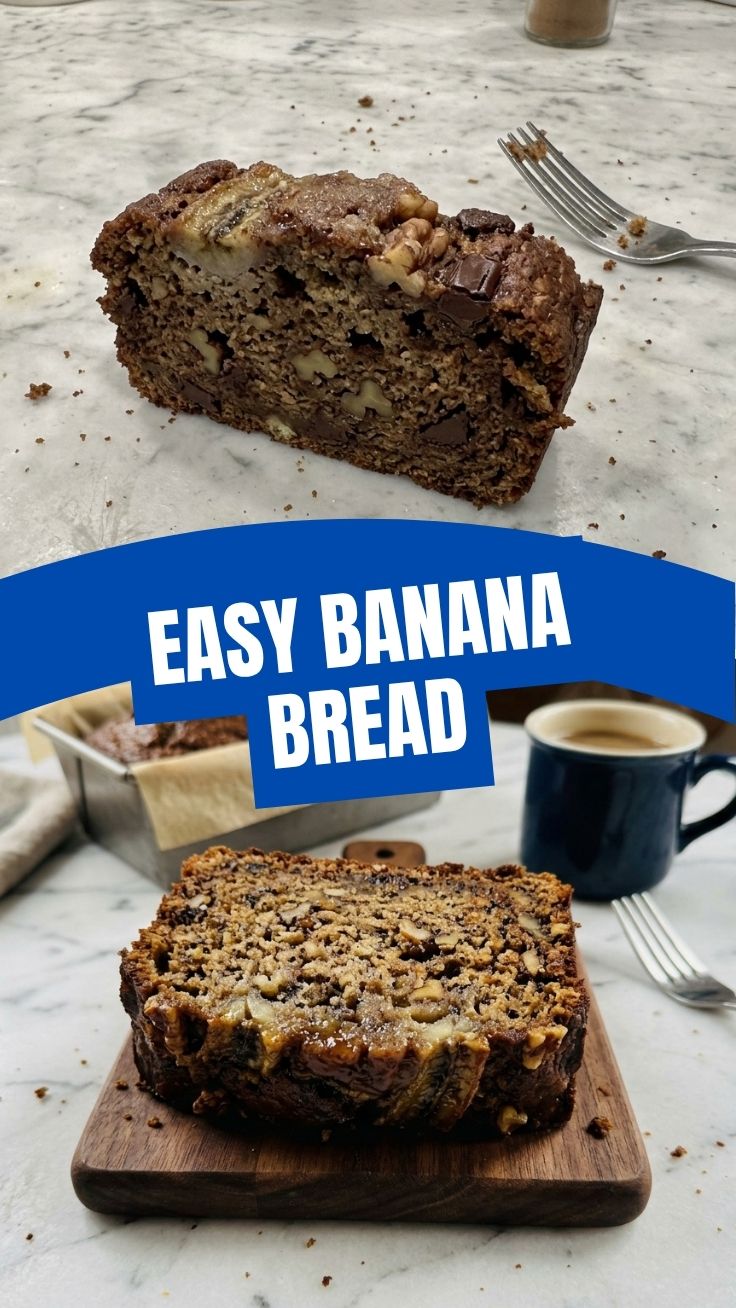
| Stage | Time | Notes |
|——-|——|——-|
| Prep time | 10 minutes | Mash bananas, melt butter, measure dry ingredients |
| Bake time | 55–65 minutes | Oven at 350°F (175°C); check at 50 minutes |
| Cool in pan | 10 minutes | Loosen edges with a knife before turning out |
| Cool on rack | 20–30 minutes | Slice only after completely cooled |
Why this schedule works: The 10‑minute rest in the pan allows the structure to set without steaming. Cooling completely on a rack prevents condensation from making the bottom soggy. Plan ahead: this bread tastes even better the next day as flavors meld.
Step-by-Step Instructions
1. Preheat and prepare – Set your oven to 350°F (175°C). Grease your loaf pan with butter or line with parchment paper, leaving an overhang for easy lifting.
2. Mash the bananas – In a large bowl, mash the ripe bananas with a fork until mostly smooth but with a few small lumps for texture. You should have about 1 1/2 cups.
3. Mix wet ingredients – Stir the melted butter, sugar, egg, and vanilla into the mashed bananas until well combined. The mixture should look glossy.
4. Combine dry ingredients – In a separate bowl, whisk together the flour, baking soda, and salt. This ensures even distribution of leavening.
5. Fold together – Add the dry mixture to the wet mixture. Stir with a spatula just until no streaks of flour remain — overmixing develops gluten and makes the bread tough. If using nuts or chocolate chips, fold them in now.
6. Bake with confidence – Pour the batter into the prepared pan and spread evenly. Bake for 55–65 minutes, or until a toothpick inserted in the center comes out clean with just a few moist crumbs. If the top browns too quickly, tent with foil at the 40‑minute mark.
7. Cool properly – Let the pan rest on a wire rack for 10 minutes. Then turn the loaf out onto the rack and cool completely before slicing.
By following this trusted Banana Bread method, you’ll build confidence in the kitchen and produce a consistently moist loaf. Use this banana bread recipe as your guide for consistent results, and feel free to adapt it with your favorite add‑ins.
Nutritional Benefits & Advantages
Banana bread isn’t just comforting—it can also be part of a balanced diet when made with whole ingredients. Bananas are rich in potassium, vitamin B6, and dietary fiber, which support heart health and digestion. Using unsalted butter keeps sodium in check, and reducing the sugar lets the natural fruit sweetness shine. For a lighter version, swap half the butter with unsweetened applesauce—this cuts fat while keeping moisture intact. The optional nuts add healthy fats, protein, and a satisfying crunch, making each slice more nutrient‑dense than a typical bakery treat.
Tips Variations & Cooking Advice
– Flavor twists: Add 1 teaspoon of cinnamon or nutmeg to the dry ingredients for warmth. A tablespoon of dark rum or bourbon in the wet mix adds depth.
– Dairy‑free swap: Use melted coconut oil or vegan butter, and replace the egg with a flax egg (1 tablespoon flaxseed meal + 3 tablespoons water).
– Gluten‑free version: Substitute a 1:1 gluten‑free baking flour blend. Add 1 tablespoon of cornstarch to improve tenderness.
– Mini loaves or muffins: Pour batter into greased muffin tins and bake for 18–22 minutes, or mini loaf pans for 30–35 minutes.
– Extra‑moist hack: Add 1/4 cup of plain Greek yogurt or sour cream to the wet ingredients—this boosts moisture and tenderness.
Common Mistakes to Avoid
– Using underripe bananas: Green or yellow bananas lack sweetness and moisture. Always wait for brown spots to develop.
– Overmixing the batter: Stir only until flour disappears. Overmixing activates gluten, resulting in a dense, rubbery loaf.
– Opening the oven door too early: Wait at least 40 minutes before checking. Sudden temperature changes can cause the center to collapse.
– Skipping the cool‑down: Slicing while hot leads to a gummy, crumbly texture. Patience pays off.
– Wrong pan size: A 9×5‑inch pan is standard. An 8×4‑inch pan will produce a taller loaf that may need extra baking time, while a larger pan yields a flatter, drier result.
Storage & Meal Prep Tips
At room temperature: Wrap the cooled loaf tightly in plastic wrap or store in an airtight container for up to 4 days. Refrigeration: Not recommended—it speeds up staling and dries out the crumb. Freezing: Wrap slices individually in plastic wrap, then place in a freezer‑safe bag for up to 3 months. Reheating: Thaw at room temperature or warm a slice in a 300°F oven for 5–7 minutes. For a quick treat, toast a slice and spread with butter or nut butter.
Conclusion
Baking banana bread at home is one of the most rewarding kitchen skills you can develop. It transforms simple ingredients into something far greater than the sum of their parts—a warm, fragrant, and deeply satisfying loaf that brings people together. By following the techniques outlined here, from mashing the perfect bananas to avoiding common pitfalls, you’ll consistently produce a moist, tender bread that rivals any bakery version. Mastering this Banana Bread is a skill you’ll treasure for years. Try this banana bread recipe today and share your results—your family and friends will thank you, and your kitchen will smell incredible.
FAQs
1. Can I use frozen bananas?
Yes! Thaw them completely, then drain any excess liquid before mashing. Frozen bananas are often sweeter and even more moist.
2. Why did my banana bread sink in the middle?
This usually happens if the batter is overmixed, the oven temperature is too low, or the pan is too small. Ensure your oven is properly preheated and avoid opening the door during the first 40 minutes of baking.
3. How can I make this recipe vegan?
Replace the egg with a flax egg, use melted coconut oil or vegan butter, and substitute dairy milk with unsweetened almond or oat milk if needed.
4. Can I reduce the sugar without ruining the texture?
Yes, you can cut the sugar to 1/2 cup, especially if your bananas are very ripe and spotty. The bread will still be sweet and moist. For extra sweetness without sugar, add 1/4 cup of unsweetened applesauce.
5. How do I know when the bread is fully baked?
Insert a toothpick or skewer into the center—it should come out clean or with a few moist crumbs, not wet batter. The internal temperature should reach 200–205°F (93–96°C) for a perfectly baked loaf.
Proven way to grow Banana Bread: 3 Tips
Ingredients
Equipment
Method
- Preheat your oven to 350°F (175°C) and grease a loaf pan.
- In a medium bowl, combine flour, baking soda, and salt.
- In a separate large bowl, mash the ripe bananas.
- Add sugar, egg, melted butter, and vanilla extract to the mashed bananas and mix well.
- Gradually add the dry ingredients to the wet ingredients, mixing until just combined.
- Pour the batter into the prepared loaf pan and bake for 60-65 minutes, or until a toothpick inserted into the center comes out clean.
- Allow the banana bread to cool in the pan for 10 minutes before transferring it to a wire rack to cool completely.