Sizzling Beef Fajitas: Your Ultimate Guide to Restaurant-Quality Mexican Flavors at Home
Have you ever wondered why restaurant Beef Fajitas taste so much better than what you make at home? The secret isn’t a special ingredient—it’s technique. Learning to prepare this iconic dish yourself not only saves money but lets you customize the spice level, control the sodium, and enjoy that sizzling presentation fresh from the skillet. Today, I’ll walk you through everything you need to create authentic Mexican recipes that rival your favorite taqueria. Whether you’re a beginner or a seasoned cook, mastering these Beef Fajitas will transform your weeknight dinners.
Ingredients & Kitchen Tools
For the Marinade:
– 1 lb flank steak or skirt steak – Best cuts for fajitas; slice thinly against the grain
– 3 tablespoons lime juice (fresh is essential; bottled tastes flat)
– 3 tablespoons soy sauce – Adds umami depth and tenderizes
– 2 cloves garlic, minced – Fresh garlic outshines powdered here
– 1 teaspoon ground cumin – The backbone of Mexican seasoning
– 1 teaspoon chili powder – Use ancho chili for smokiness
– ½ teaspoon smoked paprika – Optional but recommended for color
– ¼ cup olive oil – Helps carry flavors into the meat
– Salt and black pepper – To taste
For the Vegetables:
– 1 large red bell pepper, sliced – Adds sweetness; use yellow or orange for variety
– 1 large green bell pepper, sliced – Traditional color contrast
– 1 large yellow onion, sliced – Preferably Spanish or Vidalia
– 1 jalapeño, seeded and sliced (optional) – For heat lovers
Serving Essentials:
– 6-8 small flour or corn tortillas – Warm them directly over a gas flame
– Sour cream, guacamole, pico de gallo – Customize your toppings
– Fresh cilantro, chopped – For garnish
– Lime wedges – Squeeze before eating
Kitchen Tools:
– Cast iron skillet or heavy-bottomed pan – Retains heat for that sizzle
– Tongs – For flipping meat and veggies
– Sharp chef’s knife – Thin slicing depends on a sharp blade
– Cutting board – Preferably two (one for meat, one for veggies)
– Mixing bowl – For marinade
– Ziploc bag or glass dish – For marinating
Prep Time & Cooking Schedule
– Marinating time: 30 minutes (minimum) to 4 hours (ideal)
– Prep time: 15 minutes (slicing vegetables, preparing marinade)
– Cook time: 12-15 minutes total
– Resting time: 5 minutes after cooking
Planning tip: Start your marinade before prepping vegetables. While the beef absorbs flavors, slice your peppers and onions. This workflow ensures everything finishes simultaneously. If planning for a party, marinate the beef the night before—the flavor deepens wonderfully.
Step-by-Step Instructions
Step 1: Prepare the Marinade
In a mixing bowl, whisk together lime juice, soy sauce, minced garlic, cumin, chili powder, smoked paprika, olive oil, salt, and pepper. This mixture creates the signature tangy-savory profile that defines authentic Beef Fajitas.
Step 2: Marinate the Beef
Place the flank steak in a ziploc bag or shallow dish. Pour the marinade over the meat, seal, and massage gently to coat. Refrigerate for at least 30 minutes—90 minutes is optimal. Don’t exceed 4 hours; the lime juice can begin breaking down the meat’s texture too aggressively.
Step 3: Prepare the Vegetables
While the beef marinates, slice bell peppers and onion into ¼-inch strips. Keep slices uniform for even cooking. For a hint of heat, add jalapeño. Set aside at room temperature.
Step 4: Cook the Beef
Heat your cast iron skillet over high heat until smoking (about 3-4 minutes). Remove the steak from the marinade, letting excess drip off. Sear for 3-4 minutes per side for medium-rare (internal temperature 130-135°F). Adjust timing based on thickness. For well-done, cook 5-6 minutes per side. Let the meat rest on a cutting board for 5 minutes before slicing.
Step 5: Sauté the Vegetables
In the same hot skillet, add a splash of oil. Toss in peppers, onions, and jalapeño. Cook undisturbed for 2 minutes to develop char marks, then stir. Cook 3-4 minutes total—vegetables should be tender-crisp, not limp. Season lightly with salt.
Step 6: Slice and Assemble
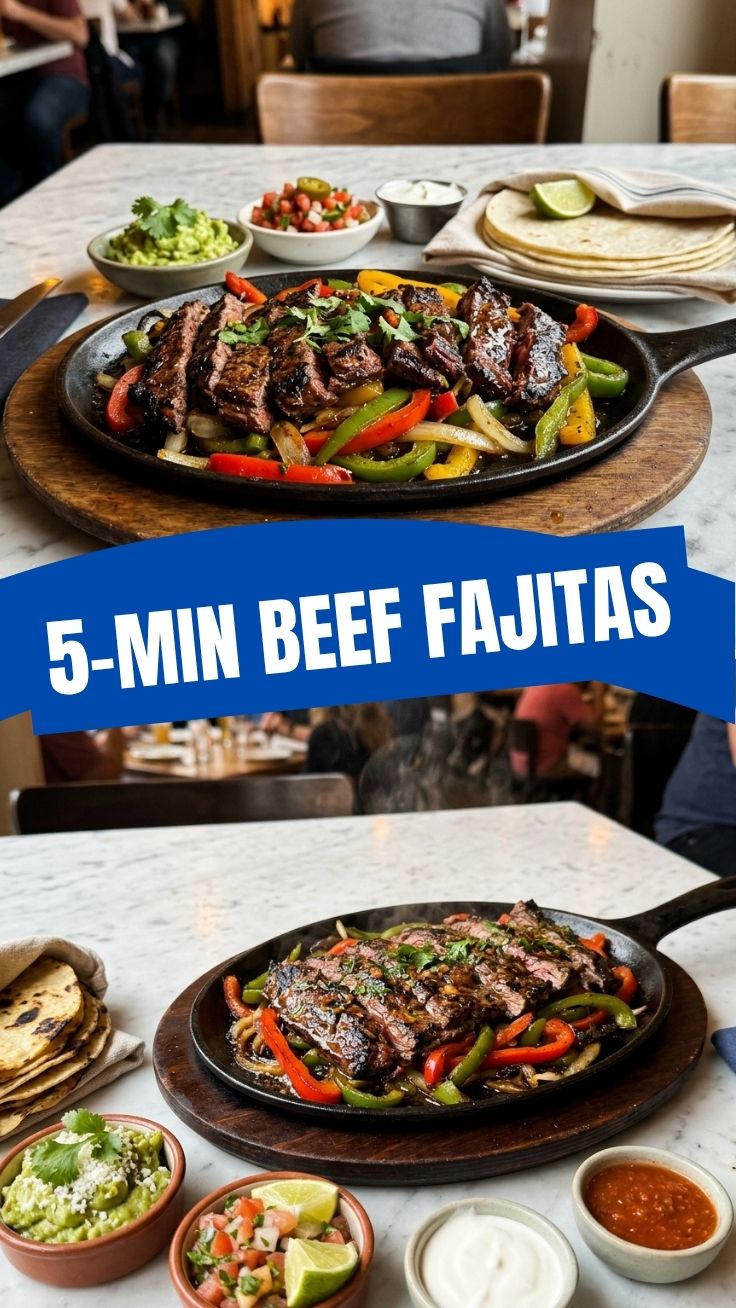
Slice the rested beef thinly against the grain at a 45-degree angle. This is crucial—slicing with the grain makes meat chewy. Return sliced beef to the skillet with vegetables for 30 seconds to combine flavors. Warm tortillas directly over a gas flame or in a dry pan. Serve immediately with toppings. This is one of those timeless Mexican recipes where freshness makes all the difference.
Nutritional Benefits & Advantages
Beef Fajitas deliver impressive nutrition without sacrificing flavor. Flank steak provides high-quality protein (about 23g per serving), iron for energy production, and zinc for immune support. Bell peppers are vitamin C powerhouses—one serving covers your daily needs. Onions contain quercetin, an anti-inflammatory antioxidant. Using minimal oil and fresh ingredients keeps saturated fat lower than many restaurant versions. For a balanced meal, skip sour cream and load up on guacamole for healthy monounsaturated fats. This dish fits keto, paleo, and gluten-free diets (with corn tortillas). When exploring Mexican recipes for health, fajitas consistently rank among the top choices.
Tips Variations & Cooking Advice
Flavor Variations:
– Spicy version: Add chipotle powder or sliced serrano peppers
– Citrus-forward: Increase lime juice and add orange juice to the marinade
– Smoky twist: Use grilled beef instead of skillet-cooked
Ingredient Swaps:
– Protein: Chicken thighs, shrimp, or portobello mushrooms work beautifully
– Tortillas: Lettuce wraps for low-carb, or use hard taco shells
– Vegetables: Add zucchini, mushrooms, or corn for summer sweetness
Cooking Methods:
– Grill: Cook steak over direct high heat, 4-5 minutes per side
– Air fryer: Cook sliced beef at 400°F for 8-10 minutes, shaking halfway
– Oven: Broil on a sheet pan for 10-12 minutes
Dietary Adaptations:
– Gluten-free: Use corn tortillas; check soy sauce is tamari
– Dairy-free: Omit sour cream and cheese
– Low-sodium: Use reduced-sodium soy sauce or coconut aminos
Common Mistakes to Avoid
| Mistake | Why It Happens | Solution |
|————-|——————-|————–|
| Tough, chewy meat | Overcooking or slicing with the grain | Cook to medium-rare; always slice against the grain at 45° angle |
| Soggy vegetables | Overcrowding the pan | Cook in batches or use a larger skillet; high heat is critical |
| Bland flavor | Skipping the marinade or using weak spices | Marinate at least 30 minutes; toast cumin seeds before grinding |
| Burnt tortillas | Overheating or burning directly on flame | Warm for 15-20 seconds per side; wrap in foil to keep soft |
| No sizzle presentation | Serving on a cold plate | Preheat plates or cast iron serving pan in oven at 200°F |
Storage & Meal Prep Tips
Refrigeration:
Store separated components: sliced beef in one container, vegetables in another, and tortillas separately. They stay fresh for 3-4 days. Do not store assembled fajitas—the tortillas become soggy.
Freezing:
Cooked beef freezes well for up to 3 months. Wrap tightly in plastic wrap then foil. Thaw overnight in the refrigerator. Vegetables freeze less effectively—better to prep fresh when reheating.
Reheating:
– Skillet: Best method. Heat over medium-high with a splash of water or broth, covered, for 2-3 minutes
– Microwave: Acceptable for beef alone; place on a damp paper towel and heat in 30-second bursts
– Avoid: Boiling in sauce or steaming; it ruins the charred texture
Meal Prep Strategy:
Saturday: Marinate beef overnight. Sunday: Cook, slice, and portion into containers for the week. Pack tortillas separately with a damp paper towel. Reheat only what you need.
Conclusion
Mastering these Beef Fajitas isn’t just about following steps—it’s about understanding why each technique matters. From the acidic marinade that tenderizes the meat to the screaming-hot skillet that creates that iconic sizzle, every detail contributes to an unforgettable meal. This dish represents the best of Mexican recipes: simple ingredients transformed through proper technique into something extraordinary. Try this recipe this weekend, and don’t skip the rested meat or the charred vegetables. When you nail that first bite, you’ll never order takeout fajitas again. Share your results in the comments—did you add a twist? What topping did you invent? Your variation might inspire another cook! For more authentic dishes, explore our collection of Mexican-inspired dinners.
FAQs
Can I use a different cut of beef for fajitas?
Absolutely. Skirt steak is traditional, but flank steak, sirloin flap, or even top round work well. Avoid tenderloin—it’s too lean and lacks flavor. The key is slicing thinly against the grain.
How long should I marinate beef fajitas?
Minimum 30 minutes, maximum 4 hours. The lime juice starts denaturing proteins after 2 hours. For deeper flavor, you can marinate overnight but use less acidic ingredients (skip or reduce lime juice).
Why are my fajitas soggy instead of sizzling?
Two reasons: your pan wasn’t hot enough, or you overcrowded it. Always preheat the pan until smoking before adding meat. Cook in batches if needed. The pan should sizzle immediately when food hits.
Can I make this dairy-free and gluten-free?
Yes! Use corn tortillas (check they’re 100% corn), and replace soy sauce with tamari or coconut aminos. Skip sour cream and cheese, or use dairy-free alternatives. The recipe is naturally gluten-free with these swaps.
How do I reheat fajitas without drying them out?
The skillet method works best: add a teaspoon of water or broth to the pan, cover, and heat over medium for 2-3 minutes. The steam rehydrates the meat without making it rubbery. Avoid microwaving vegetables separately.