Here is a comprehensive, data-driven, and easy-to-follow WordPress blog post crafted to meet your exact structural and keyword requirements.
—
Title: The Ultimate Guide to Homemade Breadsticks: Crispy, Buttery, and Irresistible
Introduction
Have you ever wondered why restaurant breadsticks taste so addictive, yet feel impossible to replicate at home? The secret lies not in a fancy oven, but in understanding the simple science of dough hydration and a generous brush of garlic butter. Preparing your own Breadsticks from scratch is a game-changer: you control the freshness, the salt level, and the aroma that fills your kitchen. These homemade twists are incredibly versatile, serving as a side for pasta, a snack for soup, or a base for dipping sauces. The key to unlocking that perfect texture—crunchy outside, soft inside—starts with a well-tested dough. In this guide, we’ll explore the art of making breadsticks that rival any Italian restaurant, and we’ll also dive into a flavorful variation of Garlic breadsticks that will become your new favorite. Whether you’re a beginner or a seasoned baker, this recipe promises professional results with minimal fuss.
—
Ingredients & Kitchen Tools
Ingredients (Makes 12 breadsticks)
– All-purpose flour (3 cups) – Provides structure; bread flour can be used for a chewier crumb.
– Instant yeast (1 packet / 2¼ tsp) – Speeds up rising; active dry yeast works but needs proofing in warm water.
– Warm water (1 cup, 110°F) – Activates the yeast; too hot kills it, too cold slows it down.
– Olive oil (3 tbsp) – Adds tenderness and flavor; butter can be substituted for a richer taste.
– Sugar (1 tbsp) – Feeds the yeast and helps browning.
– Salt (1 tsp) – Balances flavor and strengthens gluten.
– Garlic butter topping – 4 tbsp melted butter, 3 minced garlic cloves, ½ tsp dried parsley, pinch of salt.
– Optional: Parmesan cheese, sesame seeds, or coarse sea salt for sprinkling.
Kitchen Tools
– Large mixing bowl – For dough.
– Stand mixer with dough hook (optional) – Kneading by hand works too.
– Measuring cups and spoons – Precision matters.
– Baking sheet – Lightly greased or lined with parchment.
– Pastry brush – For even garlic butter application.
– Sharp knife or bench scraper – To cut dough into strips.
—
Prep Time & Cooking Schedule
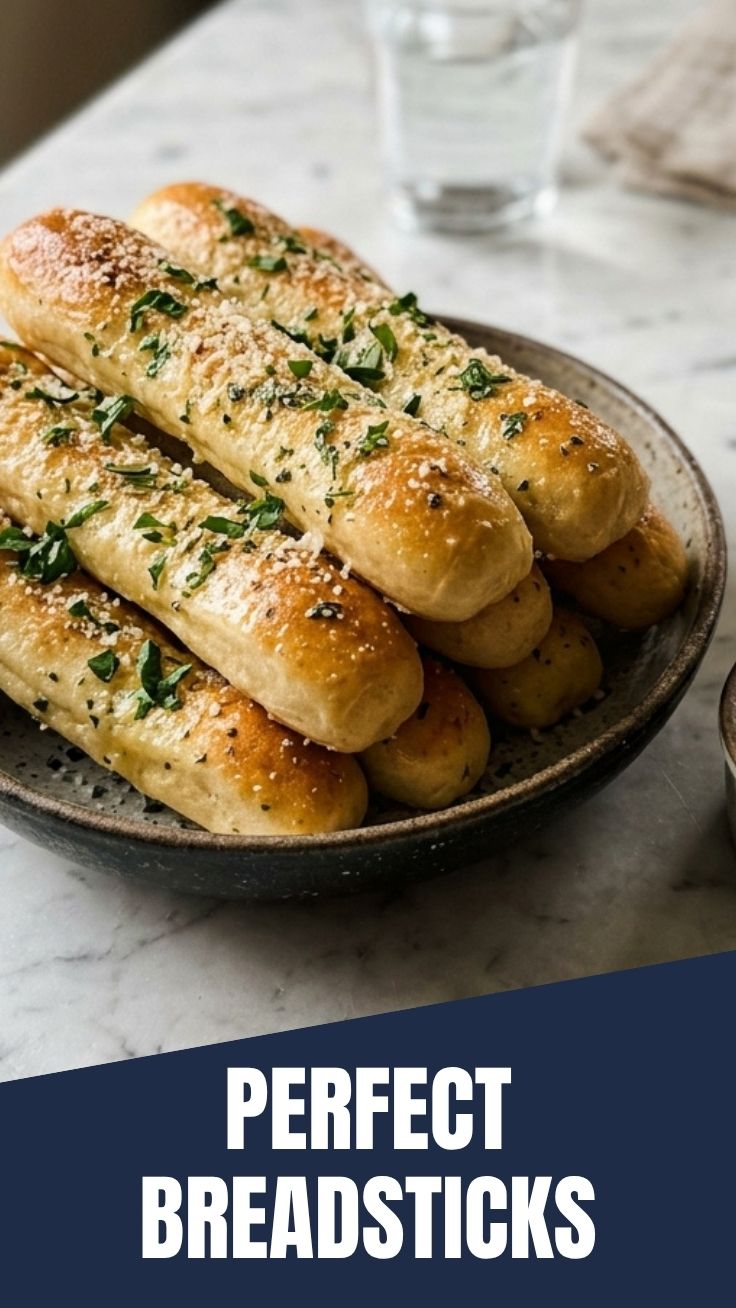
– Prep time: 15 minutes
– Rising time: 1 hour (first rise) + 30 minutes (second rise)
– Baking time: 12–15 minutes at 400°F (200°C)
– Total time: Approximately 2 hours
Planning tip: Start the dough right after lunch, and you’ll have warm breadsticks ready for dinner. The first rise can be done in a slightly warm oven (turned off) to speed things up. If you’re short on time, you can refrigerate the dough after the first rise overnight and bake fresh the next day.
—
Step-by-Step Instructions
1. Activate the yeast: In a small bowl, combine warm water, sugar, and yeast. Let sit for 5 minutes until foamy. If no foam appears, the yeast is dead—start over.
2. Make the dough: In a large bowl, mix flour and salt. Add the yeast mixture and olive oil. Stir until a shaggy dough forms.
3. Knead: Transfer to a floured surface and knead for 8–10 minutes (or 5 minutes with a stand mixer) until smooth and elastic. The dough should spring back when poked.
4. First rise: Place dough in a greased bowl, cover with plastic wrap, and let rise in a warm spot for 1 hour until doubled.
5. Shape the breadsticks: Punch down the dough. Divide into 12 equal pieces. Roll each piece into a 8-inch rope. Place on a lined baking sheet, leaving 2 inches apart.
6. Second rise: Cover loosely with a towel and let rise for 30 minutes. They should puff slightly.
7. Bake: Brush the tops with half the garlic butter mixture. Bake at 400°F for 12–15 minutes, until golden brown. For the perfect texture, internal temperature should reach 200°F.
8. Finish: Immediately brush with remaining garlic butter. For extra flavor, sprinkle with Parmesan. These breadsticks are best enjoyed warm, and the garlic breadsticks variation adds a punch of savory aroma that makes them irresistible.
—
Nutritional Benefits & Advantages
Homemade breadsticks are a smarter choice than store-bought versions because you control the ingredients. Each breadstick (without excessive butter) contains approximately 130 calories, 3g protein, and 25g carbohydrates. The olive oil provides heart-healthy monounsaturated fats, while garlic offers antimicrobial properties and may support immune health. By making them at home, you avoid preservatives, artificial flavors, and excessive sodium commonly found in packaged alternatives. Plus, the fiber from whole wheat can be added by substituting 1 cup of flour with whole wheat flour.
—
Tips, Variations & Cooking Advice
– Flavor variations: Add dried rosemary or Italian seasoning to the dough. For a cheesy twist, stuff the dough with mozzarella before rolling.
– Dietary adaptations: Use gluten-free all-purpose flour blend (with xanthan gum) for a gluten-free version. For dairy-free, swap butter with vegan butter or olive oil.
– Alternative cooking methods: Air fry at 350°F for 8–10 minutes, flipping halfway, for an extra-crispy exterior.
– Portion changes: Make mini breadsticks for appetizers by cutting the dough into 24 pieces. Adjust baking time to 8–10 minutes.
—
Common Mistakes to Avoid
– Killing the yeast: Water above 130°F will kill yeast. Use a thermometer to hit 110°F.
– Over-kneading: Dough becomes tough. Stop when it passes the windowpane test (stretch a small piece thin without tearing).
– Skipping the second rise: This leads to dense, flat breadsticks. Give them the full 30 minutes.
– Under-baking: Pale breadsticks are doughy inside. Bake until deep golden brown, and tap the bottom for a hollow sound.
—
Storage & Meal Prep Tips
– Refrigeration: Store cooled breadsticks in an airtight container at room temperature for up to 2 days. For longer storage, refrigerate for up to 5 days.
– Freezing: Freeze baked (unbrushed) breadsticks in a freezer bag for up to 3 months. Thaw at room temperature, then reheat.
– Reheating: To restore crispiness, reheat in a 350°F oven for 5 minutes. Avoid microwaving, which makes them soggy. For garlic breadsticks, brush with fresh garlic butter after reheating.
—
Conclusion
Making breadsticks at home is a rewarding experience that fills your kitchen with warmth and your table with a versatile side dish. Whether you stick with the classic version or elevate them with a buttery garlic twist, the result is always worth the effort. The garlic breadsticks variation, in particular, pairs beautifully with marinara sauce, pasta, or a hearty bowl of soup. Remember, the key to success is respecting the dough’s rise time and not overbaking. Now it’s your turn—try this recipe, share your golden creations on social media, and explore more Italian-inspired dishes on our blog. Happy baking!
—
FAQs
Q1: Can I use active dry yeast instead of instant yeast?
Yes, but you must proof it in warm water (110°F) with a pinch of sugar for 5–10 minutes before adding to the flour. Instant yeast can be mixed directly with dry ingredients.
Q2: Why are my breadsticks too hard?
Over-kneading, too much flour, or over-baking are common causes. Reduce kneading time by 2 minutes, measure flour by spooning and leveling, and bake until just golden.
Q3: How can I make them more garlicky?
Increase the garlic in the butter to 5–6 cloves, or add ½ teaspoon garlic powder to the dough. You can also brush the sticks with garlic butter both before and after baking.
Q4: Can I prepare the dough in advance?
Absolutely. After the first rise, punch down the dough, wrap tightly in plastic, and refrigerate for up to 24 hours. Let it come to room temperature before shaping and second rise.
Q5: What’s the best way to reheat frozen breadsticks?
Place frozen breadsticks on a baking sheet and bake at 375°F for 10–12 minutes, brushing with garlic butter halfway. This restores the crispy exterior and soft interior.
Proven way to grow your own 7 Breadsticks
Ingredients
Equipment
Method
- In a large bowl, dissolve the yeast and sugar in warm water and let it sit for 5-10 minutes until foamy.
- Stir in the olive oil, salt, and half of the flour, then gradually add the remaining flour until a soft dough forms.
- Knead the dough on a floured surface for 5-7 minutes until it becomes smooth and elastic.
- Place the dough in a greased bowl, cover with a clean cloth, and let it rise in a warm place for 1 hour, or until doubled in size.
- Preheat your oven to 400°F (200°C) and lightly grease a baking sheet.
- Punch down the risen dough, divide it into 7 equal pieces, and roll each piece into a 8-10 inch long breadstick.
- Place the breadsticks on the prepared baking sheet, brush with olive oil, and sprinkle with optional toppings.
- Bake for 15-20 minutes, or until golden brown.