The Ultimate Guide to Perfect Cacio e Pepe at Home
Have you ever wondered why a dish as simple as Cacio e Pepe can be so elusive to perfect? Among the vast world of Italian pasta recipes, this Roman classic stands out for its deceptive simplicity—just pasta, cheese, and pepper. Yet many home cooks end up with a clumpy, greasy mess instead of a silky, emulsified sauce. Learning to make it at home is valuable because you gain a fundamental technique that elevates your pasta game and saves you from disappointing takeout versions. With just a few ingredients and careful attention to temperature, you can create a restaurant-quality plate in under 20 minutes.
Ingredients & Kitchen Tools
Ingredients:
– 200g spaghetti – Use bronze-die extruded pasta for better sauce adherence.
– 150g Pecorino Romano – Freshly grated from a block; pre-grated contains anti-caking agents that ruin texture.
– 2 tsp whole black peppercorns – Crack coarsely with a mortar or heavy pan; pre-ground pepper lacks aroma.
– Salt – Optional, as Pecorino is salty; use only if pasta water needs a boost.
Kitchen Tools:
– Large pot (5–6 quarts) for boiling pasta.
– Large skillet or sauté pan – Wide enough to toss pasta.
– Box grater or microplane – For fine, fluffy cheese.
– Tongs – For tossing and coating.
– Mortar and pestle or rolling pin – For cracking pepper.
– Measuring cups – To reserve pasta water.
Prep Time & Cooking Schedule
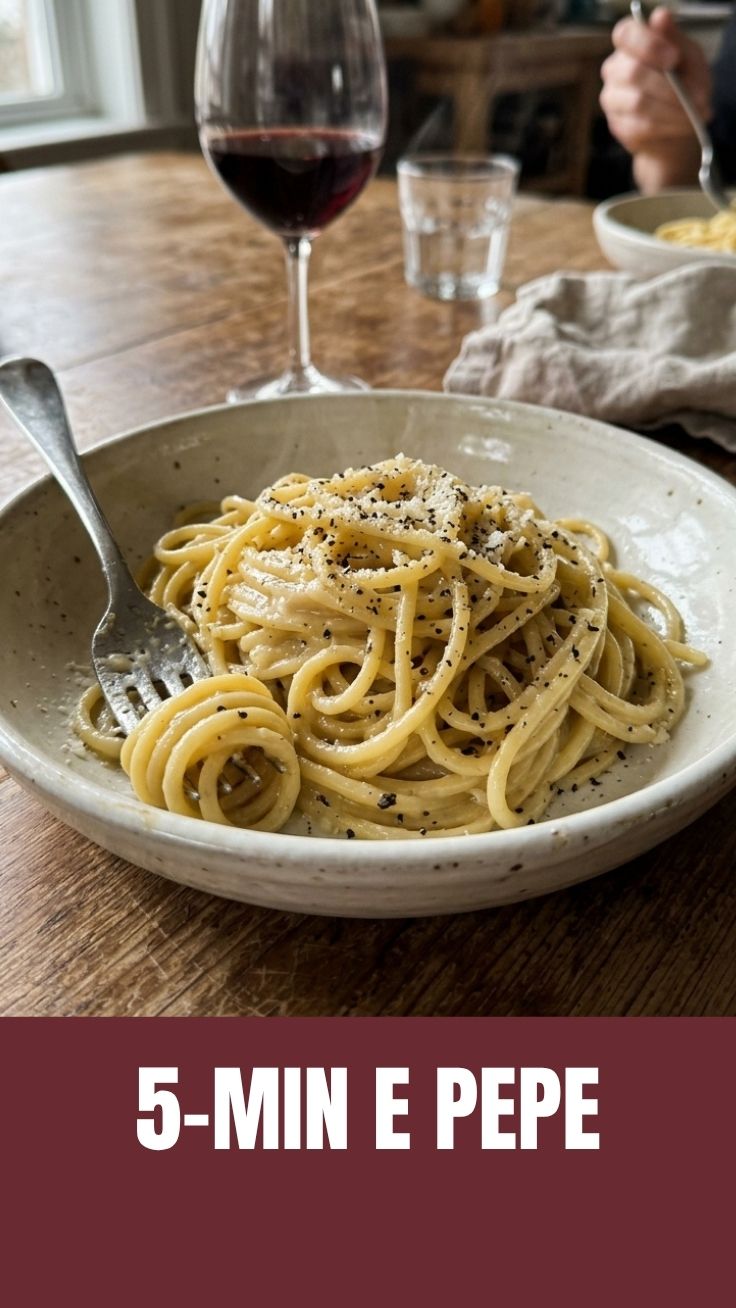
– Prep time: 5 minutes (grate cheese, crack pepper, set water to boil)
– Cook time: 12–15 minutes
– Total time: ~20 minutes
– Resting/tossing time: 2 minutes off heat for final emulsion
Plan to serve immediately—Cacio e Pepe waits for no one. Have all tools and ingredients ready before the pasta goes into the water.
Step-by-Step Instructions
1. Boil the pasta in generously salted water (2 tablespoons salt per gallon) until al dente, about 1 minute less than package directions. Reserve 1½ cups of starchy pasta water before draining.
2. Toast the pepper in a large dry skillet over medium heat for 30–60 seconds until fragrant. Add ¾ cup reserved pasta water, bring to a simmer, then remove from heat.
3. Grate the Pecorino very finely into a bowl. Sprinkle a tablespoon of cold pasta water over it and stir into a paste – this prevents clumping later.
4. Combine off heat: Add drained pasta to the skillet. Sprinkle half the cheese paste over the pasta while tossing vigorously with tongs. Drizzle in additional pasta water as needed to create a creamy, emulsified sauce that coats each strand.
5. Finish with remaining cheese and a generous final crack of black pepper. Toss again—the residual heat should melt everything into a glossy sauce. Serve immediately.
> Key tip: Temperature control is everything. If the pan is too hot, the cheese will seize into clumps. Too cold, and it won’t emulsify. This step is crucial for an authentic Cacio e Pepe. Many Italian pasta recipes stress the importance of using starchy water and working off the heat to achieve the right texture.
Nutritional Benefits & Advantages
Cacio e Pepe is deceptively nutritious for such a indulgent dish. The Pecorino Romano provides:
– 30–40% daily calcium per serving for bone health.
– 8–10g protein per ounce, supporting muscle repair.
– Probiotics from aged cheese (live cultures survive aging).
– Black pepper contains piperine, which boosts nutrient absorption and aids digestion.
The dish is naturally vegetarian, uses only whole foods, and has no added fats beyond what’s in the cheese. For a 200g serving (with 150g cheese total across 2 servings), each portion contains roughly 500–550 calories, making it a satisfying main course.
Tips, Variations & Cooking Advice
– Flavor variation: Add a pinch of nutmeg or a drizzle of truffle oil after tossing.
– Ingredient swaps: Substitute half the Pecorino with Parmesan for a milder taste (but it’s not traditional).
– Pasta shapes: Use tonnarelli, bucatini, or even penne. Adjust pasta water quantity for shape.
– Gluten-free: Use high-quality GF spaghetti; cook very al dente and increase starchy water by ¼ cup.
– Dairy-free: This dish is nearly impossible without cheese, but a blend of nutritional yeast, cashew cream, and lactic acid can mimic the tang – though results vary.
Common Mistakes to Avoid
– Using pre-grated cheese – It contains cellulose and starch that prevent melting. Always grate fresh.
– Overheating the cheese – Adding cheese to a hot pan causes it to separate into greasy clumps. Always work off heat.
– Under-seasoning pepper – Cacio e Pepe means “cheese and pepper”; don’t be shy. Use at least 2 teaspoons cracked pepper.
– Skipping the cheese paste – Mixing cheese with cold pasta water before adding to the pan ensures stable emulsion.
– Draining pasta too dry – Burnt milk solids from overheated cheese can ruin the flavor.
Storage & Meal Prep Tips
Cacio e Pepe is best eaten fresh, but leftovers can be stored:
– Refrigerate in an airtight container for up to 2 days.
– Reheat in a skillet with 1–2 tablespoons water or milk over low heat, tossing constantly. Do not microwave – it will separate.
– Freezing is not recommended – the emulsion breaks and cheese becomes grainy.
– Meal prep: You can toast the pepper and grate the cheese the night before. Cook pasta fresh when ready.
Conclusion
Mastering Cacio e Pepe is a true test of a cook’s skill, and one of the most rewarding Italian pasta recipes to have in your repertoire. With just three ingredients and the right technique, you transform simple pantry staples into a silky, peppery, cheese-laden masterpiece. The key takeaways: use high-quality Pecorino, grind fresh pepper, reserve plenty of pasta water, and never apply direct heat when combining cheese. Now it’s your turn – grab some spaghetti, a block of Pecorino, and a pepper mill, and cook this classic tonight. Share your results (or your questions) in the comments – we’d love to see your perfect twirl!
Frequently Asked Questions
1. Can I use Parmesan instead of Pecorino?
Parmesan is less salty and less tangy. For a closer result, use a 50/50 blend. But authentic Cacio e Pepe demands Pecorino Romano.
2. My sauce turned into a clumpy mess – what went wrong?
Most likely the pan was too hot. Start over with fresh pasta and cheese, and this time turn off the heat before adding cheese. Stir the cheese with cold water first.
3. Is Cacio e Pepe gluten-free?
It can be if you substitute gluten-free pasta. Use a rice-based or legume-based spaghetti and adjust cooking time to keep it al dente.
4. How do I fix oily sauce?
If the sauce looks greasy, the cheese separated from fat. Add a splash of cold pasta water and whisk vigorously off heat to try re-emulsifying. Next time, grate the cheese more finely and keep the pan cool.
5. Can I use pre-ground black pepper?
Not recommended. Pre-ground pepper lacks the volatile oils that make freshly cracked pepper aromatic and bold. Crack whole peppercorns just before cooking.
Proven way to grow 6 perfect Cacio e Pepe
Ingredients
Equipment
Method
- Boil salted water in a large pot and cook the spaghetti according to package instructions until al dente.
- While the pasta cooks, toast the freshly cracked black peppercorns in a dry pan until fragrant, then remove a small amount for garnish and set aside.
- Gradually add some of the hot pasta water to the remaining toasted peppercorns in the pan and bring to a simmer. Meanwhile, in a separate bowl, combine the finely grated Pecorino Romano with a small amount of pasta water to create a creamy paste.
- Drain the cooked spaghetti, reserving a cup of the pasta water, and immediately transfer it to the pan with the peppercorn-infused water.
- Quickly add the Pecorino paste to the pasta, tossing vigorously to coat evenly, and add more reserved pasta water as needed to achieve a smooth, emulsified sauce.
- Serve the Cacio e Pepe immediately, garnished with the reserved cracked black pepper.