The Ultimate Tuna Salad Sandwich: A Complete Guide to Perfecting This Classic Comfort Food
Have you ever wondered why some tuna salad sandwiches taste incredible while others fall flat? The secret isn’t just in the ingredients—it’s in the technique, the balance of flavors, and a few unexpected tricks that transform a simple lunch into something memorable. Making a Tuna Salad Sandwich at home not only saves you money but also allows you to customize every element to your taste, control the quality of ingredients, and avoid the preservatives and excess sodium found in many store-bought versions. In this comprehensive guide, we’ll walk you through everything you need to know, from selecting the best tuna to building the perfect sandwich, while also sharing a reliable tuna salad recipe that you’ll come back to again and again.
Ingredients & Kitchen Tools
Essential Ingredients
– Canned tuna (preferably packed in olive oil or water) – Look for chunk light or albacore; oil-packed adds moisture and flavor, while water-packed is lighter and lower in calories.
– Mayonnaise – The binding agent; use full-fat for creaminess or Greek yogurt for a healthier twist.
– Celery – Adds essential crunch and freshness; dice finely for even distribution.
– Red onion – Provides a sharp, pungent kick; soak in cold water for 10 minutes to mellow the bite.
– Fresh lemon juice – Brightens the flavors and cuts through the richness.
– Salt and black pepper – Season to taste, but go easy on salt if using canned tuna.
– Bread – Choose hearty options like sourdough, whole wheat, brioche, or a crusty roll.
Optional Ingredients for Variation
– Dijon mustard – For a tangy depth.
– Fresh dill or parsley – Herbs elevate the flavor profile.
– Capers or pickles – Add briny pops of flavor.
– Hard-boiled eggs – Chopped for extra protein and richness.
– Avocado – For a creamy, dairy-free alternative to mayo.
Kitchen Tools
– Mixing bowl – Medium-sized for combining ingredients.
– Fork – For flaking the tuna and mixing.
– Chef’s knife and cutting board – For dicing vegetables.
– Measuring spoons – For precise seasoning.
– Spatula or spoon – For spreading the salad onto bread.
Prep Time & Cooking Schedule
– Prep time: 10 minutes
– Cook time: 5 minutes (optional for toasting bread)
– Resting time: 15–30 minutes (for flavors to meld in the refrigerator)
– Total time: Approximately 30 minutes (including resting)
Planning tip: This recipe comes together quickly, but allowing the tuna salad to rest in the fridge for at least 15–30 minutes dramatically improves the flavor as the ingredients marry. Make it ahead of time if you’re meal-prepping for busy weekdays.
Step-by-Step Instructions
1. Drain the tuna thoroughly. If using oil-packed, reserve a teaspoon of oil to add back for extra richness. Place the tuna in a mixing bowl and flake it with a fork until no large chunks remain.
2. Finely dice the celery and red onion. Aim for uniform, small pieces (about 1/4 inch) so every bite has even texture. Soak the red onion in cold water for 10 minutes if you prefer a milder taste.
3. Combine the base ingredients. Add the diced vegetables, 3 tablespoons of mayonnaise, 1 tablespoon of fresh lemon juice, 1/2 teaspoon of salt, and 1/4 teaspoon of black pepper to the flaked tuna. Mix gently but thoroughly with a fork until everything is evenly distributed. Taste and adjust seasoning—this is where you can fine-tune your Tuna Salad Sandwich to perfection.
4. Let it rest. Cover the bowl and refrigerate for at least 15 minutes. During this time, the flavors deepen and the textures meld. This step is crucial for a truly outstanding tuna salad recipe—don’t skip it.
5. Toast the bread (optional but recommended). Lightly toast your choice of bread in a toaster, skillet, or oven until golden brown. This prevents sogginess and adds a satisfying crunch.
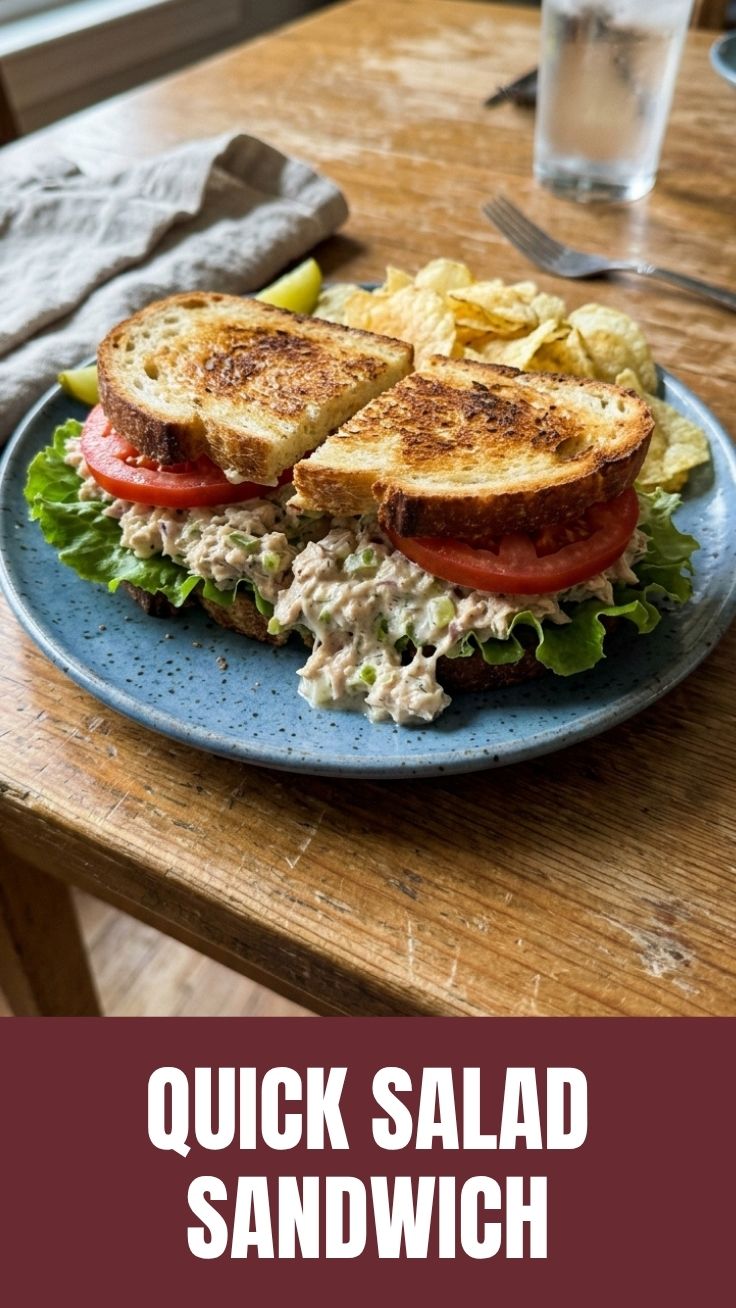
6. Assemble the sandwich. Spread a generous layer of tuna salad on one slice of bread. Add any optional toppings like lettuce, tomato slices, or avocado. Top with the second slice of bread and press gently.
7. Slice and serve. Cut diagonally for the classic presentation, and serve immediately with chips, a pickle spear, or a side salad.
Nutritional Benefits & Advantages
The Tuna Salad Sandwich offers a remarkable nutritional profile that makes it a smart choice for health-conscious eaters. Tuna is an excellent source of lean protein, providing about 20–25 grams per 3-ounce serving, which supports muscle maintenance and satiety. It’s also rich in omega-3 fatty acids, particularly EPA and DHA, which are known to support heart health, reduce inflammation, and improve cognitive function.
The celery adds dietary fiber, vitamin K, and antioxidants, while the lemon juice provides a boost of vitamin C. Using whole-grain bread adds complex carbohydrates and additional fiber, making this sandwich a balanced meal that keeps you full and energized. For those watching their calorie intake, swapping mayonnaise for Greek yogurt or avocado can significantly reduce fat content without sacrificing creaminess.
Tips, Variations & Cooking Advice
Flavor Variations
– Mediterranean style: Add chopped Kalamata olives, sun-dried tomatoes, and crumbled feta cheese.
– Asian-inspired: Mix in a teaspoon of toasted sesame oil, a splash of soy sauce, and chopped scallions.
– Spicy version: Fold in diced jalapeños, a pinch of cayenne, or a drizzle of Sriracha.
Dietary Adaptations
– Gluten-free: Serve the tuna salad on gluten-free bread, large lettuce wraps, or cucumber slices.
– Dairy-free: Use avocado or vegan mayonnaise instead of regular mayo.
– Low-carb/Keto: Skip the bread entirely and serve on a bed of mixed greens or in hollowed-out bell peppers.
Cooking Advice
– Texture tip: For a chunkier salad, gently fold ingredients rather than stirring vigorously.
– Flavor booster: Add a pinch of smoked paprika or a dash of Worcestershire sauce for umami depth.
– Moisture control: If your tuna salad seems dry, add extra mayo or a splash of olive oil; if too wet, add more finely chopped celery or a few crushed crackers.
Common Mistakes to Avoid
– Over-mixing the tuna. This breaks the fish into a paste, resulting in a mushy texture. Gently fold until just combined.
– Skipping the rest time. The flavors need time to meld—at least 15 minutes in the refrigerator makes a noticeable difference.
– Using too much mayonnaise. Start with less than you think you need; you can always add more. Too much mayo overwhelms the other ingredients.
– Forgetting to season properly. Tuna can taste bland without adequate salt, pepper, and acid from lemon juice. Always taste and adjust before serving.
– Assembling on untoasted bread. This leads to a soggy sandwich, especially if you’re making it ahead of time. Always toast your bread for best results.
Storage & Meal Prep Tips
– Refrigeration: Store leftover tuna salad in an airtight container in the refrigerator for up to 3 days. Keep the bread separate to prevent sogginess.
– Freezing: Tuna salad does not freeze well due to the mayonnaise base, which can separate and become watery upon thawing. If you must freeze, do so without the mayonnaise and add it fresh later.
– Reheating: Tuna salad is traditionally served cold or at room temperature. If you prefer it warm, gently heat it in a skillet over low heat for 1–2 minutes, stirring occasionally.
– Meal prep: Prepare the tuna salad up to 2 days in advance. Store in the fridge, then assemble sandwiches fresh when ready to eat. For packed lunches, keep the tuna salad and bread separate until lunchtime.
Conclusion
Mastering the Tuna Salad Sandwich is about more than just opening a can—it’s about understanding the balance of textures, the importance of resting time, and the power of fresh, quality ingredients. Whether you follow this tuna salad recipe to the letter or use it as a springboard for your own creative variations, you’ll have a reliable, delicious meal that never goes out of style. Try this recipe today, share your results with friends, or explore more sandwich ideas on our blog. We’d love to hear how yours turns out!
FAQs
1. Can I use fresh tuna instead of canned?
Absolutely. Pan-sear fresh tuna steak until just cooked through, then flake it and proceed with the recipe. The flavor will be even richer, though it requires more preparation time.
2. What’s the best bread for a tuna salad sandwich?
Sourdough, whole wheat, brioche, or a classic Kaiser roll all work beautifully. Choose something sturdy enough to hold the filling without falling apart.
3. How can I make this recipe lower in calories?
Replace mayonnaise with plain Greek yogurt or mashed avocado. You can also use water-packed tuna and reduce the amount of oil or dressing.
4. Why does my tuna salad taste bland?
It likely needs more salt, acid (lemon juice), or a savory element like Dijon mustard or capers. Taste and adjust gradually until the flavors pop.
5. Can I add other vegetables to the tuna salad?
Yes! Finely diced bell peppers, shredded carrots, chopped pickles, or even grated apple add sweetness and crunch. Just keep the pieces small for even distribution.
Quick way to grow tuna salad sandwich
Ingredients
Equipment
Method
- In a medium bowl, combine the drained tuna, mayonnaise, chopped celery, diced red onion, and Dijon mustard.
- Season the mixture with salt and black pepper, then stir everything well until thoroughly combined.
- Spread the tuna salad evenly over two slices of bread.
- Top with lettuce leaves and tomato slices, then cover with the remaining bread slices to create two sandwiches.