Why This Cornbread Dressing Will Be Your New Holiday Favorite
Have you ever wondered what separates a good holiday side dish from an unforgettable one? It all comes down to texture, flavor depth, and a little bit of tradition. This Cornbread Dressing recipe delivers that perfect balance of crispy edges, moist interior, and aromatic herbs—all while being surprisingly simple to prepare at home. Whether you’re hosting Thanksgiving, a Sunday supper, or a cozy winter gathering, making your own dressing from scratch saves money, lets you control the ingredients, and fills your kitchen with the unmistakable scent of sage and butter. And if you love classic comfort food, you’ll also appreciate how Southern Cornbread Dressing takes the same foundation and adds its own rustic charm. With a few smart techniques, you can achieve restaurant-quality results without the stress.
—
Ingredients & Kitchen Tools
For the cornbread base (makes about 8 cups crumbled):
– 1½ cups yellow cornmeal – stone-ground gives better texture
– 1 cup all-purpose flour – or gluten-free 1:1 blend
– 1 tablespoon baking powder
– 1 teaspoon salt
– 2 large eggs – room temperature for even mixing
– 1½ cups buttermilk – adds tang; substitute 1½ cups milk + 1½ tbsp lemon juice
– 4 tablespoons unsalted butter, melted – plus extra for greasing
For the dressing:
– 6 cups crumbled day-old cornbread – stale bread absorbs broth better
– 2 tablespoons olive oil or bacon fat
– 1 medium yellow onion, finely diced
– 3 celery stalks, finely chopped
– 2 cloves garlic, minced
– 2 teaspoons dried sage
– 1 teaspoon dried thyme
– ½ teaspoon black pepper
– 1½ cups low-sodium chicken or vegetable broth – warm broth hydrates evenly
– 2 large eggs, beaten – binder for structure
Kitchen tools:
– 9×13-inch baking dish (or cast-iron skillet)
– Large mixing bowls
– Whisk and wooden spoon
– Chef’s knife and cutting board
– Measuring cups and spoons
—
Prep Time & Cooking Schedule
– Prep time: 20 minutes (plus 10 minutes for cornbread cooling)
– Cook time: 35–40 minutes
– Resting time: 10 minutes after baking
Planning tip: Bake the cornbread a day ahead. Crumble it and leave it uncovered on a baking sheet overnight. Dry cornbread soaks up broth without turning mushy. If you’re short on time, spread crumbled cornbread on a sheet pan and toast at 300°F (150°C) for 10 minutes.
—
Step-by-Step Instructions
1. Make the cornbread. Preheat oven to 400°F (200°C). Grease a 9-inch square pan. In a large bowl, whisk cornmeal, flour, baking powder, and salt. In another bowl, whisk eggs, buttermilk, and melted butter. Pour wet into dry and stir just until combined—overmixing makes it tough. Bake 20–22 minutes until golden and a toothpick comes out clean. Cool completely, then crumble into coarse pieces.
2. Sauté the aromatics. In a large skillet over medium heat, warm olive oil. Add onion and celery; cook 5–6 minutes until softened. Add garlic, sage, thyme, and pepper. Cook 1 minute more until fragrant. Remove from heat.
3. Combine the dressing. In a large bowl, mix crumbled cornbread with sautéed vegetables. In a measuring cup, whisk warm broth with beaten eggs. Pour over cornbread mixture and gently fold. The texture should be moist but not soupy—think of wet sand. Add more broth a tablespoon at a time if needed.
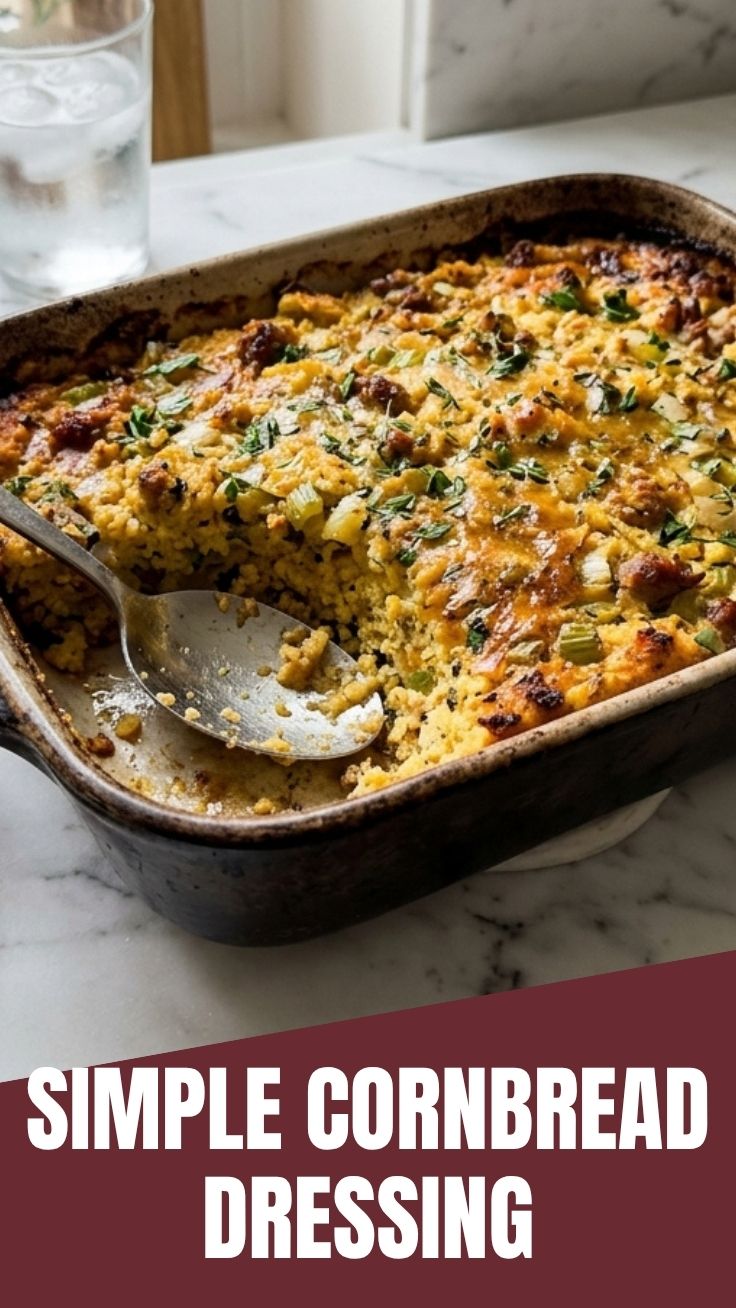
4. Bake to perfection. Preheat oven to 375°F (190°C). Transfer mixture to a greased 9×13-inch dish. Spread evenly. Bake uncovered 35–40 minutes until the top is deep golden brown and a knife inserted in the center comes out clean. Let rest 10 minutes. This Cornbread Dressing develops a crisp crust while staying tender inside. For a regional twist, you can adapt it into Southern Cornbread Dressing simply by adding ½ cup cooked crumbled sausage or bacon before baking.
Pro tips: Use a thermometer—internal temperature should reach 165°F (74°C). If top browns too quickly, tent with foil during the last 10 minutes. For extra crunch, sprinkle panko breadcrumbs on top before baking.
—
Nutritional Benefits & Advantages
Cornbread dressing offers more than comfort—it provides fiber from cornmeal (about 4g per serving), B vitamins from the corn, and antioxidants like lutein for eye health. Using homemade broth reduces sodium compared to canned versions. Celery adds vitamin K and natural crunch without extra calories. The eggs contribute high-quality protein (6g per serving). For a lighter option, replace half the butter with unsweetened applesauce.
—
Tips, Variations & Cooking Advice
– Flavor swaps: Replace sage with rosemary or add 1 tablespoon chopped fresh parsley. For heat, stir in ½ teaspoon cayenne.
– Dietary adaptations: Use gluten-free cornmeal and a 1:1 flour blend. For dairy-free, substitute olive oil for butter and unsweetened oat milk + 1 tbsp vinegar for buttermilk.
– Cooking methods: Bake in a cast-iron skillet for extra crispy edges. For a slow cooker version, cook on low 3–4 hours.
– Portion changes: This recipe serves 8–10. Double for a crowd; bake in two dishes and add 5 minutes to bake time.
—
Common Mistakes to Avoid
– Using fresh cornbread – It turns gummy. Always day-old or toasted.
– Skipping the sauté – Raw onion and celery release water during baking, making the dressing soggy. Cook them first.
– Overmixing – Stirring after adding broth can create a gluey texture. Fold gently.
– Not seasoning broth – Taste your broth first; adjust salt accordingly.
– Baking too long or too short – Underbaked dressing is raw in the center; overbaked dries out. Stick to the temperature and time.
—
Storage & Meal Prep Tips
– Refrigerating: Store leftovers in an airtight container for up to 4 days. Place a paper towel inside to absorb excess moisture.
– Freezing: Wrap the baked dressing tightly in foil, then a freezer bag. Freeze for up to 3 months. Thaw overnight in the refrigerator.
– Reheating: To restore crispness, reheat in a 350°F (175°C) oven for 15–20 minutes. For single servings, microwave on medium power for 1–2 minutes, then finish in a skillet for crunch.
– Meal prep: Assemble the unbaked dressing a day ahead, cover, and refrigerate. Add 10 minutes to bake time when cooking from cold.
—
Conclusion
This classic side dish proves that homemade Cornbread Dressing is both achievable and deeply satisfying. From the golden crust to the herb-kissed interior, every bite carries the warmth of tradition. Whether you stick to the base version or explore Southern Cornbread Dressing with added meats or vegetables, you’ll have a dish that earns a permanent spot on your holiday table. Try it this weekend, share your results in the comments, and don’t forget to check out our other holiday favorites like garlic mashed potatoes or roasted Brussels sprouts.
—
FAQs
1. Can I use store-bought cornbread for this recipe?
Yes, but choose a brand with minimal sugar—savory cornbread works best. Crumble and dry it overnight.
2. How do I prevent the dressing from becoming dry?
Warm the broth before mixing; it absorbs more evenly. Also, cover the dish with foil for the first 20 minutes of baking.
3. Can I make this vegetarian?
Absolutely. Use vegetable broth, replace any meat with sautéed mushrooms or lentils, and use plant-based butter.
4. Why did my dressing turn out mushy?
Likely from overly moist cornbread or too much broth. Next time, reduce broth by ¼ cup and bake until the top is very firm.
5. Can I add oysters or sausage?
Yes. Add 1 cup drained chopped oysters (fold in raw) or ½ pound cooked crumbled sausage. Adjust salt accordingly.
Best way to grow your Cornbread Dressing with 5 tips
Ingredients
Equipment
Method
- Tip 1: Use day-old cornbread for the best texture, ensuring it's dry enough to absorb moisture without becoming mushy.
- In a large skillet, melt butter over medium heat, then sauté chopped onions and celery until softened, which usually takes about 5-7 minutes.
- Tip 2: In a large bowl, combine the crumbled cornbread, sautéed vegetables, beaten eggs, and seasonings. Mix gently but thoroughly.
- Gradually add chicken or vegetable broth to the mixture until it reaches a moist but not soggy consistency.
- Tip 3: For enhanced flavor, let the mixture sit for at least 30 minutes, or even overnight in the refrigerator, allowing the flavors to meld.
- Tip 4: Transfer the mixture into a greased baking dish and bake at 375°F (190°C) for 45-60 minutes, or until the top is golden brown and the center is set.
- Tip 5: To prevent dryness, cover the dressing with foil for the first 30-40 minutes of baking, then remove for the remaining time to achieve a crispy top.