The Ultimate Guide to Perfect Homemade Vegetable Soup: Easy, Nutritious, and Flavor-Packed
Have you ever wondered why restaurant-style vegetable soup tastes so much richer than the canned versions you find at the grocery store? The secret lies in the technique, the freshness of ingredients, and the love you pour into each simmering pot. Preparing Vegetable Soup (Homemade) at home isn’t just about saving money—it’s about controlling every single flavor, texture, and nutrient that ends up in your bowl. Whether you’re looking for a cozy weeknight dinner, a meal-prep powerhouse, or a comforting remedy for a cold day, mastering a basic vegetable soup unlocks endless possibilities. In this comprehensive guide, we’ll walk you through everything from ingredient selection to storage hacks, ensuring your homemade soup becomes a staple in your kitchen. We’ll also explore different Soup Recipes that share foundational techniques, helping you build confidence in the kitchen.
—
Ingredients & Kitchen Tools
Ingredients (with clarifications)
| Ingredient | Quantity | Notes |
|————|———-|——-|
| Olive oil | 2 tbsp | Use extra-virgin for richer flavor; avocado oil works too |
| Onion (yellow or white) | 1 medium, diced | Adds savory depth; sweet onion is a mild alternative |
| Garlic cloves | 3–4, minced | Fresh is best; jarred minced garlic works in a pinch |
| Carrots | 2 large, peeled & diced | Provides natural sweetness and color |
| Celery stalks | 2, diced | Essential for aromatic base (mirepoix) |
| Zucchini | 1 medium, diced | Adds tender texture; can substitute with yellow squash |
| Green beans | 1 cup, trimmed & halved | Fresh or frozen both work; thaw frozen first |
| Canned diced tomatoes | 1 can (14.5 oz) | Fire-roasted adds smokiness; no-salt-added for lower sodium |
| Vegetable broth | 6 cups | Low-sodium preferred; homemade or store-bought |
| Dried herbs (thyme, oregano, basil) | 1 tsp each | Adjust to taste; fresh herbs double the amount |
| Bay leaf | 1 | Removed before serving; adds earthy complexity |
| Salt & black pepper | To taste | Season gradually; taste as you go |
| Leafy greens (spinach or kale) | 2 cups, chopped | Stir in at the end to preserve color and nutrients |
| Optional: Parmesan rind | 1 small piece | Simmers with soup for umami depth (remove before serving) |
Kitchen Tools
– Large stockpot or Dutch oven (at least 5–6 quarts)
– Chef’s knife & cutting board
– Wooden spoon or silicone spatula
– Measuring cups & spoons
– Ladle for serving
– Airtight containers for storage (glass recommended)
– Optional: immersion blender for partial puréeing
—
Prep Time & Cooking Schedule
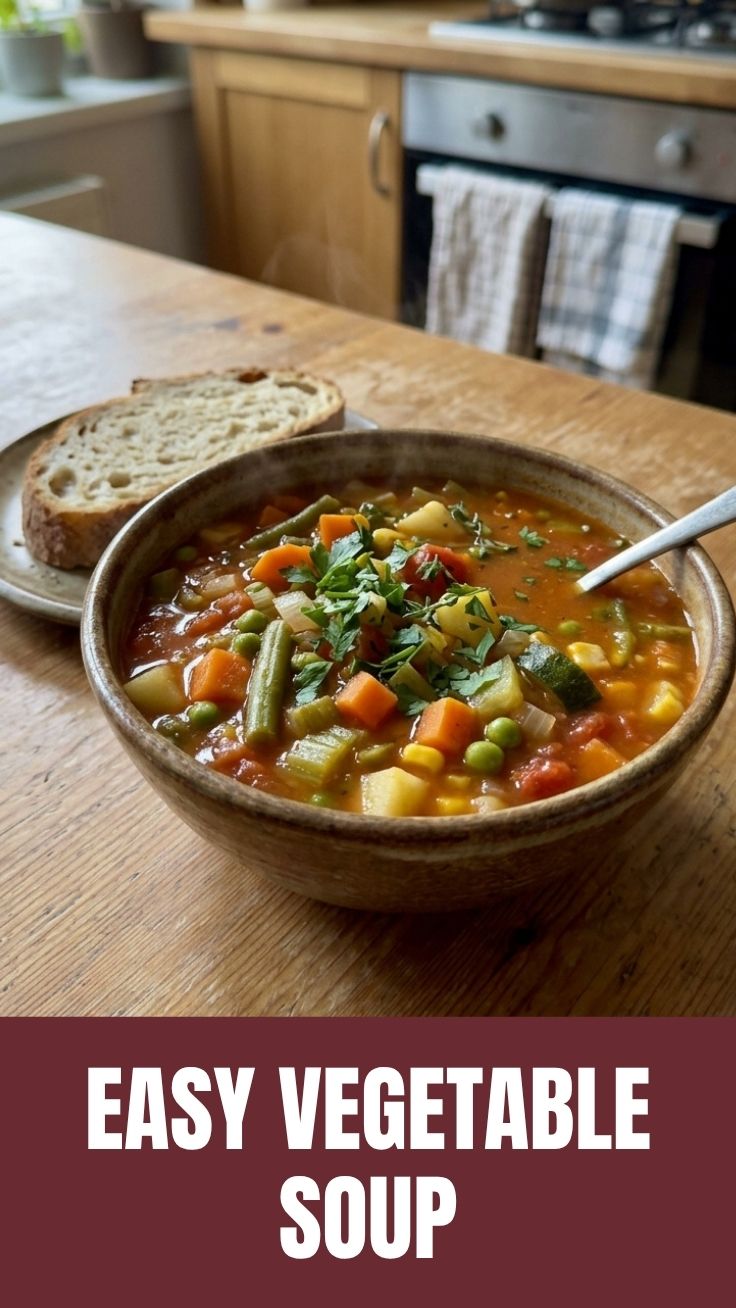
– Prep Time: 15 minutes (washing, dicing, mincing)
– Cook Time: 30–40 minutes (active simmering)
– Resting Time: 5–10 minutes (allows flavors to meld after cooking)
– Total Time: Approximately 50–60 minutes
Pro Tip: Make-ahead prep by chopping all vegetables the night before. Store them together in a sealed container in the fridge for up to 24 hours. This approach makes weeknight cooking effortless and encourages you to try more Soup Recipes with confidence.
—
Step-by-Step Instructions
1. Sauté the Aromatics
Heat olive oil in your stockpot over medium heat. Add diced onion and cook, stirring occasionally, for 4–5 minutes until translucent. Add minced garlic, carrots, and celery. Sauté for another 3–4 minutes until the vegetables soften and release a fragrant aroma. This step builds the foundational flavor for your Vegetable Soup (Homemade).
2. Build the Broth Base
Add canned tomatoes (with their juices), vegetable broth, dried herbs, and the bay leaf. Stir to combine, scraping any browned bits from the bottom of the pot. Bring to a boil, then reduce heat to a gentle simmer. Tip: Taste your broth at this stage—it should be lightly seasoned but not salty, as flavors will concentrate during simmering.
3. Simmer the Soup
Add the zucchini and green beans. Let the soup simmer uncovered for 20–25 minutes, or until all vegetables are fork-tender. Stir occasionally. Avoid boiling vigorously, which can make vegetables mushy and cloud the broth. If you’re exploring different Soup Recipes, remember that root vegetables (like potatoes) require longer simmering, while delicate greens go in last.
4. Finish with Greens & Seasoning
Remove the bay leaf. Stir in the leafy greens and cook just until wilted (about 2 minutes). Taste and adjust salt, pepper, or additional herbs. For a thicker texture, use an immersion blender to purée 1–2 cups of the soup, then stir back into the pot.
5. Rest & Serve
Let the soup sit off the heat for 5–10 minutes. This resting period allows flavors to harmonize. Ladle into bowls, garnish with fresh parsley or a drizzle of olive oil, and serve warm.
—
Nutritional Benefits & Advantages
This homemade vegetable soup is a nutritional powerhouse for several reasons:
– Low-Calorie, High Volume: A typical 2-cup serving contains only 120–150 calories, making it ideal for weight management or satiety without excess energy.
– Rich in Fiber: Carrots, celery, green beans, and leafy greens provide 5–8 grams of dietary fiber per serving, supporting digestive health and stable blood sugar levels.
– Vitamin & Mineral Density: The combination of tomatoes (lycopene), leafy greens (vitamin K, iron), and carrots (beta-carotene) delivers antioxidants that combat inflammation.
– Hydration Support: The broth base contributes to daily fluid intake, which is especially beneficial during illness or hot weather.
– No Added Preservatives or Sodium: By controlling ingredients, you avoid the high sodium and additives found in canned soups.
—
Tips, Variations & Cooking Advice
Flavor Variations
– Mediterranean Twist: Add 1 tsp smoked paprika, ½ tsp cumin, and a handful of chopped olives during the simmer.
– Asian-Inspired: Swap herbs for ginger, lemongrass, and a splash of soy sauce (or tamari for gluten-free).
– Spicy Version: Stir in ½ teaspoon red pepper flakes or a diced jalapeño with the garlic.
Ingredient Swaps
– Protein Boost: Add 1 can of drained chickpeas or white beans during the last 10 minutes of cooking.
– Low-Carb/Keto: Omit carrots and green beans; replace with cauliflower florets and more leafy greens.
– Gluten-Free: Use certified gluten-free vegetable broth and double-check canned tomato labels.
Cooking Method Alternatives
– Slow Cooker: Sauté aromatics first, then transfer everything (except greens) to a slow cooker. Cook on low for 6–8 hours or high for 3–4 hours. Stir in greens 30 minutes before serving.
– Instant Pot: Use the Sauté function for aromatics, then pressure cook on high for 5 minutes with a natural release. Add greens after releasing pressure.
—
Common Mistakes to Avoid
| Mistake | Solution |
|———|———-|
| Overcooking vegetables (mushy texture) | Add delicate vegetables like zucchini in the last 15 minutes; cook greens at the end |
| Bland, watery broth | Sauté aromatics thoroughly; use low-sodium broth and season in layers |
| Too salty | Use no-salt-added broth and tomatoes; add salt gradually |
| Unevenly chopped vegetables | Cut all ingredients to similar sizes (about ½-inch dice) for even cooking |
| Skimping on herbs | Dried herbs need time to rehydrate; add them early, and taste before serving to adjust |
—
Storage & Meal Prep Tips
Refrigeration
– Cool soup completely before transferring to airtight containers.
– Store in the refrigerator for up to 5 days.
– Reheat on the stovetop over medium-low heat, stirring occasionally, or microwave in 60-second intervals.
Freezing
– Pour cooled soup into freezer-safe bags or containers, leaving 1 inch of headspace for expansion.
– Freeze for up to 3 months.
– To reheat from frozen, thaw overnight in the fridge, then warm on the stovetop. Alternatively, add frozen soup directly to a pot with a splash of water and heat slowly.
Texture Preservation
– Leafy greens (spinach, kale) can become limp after freezing. If meal-prepping for freezing, add fresh greens after reheating.
– For best results, omit potatoes if freezing (they can become grainy). Add fresh potatoes when reheating.
—
Conclusion
Making a hearty Vegetable Soup (Homemade) from scratch is one of the most rewarding kitchen skills you can develop. With just a few fresh vegetables, quality broth, and a simple simmer technique, you can create a meal that’s tastier, healthier, and more customizable than anything from a can. The beauty of this recipe lies in its flexibility: use vegetables you have on hand, adjust seasonings to your palate, and experiment with global flavors. As you explore different Soup Recipes, you’ll discover that mastering the basics opens the door to countless variations, from creamy puréed soups to chunky stews. So grab your largest pot, dice those vegetables, and let the aroma fill your kitchen. When you taste your first spoonful, you’ll realize this wasn’t just cooking—it was creating comfort. Share your results, tag a friend, or dive into more Soup Recipes on our site to keep your inspiration flowing.
—
FAQs (Frequently Asked Questions)
1. Can I use frozen vegetables instead of fresh?
Absolutely. Frozen vegetables are flash-frozen at peak ripeness, so they retain nutrients and work well in soups. Add them directly during the simmering step without thawing. However, fresh vegetables offer superior texture and flavor when you have the time.
2. How can I make this soup more filling for a main meal?
To turn it into a complete meal, add 1 cup of cooked quinoa, brown rice, or lentils during the last 10 minutes of simmering. Alternatively, serve with crusty bread or a side salad.
3. What if my soup tastes too acidic or too sweet?
For acidic notes (from tomatoes), add ½ teaspoon of sugar or a pinch of baking soda to balance. If it’s too sweet (from carrots), add a squeeze of lemon juice or a splash of vinegar to brighten flavors.
4. Can I make this soup without tomatoes?
Yes. Omit the diced tomatoes and increase the vegetable broth by 1 cup. For depth, add 1 tablespoon of tomato paste or a splash of balsamic vinegar.
5. How do I prevent the soup from becoming mushy when reheating?
Reheat only the amount you plan to eat. For leftovers, avoid boiling—gently warm over medium-low heat. You can also reheat in the microwave at 50% power for 60-second intervals, stirring between each.
Quick way to grow your Vegetable Soup (Homemade)
Ingredients
Equipment
Method
- Sauté carrots, celery, and onion in olive oil in a large pot until softened.
- Add minced garlic, diced potatoes, canned tomatoes, mixed vegetables, and vegetable broth to the pot.
- Bring the soup to a boil, then reduce heat and simmer until vegetables are tender.
- Season with salt and black pepper to taste and serve hot.