The Ultimate Summer Orzo Salad: A Refreshing, Mediterranean-Inspired Dish You’ll Make on Repeat
Is there anything more satisfying than a vibrant, flavorful salad that doubles as a complete meal? Imagine a dish that bursts with the sun-drenched flavors of the Mediterranean, requires minimal cooking, and keeps perfectly in the fridge for days. This Orzo Salad (Summer) is exactly that—a versatile, crowd-pleasing recipe that transforms simple pantry ingredients into a culinary masterpiece. Preparing it at home not only saves money but also allows you to control the quality of every ingredient, from the extra-virgin olive oil to the fresh herbs. Whether you’re planning a backyard barbecue, a picnic, or a quick weekday lunch, this salad offers exceptional value: it’s budget-friendly, nutrient-dense, and comes together in under 30 minutes)Skip the bland, overpriced deli versions and discover how effortless homemade can be. Let’s dive into building this Mediterranean Orzo masterpiece.
Ingredients & Kitchen Tools
Before starting, gather everything you need. The quality of each component directly impacts the final dish.
Required Ingredients
– 1 cup orzo pasta: Use a high-quality, bronze-die-cut orzo for better texture and sauce adherence.
– 1.5 cups cherry tomatoes (halved): Choose ripe, sweet tomatoes for natural acidity and color.
– 1 English cucumber (diced): Less watery than regular cucumbers; keeps the salad crunchier.
– 1/2 cup Kalamata olives (halved): Their briny flavor is essential for authenticity.
– 1/2 cup crumbled feta cheese: Use block feta for creaminess; avoid pre-crumbled varieties.
– 1/4 cup red onion (finely diced): Soak in cold water for 5 minutes to mellow sharpness.
– Fresh basil (10 leaves, chiffonade): Add just before serving to prevent wilting.
– For the Dressing: 1/4 cup extra-virgin olive oil, 2 tbsp lemon juice (fresh), 1 tsp Dijon mustard, 1 garlic clove (minced), salt, and pepper.
Kitchen Tools & Substitutions
– Large pot for boiling orzo
– Colander for draining
– Cutting board and chef’s knife
– Mixing bowls (one large, one small)
– Whisk or fork for dressing
– Substitution notes: Gluten-free pasta? Use chickpea orzo. Dairy-free? Omit feta or use a plant-based alternative.
Prep Time & Cooking Schedule
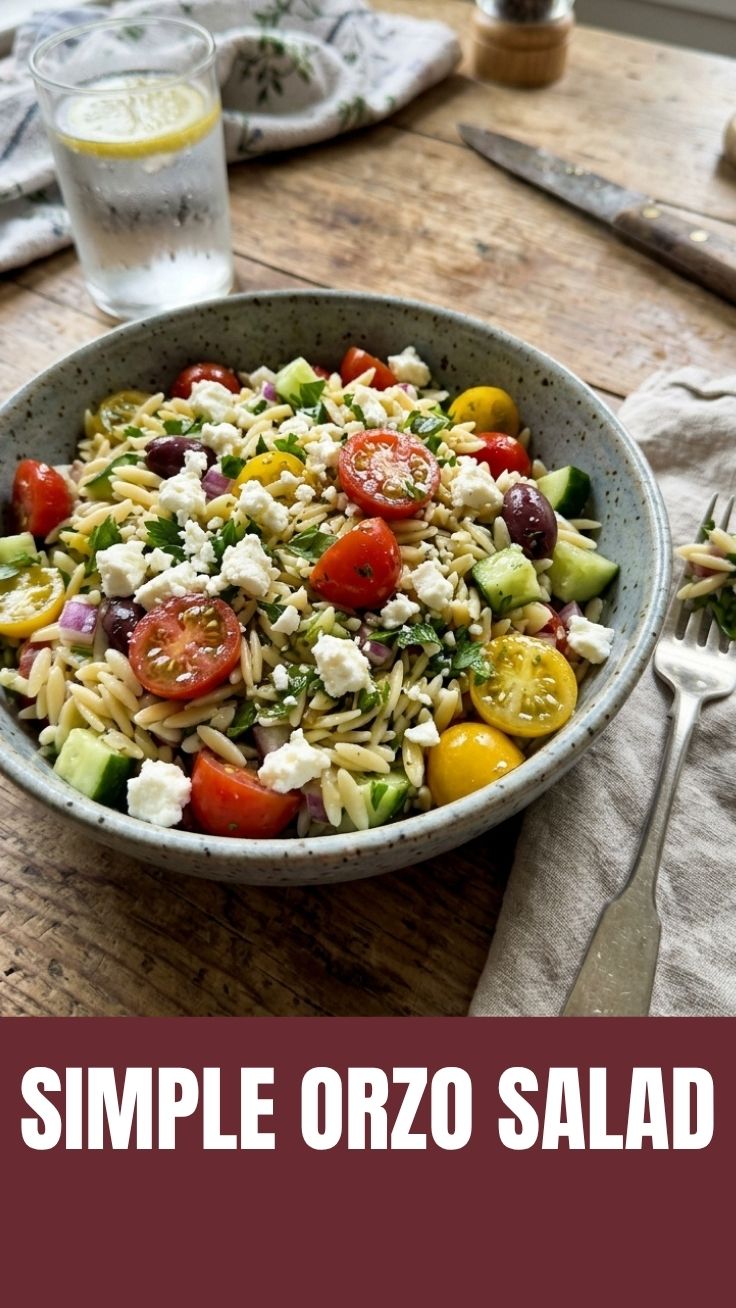
– Prep time: 15 minutes (washing, chopping, cooking)
– Cook time: 9 minutes (for al dente orzo)
– Resting time: 5 minutes (after dressing)
– Total time: 30 minutes
Planning tip: Cook the orzo while you chop vegetables. Once the pasta is done, spread it on a baking sheet to cool quickly—this stops the cooking process and prevents clumping. The salad tastes best after 30 minutes of chilling, allowing the flavors to meld.
Step-by-Step Instructions
1. Cook the orzo: Bring a large pot of generously salted water (about 1 tbsp salt per 4 cups water) to a rolling boil. Add 1 cup orzo and stir immediately to prevent sticking. Cook according to package directions, usually 8–9 minutes, until al dente (firm to the bite). Drain into a colander, but do not rinse—rinsing removes starch that helps the dressing adhere.
2. Cool the pasta: Spread the drained orzo on a rimmed baking sheet in a single layer. Drizzle with 1 tsp olive oil to prevent sticking. Let cool for 5 minutes at room temperature, or speed up by refrigerating for 10 minutes. Temperature cue: The pasta should be warm but not hot when you add vegetables to avoid wilting them.
3. Prepare the vegetables: While the orzo cooks and cools, halve the cherry tomatoes, dice the cucumber, halve the olives, and finely dice the red onion. If using red onion, soak it in cold water for 5 minutes to reduce pungency, then drain well.
4. Make the dressing: In a small bowl, whisk together 1/4 cup extra-virgin olive oil, 2 tbsp fresh lemon juice, 1 tsp Dijon mustard, 1 minced garlic clove, 1/2 tsp salt, and 1/4 tsp black pepper. Chef’s tip: Taste the dressing—it should be bright and punchy, as the acidity will mellow once tossed with the pasta.
5. Assemble the salad: In a large mixing bowl, combine the cooled orzo, halved tomatoes, diced cucumber, olives, and red onion. Pour the dressing over the mixture and toss gently with a rubber spatula until everything is evenly coated.
6. Add the cheese and herbs: Gently fold in the crumbled feta cheese. Just before serving, add the chiffonade basil and stir once more. Seasoning adjustment: Taste and adjust salt and pepper—the olives and feta are salty, so go light at first.
7. Serve: Transfer to a serving platter or keep in the bowl. Garnish with extra basil leaves for a fresh finish. This Orzo Salad (Summer) can be served at room temperature or chilled so it’s perfect for make-ahead meals. The beauty of this dish lies in its adaptability—you can easily customise the ingredients to create your own authentic Mediterranean Orzo version.
Nutritional Benefits & Advantages
This salad isn’t just delicious; it’s a nutritional powerhouse. Orzo provides complex carbohydrates for sustained energy, while the olive oil offers heart-healthy monounsaturated fats and anti-inflammatory polyphenols. Cherry tomatoes are rich in lycopene, an antioxidant linked to reduced cancer risk, especially when paired with oil. Feta cheese delivers calcium and protein, while cucumbers and basil contribute hydration, vitamin K, and essential oils. The combination of fiber from vegetables and protein from cheese (or optional chickpeas) makes it a balanced meal that supports digestion and satiety)Skip the processed sides—this salad proves healthy eating can be indulgent.
Tips Variations & Cooking Advice
– Flavor variations: Add diced roasted red peppers for sweetness, or a pinch of red pepper flakes for heat. Swap basil for mint or parsley for a different herbal profile.
– Protein boost: Fold in grilled chicken, shrimp, or canned chickpeas (drained and rinsed) to turn it into a complete entrée.
– Dietary adaptations: For gluten-free, use chickpea orquette or brown rice orzo. For dairy-free, omit the feta or use a tangy cashew-based substitute. For vegan, skip the cheese and add toasted pine nuts for richness.
– Method swap: In summer, use a no-cook version by soaking orzo in hot water for 15 minutes (like couscous), though texture will differ.
Common Mistakes to Avoid
– Overcooked orzo: Mushy pasta ruins the salad’s texture. Test 1 minute before the package time; al dente orzo should still have a slight resistant bite.
– Skipping the cool-down: Adding hot pasta to cold vegetables wilts them and releases excess water, making the salad soggy. Always cool orzo to warm or room temperature first.
– Undersalting the pasta water: Pasta absorbs salt during boiling; under-salted water leads to bland results. Use at least 1 tbsp salt per 4 cups water.
– Overdressing: The pasta absorbs dressing over time, so start with 3/4 of the dressing and add more just before serving. Remaining dressing can be stored separately.
Storage & Meal Prep Tips
– Refrigeration: Store in an airtight container for up to 4 days. The salad will dry out slightly as pasta absorbs dressing; revive with a squeeze of lemon juice and a drizzle of olive oil before serving.
– Freezing: Not recommended—pasta becomes mushy, and vegetables release water upon thawing. However, you can freeze cooked orzo alone (spread flat on a sheet pan, then transfer to a bag) for up to 1 month.
– Reheating: This salad is designed to be served cold or at room temperature. If you prefer it warm, microwave individual portions for 20–30 seconds, but note that feta will become soft and less distinct.
– Meal prep hack: Cook orzo and chop all vegetables up to 2 days ahead. Store components separately in the fridge. Assemble and dress on the day of serving for optimal texture.
Conclusion
There you have it—a foolproof Orzo Salad (Summer) that delivers on every front: vibrant flavor, impressive presentation, and effortless execution. Whether you’re feeding a crowd or meal-prepping for the week, this salad proves that simple ingredients, when treated with care, can create something truly memorable. The key is balancing textures (al dente pasta, crunchy vegetables, creamy feta) and allowing the dressing to work its magic. Don’t skip the resting time—those 30 minutes allow the flavors to meld into a harmonious culinary experience. I encourage you to make it your own by experimenting with herbs, proteins, or even a dash of za’atar. Try this Mediterranean Orzo salad this week, snap a photo, and share your creation. Your taste buds will thank you for this beautiful, fresh twist on comfort food.
FAQs
1. Can I use a different pasta shape like ditalini or acini di pepe?
Absolutely—any small pasta works well. Just adjust cooking time according to package directions and ensure you cool it properly.
2. How do I prevent the salad from becoming watery?
Salt the cucumber after dicing, let it sit for 10 minutes, then pat dry with paper towels to remove excess moisture. Also, don’t add tomatoes too early; they release water over time.
3. Can I make this salad vegan?
Yes. Omit the cheese or use a plant-based feta alternative. For extra flavor, add 2 tbsp nutritional yeast or 1/4 cup toasted sunflower seeds for nuttiness.
4. Why did my orzo clump together?
This happens if you didn’t stir it immediately after adding to boiling water, or if you rinsed it. Always stir once after adding, and don’t rinse—the starch helps the dressing cling.
5. How long does this salad last in the fridge without becoming mushy?
Up to 4 days if stored properly, but best within 2 days. To extend freshness, keep dressing separate and mix only the portion you’ll eat immediately.
Proven way to grow 3-Star Orzo Salad (Summer)
Ingredients
Equipment
Method
- Cook orzo according to package directions, then drain and rinse with cold water to cool.
- In a large bowl, combine the cooked orzo, halved cherry tomatoes, diced cucumber, thinly sliced red onion, crumbled feta cheese, chopped fresh parsley, and halved Kalamata olives.
- In a small bowl, whisk together the extra virgin olive oil, lemon juice, red wine vinegar, Dijon mustard, minced garlic, dried oregano, salt, and black pepper until well combined.
- Pour the dressing over the orzo mixture and toss gently to ensure all ingredients are evenly coated.
- Cover the bowl and refrigerate for at least 30 minutes before serving to allow the flavors to meld, then serve chilled.