Easy Homemade Peanut Butter Fudge: The Ultimate Fudge Recipe
Craving a rich, creamy dessert that melts in your mouth? This Peanut Butter Fudge is the answer—a simple, no-bake treat that delivers intense nutty sweetness with every bite. Whether you’re exploring new Fudge Recipes for a party or a last-minute indulgence, making it at home saves money and lets you control the ingredients. In this post, I’ll show you how to achieve perfect texture and flavor without a candy thermometer.
🛒 Ingredients & Kitchen Tools
Ingredients:
– 1 cup unsalted butter (or vegan butter) – provides richness and helps set the fudge.
– 1 cup creamy peanut butter (use natural for a less sweet version) – the star flavor.
– 3 cups powdered sugar – sweetens and creates the right consistency.
– 1 tsp vanilla extract – enhances overall flavor.
– ½ tsp salt (skip if using salted peanut butter) – balances sweetness.
Optional substitutions:
– Dark chocolate chips for a chocolate swirl variation.
– Coconut oil replaces butter for a dairy‑free option.
– Almond or cashew butter for a different nut profile.
Kitchen tools:
– 8×8‑inch baking pan – lined with parchment for easy removal.
– Medium saucepan – for melting butter and peanut butter.
– Mixing bowl – preferably heatproof.
– Spatula or wooden spoon – for stirring.
– Measuring cups and spoons.
⏰ Prep Time & Cooking Schedule
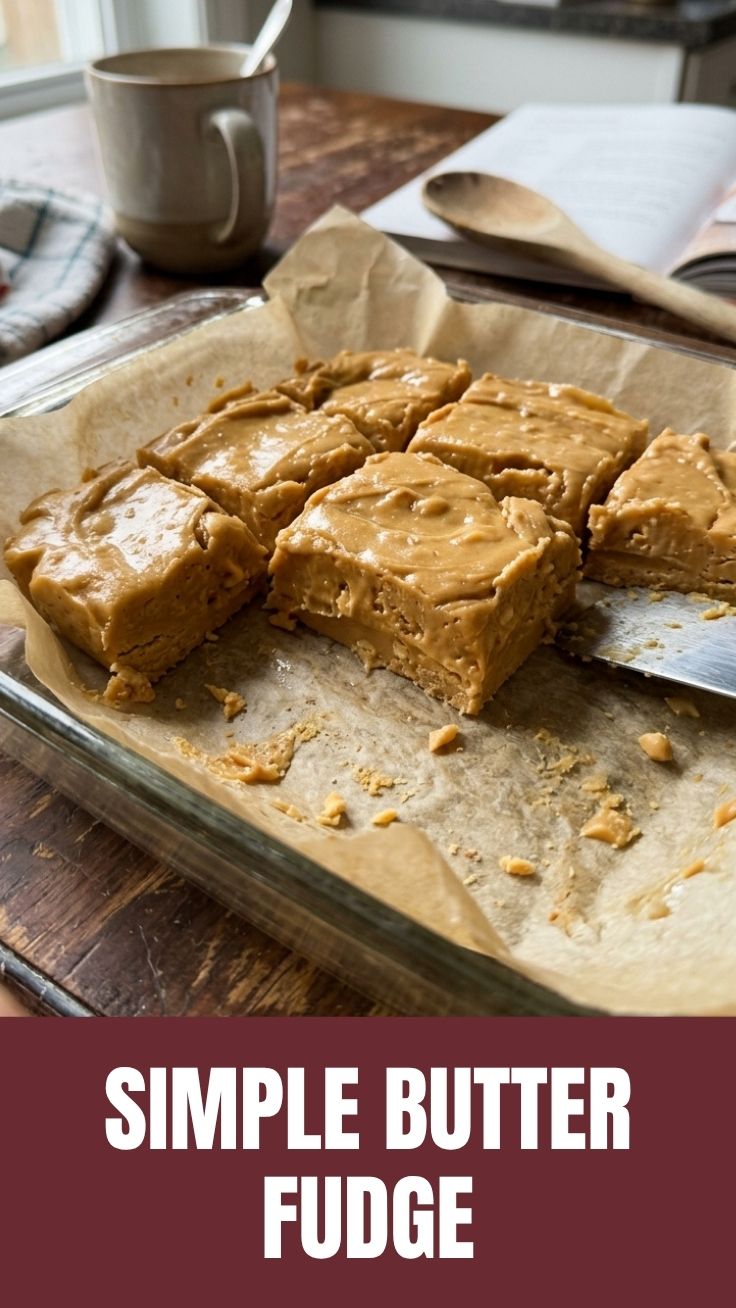
– Prep time: 10 minutes.
– Active cooking time: 5 minutes.
– Chilling time: 2 hours (or 1 hour in the freezer).
– Total time: 2 hours 15 minutes.
Plan ahead: the fudge needs uninterrupted refrigeration to set properly. If you’re in a hurry, use the freezer option and check firmness after 45 minutes.
👩🍳 Step-by-Step Instructions
1. Prepare the pan – Line your 8×8‑inch pan with parchment paper, leaving overhang on two sides. This makes lifting out the fudge effortless.
2. Melt the base – In a medium saucepan over low heat, melt the butter and peanut butter together, stirring constantly. Once smooth, remove from heat immediately. Overheating can cause the oils to separate, ruining the creamy texture of your Peanut Butter Fudge.
3. Add dry ingredients – Sift the powdered sugar into a large mixing bowl. Pour the warm butter‑peanut mixture over the sugar, then add vanilla and salt. Stir gently until no white streaks remain. The mixture will be thick—your arm will get a workout!
4. Press and chill – Transfer the mixture into the lined pan. Use a spatula or your hands (lightly greased) to press it evenly into the corners. Smooth the top. Refrigerate for at least 2 hours until firm.
5. Cut and serve – Lift the fudge block out using the parchment overhang. Slice into 1‑inch squares with a sharp knife. For clean cuts, run the knife under hot water and dry it between slices.
Pro tip: If the fudge is too crumbly, you may have added too much powdered sugar. Next time, reduce sugar by ¼ cup and test the consistency before pressing. If too soft, chill longer. This step is where many Fudge Recipes go wrong—patience pays off.
🥜 Nutritional Benefits & Advantages
Peanut butter is packed with heart‑healthy monounsaturated fats, protein, and fiber. A single square of this Peanut Butter Fudge provides about 150 calories and 2 grams of protein, making it a satisfying energy boost. By making it at home, you avoid preservatives and hydrogenated oils found in store‑bought versions. Plus, you can easily adjust sweetness—use a sugar substitute like erythritol for a keto‑friendly treat. The butter adds a dose of vitamin A, and if you choose natural peanut butter, you get extra nutrients without added sugar.
🔥 Tips, Variations & Cooking Advice
– Chocolate swirl fudge: After pressing the fudge into the pan, drizzle melted dark chocolate (½ cup) over the top and swirl with a knife.
– Crunchy version: Use chunky peanut butter and fold in ¼ cup crushed peanuts before pressing.
– Dairy‑free adaptation: Replace butter with coconut oil (same amount). The flavor will shift slightly but remains delicious.
– Spice it up: Add ½ teaspoon cinnamon or a pinch of cayenne for a warm twist.
– Serving tip: For a firmer texture, freeze for 30 minutes before slicing—especially helpful in warm climates.
❌ Common Mistakes to Avoid
| Mistake | Solution |
|———|———-|
| Fudge too dry / crumbly | Ensure butter and peanut butter are fully melted and well incorporated. Reduce powdered sugar by 2–3 tablespoons. |
| Fudge too soft / won’t set | Chill longer (up to 4 hours). If still soft, you may have used natural peanut butter with too much oil—drain excess oil first. |
| Grainy texture | Sift powdered sugar thoroughly and stir until completely smooth. Over‑stirring can also cause graininess—mix just until combined. |
| Sticking to pan | Always line with parchment paper, and lightly grease the paper if needed. |
🧊 Storage & Meal Prep Tips
Store Peanut Butter Fudge in an airtight container in the refrigerator for up to 2 weeks. For longer storage, wrap each square individually in wax paper and freeze for up to 3 months. To thaw, place in the fridge overnight or on the counter for 15 minutes. Avoid microwaving—it can melt the butter and ruin the texture. When packing for potlucks or gifts, layer squares between sheets of parchment paper to prevent sticking.
✅ Conclusion
Creating a perfect Peanut Butter Fudge at home is simple, rewarding, and far healthier than store‑bought alternatives. This recipe delivers consistent results every time—creamy, sweet, and bursting with peanut flavor. Whether you’re a beginner or a seasoned baker, these Fudge Recipes offer endless room for customization. Try this version today, share your photos in the comments, and explore more dessert ideas on our site!
❓ FAQs
1. Can I use natural peanut butter without added sugar?
Yes, but you may need to increase the powdered sugar by 2–3 tablespoons to achieve the same sweetness and texture. Also, natural peanut butter tends to be oilier—drain any excess oil before measuring.
2. Why did my fudge turn out grainy?
Graininess usually occurs from under‑dissolving the powdered sugar. Always sift it before mixing, and stir until the mixture is completely smooth. If it started to separate on the stove, you overheated the butter‑peanut base.
3. Can I make this without butter?
Yes! Substitute with equal parts coconut oil or vegan butter. The texture will be slightly firmer but still delicious. Note that coconut oil adds a mild coconut flavor.
4. How long does homemade fudge last?
Properly stored in an airtight container in the fridge, it stays fresh for up to 2 weeks. Frozen, it lasts up to 3 months without quality loss.
5. Can I add chocolate chips or nuts?
Absolutely. Fold in ½ cup mini chocolate chips, chopped peanuts, or even crushed pretzels right before pressing the mixture into the pan. This adds crunch and a flavor boost.
Best way to grow 3-lb Peanut Butter Fudge
Ingredients
Equipment
Method
- Line a 9x13 inch pan with parchment paper, leaving an overhang on the sides for easy removal, and set aside.
- In a large heavy-bottomed saucepan over medium heat, combine the sugar, milk, and butter.
- Bring the mixture to a rolling boil, stirring constantly to prevent scorching.
- Continue boiling for 5 minutes without stirring, or until a candy thermometer reads 235-240°F (soft ball stage).
- Remove the saucepan from the heat and immediately add the peanut butter and vanilla extract.
- Stir vigorously with a wooden spoon or electric mixer until the peanut butter is fully incorporated and the mixture is thick and no longer glossy.
- Quickly pour the fudge into the prepared pan and spread evenly.
- Allow the fudge to cool completely at room temperature, then lift it out of the pan using the parchment paper and cut into squares before serving.