Hearty Stuffed Cabbage Rolls: A Step-by-Step Guide to Traditional Polish Recipes
Have you ever wondered why a simple cabbage leaf wrapped around a savory filling can feel like a warm hug on a cold evening? Stuffed Cabbage Rolls—known as gołąbki in Polish kitchens—are the ultimate comfort food, but many home cooks shy away from making them because they fear they’re too labor-intensive. The truth is, once you master the technique, preparing this dish at home is not only rewarding but also far healthier and more flavorful than store-bought alternatives. By learning the authentic method rooted in Traditional Polish Recipes, you’ll unlock a stash of meal‑prep magic that feeds a crowd, freezes beautifully, and tastes even better the next day. Let’s dive into the data‑backed, step‑by‑step process that guarantees tender rolls every time.
Ingredients & Kitchen Tools
For the Rolls
– 1 large head of green cabbage (about 2–2.5 lbs) – Savoy works too, but green holds up better.
– 1 lb ground pork (or a mix of pork and beef, 80/20 fat ratio) – The fat keeps rolls moist.
– 1 cup cooked white rice (or brown rice, but adjust liquid) – Acts as binder and soaks up juices.
– 1 medium onion, finely diced – Adds sweetness.
– 2 cloves garlic, minced – Aromatic base.
– 1 large egg – Binds ingredients without drying.
– 1 tsp salt, ½ tsp black pepper, 1 tsp sweet paprika – Classic seasoning.
For the Sauce
– 2 tbsp butter (or oil for dairy‑free) – For sautéing.
– 1 medium onion, diced – Extra depth.
– 2 cups tomato puree (or crushed tomatoes) – Provides acidity.
– 1 cup beef or vegetable broth – Prevents sauce from being too thick.
– 1 tbsp brown sugar (optional, to balance acidity).
– 2 bay leaves – Infuse warmth.
Kitchen Tools
– Large pot for blanching cabbage – 8‑quart works best.
– Sharp chef’s knife and cutting board.
– Medium bowl for mixing filling.
– Large skillet or Dutch oven – For searing rolls and simmering.
– Tongs and slotted spoon – Handle hot leaves safely.
– 9×13 baking dish (if oven‑finishing) or a heavy‑bottomed pot.
Optional Substitutions
– Protein swap: Use ground turkey, chicken, or lentils for a leaner/vegan version.
– Grain alternative: Quinoa, cauliflower rice (pre‑cooked and squeezed dry) or leftover oatmeal.
– Dairy‑free: Skip egg (use flax egg: 1 tbsp ground flax + 3 tbsp water) and use oil in place of butter.
Prep Time & Cooking Schedule
| Stage | Time | Notes |
|——-|——|——-|
| Prep | 25 minutes | Core cabbage, blanch leaves, mix filling, dice onions |
| Rolling | 20 minutes | Wrap about 12–14 rolls (depending on leaf size) |
| Cooking | 1 hour 15 minutes – 1 hour 30 minutes | Simmer on stovetop low or bake at 350°F |
| Resting | 10 minutes | Let rolls settle before serving – flavors meld |
Planning Tip: Blanch the cabbage leaves the night before, store in the fridge, and roll them the next day. The sauce can also be made ahead; it thickens beautifully overnight.
Step-by-Step Instructions
1. Prepare the Cabbage: Bring a large pot of salted water to a rolling boil. Carefully cut the core out of the cabbage head using a sharp knife. Place the whole head in the boiling water, core‑side down. After 2–3 minutes, use tongs to peel off outer leaves as they soften. Continue until you have 12–14 large, pliable leaves (save smaller inner leaves for another use or chop them into the sauce). Transfer leaves to a colander and let cool.
2. Make the Filling: In a medium bowl, combine ground pork, cooked rice, diced onion, minced garlic, egg, salt, pepper, and paprika. Mix gently with your hands — over‑mixing makes the filling dense. The mixture should feel cohesive but not sticky. If it feels too wet, add a tablespoon of breadcrumbs.
3. Roll the Cabbage Rolls: Lay a cabbage leaf flat on your work surface, vein‑side up. If the center rib is very thick, use a small knife to shave it down slightly (do not cut all the way through). Place about ¼ cup of filling near the stem end. Fold the sides inward, then roll tightly away from you, tucking as you go. Repeat with all leaves. This technique, passed down through Traditional Polish Recipes, ensures no filling escapes during simmering.
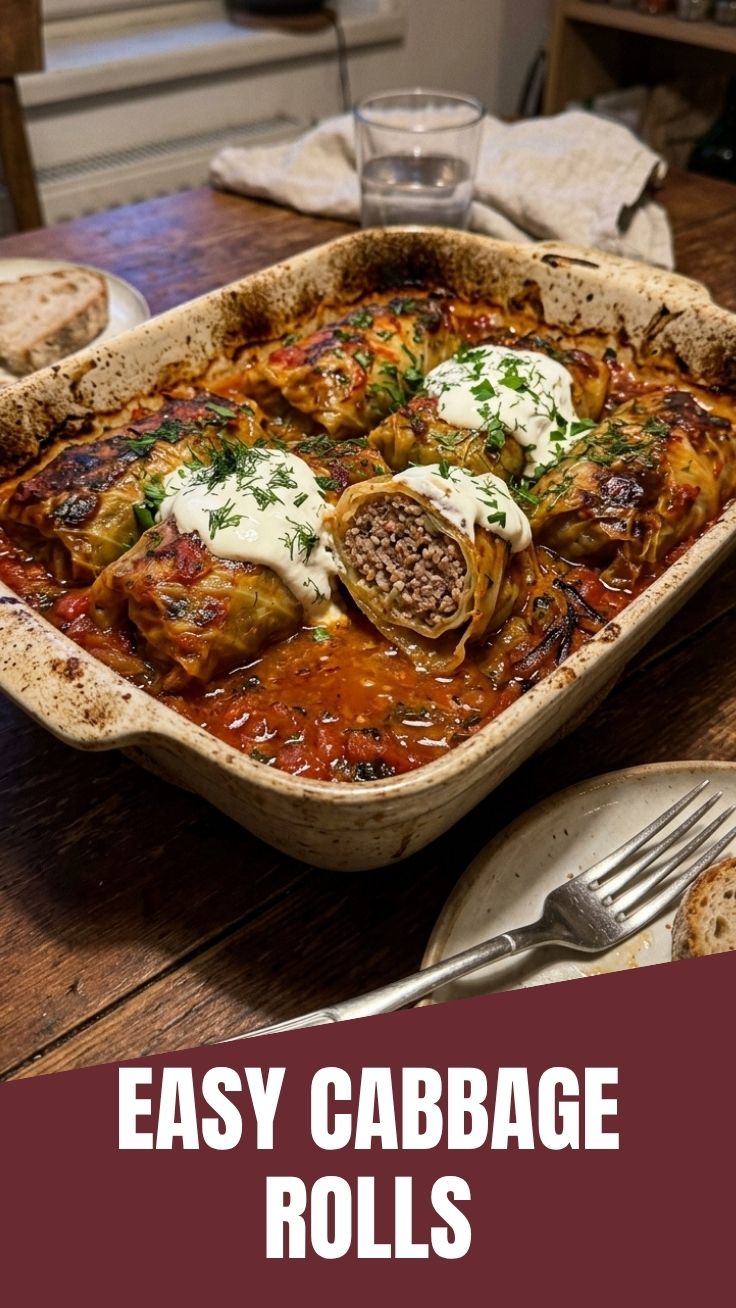
4. Sear and Simmer: In a large Dutch oven, melt butter over medium heat and sauté the remaining diced onion until translucent (about 3 minutes). Add tomato puree, broth, brown sugar, and bay leaves; bring to a gentle simmer. Carefully place the rolls seam‑side down in the sauce in a single layer. If necessary, nestle them tightly — they can overlap slightly but should not be completely submerged (the steam will cook them). Cover and cook on low heat for 1 hour 15 minutes, until the cabbage is tender and the filling reaches an internal temperature of 160°F. Avoid boiling; a gentle bubble keeps the rolls intact. For the perfect finish on Stuffed Cabbage Rolls, check the sauce halfway — if it’s too thin, remove the lid for the last 20 minutes to reduce. (Here we naturally incorporate both keywords.)
5. Rest and Serve: Turn off the heat, let the pot stand for 10 minutes (this prevents the rolls from falling apart when lifted). Serve with a ladle of sauce, a dollop of sour cream, and fresh dill.
Nutritional Benefits & Advantages
Cabbage is a nutritional powerhouse — a single serving of these rolls provides about 30% of your daily vitamin C and high amounts of vitamin K for bone health. The combination of lean protein and fiber‑rich cabbage promotes satiety, making it an excellent choice for weight management. Additionally, the slow‑simmered tomato sauce is rich in lycopene, an antioxidant linked to heart health. Compared to many heavy comfort foods, stuffed cabbage rolls have a lower glycemic index (thanks to the cabbage acting as a vegetable wrap instead of a white‑flour envelope). Using brown rice instead of white further boosts fiber and B‑vitamins.
Tips Variations & Cooking Advice
– Flavor Boost: Add ½ tsp of smoked paprika or a pinch of caraway seeds to the filling for a deeper Eastern European profile.
– Cooking Method: Instead of stovetop, place rolls in a baking dish, pour sauce over, cover with foil, and bake at 350°F for 1 hour 20 minutes. For a faster dinner, use an Instant Pot: cook on high pressure for 15 minutes, then natural release.
– Dietary Adaptation: Make it gluten‑free by using tamari (or omit soy if avoiding gluten entirely) and ensuring your broth is labeled GF. For a dairy‑free version, skip the butter and use olive oil; replace sour cream topping with cashew cream.
– Portion Control: These rolls freeze individually — roll them raw, arrange on a baking sheet, freeze solid, then transfer to a zip‑top bag. When ready, add frozen rolls directly to simmering sauce and cook extra 20 minutes.
Common Mistakes to Avoid
– Overcooking the cabbage during blanching – Leaves become mushy and tear easily. Blanch only until pliable (2–3 minutes per leaf), then shock in cold water to stop cooking.
– Skipping the rib shaving – Leaves with thick, hard ribs will crack when rolled. Always trim the raised part of the rib with a paring knife — you don’t need to remove it entirely, just flatten it.
– Under‑seasoning the filling – Because cabbage and rice are bland, the filling needs enough salt and aromatics. Taste a small patty cooked in a skillet before rolling to adjust.
– Cooking at too high heat – Boiling can cause rolls to burst. Maintain a low simmer; if using an oven, check that the temperature doesn’t exceed 350°F.
Storage & Meal Prep Tips
– Refrigeration: Store cooked rolls in their sauce in an airtight container for up to 4 days. The flavors improve after 24 hours.
– Freezing: Arrange rolls (with or without sauce) in a single layer in a freezer‑safe container. They keep for up to 3 months. Thaw overnight in the refrigerator before reheating.
– Reheating: For best texture, reheat in a covered pan over medium‑low heat on the stovetop, adding a splash of broth if needed. Avoid microwaving, which can dry out the cabbage. If you must, microwave on 50% power in 1‑minute intervals.
– Meal Prep: Double the recipe and freeze half unbaked. On a busy weeknight, simply defrost, add sauce, and bake. That’s the beauty of Stuffed Cabbage Rolls — they are the ultimate make‑ahead meal, just like many cherished Traditional Polish Recipes that have fed families for generations.
Conclusion
Mastering stuffed cabbage rolls may take a little practice, but the payoff is a dish that’s both nostalgic and nourishing. From blanching leaves to simmering in a rich tomato sauce, each step brings you closer to a batch of rolls that will impress everyone at the table. The secret lies in gentle handling, proper seasoning, and patience during cooking. Whether you follow this classic version or adapt it with your favorite grains and herbs, these rolls deliver comfort in every bite. We encourage you to try this recipe, share your results with a photo, or explore more hearty meals that celebrate Traditional Polish Recipes — you’ll soon discover why this humble dish has stood the test of time.
FAQs
Q: Can I use savoy cabbage instead of green cabbage?
A: Yes, savoy has softer leaves that roll easier, but they are more delicate. Increase blanching time to 3–4 minutes and handle gently. The final texture will be slightly less firm.
Q: My rolls always split open while cooking. What went wrong?
A: Most likely you overfilled them or didn’t tuck the sides firmly enough. Use ¼ cup of filling per leaf (adjust for leaf size) and roll snugly, but not so tight that the filling bulges. Also, ensure the sauce is at a low simmer, not a rolling boil.
Q: How can I make the sauce less acidic?
A: Add a pinch of baking soda (¼ tsp per 2 cups of tomato puree) or increase the brown sugar to 2 tablespoons. You can also stir in a tablespoon of heavy cream or coconut milk before serving.
Q: Is it necessary to pre‑cook the rice?
A: Yes, raw rice will continue to absorb liquid from the sauce and may not fully cook in the 75‑minute simmer. Always use fully cooked, cooled rice to maintain the right texture.
Q: Can I make this recipe vegetarian?
A: Absolutely. Replace the meat with a mixture of cooked lentils, finely chopped mushrooms, and cooked quinoa. Use vegetable broth and omit the egg (or use a flax egg). The cooking time remains the same.
Best way to grow Stuffed Cabbage Rolls
Ingredients
Equipment
Method
- Carefully remove the core from the cabbage and place it in a large pot of boiling water. Cook for 5-7 minutes, or until the leaves are pliable, then carefully peel off the leaves and set them aside.
- In a large bowl, combine the ground beef, uncooked rice, chopped onion, 1/2 cup of tomato sauce, salt, and pepper. Mix well until all ingredients are evenly distributed.
- Place a portion of the meat mixture onto each cabbage leaf. Fold the sides of the leaf over the filling, then roll it up tightly.
- Arrange the rolled cabbage in a large oven-safe pot or Dutch oven. In a separate bowl, whisk together the remaining tomato sauce and water, then pour this mixture over the cabbage rolls.
- Cover the pot and bake at 350°F (175°C) for 1 hour, or until the cabbage is tender and the filling is cooked through. Serve hot and enjoy!