The Ultimate Guide to a Creamy, Comforting Tuna Casserole
Have you ever stood in front of an open pantry, wondering what to make with just a few staples like canned tuna, noodles, and a can of soup? The answer is a classic, crowd‑pleasing dish that has warmed kitchens for decades: the beloved Tuna Casserole. Preparing this comforting meal at home not only saves money and reduces food waste, but also lets you control every ingredient—from the creaminess of the sauce to the crunchiness of the topping. In this guide, you’ll discover how to build a rich, flavorful casserole that even picky eaters will love, while also learning the secrets to a perfect Tuna noodle casserole that fits your dietary needs. Let’s dive into the details and make your next weeknight dinner unforgettable.
—
Ingredients & Kitchen Tools
Required Ingredients
– Canned tuna (2 cans, 5 oz each) – Use chunk light or albacore, drained well. Albacore offers a firmer texture; chunk light is more budget‑friendly.
– Egg noodles (8 oz) – Classic wide egg noodles provide the perfect chew. Substitute with gluten‑free pasta or zucchini noodles.
– Cream of mushroom soup (1 can, 10.5 oz) – The traditional creamy base. For a lighter version, use cream of celery or homemade béchamel.
– Milk (½ cup) – Whole milk adds richness; 2% or unsweetened almond milk work too.
– Frozen peas (1 cup) – Adds color and sweetness. Fresh or canned peas are fine.
– Shredded cheddar cheese (1 cup) – Sharp cheddar gives bold flavor. Mix with Monterey Jack for extra melt.
– Breadcrumbs (½ cup) – Panko for extra crunch; regular breadcrumbs or crushed potato chips are great.
– Butter (2 tbsp) – For sautéing and topping. Vegan butter works.
– Seasonings – Salt, black pepper, garlic powder, onion powder, and a pinch of paprika.
Kitchen Tools
– Large pot (for boiling noodles)
– Mixing bowl
– 9×13-inch baking dish or 2‑quart casserole dish
– Colander
– Wooden spoon or spatula
– Measuring cups and spoons
– Small skillet (for toasting breadcrumbs, optional)
Optional Substitutions
– Protein: Substitute tuna with canned salmon or shredded cooked chicken.
– Veggies: Add sautéed mushrooms, chopped broccoli, or diced bell peppers.
– Creaminess: Swap soup with Greek yogurt + 1 tbsp flour for a tangy twist.
– Topping: Use crushed Ritz crackers, french‑fried onions, or grated Parmesan.
—
Prep Time & Cooking Schedule
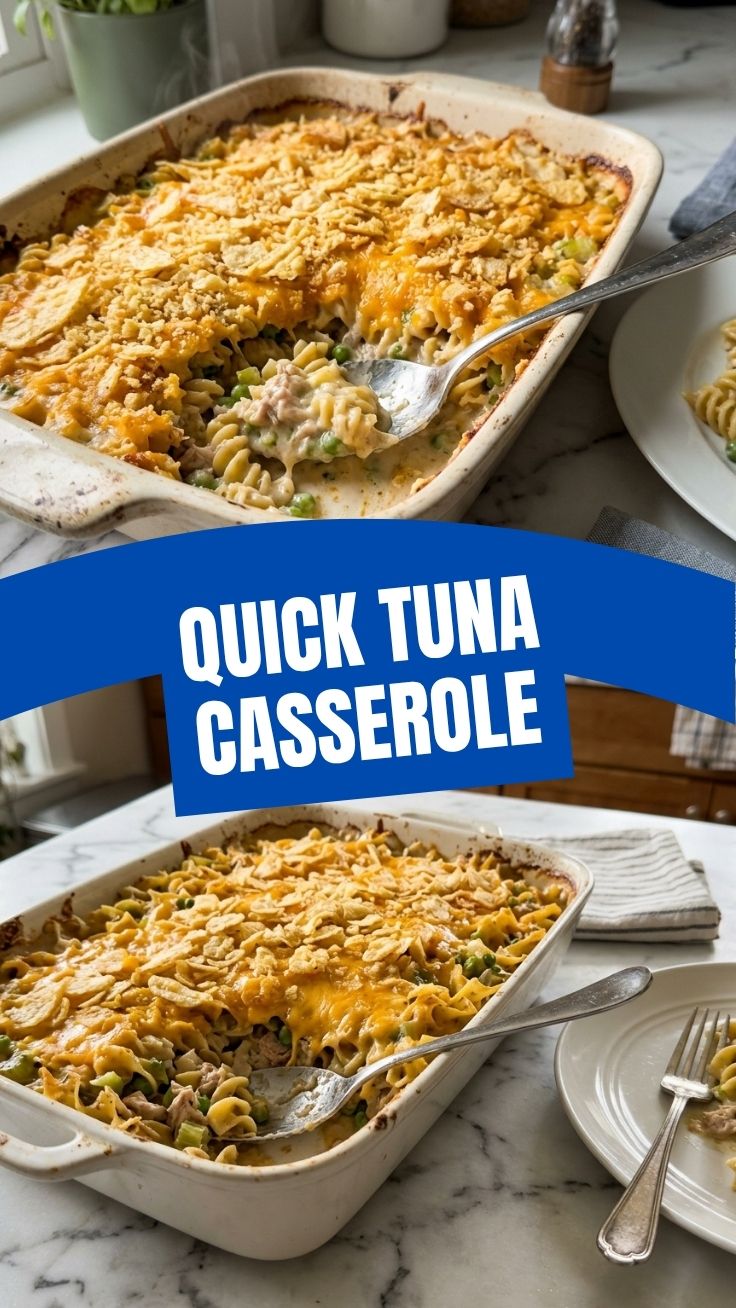
This recipe is designed for busy weeknights. Here’s the timeline:
– Prep time: 15 minutes (boil water, chop, mix)
– Cook time: 25–30 minutes (baking)
– Resting time: 5 minutes (after baking, before serving)
– Total time: ~50 minutes
Planning tip: You can assemble the casserole a day ahead (do not bake) and store it covered in the fridge. Add 5–10 minutes to the baking time if starting cold.
—
Step-by-Step Instructions
1. Preheat & boil water: Set oven to 375°F (190°C). Bring a large pot of salted water to a boil. Cook egg noodles until al dente (about 1 minute less than package directions). Drain and set aside.
2. Prepare the filling: In a large mixing bowl, combine drained tuna, cream of mushroom soup, milk, thawed peas, half the shredded cheese, and seasonings (½ tsp salt, ¼ tsp pepper, ½ tsp garlic powder). Stir until well blended.
3. Combine noodles & sauce: Add the cooked noodles to the bowl and gently fold everything together. The mixture should be creamy but not soupy—add a splash of milk if it seems dry.
4. Assemble in dish: Transfer the mixture to a greased 9×13-inch baking dish. Spread evenly. Top with remaining cheese.
5. Add the crunch: In a small skillet, melt 2 tbsp butter and toss with breadcrumbs until golden. Sprinkle over the cheese layer. For extra flavor, add a pinch of paprika or dried parsley.
6. Bake: Place dish on the middle rack. Bake uncovered for 25–30 minutes, until bubbly around the edges and golden on top. The internal temperature should reach 165°F.
7. Rest & serve: Let the casserole rest for 5 minutes before serving. This allows the sauce to thicken.
Temperature control tip: If the topping browns too quickly, tent loosely with foil during the last 10 minutes. For a softer texture, bake covered for the first 15 minutes, then uncover.
Why this works: The creamy base of the Tuna Casserole ensures every bite is moist, while the crispy topping adds contrast. For a twist, you can turn this into a Tuna noodle casserole by swapping egg noodles for cauliflower florets or shirataki noodles—just adjust the baking time to avoid overcooking.
—
Nutritional Benefits & Advantages
This dish is a powerhouse of convenience and nutrition:
– High‑quality protein: Tuna provides lean protein, omega‑3 fatty acids, and B vitamins. A serving delivers about 20–25g of protein.
– Vegetable boost: Peas add fiber, vitamin C, and a touch of sweetness.
– Calcium: Cheese and milk contribute calcium and phosphorus for bone health.
– Energy‑packed: Noodles supply complex carbs for sustained energy, making this a complete meal.
Dietary advantage: By using low‑sodium soup and reduced‑fat cheese, you can cut sodium and saturated fat while keeping flavor. The recipe is naturally egg‑free (if you avoid egg noodles) and can be made dairy‑free with plant‑based milk and vegan cheese.
—
Tips Variations & Cooking Advice
Flavor Variations
– Herb infusion: Stir in 1 tsp dried thyme or dill for an earthy note.
– Spicy kick: Add ¼ tsp cayenne or a dash of hot sauce to the sauce.
– Cheese swap: Use Gruyère or smoked gouda for a richer, nuttier taste.
Dietary Adaptations
– Gluten‑free: Use gluten‑free pasta (e.g., brown rice or chickpea) and ensure your cream soup is labeled GF. Crush gluten‑free crackers for the topping.
– Dairy‑free: Replace milk with unsweetened oat milk, use dairy‑free cream of mushroom soup (or homemade), and choose vegan cheese.
– Keto/low‑carb: Follow the Tuna noodle casserole approach: replace noodles with steamed cauliflower florets or palmini “noodles.” Use full‑fat coconut milk and extra cheese to keep it creamy.
Cooking Methods
– Stovetop: Cook everything in a large skillet, then transfer to a broiler‑safe dish to brown the topping.
– Slow cooker: Assemble in a lightly greased slow cooker, cook on low for 3–4 hours, then add the topping and broil briefly.
Portion Changes
– For a crowd: Double the recipe and use a 9×13‑inch pan; increase baking time by 10 minutes.
– Individual servings: Divide into ramekins (bake 15–18 minutes) for perfect portion control.
—
Common Mistakes to Avoid
1. Overcooking the noodles – They will become mushy after baking. Always cook to al dente.
2. Skipping the draining of tuna – Excess moisture leads to a watery casserole. Press with a fork.
3. Not seasoning enough – Canned tuna and soup can be bland; taste the filling before baking.
4. Burning the topping – Watch the last 5 minutes. If it’s browning too fast, cover with foil.
5. Removing from the oven too soon – Let it rest; a too‑hot casserole will be runny.
—
Storage & Meal Prep Tips
– Refrigeration: Cool completely, cover tightly, and refrigerate for up to 4 days. The flavors meld beautifully.
– Freezing: Assemble (without topping), wrap in plastic and foil, freeze for up to 3 months. Thaw overnight in the fridge, then add topping and bake.
– Reheating: For best texture, reheat in a 350°F oven for 15–20 minutes (covered with foil). Microwave in 30‑second bursts, but note the topping may soften.
– Meal prep: Cook the noodles and make the sauce in advance. Assemble just before baking to keep the texture fresh.
—
Conclusion
Making a Tuna Casserole from scratch is more than just a meal—it’s a canvas for creativity and a solution for busy evenings. With a creamy interior, a crunchy crown, and endless opportunities for customization, this dish proves that simple ingredients can create extraordinary comfort. Whether you stick to the classic recipe or experiment with a Tuna noodle casserole variation, you’ll have a nutritious, satisfying dinner on the table in under an hour. Try it tonight, share your results with family, and don’t forget to explore more comforting casseroles on our site!
—
FAQs
1. Can I use fresh tuna instead of canned?
Yes! Poach or sear fresh tuna (about 1 lb) and flake it. Adjust seasoning, as fresh tuna is milder.
2. Why is my casserole watery?
Likely causes: undrained tuna, overcooked noodles, or too much milk. To fix, bake uncovered an extra 5–10 minutes or stir in 1 tbsp flour mixed with water.
3. How do I make it ahead of time?
Assemble completely (minus topping) and refrigerate up to 24 hours. Add breadcrumbs and bake 5–10 minutes longer.
4. Can I freeze leftovers?
Absolutely. Freeze in airtight containers for up to 3 months. Thaw in the fridge overnight, then reheat in the oven.
5. What if I don’t have cream of mushroom soup?
Use cream of chicken, cream of celery, or make a quick béchamel (2 tbsp butter + 2 tbsp flour + 1 cup milk, seasoned).
Proven way to grow Tuna Casserole in 3 Steps
Ingredients
Equipment
Method
- Cook egg noodles according to package directions; drain well. In a large bowl, combine the cooked noodles, drained tuna, cream of mushroom soup, milk, and frozen peas, mixing until everything is well incorporated.
- Transfer the mixture to a 9x13 inch baking dish. Sprinkle the shredded cheddar cheese and breadcrumbs evenly over the top of the casserole.
- Bake at 375°F (190°C) for 20-25 minutes, or until bubbly and the topping is golden brown. Let stand for a few minutes before serving.