The Ultimate Guide to a Juicy, Perfectly Roasted Turkey Breast
Have you ever struggled to get a perfectly juicy and flavorful turkey breast without it drying out? This guide will teach you everything about roasting a Turkey Breast to perfection, and it draws inspiration from the best Turkey Breast Recipes available online. Preparing this dish at home is valuable not only for controlling every seasoning and cooking variable but also for saving money while impressing family and friends with a restaurant-quality meal. Whether you’re planning a holiday feast or a simple Sunday dinner, mastering this lean cut of poultry ensures you end up with moist, flavorful results every time.
Ingredients & Kitchen Tools
For the Turkey Breast:
– 1 bone-in, skin-on turkey breast (5–7 lbs) — The bone retains moisture and adds deeper flavor.
– 3 tbsp unsalted butter, softened — Creates a golden, crispy skin.
– 2 cloves garlic, minced — Adds aromatic depth.
– 1 tbsp fresh rosemary, chopped (or 1 tsp dried) — Classic poultry herb.
– 1 tsp fresh thyme leaves (or ½ tsp dried) — Earthy and fragrant.
– 1 tsp salt — Enhances natural flavors.
– ½ tsp black pepper — For subtle heat.
– 1 tbsp olive oil — Helps the seasoning adhere.
– ½ cup chicken broth — Keeps the pan moist and forms a base for gravy.
Optional Substitutions:
– Swap butter for vegan margarine for a dairy-free version.
– Use turkey or vegetable broth instead of chicken broth.
– Replace rosemary with sage or marjoram for a different herb profile.
Kitchen Tools:
– Roasting pan with rack — Elevates the bird for even heat circulation.
– Meat thermometer — Essential for perfect doneness.
– Basting brush — For applying butter mixture.
– Chef’s knife and cutting board — For prepping aromatics.
– Aluminum foil — Tenting prevents over-browning.
– Carving knife and fork — For clean slicing after resting.
Prep Time & Cooking Schedule
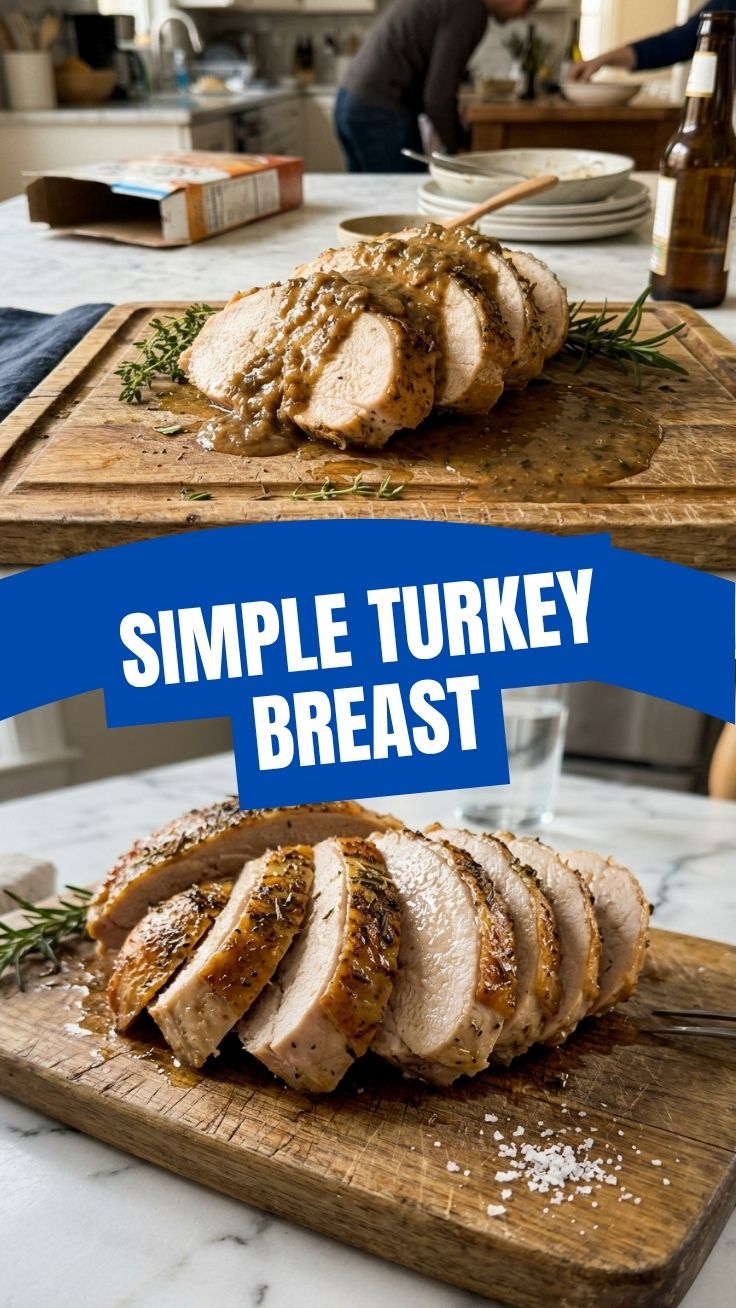
– Prep Time: 15 minutes (including seasoning and preheating)
– Cook Time: 1 hour 15 minutes to 1 hour 30 minutes (depending on weight)
– Resting Time: 15–20 minutes (crucial for juice redistribution)
– Total Time: Approximately 1 hour 45 minutes
Planning Tip: Remove the turkey breast from the refrigerator 30 minutes before roasting to bring it to room temperature. This promotes even cooking. If marinating overnight, reduce salt in the rub to avoid over-salting.
Step-by-Step Instructions
1. Preheat and Prep Dry Rub: Preheat your oven to 400°F (200°C). In a small bowl, combine softened butter, minced garlic, rosemary, thyme, salt, and pepper to form a paste. Pat the turkey breast dry with paper towels (moisture prevents browning). Carefully loosen the skin with your fingers, leaving it attached, and spread half the butter mixture directly over the meat under the skin. Rub the remaining mixture over the top of the skin. Drizzle with olive oil for extra crispiness.
2. Set Up the Pan: Place the turkey breast skin-side up on a rack inside a roasting pan. Pour chicken broth into the bottom of the pan (not over the bird) to create steam and keep the pan drippings from burning. Insert a meat thermometer into the thickest part of the breast, avoiding the bone.
3. Roasting Process: Roast at 400°F for 15 minutes, then reduce the temperature to 350°F (175°C) without opening the oven. Continue roasting until the thermometer reads 155°F (68°C) — approximately 13–15 minutes per pound. Monitor the internal temperature of your Turkey Breast closely; for more ideas, check out other Turkey Breast Recipes online for glaze variations. If the skin is browning too fast, loosely tent with foil during the last 20 minutes.
4. Rest and Carve: Remove from the oven when the internal temperature reaches 160°F (71°C) — carryover cooking will bring it to the safe 165°F (74°C). Cover loosely with foil and rest for 15–20 minutes before slicing against the grain. The resting period allows juices to settle back into the meat, ensuring each slice stays moist and tender.
Nutritional Benefits & Advantages
Turkey breast is a lean, high-quality protein source packed with essential nutrients. A 4-ounce serving provides approximately 30 grams of protein, which supports muscle repair and keeps you feeling full longer. It is naturally low in saturated fat compared to red meats and contains important B vitamins (B6 and B12), selenium (an antioxidant that supports thyroid function), and phosphorus for bone health. Choosing skinless meat reduces calorie count even further, though the skin adds flavor and moisture during roasting. This dish fits well into balanced diets, including low-carb, keto, and paleo meal plans, when paired with roasted vegetables or a fresh green salad.
Tips, Variations & Cooking Advice
Flavor Twists:
– Citrus Herb: Add lemon zest and orange juice to the butter rub.
– Spiced: Mix ground cumin, smoked paprika, and a pinch of cayenne for warmth.
– Glazed: Brush with honey or maple syrup in the last 10 minutes for a sweet crust.
Cooking Method Alternatives:
– Air Fryer: Cook at 360°F for about 25–30 minutes per pound; flip halfway for even browning.
– Slow Cooker: Season and cook on low for 6–7 hours with ½ cup broth; finish under the broiler for crispy skin.
– Grill: Use indirect heat at 350°F and smoke with wood chips for a smoky flavor.
Dietary Adaptations:
– Gluten-Free: All ingredients are naturally gluten-free, but double-check broth labels.
– Dairy-Free: Substitute butter with olive oil or vegan butter.
– Low-Sodium: Use unsalted butter and reduce added salt, relying on herbs for flavor.
Common Mistakes to Avoid
– Not Patting Dry: Skipping this step leads to steamed, soggy skin instead of golden crispness. Always dry thoroughly.
– Overcooking: Cooking past 170°F dries out the lean meat. Rely on a thermometer, not timing alone.
– Skipping the Rest Period: Cutting immediately causes juices to flood the cutting board, leaving dry meat. Patience pays off.
– Basting Without Purpose: Frequent basting opens the oven door and drops temperature. Baste once or twice max to maintain heat stability.
– Underseasoning Under the Skin: Only seasoning the surface means bland meat. Always rub seasoning directly onto the flesh under the skin for full flavor penetration.
Storage & Meal Prep Tips
Refrigeration: Store leftover turkey breast in an airtight container or tightly wrapped in plastic wrap for up to 4 days. Keep the meat in whole slices rather than shredded to retain moisture.
Freezing: For longer storage, wrap individual portions in plastic wrap, then place in a freezer-safe bag. Squeeze out excess air. Frozen turkey breast stays fresh for up to 3 months. Thaw overnight in the refrigerator before reheating.
Reheating: To avoid drying out, reheat in a 300°F oven covered with foil for 10–15 minutes, or microwave with a damp paper towel in 30-second bursts. Add a splash of broth or gravy for extra moisture.
Meal Prep Ideas:
– Slice and add to salads, wraps, or grain bowls.
– Shred for tacos, sandwiches, or soups.
– Use in casseroles like turkey tetrazzini or pot pie.
Conclusion
Mastering a perfectly roasted Turkey Breast at home is a rewarding skill that yields succulent, flavorful results with minimal effort when following this method. By controlling the seasoning, monitoring temperature precisely, and allowing proper rest, you’ll consistently produce a dish that rivals any holiday spread. I encourage you to try this recipe and share your results, or explore more Turkey Breast Recipes for different flavor inspirations. The combination of herb butter, gentle heat, and simple techniques transforms a lean cut into the star of any meal. Whether you’re cooking for a crowd or meal-prepping for the week, this approach guarantees moist, delicious meat every time.
FAQs
Q1: Can I use a boneless turkey breast for this recipe?
Yes, but boneless cuts cook about 20–30% faster. Reduce the roasting time and start checking internal temperature at 45 minutes. Boneless breaks may also dry out faster, so consider brining for extra moisture.
Q2: What should I do if the skin is browning too quickly?
Tent the breast loosely with aluminum foil. This blocks direct heat while allowing the meat to continue cooking. Remove the foil during the last 10 minutes if you want extra crisp.
Q3: How can I add more flavor without extra salt?
Increase aromatic herbs like sage, thyme, or tarragon. Add a splash of white wine or apple cider vinegar to the pan broth — the acidity lifts flavors without adding sodium. You can also place halved garlic cloves and lemon slices under the skin.
Q4: Can I prepare this turkey breast a day ahead?
Absolutely. Roast, cool completely, and refrigerate whole or sliced. Reheat gently as described in the storage section. The meat may lose a bit of moisture, so serve with gravy or a sauce.
Q5: Why did my turkey breast come out dry even though I followed the temperature?
Possible reasons include: not bringing the meat to room temperature before roasting, cooking too high of a heat for too long, or skipping the rest period. Using a fresh (not frozen) bird and checking with an instant-read thermometer at multiple spots ensures accuracy.
Quick way to grow Turkey Breast
Ingredients
Equipment
Method
- Preheat your oven to 400°F (200°C) and prepare a baking sheet by lining it with parchment paper.
- Pat the turkey breast dry with paper towels, then rub it with olive oil, ensuring it is evenly coated.
- In a small bowl, mix together garlic powder, paprika, dried thyme, salt, and black pepper, then sprinkle the seasoning mixture all over the turkey breast.
- Place the seasoned turkey breast on the prepared baking sheet and roast for 25-30 minutes, or until the internal temperature reaches 165°F (74°C).
- Once cooked, remove the turkey breast from the oven, loosely tent it with foil, and let it rest for 5-10 minutes before slicing.