Why Homemade Steak Fajitas Beat Restaurant Versions Every Time
Have you ever wondered why restaurant fajitas arrive at your table sizzling and aromatic, only to cool into chewy, overcooked meat within minutes? The secret isn’t magic—it’s temperature control and timing. By preparing Steak Fajitas at home, you gain complete command over every sear, every seasoning, and every slice. No rushed service, no pre-cut meat sitting under heat lamps. You get restaurant-quality results with supermarket ingredients, and you save money while impressing your guests. Beyond the sizzle, this dish is also a fantastic entry point for exploring Mexican steak recipes that balance bold flavors with fresh, vibrant ingredients.
—
Ingredients & Kitchen Tools
For the Steak & Marinade
– 1½ lbs flank steak or skirt steak: Flank is lean and slices beautifully; skirt has more marbling and flavor. Trim excess silver skin.
– 3 tbsp olive oil: Use extra virgin for marinade; regular for high-heat cooking.
– 3 tbsp fresh lime juice: Bottled lacks brightness—squeeze 2–3 limes.
– 4 cloves garlic, minced: Press or finely chop; avoid pre-minced jars.
– 1 tsp ground cumin: Toast whole seeds and grind for deeper flavor.
– 1 tsp smoked paprika: Adds color and subtle smokiness.
– 1 tsp chili powder: Use ancho or chipotle for authentic heat.
– ½ tsp salt + ½ tsp black pepper: Adjust to taste; sea salt preferred.
– Optional: 1 tsp brown sugar: Helps caramelization.
For the Vegetables
– 2 large bell peppers (mixed colors): Red, yellow, orange for sweetness; green is more bitter.
– 1 large red onion: Sliced into ½-inch strips; yellow onion works but is milder.
– 1–2 jalapeños (optional): Thinly sliced; remove seeds for less heat.
For Serving
– 8 small flour or corn tortillas: Warm directly on a dry skillet for 30 seconds per side.
– Toppings: Fresh salsa, sour cream or Greek yogurt, guacamole, fresh cilantro, lime wedges.
Kitchen Tools
– Cast-iron skillet or heavy-duty stainless steel pan: Retains high heat for perfect sear.
– Tongs: For flipping meat without piercing.
– Sharp chef’s knife: Thin slicing is critical.
– Cutting board with juice groove: Prevents cross-contamination.
– Mixing bowl: For marinade.
– Zester or citrus juicer: Optional but helpful.
—
Prep Time & Cooking Schedule
Total time: 1 hour 15 minutes (including 30 minutes marinating)
Active prep: 20 minutes | Marinating: 30 minutes (minimum; up to 4 hours) | Cooking: 15 minutes | Resting: 10 minutes
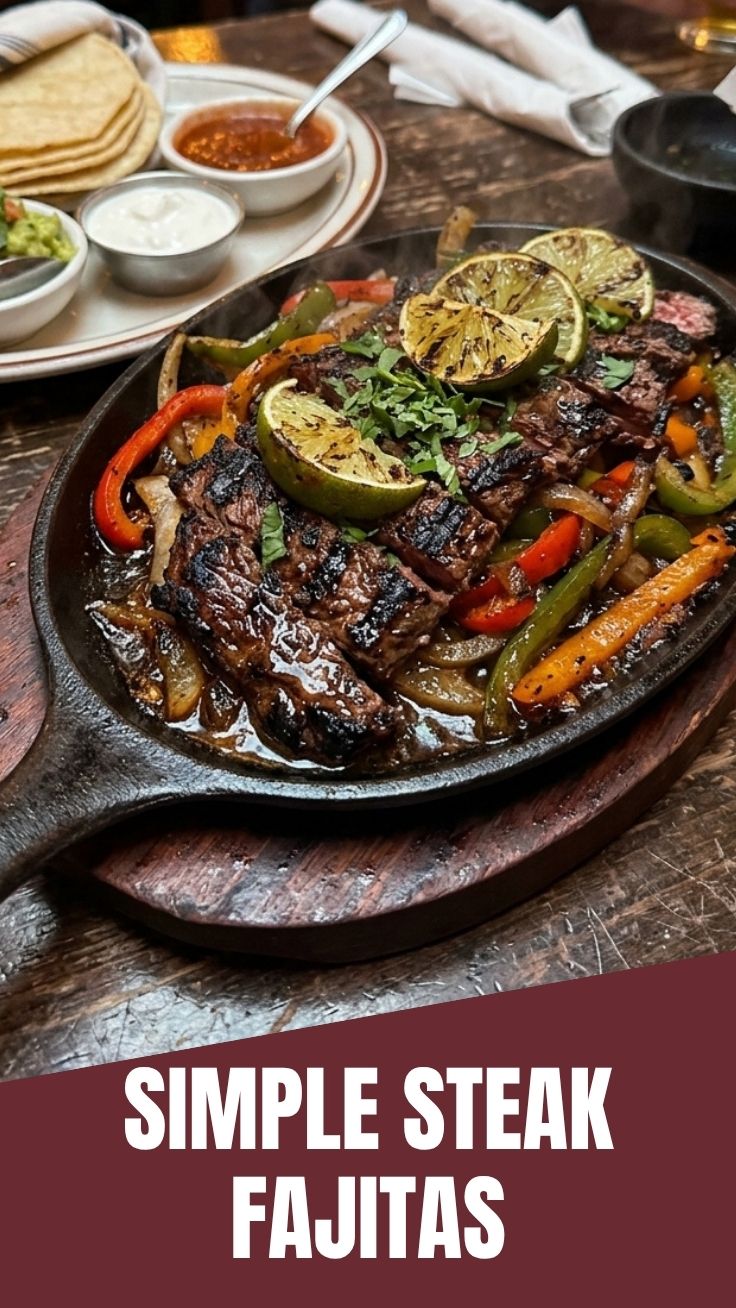
Schedule tip: Marinate the steak while prepping vegetables. Rest the meat while warming tortillas and arranging toppings. This staggered flow keeps everything hot and ready to serve simultaneously—a key lesson from professional kitchens.
—
Step-by-Step Instructions
1. Marinate the steak: In a bowl, whisk olive oil, lime juice, minced garlic, cumin, smoked paprika, chili powder, salt, and pepper. Place steak in a zip-top bag, pour marinade over, seal, and massage. Refrigerate 30 minutes (or up to 4 hours). Do not exceed—lime acid can toughen the meat.
2. Prep vegetables: Slice bell peppers and onion into ½-inch strips. Keep slices uniform for even cooking. If using jalapeños, slice thinly and set aside.
3. Preheat cast-iron skillet over high heat for 5 minutes until smoking. A drop of water should evaporate instantly. Pat steak dry with paper towels—moisture prevents browning.
4. Sear the steak: Place steak in dry skillet (no extra oil needed). Cook 4–5 minutes per side for medium-rare (internal temp 130°F). For medium, 6–7 minutes per side (140°F). The secret to mastering Steak Fajitas is a hard crust and juicy center—don’t move the steak for the first 3 minutes.
5. Rest and slice: Transfer steak to a cutting board, tent loosely with foil, and rest 10 minutes. This redistributes juices. Slice against the grain at a 45-degree angle into thin strips—this shortens muscle fibers for tenderness.
6. Sauté vegetables: In the same skillet over medium-high heat (pan will still be hot), add 1 tsp oil. Sauté peppers and onions 4–5 minutes until charred but still crisp. For spice, add jalapeños in last 2 minutes. This step complements classic Mexican steak recipes by layering smoky, sweet, and spicy notes.
7. Warm tortillas: On a separate dry skillet or directly over a gas flame, heat tortillas 30 seconds per side. Keep wrapped in a clean kitchen towel.
8. Assemble and serve: Layer sliced steak over vegetables in the skillet (or a platter), squeeze fresh lime, and serve with warm tortillas and toppings.
—
Nutritional Benefits & Advantages
Each serving (3 oz steak + ½ cup vegetables + 2 tortillas) provides approximately:
– 450 calories | 28g protein | 15g fat | 50g carbohydrates
– High in iron (from beef) and vitamin C (from bell peppers and lime), which boosts iron absorption.
– Vitamin A from red peppers supports eye health; capsaicin from chili may boost metabolism.
– Lower in saturated fat than takeout versions (3g vs 6g typical restaurant) because you control oil and portion sizes.
– Gluten-free if using corn tortillas.
—
Tips Variations & Cooking Advice
Flavor Variations
– Citrus-herb steak: Add 2 tbsp chopped cilantro and 1 tsp oregano to marinade.
– Smoky chipotle: Blend 1 chipotle in adobo sauce into the marinade—intense heat and depth.
– Thai-inspired: Swap cumin for 1 tbsp fish sauce and 1 tsp ginger—serve with rice paper wraps.
Ingredient Swaps
– Protein: Chicken thighs (same cooking time), shrimp (2–3 minutes total), or portobello mushrooms for plant-based.
– Vegetables: Zucchini, asparagus, or poblano peppers in place of bell peppers.
– Tortillas: Lettuce wraps for keto; jicama slices for crunchy, low-carb option.
Alternative Cooking Methods
– Grill: 4 minutes per side on high, covered. Same marinade; grill veggies in a basket.
– Air fryer: Cook steak at 400°F for 8 minutes, rest 5, then sauté veggies at 375°F for 4 minutes.
Dietary Adaptations
– Gluten-free: Certified corn tortillas or lettuce wraps.
– Dairy-free: Omit sour cream; use cashew-based crema instead.
– Low-carb: Skip tortillas; serve over cauliflower rice with extra guacamole.
—
Common Mistakes to Avoid
1. Overcooking the steak: Without an instant-read thermometer, use the “finger test”—medium-rare feels like the fleshy part of your palm when thumb touches index finger. Invest in a $10 probe thermometer.
2. Slicing with the grain: This transforms tender flank steak into rubbery strips. Always cut perpendicular to the visible muscle lines.
3. Crowding the pan: Overloading vegetables or steak traps steam, preventing Maillard browning. Cook in batches if necessary.
4. Skipping the rest: Resting is non-negotiable. Slicing immediately releases up to 30% of juices onto the cutting board, not your plate.
5. Cold tortillas: Cold tortillas crack and taste raw. Warm them properly or briefly microwave between damp paper towels.
—
Storage & Meal Prep Tips
– Refrigeration: Store sliced steak and vegetables separately in airtight containers for up to 4 days. Tortillas keep at room temperature in a sealed bag for 5 days.
– Freezing: Freeze cooked steak strips in a single layer on a sheet pan, then transfer to a freezer bag for up to 3 months. Thaw overnight in refrigerator.
– Reheating: Avoid microwave—it turns meat rubbery. Instead, reheat steak and veggies in a hot skillet (2–3 minutes) or under a broiler for 90 seconds. Tortillas: 30 seconds in a dry pan.
– Meal prep: Marinate steak up to 24 hours in advance. Pre-slice veggies (store in water to crisp) and mix dry seasoning in an airtight container.
—
Conclusion
Homemade Steak Fajitas deliver the dramatic sizzle, vibrant colors, and customizable flavors that restaurant versions promise but rarely sustain. By mastering a simple marinade, perfecting the sear, and slicing against the grain, you transform an inexpensive cut into a showcase dish. This recipe also opens the door to exploring Mexican steak recipes that rely on bright acidity, smoky spices, and fresh vegetables—a culinary tradition that celebrates balance over heaviness. Try it tonight, and once you taste the difference, you’ll never wait for table service again.
—
FAQs
1. Can I use sirloin or ribeye instead of flank steak?
Yes. Sirloin is lean and affordable but may be slightly less tender. Ribeye is richer but more expensive. Adjust cooking time based on thickness: ribeye needs 4–5 minutes per side; sirloin, 5–6 minutes. Always slice against the grain.
2. Why are my vegetables burning before the steak finishes?
High heat can char peppers too quickly. Remove vegetables after 3 minutes if they darken too much, or cook them after the steak (when pan heat lowers slightly). Use a separate pan for more control.
3. How do I make the fajitas less spicy?
Skip the jalapeños and use mild chili powder (label should say “mild” or “sweet”). For the marinade, reduce chili powder to ½ tsp and use smoked paprika instead. Serve with cooling toppings like sour cream or guacamole.
4. Can I prepare the marinade a day ahead?
Absolutely. Mix the marinade (without steak) 1–2 days in advance and refrigerate. However, only add steak 4–6 hours before cooking—marinating longer can break down the meat’s texture due to the lime acid.
5. My steak came out tough—what went wrong?
Three possible causes: (a) You sliced with the grain. (b) You overcooked it—use a thermometer next time. (c) You skipped the rest step. Flank and skirt steak are naturally tough if not sliced thinly against the grain.
Proven way to grow 3 Steak Fajitas Steak Fajitas
Ingredients
Equipment
Method
- Slice the steak, bell peppers, and onion into thin strips.
- In a bowl, toss the steak and vegetables with olive oil and fajita seasoning.
- Heat a large skillet or cast-iron pan over medium-high heat.
- Add the steak and vegetable mixture to the hot pan and cook for 5-7 minutes, stirring occasionally, until the steak is cooked through and the vegetables are tender-crisp.
- Warm the tortillas according to package instructions.
- Serve the steak and vegetable mixture in the warm tortillas.