Baked Salmon with Garlic Perfection: A Foolproof Recipe for Juicy, Flavorful Fish
Have you ever wondered why restaurant-quality Baked Salmon with Garlic tastes so incredible, yet seems so simple? The secret isn’t a complicated technique—it’s understanding how heat, fat, and seasoning work together to transform a humble fillet into a luxurious meal. Preparing this dish at home not only saves you money and gives you complete control over ingredients, but it also delivers results that rival any fine dining establishment. When you learn to master this recipe, you unlock a versatile weeknight hero that comes together in under 30 minutes.
Ingredients & Kitchen Tools
For the Salmon:
– 4 salmon fillets (6 oz each) – Opt for center-cut, skin-on fillets for moisture retention. Wild-caught is preferable but farmed Atlantic works beautifully.
– 4 cloves fresh garlic, minced – Pre-minced jarred garlic lacks the pungent punch needed.
– 3 tablespoons unsalted butter – Creates richness and helps the garlic bloom without burning.
– 2 tablespoons extra-virgin olive oil – Raises the smoke point and adds fruitiness.
– 1 lemon (zested and juiced) – Brightens the dish; avoid bottled lemon juice.
– 1 teaspoon sea salt – Use flaky salt for final sprinkle.
– ½ teaspoon black pepper, freshly ground
– 1 teaspoon smoked paprika – Adds color and subtle smokiness.
– Optional: 2 tablespoons fresh dill or parsley, chopped
For the Garlic Butter Sauce:
– ¼ cup unsalted butter
– 3 cloves garlic, thinly sliced – Slicing rather than mincing gives texture.
– 1 tablespoon lemon juice
– 1 teaspoon Dijon mustard – Emulsifies the sauce and adds tang.
– Pinch of red pepper flakes – Optional warmth.
Kitchen Tools:
– Baking dish or sheet pan (rimmed preferred)
– Small saucepan
– Microplane or zester
– Instant-read thermometer
– Fish spatula
– Aluminum foil or parchment paper
Optional Substitutions:
– Butter → Ghee for dairy-free; Coconut oil for paleo
– Salmon → Arctic char or trout for similar fat content
– Fresh garlic → 1 teaspoon garlic powder (but fresh is best)
– Lemon → Lime for a tropical twist
Prep Time & Cooking Schedule
| Stage | Time | Notes |
|——-|——|——-|
| Prep Time | 10 minutes | Mince garlic, zest lemon, pat salmon dry |
| Sauce Prep | 5 minutes | Melt butter, infuse with garlic |
| Baking Time | 12–15 minutes | At 400°F for medium; adjust for thickness |
| Resting Time | 3 minutes | Crucial for juiciness; do not skip |
| Total | ~28 minutes | Quick enough for a busy weeknight |
Planning Tip: Remove salmon from the refrigerator 15 minutes before cooking to temper. Cold fish cooks unevenly and may become rubbery on the outside while raw inside.
Step-by-Step Instructions
1. Preheat and prepare – Set oven to 400°F. Line a baking sheet with parchment or lightly grease with olive oil.
2. Season the fillets – Pat salmon dry with paper towels (moisture is the enemy of browning). Season both sides evenly with salt, pepper, and smoked paprika. Drizzle with olive oil and rub to coat.
3. Infuse the butter – In a small saucepan over medium heat, melt 3 tablespoons butter. Add minced garlic and cook for 30–60 seconds until fragrant but not browned. Stir in lemon zest and half the lemon juice. Remove from heat.
4. Brush and bake – Place salmon skin-side down on the prepared sheet. Brush the garlic butter mixture generously over each fillet. Bake for 12–15 minutes depending on thickness. The fish should flake easily with a fork and reach 125°F–130°F internally for medium doneness.
5. Make the sauce – While salmon bakes, prepare the garlic butter sauce. In the same saucepan, melt ¼ cup butter over low heat. Add sliced garlic and cook gently for 2 minutes—do not let it brown. Stir in remaining lemon juice, Dijon mustard, and red pepper flakes. Keep warm.
6. Rest and serve – Remove salmon from the oven and let rest for 3 minutes. This allows juices to redistribute. Drizzle with garlic butter sauce, garnish with fresh herbs, and serve immediately.
Pro Tip: If your fillets vary in thickness, fold the thin tail ends under to ensure even cooking. For the best Baked Salmon with Garlic, always check temperature early—overcooked salmon becomes dry and mealy.
Nutritional Benefits & Advantages
This dish is a nutritional powerhouse for several reasons:
– Omega-3 fatty acids – Salmon is one of the richest sources of EPA and DHA, which support heart health, brain function, and reduce inflammation.
– High-quality protein – A 6-ounce serving provides about 34 grams of protein, essential for muscle repair and satiety.
– Vitamin D – Wild salmon contains high levels, often lacking in modern diets.
– Selenium – An antioxidant mineral that supports thyroid function and protects against oxidative stress.
– Garlic – Contains allicin, a compound with antimicrobial and immune-boosting properties. Cooking reduces potency but still provides benefits.
– Low in carbs – Naturally keto-friendly, gluten-free, and suitable for low-carb lifestyles.
Compared to frying or grilling, baking retains more nutrients because the gentle heat preserves delicate omega-3s. The butter and olive oil combination also aids absorption of fat-soluble vitamins A, D, E, and K.
Tips Variations & Cooking Advice
Flavor Variations:
– Mediterranean – Add cherry tomatoes, olives, and oregano before baking.
– Asian-inspired – Swap butter for coconut milk, add ginger, soy sauce, and sesame oil.
– Spicy Cajun – Season with paprika, cayenne, thyme, and onion powder.
– Herb-crusted – Press fresh dill, parsley, and chives onto the buttered surface.
Dietary Adaptations:
– Dairy-free – Replace butter with ghee or avocado oil infused with garlic.
– Low-FODMAP – Use garlic-infused oil instead of whole garlic cloves.
– Paleo/Whole30 – Use clarified butter or coconut oil; omit Dijon if not compliant.
Cooking Method Swaps:
– Air Fryer – Cook at 375°F for 8–10 minutes. No need to flip.
– Grill – Use a cedar plank or foil packet to prevent sticking.
– Pan-sear then finish in oven – Sear skin-side in a cast-iron skillet for 3 minutes, then transfer to oven for 6–8 minutes.
Portion Adjustments:
– For 2 servings – Halve all ingredients; bake time remains similar.
– For 8+ servings – Use two baking sheets, rotate halfway through, and expect 2–3 extra minutes.
Common Mistakes to Avoid
1. Overcooking – Salmon continues cooking after removal. Pull it at 125°F–130°F for perfect medium. Use an instant-read thermometer—don’t rely solely on visual cues.
2. Skipping the dry pat – Wet skin steams instead of sears. Blot thoroughly with paper towels before seasoning.
3. Burning the garlic – Garlic turns bitter when scorched. Cook butter-garlic mixture on medium heat, not high, and remove from heat immediately when fragrant.
4. Crowding the pan – Overlapping fillets trap steam. Leave at least 1 inch between pieces for proper browning.
5. Forgetting the rest – Cutting into salmon directly from the oven forces juices onto the plate. A 3-minute rest keeps the fish moist.
Storage & Meal Prep Tips
Refrigeration:
– Storage container – Place cooled leftovers in an airtight container. Layer with paper towels to absorb excess moisture.
– Shelf life – Consume within 3–4 days. The garlic butter may separate; simply reheat gently.
Freezing:
– Method – Wrap individual portions tightly in plastic wrap, then foil, or use vacuum-sealed bags. Freeze for up to 3 months.
– Thawing – Overnight in the refrigerator is best. Avoid microwave thawing, which can create rubbery texture.
Reheating:
– Oven – 300°F for 8–10 minutes, covered with foil to prevent drying.
– Stovetop – Add a splash of water or lemon juice to a covered pan over low heat for 3–4 minutes.
– Microwave – Use 50% power in 30-second bursts, but expect some texture loss.
Meal Prep Idea: Bake 4 fillets on Sunday. Use two for dinner, then flake the remaining two into salads, grain bowls, or omelets throughout the week.
Conclusion
Mastering Baked Salmon with Garlic is one of the most rewarding skills in home cooking—it delivers restaurant-quality flavor with minimal effort and maximum nutritional payoff. By understanding the interplay of seasoning, temperature, and timing, you can consistently produce juicy, flaky fillets bathed in aromatic garlic butter sauce that elevates any weeknight meal. Whether you’re feeding a family or prepping for the week ahead, this recipe adapts to your schedule and dietary needs. Try it tonight, and discover how simple perfection truly tastes. Share your results in the comments below—we’d love to see your golden, garlicky creations.
FAQs
Can I use frozen salmon for this recipe?
Yes, but thaw completely in the refrigerator overnight. Pat very dry before seasoning—frozen salmon releases more moisture during cooking. Extend baking time by 2–4 minutes.
How do I know when salmon is done without a thermometer?
The fish should flake easily with a fork and appear opaque throughout. For visual cues: the white albumin (protein) will begin to bead on the surface—that’s your signal to check.
Can I make the garlic butter sauce ahead?
Absolutely. Prepare the sauce up to 2 days in advance, store in the refrigerator, and reheat gently before serving. Add fresh lemon juice just before using for brightest flavor.
Why did my salmon turn out dry?
Most likely overcooked or baked at too high a temperature. Stick to 400°F and check temperature early. Also, ensure you didn’t skip the rest time—this step redistributes moisture.
What side dishes pair best with garlic butter salmon?
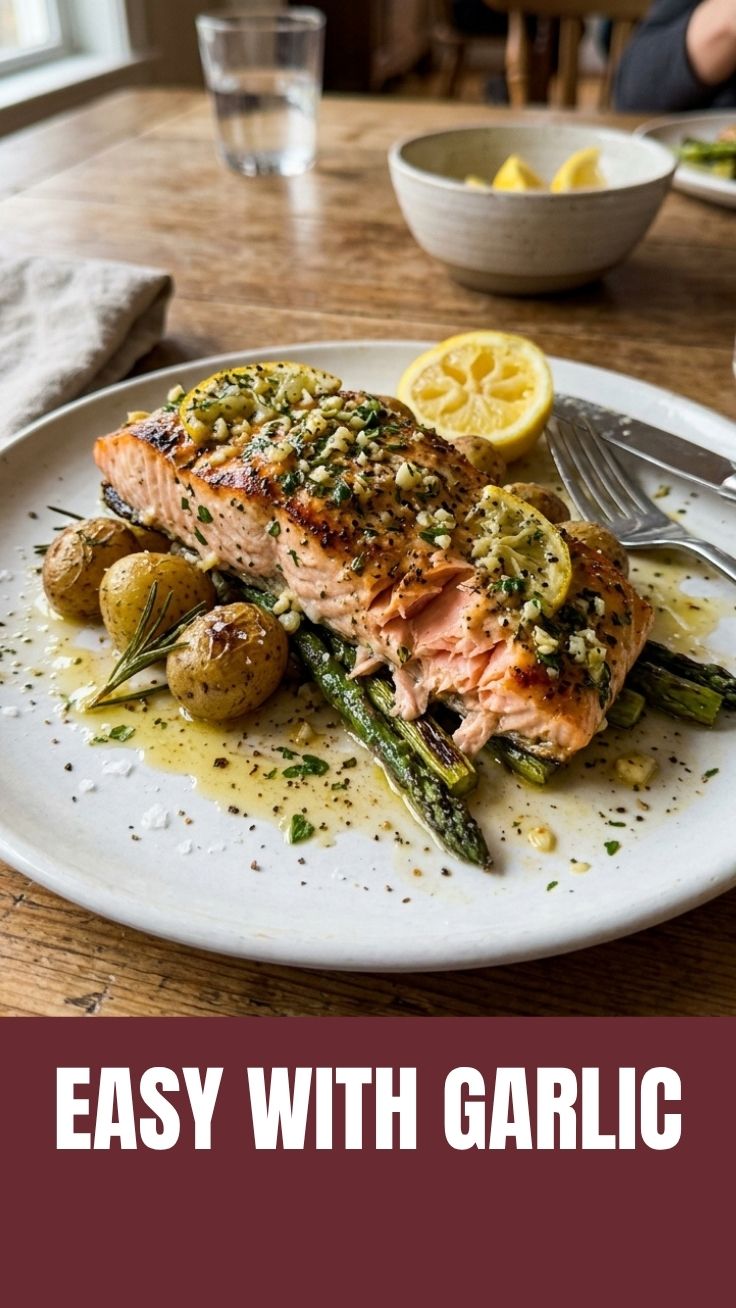
Roasted asparagus, lemon-herb quinoa, garlic sautéed spinach, or a crisp arugula salad with shaved Parmesan all complement the richness beautifully.
Quick way to grow 5 Baked Salmon with Garlic flavorsBaked Salmon with Garlic
Ingredients
Equipment
Method
- Preheat your oven to 400°F (200°C) and line a baking sheet with parchment paper for easy cleanup.
- In a small bowl, whisk together the minced garlic, olive oil, lemon juice, dried dill, salt, and black pepper to create a flavorful marinade.
- Place the salmon fillets on the prepared baking sheet and evenly spread the garlic-dill mixture over each fillet.
- Bake for 12-15 minutes, or until the salmon is cooked through and flakes easily with a fork.
- Carefully transfer the baked salmon to serving plates and serve immediately with your favorite side dishes.