The Ultimate Guide to Perfect Teriyaki Salmon: A Restaurant-Quality Meal in Minutes
Have you ever craved that glossy, caramelized, umami-packed piece of fish you get at your favorite Japanese restaurant, only to feel intimidated about recreating it at home? You’re not alone. Many home cooks believe achieving that perfect balance of sweet and savory, with a crispy exterior and tender, flaky interior, requires culinary school training. The truth is, preparing Teriyaki Salmon at home is not only achievable but also faster, healthier, and more cost-effective than dining out. In this comprehensive guide, I’ll show you how to master this iconic dish with data-driven techniques, practical tips, and science-backed methods that guarantee consistent results. Whether you’re a busy professional looking for a quick weeknight dinner or a home chef wanting to impress dinner guests, these easy salmon recipes will transform your kitchen routine. Let’s dive into the art of creating the perfect teriyaki glaze, selecting the right salmon, and cooking it to absolute perfection.
Ingredients & Kitchen Tools
For the Teriyaki Glaze
– 1/2 cup soy sauce (use low-sodium to control salt levels)
– 1/4 cup mirin (Japanese sweet rice wine; substitute with 3 tbsp sake + 1 tbsp sugar)
– 3 tablespoons honey (or brown sugar for deeper molasses notes)
– 2 tablespoons rice vinegar (adds acidity to balance sweetness)
– 2 garlic cloves, minced (fresh garlic is essential for aromatic depth)
– 1 teaspoon fresh ginger, grated (microplane or fine grater works best)
– 1 tablespoon cornstarch mixed with 2 tablespoons water (slurry for thickening)
For the Salmon
– 4 salmon fillets (6 oz each) , skin-on (skin prevents sticking and adds crispy texture)
– Salt and white pepper (black pepper works but white pepper is more traditional)
– 2 tablespoons vegetable oil (avocado or grapeseed oil for high-heat cooking)
– Sesame seeds and sliced green onions for garnish
Kitchen Tools
– Non-stick skillet or cast-iron pan (heavy-bottomed for even heat distribution)
– Small saucepan (for preparing the separate glaze)
– Fish spatula (thin, flexible for flipping without breaking fillets)
– Instant-read thermometer (prevents overcooking; target 125°F for medium)
– Tongs (helps handle salmon during basting)
– Pastry brush (for even glaze application)
Optional Substitutions: Use tamari for gluten-free, coconut aminos for soy-free, or maple syrup instead of honey for a different flavor profile.
Prep Time & Cooking Schedule
| Stage | Time | Notes |
|——-|——|——-|
| Marinade preparation | 5 minutes | Whisk ingredients together; don’t boil yet |
| Marinating salmon | 15-30 minutes | Do not exceed 30 minutes—acidic marinade can “cook” the fish |
| Cooking time | 8-10 minutes | 4-5 minutes per side depending on thickness |
| Glaze reduction | 3-4 minutes | Simmer until syrupy |
| Resting time | 2-3 minutes | Essential for juices to redistribute |
Total active time: 25 minutes
Total overall time: 45 minutes
Pro tip: While the salmon marinates, prep your sides—steamed rice, sautéed bok choy, or a simple cucumber salad. This efficient scheduling ensures everything finishes simultaneously.
Step-by-Step Instructions
Step 1: Prepare the Glaze (5 minutes)
In a small saucepan, combine soy sauce, mirin, honey, rice vinegar, garlic, and ginger. Bring to a gentle simmer over medium heat, whisking occasionally. Reduce heat to low and let it bubble softly for 3-4 minutes until slightly thickened. Remove from heat and set aside half the glaze for serving—reserve the other half for basting.
Step 2: Marinate the Salmon (15-30 minutes)
Pat salmon fillets dry with paper towels. Season both sides with salt and white pepper. Place fillets in a shallow dish and pour half the reserved glaze over them. Turn to coat evenly. Cover and refrigerate for 15-30 minutes. Remember: longer isn’t better here. The acid in the marinade will begin denaturing the proteins after 30 minutes, creating a mushy texture.
Step 3: Sear the Salmon (8-10 minutes)
Heat vegetable oil in a non-stick skillet over medium-high heat until shimmering. Remove salmon from marinade, letting excess drip off (pat dry with paper towels if needed—dry surface creates better sear). Place fillets skin-side down in the hot pan. Listen for that satisfying sizzle—if it’s quiet, the pan isn’t hot enough. Cook without moving for 4-5 minutes until the skin is golden brown and crispy. The skin should release easily from the pan when it’s ready.
Step 4: Flip and Glaze (3-4 minutes)
Carefully flip fillets using the fish spatula. Brush each fillet generously with the remaining basting glaze. Cook for 2-3 minutes for medium (translucent center) or 3-4 minutes for well-done. For precision, use an instant-read thermometer: 120°F for rare, 125°F for medium, 130°F for medium-well, 135°F for well-done.
Step 5: Finish and Serve
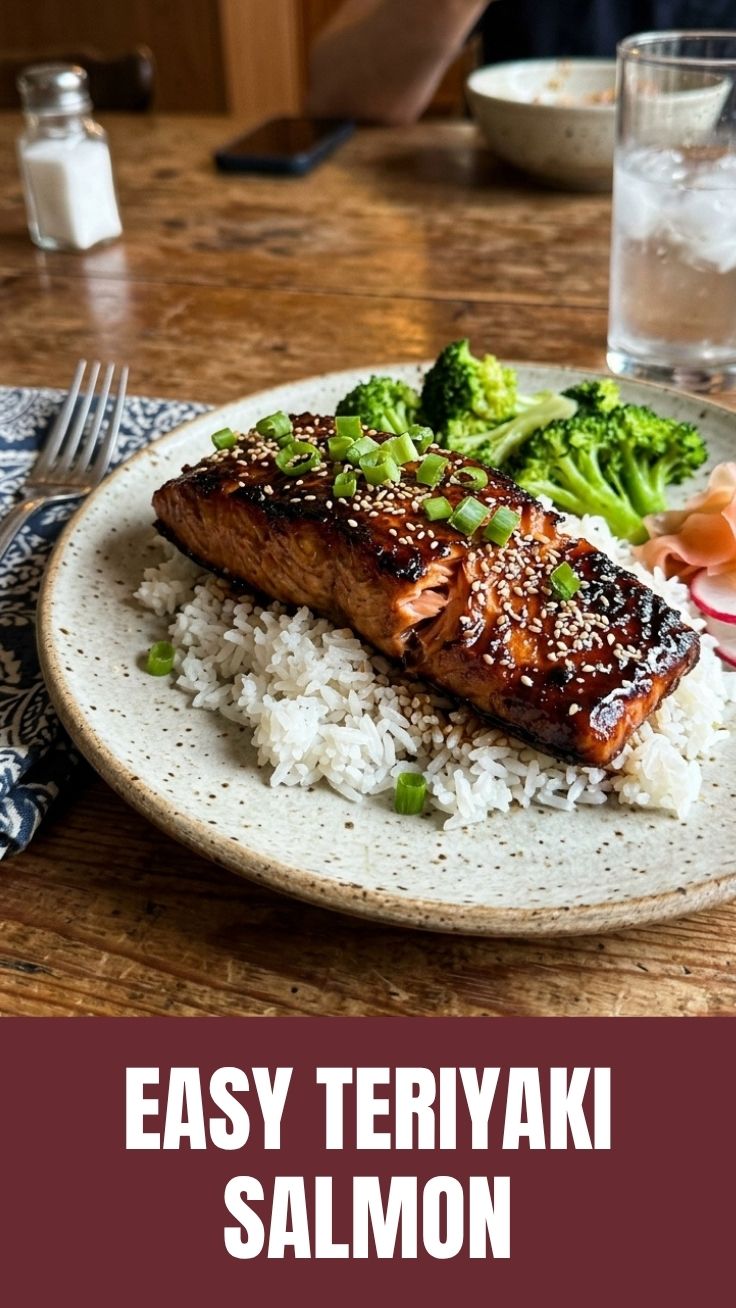
Remove salmon from pan and let rest for 2-3 minutes on a clean plate. During this time, pour any pan juices over the fillets. Drizzle with the reserved fresh glaze. Garnish with sesame seeds and sliced green onions. Serve immediately over steamed rice or alongside roasted vegetables.
Temperature Control Tip: If the glaze starts burning in the pan, reduce heat immediately or deglaze with 1 tablespoon water. Burnt sugar creates bitter notes that ruin the dish.
Nutritional Benefits & Advantages
Teriyaki Salmon is more than just delicious—it’s a nutritional powerhouse. A 6-ounce serving of Atlantic salmon provides:
– 35-40 grams of protein (crucial for muscle repair and satiety)
– 2000-3000 mg Omega-3 fatty acids (EPA and DHA, supporting heart and brain health)
– Vitamin D (provides 100% of daily value in one serving)
– Selenium (antioxidant that supports thyroid function)
– B vitamins (B12, B6, niacin for energy metabolism)
Compared to other easy salmon recipes, this teriyaki version offers:
– Lower calorie count than creamy or butter-based sauces (approximately 400-450 calories per serving with glaze)
– No refined sugar when using honey or maple syrup
– Customizable sodium through low-sodium soy sauce
– Gluten-free option using tamari
The combination of high-quality protein and healthy fats makes this an ideal meal for:
– Weight management (high protein increases satiety by 25-30%)
– Athletic recovery (Omega-3s reduce inflammation)
– Brain health (DHA supports cognitive function)
Tips Variations & Cooking Advice
Flavor Variations
– Spicy Teriyaki: Add 1-2 teaspoons sriracha or gochujang to the glaze
– Citrus Twist: Swap rice vinegar for fresh orange or yuzu juice
– Garlic Lover: Roast 6-8 garlic cloves and mash into the glaze
– Smoky Version: Cook on a charcoal grill or add liquid smoke to the glaze
Cooking Method Alternatives
| Method | Time | Temperature | Notes |
|——–|——|————-|——-|
| Oven-baked | 12-15 minutes | 400°F | Broil last 2 minutes for glaze caramelization |
| Air Fryer | 8-10 minutes | 375°F | Spray basket with oil; flip halfway |
| Grill | 6-8 minutes | Medium-high heat | Use cedar plank for extra smoky flavor |
| Poached | 10-12 minutes | 165°F | Gentle method; glaze separately after |
Dietary Adaptations
– Gluten-Free: Use tamari or coconut aminos instead of soy sauce
– Dairy-Free: This recipe is naturally dairy-free
– Low-Carb/Keto: Replace honey with monk fruit sweetener or erythritol
– Paleo/Whole30: Use coconut aminos and omit rice (serve with cauliflower rice)
Portion Adjustments
– For 2 people: Use 2 fillets (6 oz each) and halve the glaze recipe
– For 6-8 people: Double ingredients; cook in batches to avoid overcrowding pan
– For meal prep: Cook 4-6 fillets and store individually for grab-and-go lunches
Common Mistakes to Avoid
1. Over-marinating salmon
Problem: Acidic marinade “cooks” the fish, creating a mushy, ceviche-like texture.
Solution: Limit marinating to 30 minutes maximum. For deeper flavor, score the skin (not the flesh) to allow absorption.
2. Skipping the dry pat
Problem: Wet salmon steams instead of searing, preventing crispy skin.
Solution: Always pat fillets dry with paper towels before seasoning and searing.
3. Cooking cold salmon
Problem: Cold fillets cook unevenly—brown on outside, raw in center.
Solution: Let salmon rest at room temperature for 15 minutes before cooking.
4. Overcrowding the pan
Problem: Steam forms between fillets, dropping pan temperature and preventing browning.
Solution: Leave at least 1 inch space between fillets; cook in two batches if needed.
5. Burning the glaze
Problem: High sugar content burns quickly, creating bitter, acrid flavors.
Solution: Keep heat at medium and brush glaze during the last 2-3 minutes of cooking only.
Storage & Meal Prep Tips
Refrigeration
– Store leftover salmon in an airtight container within 2 hours of cooking
– Consume within 3-4 days for best quality (FDA recommendation)
– Separate glaze and salmon to prevent sogginess
Freezing
– Uncooked salmon: Freeze fillets with glaze in a freezer bag for up to 3 months. Thaw overnight in refrigerator before cooking.
– Cooked salmon: Wrap individually in plastic wrap, then foil, then freezer bag. Label with date. Lasts 2-3 months.
– Glaze: Freeze in ice cube trays; pop out cubes for quick sauce later.
Reheating Instructions
| Method | Time | Temperature | Notes |
|——–|——|————-|——-|
| Oven | 8-10 minutes | 300°F | Loosely cover with foil to retain moisture |
| Stovetop | 3-4 minutes | Medium-low | Add 1 tablespoon water; cover |
| Microwave | 60-90 seconds | Medium power | Place on paper towel; cover with damp paper |
| Air Fryer | 3-4 minutes | 325°F | Best for recrisping skin |
Pro tip for meal prep: Cook salmon without glaze, then add fresh glaze when reheating. This prevents the sugar from becoming sticky and overcooked.
Conclusion
Mastering Teriyaki Salmon at home transforms a restaurant-favorite dish into an accessible, weeknight-friendly meal that rivals any takeout. By understanding the science behind marinating times, temperature control, and glaze reduction, you’ve unlocked the ability to create consistently delicious results. The beauty of these easy salmon recipes lies in their versatility—whether you’re cooking for one or a crowd, adapting for dietary needs, or experimenting with flavor variations, this foundational technique serves as your culinary canvas. Remember: the perfect fillet has a crispy, caramelized exterior, moist flaky interior, and a glossy glaze that clings beautifully. I encourage you to try this recipe this week, share your creations on social media with #TeriyakiSalmonSuccess, and explore more of my quick seafood recipes for endless inspiration. Your kitchen is now the best Japanese restaurant in town.
FAQs
Q: Can I use frozen salmon for this recipe?
A: Absolutely. Thaw frozen fillets in the refrigerator overnight. Pat extremely dry after thawing—frozen fish releases more moisture. Reduce cooking time by 1-2 minutes since thawed salmon cooks faster.
Q: What’s the best salmon variety for this dish?
A: King (Chinook) salmon offers the highest fat content for moist results. Coho and Sockeye work well but are leaner—reduce cooking time by 1 minute. Avoid Atlantic farmed salmon if possible; wild-caught has superior texture and flavor.
Q: Why is my glaze too thick or too thin?
A: Too thick means you reduced it too long; add 1 tablespoon water or sake. Too thin means insufficient cooking; continue simmering until it coats the back of a spoon. Remember: glaze thickens further as it cools.
Q: Can I make the glaze ahead of time?
A: Yes! The glaze keeps in the refrigerator for up to 2 weeks in an airtight jar. Reheat gently before use. Note: Garlic and ginger flavors intensify over time, so adjust seasoning if needed.
Q: How do I prevent the skin from sticking to the pan?
A: Three secrets: (1) Ensure the pan is hot (medium-high heat) before adding oil, (2) Use enough oil to coat the pan bottom, (3) Don’t touch the fillet for 4 minutes—the skin will release naturally when properly seared. If it sticks, it’s not ready.
Q: Is this recipe suitable for meal prep for the whole week?
A: Salmon is best consumed within 3-4 days. For extended meal prep, cook without glaze, portion into containers, and add fresh glaze with each serving. Cooked salmon freezes well for up to 3 months.
Q: My salmon always comes out dry. What am I doing wrong?
A: Most likely overcooking. Use an instant-read thermometer (125°F for medium). Remove from heat at 120°F as carryover cooking adds 5°F. Also, ensure you’re not cooking fillets thinner than 1 inch—thinner fillets dry out faster.
Proven way to grow 3 Teriyaki Salmon dishes
Ingredients
Equipment
Method
- Marinate salmon fillets in teriyaki sauce, sesame oil, minced garlic, grated ginger, soy sauce, brown sugar, and rice vinegar for at least 15 minutes.
- Preheat your oven to 400°F (200°C) or prepare your grill for medium-high heat.
- Bake or grill the salmon for 12-15 minutes, or until cooked through and flaky.
- Once cooked, optionaly glaze with more teriyaki sauce during the last few minutes.
- Garnish the cooked salmon with sliced green onions and sesame seeds.
- Serve immediately with your preferred sides, such as rice or steamed vegetables.