Why This Classic Beef Stew Deserves a Spot in Your Weekly Rotation
Is there anything more soul-warming than a bowl of tender, slow-simmered beef stew on a chilly evening? The aroma of rich broth, caramelized vegetables, and melt-in-your-mouth beef filling your kitchen is pure comfort. While it’s easy to grab a canned version, nothing compares to a homemade beef stew where you control the ingredients, seasoning, and texture. Whether you’re a seasoned cook or a beginner, mastering this dish is a valuable skill that saves money and delivers superior flavor. Today, we’ll explore every detail, including an effortless crockpot beef stew variation that fits busy schedules. Let’s dive into the ultimate guide.
Ingredients & Kitchen Tools
Ingredients
– Beef chuck (2 lbs) – Best for stewing; it becomes fork-tender when cooked low and slow.
– All-purpose flour (¼ cup) – For dusting beef to thicken the stew.
– Olive oil (2 tbsp) – For browning; use avocado oil if preferred.
– Onion (1 large, diced) – Adds savory depth.
– Garlic (4 cloves, minced) – Essential aromatic.
– Carrots (3, sliced) – Provide natural sweetness.
– Celery (3 stalks, sliced) – Adds earthy notes.
– Potatoes (3 medium, cubed) – Use Yukon Gold or Russets; they thicken the broth.
– Beef broth (4 cups) – Low-sodium preferred to control salt.
– Tomato paste (2 tbsp) – Deepens color and umami.
– Worcestershire sauce (1 tbsp) – Adds tangy complexity.
– Bay leaves (2), dried thyme (1 tsp), salt & pepper – Classic herb blend.
– Frozen peas (1 cup) – Added at the end for color and sweetness.
Kitchen Tools
– Dutch oven or heavy-bottomed pot – Retains heat evenly.
– Sharp chef’s knife – For uniform vegetable cuts.
– Cutting board – Preferably large with a juice groove.
– Wooden spoon – For stirring and scraping fond.
– Measuring cups & spoons – Accuracy matters.
– Tongs – For flipping beef pieces easily.
– Slow cooker (optional) – For the crockpot method.
Optional Substitutions
– Use gluten-free flour for thickening if needed.
– Swap potatoes for parsnips or turnips for lower carbs.
– Replace Worcestershire with soy sauce + a splash of vinegar.
Prep Time & Cooking Schedule
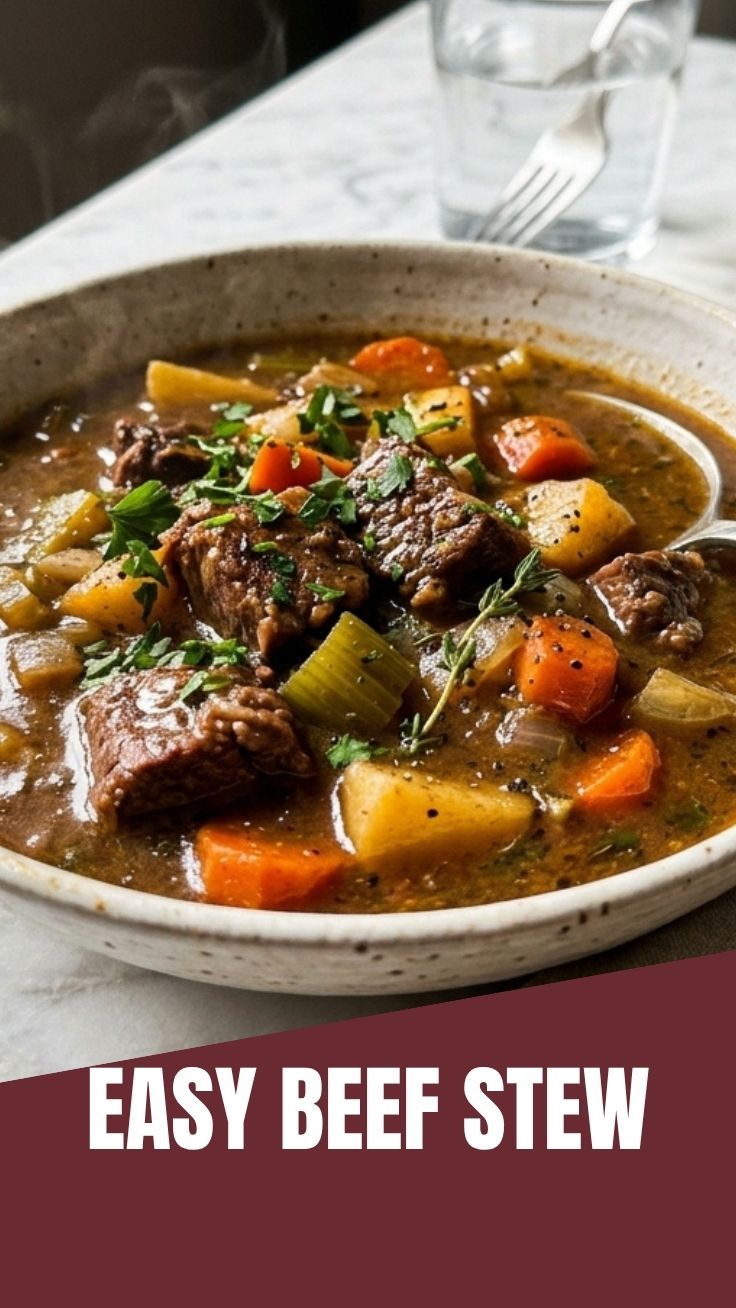
– Prep time: 20 minutes (chopping veggies, cutting beef, measuring ingredients)
– Cook time (stovetop): 2–2.5 hours on low simmer
– Cook time (crockpot): 6–8 hours on low or 4–5 hours on high
– Resting time: 10–15 minutes after cooking (allows flavors to meld)
Plan ahead: this stew tastes even better the next day, so consider making it the night before. The active prep is only 20 minutes, and then you can let time do the work.
Step-by-Step Instructions
1. Prepare the beef: Pat beef chuck dry with paper towels. Cut into 1½-inch cubes. Season generously with salt and pepper, then toss with flour until lightly coated. Shake off excess flour.
2. Brown the beef in batches: Heat 1 tbsp olive oil in your Dutch oven over medium-high heat. Add beef in a single layer (don’t overcrowd). Cook 3–4 minutes per side until deep brown. Transfer to a plate. Repeat with remaining beef. This step builds the foundation of flavor.
3. Sauté aromatics: Reduce heat to medium. Add remaining oil. Sauté onions, carrots, and celery for 5–7 minutes until softened. Stir in garlic and tomato paste; cook 1 minute until fragrant.
4. Deglaze the pot: Pour in ½ cup beef broth and scrape up any browned bits from the bottom – this is pure flavor gold.
5. Combine and simmer: Return beef to the pot. Add remaining broth, Worcestershire sauce, thyme, bay leaves, and potatoes. Bring to a gentle boil, then reduce heat to low. Cover and simmer for 1½ hours, stirring occasionally. For a crockpot beef stew, transfer everything to a slow cooker after step 4 and cook on low for 7 hours.
6. Final touch: After 1½ hours, uncover and simmer 30 more minutes to thicken. Stir in frozen peas. Cook 5 minutes. Remove bay leaves. Taste and adjust salt or pepper.
Throughout the process, watch for texture cues: beef should shred easily with a fork, and broth should coat the back of a spoon. If it’s too thin, mash a few potato cubes against the pot side to release starch. This beef stew is forgiving – adjust seasoning as you go.
Nutritional Benefits & Advantages
This dish is a nutritional powerhouse. Beef chuck provides high-quality protein, iron, and zinc, supporting muscle health and immunity. Carrots and celery deliver vitamin A and fiber, while potatoes offer potassium and vitamin C. The slow cooking preserves nutrients and makes collagen from the beef’s connective tissue available, benefiting joints and skin. A single serving (about 1½ cups) contains roughly 350–400 calories, 30g protein, and 35g carbs, making it a balanced meal that keeps you full for hours. Plus, it’s naturally gluten-free if you swap the flour for cornstarch, and low in sugar.
Tips, Variations & Cooking Advice
– Flavor upgrades: Add a splash of red wine after deglazing (omit for kids), or stir in a teaspoon of smoked paprika for depth.
– Herb swaps: Use rosemary or rosemary branches instead of thyme for a pine-like aroma.
– Vegetarian version: Replace beef with portobello mushrooms and use vegetable broth.
– Dairy-free: No dairy needed; the stew is already dairy-free.
– Quick method: Use an Instant Pot – pressure cook on high for 35 minutes with natural release.
– Thicker stew: Whisk 2 tbsp cornstarch with 2 tbsp cold water and stir in during the last 15 minutes.
– Portion control: This recipe serves 6–8; halve it for smaller households.
Common Mistakes to Avoid
1. Skipping the browning step – Without browning, the stew lacks deep umami. Don’t skip it.
2. Using lean meat – Lean cuts like sirloin dry out. Stick to chuck or brisket.
3. Overcrowding the pan – Steam replaces sear. Brown in batches.
4. Adding vegetables too early – Potatoes and carrots can turn mushy; add potatoes with the broth, but wait to add peas until the end.
5. Rushing the simmer – Low and slow is non-negotiable. High heat toughens beef.
6. Undersalting – Season in layers: at browning, after deglazing, and at the end.
7. Not tasting enough – Adjust acid (a splash of vinegar) or sweetness (a pinch of sugar) if needed.
Storage & Meal Prep Tips
– Refrigeration: Store in an airtight container for up to 4 days. The flavors deepen overnight.
– Freezing: Portion into freezer-safe bags or containers. Freeze for up to 3 months. Leave ½-inch headspace to allow expansion.
– Reheating: Thaw overnight in fridge. Reheat gently on stovetop over low heat, stirring occasionally. Add a splash of broth if too thick. Avoid microwaving on high, which can dry out beef.
– Meal prep: Cook a large batch on Sunday, portion into single servings, and enjoy all week. The stew also works beautifully in thermoses for lunch.
Conclusion
There’s a reason this beef stew has been a family favorite for generations: it’s forgiving, deeply satisfying, and packed with nourishment. Whether you choose the classic stovetop method or let your slow cooker work its magic for a crockpot beef stew, you’re guaranteed a meal that warms from the inside out. Remember the key steps: brown the beef, simmer low and slow, and season with patience. Now it’s your turn – grab your pot, pick your favorite variation, and share your results. And if you loved this, explore our other comfort food classics.
FAQs
1. Can I use a different cut of beef for stew?
Yes. Chuck is best, but brisket or round roast also work. Avoid lean cuts like sirloin or tenderloin.
2. My stew turned out too salty. How do I fix it?
Add a peeled raw potato and simmer for 20 minutes; it absorbs excess salt. Or add more unsalted broth.
3. Can I make this without flour for a gluten-free version?
Absolutely. Skip the flour dusting and use 2 tbsp cornstarch mixed with 2 tbsp cold water added at the end.
4. How do I thicken beef stew without cornstarch?
Mash some of the cooked potatoes into the broth, or puree a cup of the stew and stir it back in.
5. Can I add other vegetables?
Sure. Mushrooms, parsnips, or turnips are great. Add mushrooms with the aromatics; add turnips with the potatoes.
Proven way to grow 3 Beef Stew
Ingredients
Equipment
Method
- Pat the beef dry with paper towels and season generously with salt and pepper.
- Heat olive oil in a large Dutch oven or heavy-bottomed pot over medium-high heat.
- Sear the beef in batches until browned on all sides, then remove and set aside.
- Add the chopped onion, carrots, and celery to the pot and cook until softened, about 5-7 minutes.
- Stir in the minced garlic and cook for another minute until fragrant.
- Return the seared beef to the pot, then add the beef broth, diced tomatoes, tomato paste, Worcestershire sauce, dried thyme, and bay leaves.
- Bring the stew to a simmer, then reduce heat to low, cover, and cook for 1.5 to 2 hours, or until the beef is tender.
- Stir in the cubed potatoes and continue to cook for 20-30 minutes, or until the potatoes are tender.
- Remove the bay leaves, taste, and adjust seasoning with salt and pepper as needed.
- Serve hot, garnished with fresh parsley if desired.