The Ultimate Guide to Making Perfect Carne Asada at Home
Have you ever wondered why restaurant-quality Carne Asada tastes so much better than your backyard attempts? The secret isn’t a secret at all—it’s about mastering the marinade, heat control, and resting time. When you learn to prepare this iconic Mexican dish yourself, you not only save money but also control every ingredient, from citrus acidity to spice level. Whether you plan to use it for tacos, burrito bowls, or simply sliced with rice and beans, homemade grilled flank steak delivers unmatched freshness and flavor. In this comprehensive guide, we’ll walk you through every step, from ingredient selection to storage, so you can confidently serve a plate that rivals your favorite taqueria.
Ingredients & Kitchen Tools
For the Marinade
– 1/2 cup freshly squeezed orange juice – Adds bright acidity and helps tenderize the meat.
– 1/4 cup lime juice – Balances sweetness and enhances the citrus profile.
– 4 garlic cloves, minced – Provides a pungent, savory base.
– 1/4 cup soy sauce (or tamari for gluten-free) – Umami booster that deepens flavor.
– 1/4 cup olive oil – Helps carry fat-soluble flavors and prevents sticking.
– 2 tsp ground cumin – Earthy warmth typical of Mexican cuisine.
– 2 tsp chili powder – Mild heat with smoky undertones.
– 1 tsp dried oregano – Floral and slightly bitter, authentic to carne asada.
– 1/2 tsp black pepper – Freshly ground for best aroma.
– 1/4 cup chopped fresh cilantro (optional) – Adds freshness post-marinade.
For the Steak
– 2 lbs flank steak (or skirt steak) – The classic cut; flank is leaner, skirt is richer. Both work.
– Salt, to taste – Sprinkle just before grilling, not during marination.
Kitchen Tools
– Large resealable bag or glass dish – For marinating.
– Grill (charcoal or gas) or cast-iron skillet – High heat is critical.
– Tongs – For flipping without piercing.
– Instant-read thermometer – Ensures perfect doneness.
– Cutting board and sharp knife – For slicing against the grain.
– Aluminum foil – For resting.
Optional Substitutions
– Swap flank for skirt steak or top round (though top round needs longer marination).
– Replace orange juice with pineapple juice for extra tenderness (contains bromelain).
– Use coconut aminos instead of soy sauce for a paleo-friendly option.
Prep Time & Cooking Schedule
– Marinating time: 2–8 hours (minimum 2 hours, overnight is best).
– Prep time: 15 minutes (mixing marinade, scoring steak lightly).
– Grill time: 8–12 minutes total for medium-rare (depending on thickness).
– Resting time: 10 minutes, covered loosely with foil.
– Total time: About 30 minutes active, plus marination.
Pro tip: Start marinating in the morning if you plan dinner. For last-minute cravings, a 1-hour marination with extra acidity still yields good results.
Step-by-Step Instructions
1. Prepare the marinade: In a bowl, whisk together orange juice, lime juice, garlic, soy sauce, olive oil, cumin, chili powder, oregano, and black pepper. Reserve 2 tablespoons for basting later.
2. Marinate the steak: Place the flank steak in a resealable bag or shallow dish. Pour the marinade over it, seal, and massage gently to coat. Refrigerate for at least 2 hours (or up to 8). Do not exceed 8 hours – the acid can begin to break down the meat into mush.
3. Bring to room temperature: Remove steak from fridge 30 minutes before grilling. Pat dry with paper towels (discard used marinade) to promote good searing. Season both sides with salt.
4. Preheat grill to high heat (450–500°F / 230–260°C). Clean grates and oil them lightly.
5. Grill the steak: Place steak on hot grates. Cook for 4–6 minutes per side for medium-rare (internal temp 130–135°F / 54–57°C). Use the reserved marinade to baste once during flipping – this adds a final burst of citrus and spice. If using a skillet, sear in batches over high heat with a bit of oil.
6. Rest and slice: Transfer steak to a cutting board, tent with foil, and rest for 10 minutes. Always slice against the grain into thin strips. This ensures every bite of your grilled flank steak is tender, never chewy.
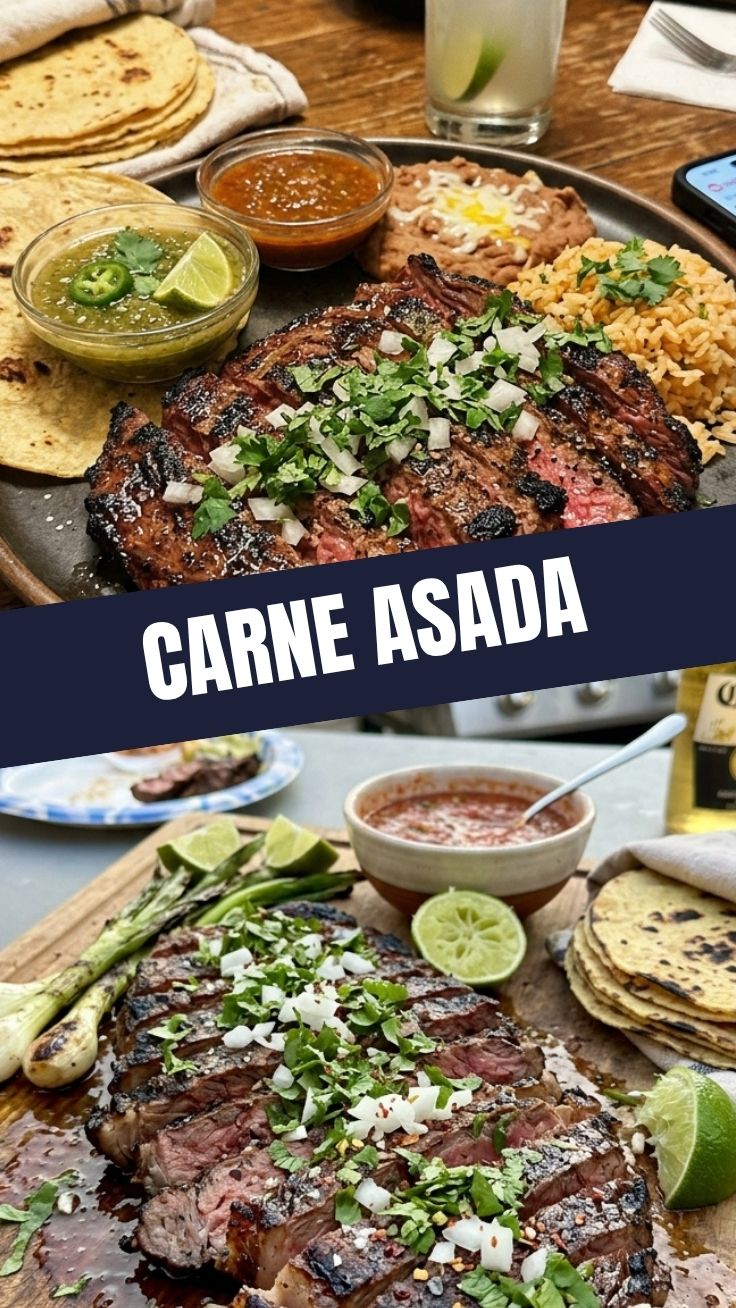
7. Serve immediately: Use in tacos with warm corn tortillas, salsa verde, diced onion, and cilantro, or pile over a salad with avocado and cotija cheese.
Nutritional Benefits & Advantages
This recipe is naturally high in protein (about 25g per 3-ounce serving) and rich in iron, zinc, and B vitamins from the beef. The citrus marinade adds vitamin C, which aids iron absorption. Using flank steak keeps the dish relatively lean compared to fattier cuts, while the olive oil provides heart-healthy monounsaturated fats. By controlling sodium levels (you can reduce soy sauce), it fits into balanced eating plans. Carne Asada is also naturally gluten-free when you choose tamari or coconut aminos, making it a great option for those with sensitivities.
Tips, Variations & Cooking Advice
– Flavor twist: Add a chipotle pepper in adobo to the marinade for smoky heat.
– Cooking method: No grill? Use a cast-iron skillet or broiler. For skillet, get it screaming hot and cook in 1–2 batches to avoid steaming.
– Dietary adaptation: For a dairy-free finish, skip cheese toppings and use avocado crema made with coconut milk.
– Portion changes: This recipe serves 4–6. Double ingredients for a crowd; just don’t overcrowd the grill.
– Serving idea: Slice cold leftovers over a lunch salad with black beans and corn.
Common Mistakes to Avoid
1. Marinating too long – Beyond 8 hours, the meat becomes mushy. Set a timer.
2. Skipping the rest – Cutting immediately causes juices to run out, leaving dry meat. Resting is non-negotiable.
3. Overcooking – Flank steak is best medium-rare to medium. Above 145°F it gets tough. Use a thermometer.
4. Slicing with the grain – This makes even perfect steak chewy. Always cut across the short fibers.
5. Not patting dry – Wet steak won’t sear; it steams instead. Pat thoroughly before grilling.
Storage & Meal Prep Tips
– Refrigeration: Store leftover steak in an airtight container for up to 4 days. Keep it whole (slice only what you eat) to retain moisture.
– Freezing: Wrap tightly in plastic wrap then foil, or vacuum-seal. Freeze for up to 3 months. Thaw overnight in fridge.
– Reheating: For best texture, reheat in a hot skillet for 30 seconds per side, or use a toaster oven at 350°F. Avoid microwaving, which toughens the meat.
– Meal prep: Marinate the raw steak on Sunday, then grill on Tuesday. Slice and store with tortillas and fixings for quick weekday tacos.
Conclusion
Mastering authentic Carne Asada at home is about understanding how citrus, heat, and slicing transform a humble grilled flank steak into a celebration of flavor. With the right marinade, high heat, and a few simple techniques, you can consistently produce juicy, charred, tender meat that rivals any restaurant. Try this recipe for your next taco night or weekend barbecue, and don’t forget to share your results—tag us or leave a comment below! Looking for more Mexican-inspired dishes? Check out our guide on homemade salsa verde or Mexican street corn.
FAQs
Q: Can I use skirt steak instead of flank steak?
A: Absolutely. Skirt steak is more flavorful and slightly fattier; just reduce cooking time by 1–2 minutes per side since it’s thinner.
Q: How do I know when the steak is done without a thermometer?
A: Use the finger test: for medium-rare, the texture should feel like the base of your thumb when you touch your index finger to your thumb. But a thermometer is far more reliable.
Q: Can I make this in the oven if I don’t have a grill?
A: Yes. Broil on high 4–5 inches from the element for 5–6 minutes per side. Ensure good air circulation; avoid a crowded pan.
Q: My steak turned out tough – what went wrong?
A: Likely overcooked or sliced with the grain. Next time, cook to 130°F and slice against the grain into thin strips.
Q: How long does the marinade keep?
A: Fresh marinade (without raw meat) can be refrigerated for up to 5 days. Once used on raw steak, discard leftovers to avoid cross-contamination.
Quick way to grow a flavorful Carne Asada in 3 steps
Ingredients
Equipment
Method
- In a bowl, combine orange juice, lime juice, soy sauce, olive oil, minced garlic, cumin, chili powder, salt, and pepper to create the marinade.
- Place the skirt steak in a shallow dish or a resealable bag and pour the marinade over it, ensuring the meat is fully coated; marinate for at least 30 minutes, or preferably several hours in the refrigerator.
- Preheat your grill to high heat, then remove the steak from the marinade and discard any excess.
- Grill the steak for 3-5 minutes per side for medium-rare, or adjust according to your preferred doneness, then let it rest for 5 minutes before slicing against the grain and serving.