Have you ever wondered why restaurant seafood tastes so much better than your home-cooked version? The secret often lies in the condiment. Discovering the perfect Tartar Sauce (Homemade) elevates any fried fish, crab cake, or shrimp po’ boy from good to unforgettable. This Tartar Sauce Recipe is not only quick to prepare using pantry staples, but it also avoids the preservatives and high-fructose corn syrup found in store-bought versions. By making it at home, you control the tang, the creaminess, and the briny crunch, ensuring every bite is perfectly balanced. Let’s dive into this simple yet transformative condiment.
Ingredients & Kitchen Tools
Creating a vibrant, creamy tartar sauce requires just a few fresh components. Here is everything you need, along with notes for substitutions.
Ingredients:
– 1 cup high-quality mayonnaise – Full-fat mayo provides the best texture and flavor. Do not use salad dressing or Miracle Whip, as they are too sweet and thin.
– 2 tablespoons finely diced dill pickles – Dill pickles offer the classic tangy crunch. Sweet pickles will change the flavor profile significantly.
– 1 tablespoon rinsed and drained capers, minced – Capers add a salty, briny pop that is essential for depth.
– 1 tablespoon finely chopped fresh parsley – Flat-leaf parsley adds color and freshness. Dry parsley is not a suitable substitute here.
– 1 teaspoon fresh lemon juice – Brightens the sauce and balances the fats.
– ½ teaspoon Dijon mustard – Adds a subtle sharpness and helps emulsify the sauce.
– ¼ teaspoon Worcestershire sauce – Provides umami complexity.
– Salt and freshly ground black pepper to taste – Go light on salt due to the pickles and capers.
Kitchen Tools:
– Medium mixing bowl
– Sharp chef’s knife
– Cutting board
– Measuring spoons
– Rubber spatula or spoon
– Small jar or airtight container for storage
Optional Substitutions:
– Dairy-free version: Use vegan mayonnaise and ensure capers and Dijon mustard are vegan-friendly.
– Gluten-free: This recipe is naturally gluten-free, but verify your Worcestershire sauce label as some brands contain malt vinegar from barley.
– Lower sodium: Use low-sodium pickles and rinse capers thoroughly.
Prep Time & Cooking Schedule
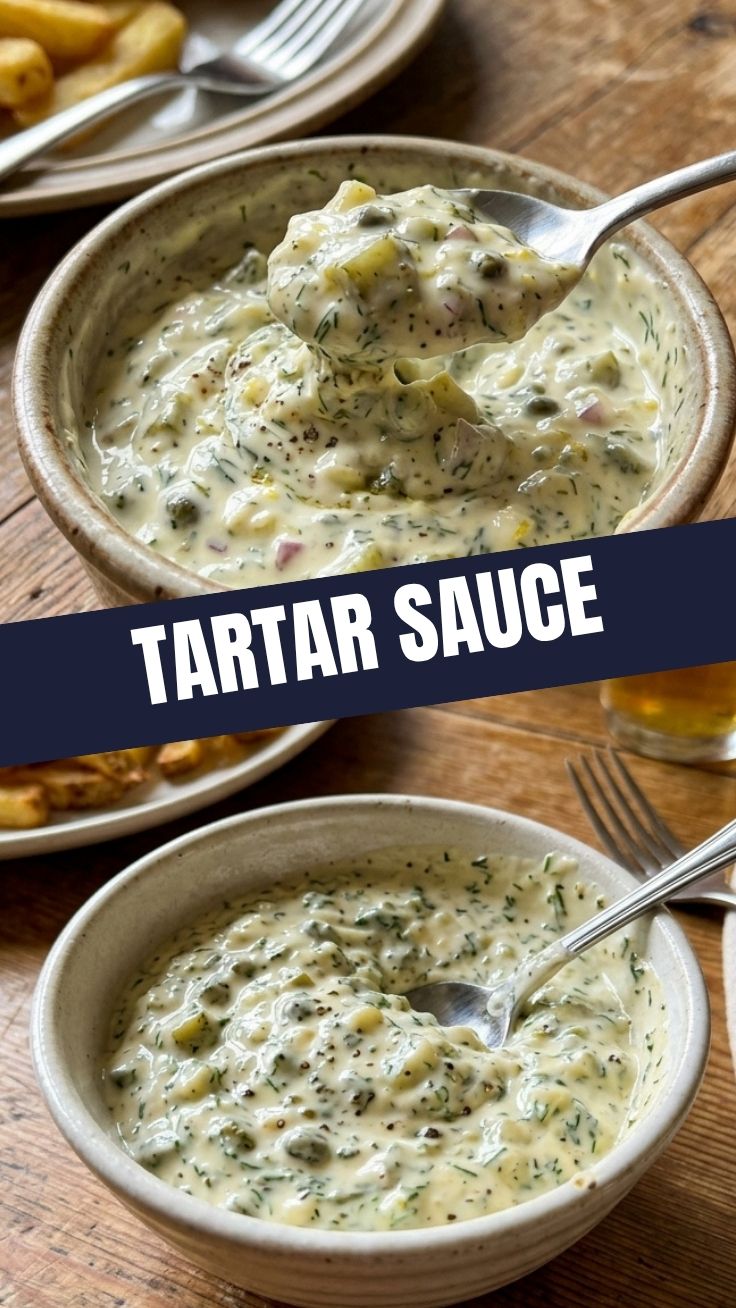
This recipe requires no cooking, making it one of the easiest condiments you can prepare. All the work happens in the chopping and mixing stages.
– Prep Time: 10 minutes (this includes dicing pickles, mincing capers, and chopping parsley)
– Resting Time: 30 minutes to 2 hours (highly recommended for flavor meld)
– Total Time: 40 minutes to 2 hours and 10 minutes
While the active time is minimal, the resting period is crucial. Allowing the sauce to sit in the refrigerator for at least 30 minutes lets the flavors marry and the acidity from the pickles and lemon juice to mellow. If you can wait the full 2 hours, the result is a more cohesive and harmonious sauce.
Step-by-Step Instructions
Follow these directions carefully to achieve a restaurant-quality sauce every time. The key is in the texture and seasoning balance.
1. Prepare the aromatics. Ensure your dill pickles are very finely diced. Aim for pieces no larger than ⅛-inch. Similarly, mince the capers and chop the parsley finely. Uniform pieces ensure every bite of the finished sauce delivers consistent flavor and crunch.
2. Mix the base. In a medium mixing bowl, combine the mayonnaise, Dijon mustard, and Worcestershire sauce. Whisk gently until smooth and fully incorporated.
3. Fold in the solids. Add the diced pickles, minced capers, and fresh parsley. Use a rubber spatula to fold everything together gently. Avoid over-mixing, which can break the emulsion of the mayonnaise.
4. Season and acidify. While preparing this Tartar Sauce (Homemade), add the fresh lemon juice. Taste the sauce at this point. It should be tangy but not sour. Season with a tiny pinch of salt and a few grinds of black pepper. Remember that the flavor will deepen as it rests.
5. Rest for optimal flavor. Transfer the sauce to an airtight container. Refrigerate for at least 30 minutes. This Tartar Sauce Recipe benefits significantly from this rest, as the capers and pickles release their brine into the mayonnaise.
6. Final taste check. Before serving, stir the sauce once more and re-season if needed. The sauce should be thick, creamy, and packed with bright, briny notes.
Nutritional Benefits & Advantages
Homemade tartar sauce offers distinct nutritional advantages over commercial versions. By making it yourself, you eliminate added sugars, artificial colors, and stabilizers often found in shelf-stable jars.
– Healthy Fats: Mayonnaise is primarily made from oil and egg yolks. Using a mayonnaise made from avocado or olive oil provides heart-healthy monounsaturated and polyunsaturated fats.
– Low Carbohydrate: This sauce is naturally low in carbs and keto-friendly, making it an excellent condiment for those monitoring their carbohydrate intake.
– Antioxidants: Fresh parsley is rich in vitamins A, C, and K, as well as antioxidant flavonoids.
– Probiotic Potential: Dill pickles that are naturally fermented (not pasteurized) contain beneficial probiotics that support gut health.
– Sodium Control: You can dramatically reduce the sodium content compared to store-bought versions by using low-sodium pickles and controlling the added salt.
Tips, Variations & Cooking Advice
This core recipe is incredibly versatile. Adapt it to suit your taste or the specific dish you are serving.
– Spicy Tartar Sauce: Add 1 teaspoon of sriracha, hot sauce, or a pinch of cayenne pepper for a fiery kick.
– Herb-Forward Variation: Swap the parsley for fresh dill or a mix of dill and chives. Dill pairs exceptionally well with seafood like salmon or halibut.
– Lemony Brightness: Increase the lemon juice to 1½ tablespoons and add ½ teaspoon of lemon zest for an extra citrus punch.
– Creamier Texture: Fold in 1 tablespoon of full-fat Greek yogurt or sour cream for a lighter, tangier consistency.
– Caper-Free Alternative: If you dislike capers, double the amount of diced dill pickles and add a pinch of celery salt to mimic the briny depth.
– Serving Suggestions: This sauce is classic with fried fish, fish and chips, crab cakes, and shrimp. It also works beautifully as a spread for fish sandwiches or a dip for raw vegetables and crispy zucchini fries.
Common Mistakes to Avoid
Even a simple sauce like tartar can go wrong. Avoid these pitfalls for guaranteed success.
– Using Sweet Relish: Sweet relish contains added sugar and a different vinegar profile. It will make your sauce taste like a dessert topping rather than a savory condiment. Always use unsweetened dill pickles.
– Over-chopping Ingredients: If your pickles and capers are minced too finely (almost to a paste), they will dissolve into the mayonnaise and lose the crucial textural crunch. Aim for tiny, distinct pieces.
– Skipping the Resting Time: Serving the sauce immediately after mixing results in a disjointed, sharp flavor. The resting period is non-negotiable for a harmonious taste.
– Adding Too Much Salt Early: Capers and pickles are naturally salty. Always taste the sauce after resting and add salt only if necessary. Over-salting is a common and irreversible mistake.
– Using Watery Ingredients: If you are using fresh lemon juice, ensure no pulp or seeds fall in. Similarly, if your pickles seem extremely wet, pat them dry gently with a paper towel to prevent the sauce from becoming thin.
Storage & Meal Prep Tips
Proper storage ensures your homemade sauce stays fresh and delicious for several days.
– Refrigeration: Store the sauce in an airtight glass jar or container. It will stay fresh for up to one week in the refrigerator.
– Freezing: Do not freeze this sauce. The mayonnaise emulsion will break upon thawing, resulting in a watery, separated mess.
– Reheating: This sauce is served cold. Do not microwave or heat it. If it has been refrigerated and is too thick, let it sit at room temperature for 10 minutes, then stir gently.
– Meal Prep: This sauce is perfect for meal prep. Make it up to 3 days in advance to allow the flavors to fully develop. Prepare it while you are cooking other components of your meal to save time.
– Signs of Spoilage: Discard the sauce if you see any mold growth, if the odor changes to something sour or off-putting, or if the texture becomes excessively thin or watery.
Conclusion
Mastering a classic condiment is a small but impactful step toward better home cooking. With this Tartar Sauce (Homemade), you have a fresh, vibrant, and perfectly balanced sauce that rivals any restaurant version. The process is quick, the ingredients are simple, and the result is far superior to anything from a jar. This Tartar Sauce Recipe is sure to become a staple in your kitchen, ready to elevate all your favorite seafood dishes. Try it this week, and do not forget to share your results or let us know how you customized it in the comments below. For more quick condiment recipes, explore our guide to homemade aioli and remoulade.
FAQs
1. Can I use dried dill instead of fresh parsley?
Yes, dried dill is an excellent substitute. Use 1 teaspoon of dried dill for the fresh parsley. Add it during the mixing stage so it has time to rehydrate and release its flavor.
2. Why is my tartar sauce too thin?
This usually happens if you over-mix the mayonnaise, causing the emulsion to break, or if your pickles released too much liquid. To fix it, try gently whisking in 1-2 tablespoons of additional mayonnaise. Next time, pat your diced pickles dry with a paper towel before adding them.
3. How long does homemade tartar sauce last?
When stored in an airtight container in the refrigerator, it remains fresh for up to one week. Always use clean utensils when scooping out the sauce to prevent contamination.
4. Can I make this dairy-free?
Absolutely. Simply use a high-quality vegan mayonnaise. All other ingredients (capers, pickles, mustard, lemon juice, etc.) are naturally dairy-free.
5. What if I don’t have capers? Can I omit them?
You can omit capers, but the sauce will lose a significant layer of briny flavor. A good substitute is ½ teaspoon of pickle brine or 1 teaspoon of finely chopped green olives. Both will add the necessary salt and tang.
Quick way to grow Tartar Sauce (Homemade) in 3 minutes
Ingredients
Equipment
Method
- In a medium-sized bowl, combine mayonnaise, sweet pickle relish, dill weed, lemon juice, Dijon mustard, salt, and black pepper.
- Stir all ingredients thoroughly until well combined.