The Ultimate Guide to Perfect Chicken Parmesan: A Crispy, Cheesy Classic Made Easy
Have you ever craved that golden, breaded cutlet smothered in rich marinara and gooey melted cheese but felt intimidated by the restaurant version? You’re not alone. Yet, the truth is that crafting a restaurant-quality Chicken Parmesan in your own kitchen is not only achievable but deeply rewarding. Preparing it at home gives you full control over ingredients, ensures a fresher taste, and saves money while impressing your family. From the satisfying crunch of the breading to the perfectly melted mozzarella, this dish is a crowd-pleaser. Exploring different Chicken Parmesan Recipes can open your eyes to new techniques, but this guide will give you a foolproof method you can rely on every single time.
Ingredients & Kitchen Tools
For the Chicken
– 4 boneless, skinless chicken breasts (about 6 oz each) – Pound to even ½-inch thickness for uniform cooking.
– 1 cup all-purpose flour – For the first dredge; creates a dry surface for the egg wash.
– 2 large eggs – Beaten with 1 tablespoon water to help breadcrumbs adhere.
– 1½ cups seasoned breadcrumbs – Panko preferred for extra crunch; regular work too.
– ½ cup grated Parmesan cheese – Adds nutty flavor to the breading.
– 1 teaspoon garlic powder – For subtle aromatic depth.
– ½ teaspoon salt and ¼ teaspoon black pepper – Essential seasoning layers.
– Vegetable or olive oil – For pan-frying; use enough to reach ¼ inch depth.
For Assembly & Sauce
– 2 cups marinara sauce – Quality store-bought or homemade; look for low-sugar options.
– 2 cups shredded mozzarella cheese – Whole milk mozzarella melts best.
– ¼ cup fresh basil leaves – Optional but highly recommended for garnish.
– ½ cup extra grated Parmesan – For final topping before baking.
Kitchen Tools
– Meat mallet or rolling pin
– Three shallow bowls (for flour, eggs, breadcrumbs)
– Large skillet (cast iron or non-stick)
– 9×13-inch baking dish
– Instant-read thermometer
– Tongs and spatula
– Wire cooling rack (placed on baking sheet)
Optional Substitutions
– Gluten-free: Use almond flour for dredging and gluten-free panko.
– Dairy-free: Use nutritional yeast in breading and dairy-free mozzarella shreds.
– Chicken thighs: Juicier alternative; cook 2-3 minutes longer per side.
Prep Time & Cooking Schedule
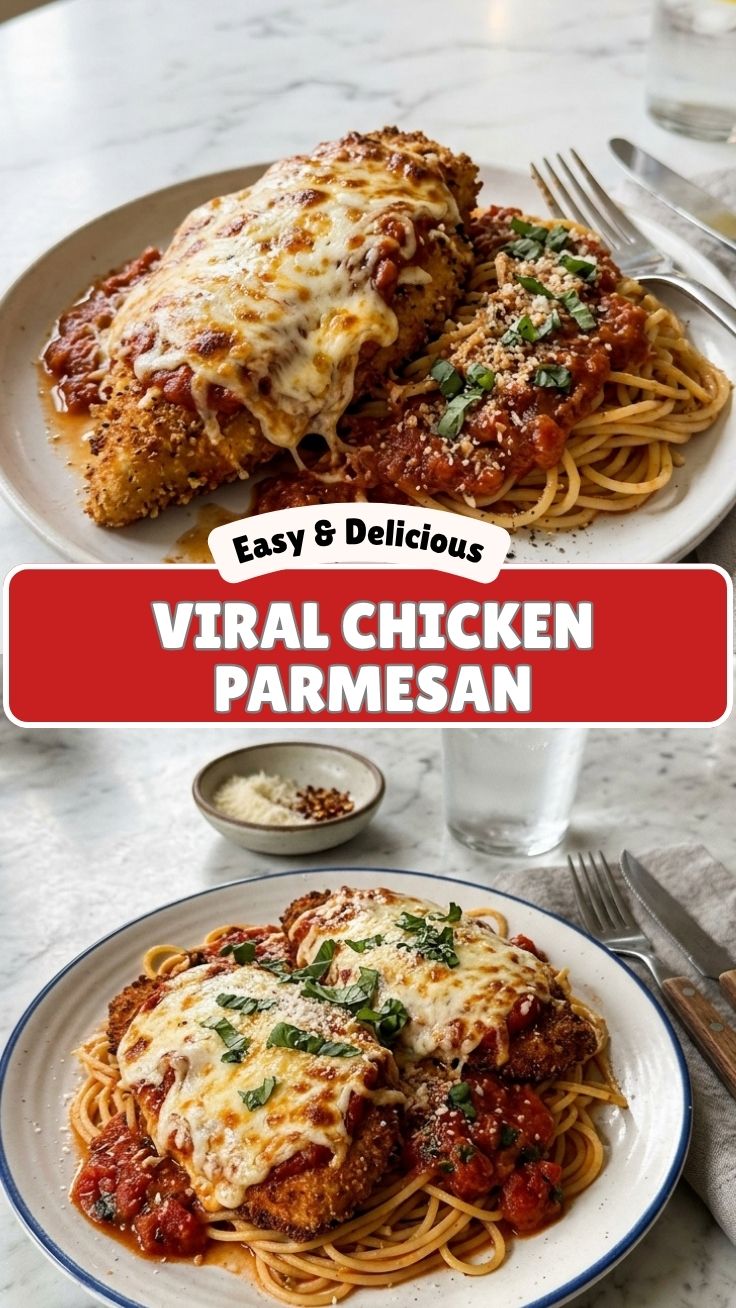
– Prep time: 20 minutes (pound chicken, set up dredging station, preheat oven)
– Active cooking time: 15 minutes (pan-frying)
– Baking time: 20-25 minutes (depending on chicken thickness)
– Resting time: 5 minutes after baking
Plan ahead: The sauce can be made 2 days prior. Breading can be prepared 1 hour ahead and refrigerated. This dish works beautifully for a weekend dinner when you have 60-70 minutes total.
Step-by-Step Instructions
1. Prepare the chicken: Place each breast between two sheets of plastic wrap. Pound to an even ½-inch thickness using a meat mallet or rolling pin. Season both sides with salt, pepper, and garlic powder.
2. Set up the breading station: In bowl one, add flour. In bowl two, beat eggs with water. In bowl three, combine breadcrumbs and grated Parmesan. Working with one piece at a time, dredge chicken in flour (shake off excess), dip in egg, then press firmly into breadcrumb mixture. Place on a wire rack.
3. Pan-fry to golden perfection: Heat oil in a large skillet over medium-high heat until shimmering (350°F if using thermometer). Fry 2-3 cutlets at a time without crowding. Cook 3 minutes per side until deep golden brown and internal temperature reaches 155°F. Transfer to a paper-towel-lined plate.
4. Assemble and bake: Preheat oven to 400°F. Spread ½ cup marinara in the baking dish. Arrange fried cutlets in a single layer. Top each with ¼ cup sauce, then generous mozzarella and remaining Parmesan. The secret to a perfect Chicken Parmesan is not to drown the chicken in sauce—just enough to cover. Bake 15 minutes until cheese is bubbly, then broil 2-3 minutes for browned spots. For more inspiration, these Chicken Parmesan Recipes offer creative spins on the classic method.
5. Rest and serve: Let rest 5 minutes before garnishing with fresh basil. Serve immediately with pasta or a crisp green salad.
Nutritional Benefits & Advantages
Chicken Parmesan offers surprising nutritional value when made thoughtfully. A single serving (one cutlet with sauce and cheese) provides approximately 450-500 calories, 35g protein, 25g fat, and 20g carbohydrates. The chicken breast is an excellent lean protein source that supports muscle repair and satiety. The lycopene in tomato sauce is a powerful antioxidant linked to heart health, especially when cooked. Mozzarella adds calcium for bone health, while basil contributes vitamins A and K. Using quality olive oil instead of vegetable oil boosts healthy monounsaturated fats. For a lighter version, bake the breaded chicken on a wire rack with cooking spray instead of frying.
Tips Variations & Cooking Advice
Flavor Variations
– Spicy Arrabiata: Add red pepper flakes to sauce.
– Eggplant Parmesan: Substitute thick eggplant slices (salted and drained).
– Chicken Parmesan Sandwich: Place cutlet on crusty bread with extra sauce.
Ingredient Swaps
– Breadcrumbs: Crushed pork rinds for low-carb; crushed cornflakes for extra crunch.
– Cheese: Provolone or provolone-mozzarella blend for sharper flavor.
– Sauce: Vodka sauce or pesto cream sauce for a twist.
Dietary Adaptations
– Gluten-free: Use gluten-free flour and panko. Add 1 tablespoon cornstarch to breading for crispness.
– Low-carb: Replace breadcrumbs with almond flour and grated Parmesan (2:1 ratio).
– Dairy-free: Use vegan mozzarella and nutritional yeast in breading.
Cooking Methods
– Air fryer: Cook at 375°F for 8-10 minutes, flipping halfway. Top with cheese and cook 2 minutes more.
– Sheet pan: Bread and bake at 425°F for 15 minutes, then add sauce and cheese and bake 5 more.
Common Mistakes to Avoid
– Soggy breading: This happens when chicken isn’t patted dry or when oil isn’t hot enough. Always dry chicken thoroughly and test oil with a breadcrumb—it should sizzle immediately.
– Overcooked, dry chicken: Use an instant-read thermometer to pull chicken at 160°F (it will rise to 165°F while resting). Pounding evenly prevents thin edges from burning.
– Too much sauce: A common error. Use just enough to cover the top; excess moisture will steam the breading and ruin the crunch.
– Cheese sliding off: Grate your own cheese (pre-shredded has anti-caking agents that prevent melting) and don’t overload the pan.
– Burning the bottom: Use a heavy-bottomed skillet and adjust heat if the first side darkens too quickly.
Storage & Meal Prep Tips
Refrigeration: Store cooled leftovers in an airtight container for up to 4 days. Layer with parchment paper to prevent sticking. Reheat in a 350°F oven for 10 minutes (not microwave, which ruins crispiness). A toaster oven works beautifully.
Freezing: Assemble the dish completely but do not bake. Wrap tightly in plastic wrap and then foil. Freeze for up to 3 months. To bake, thaw overnight in fridge, then bake at 375°F for 25-30 minutes (add 5-10 minutes if still cold).
Meal prep: Bread and fry the chicken up to 2 days ahead. Keep refrigerated. When ready, assemble with sauce and cheese and bake. The pre-fried chicken can also be frozen flat on a baking sheet, then transferred to a freezer bag.
Conclusion
Mastering this classic dish transforms your home cooking forever. You’ve learned the precise techniques—from pounding and breading to achieving that perfect golden crust—that separate good Chicken Parmesan from extraordinary. The balance of flavors, textures, and temperatures creates something genuinely special. Don’t hesitate to experiment with the variations shared here, and remember that consistency comes from practice. Whether you’re following this exact method or exploring other Chicken Parmesan Recipes, you now have the confidence to make it your own. Try this recipe this week, serve it with your favorite pasta or a fresh salad, and share your results in the comments. Your family will be asking for it again and again.
FAQs
1. Can I use chicken thighs instead of breasts?
Yes. Boneless, skinless thighs work well and are more forgiving to cook. Pound to ½-inch thickness and increase frying time by 1-2 minutes per side. They remain juicier due to higher fat content.
2. How do I keep the breading from falling off?
Ensure chicken is completely dry before the flour dredge. Let breaded cutlets rest on a wire rack for 10 minutes before frying—this helps the coating adhere. Don’t overcrowd the pan, which lowers oil temperature.
3. Can I make this without frying?
Absolutely. Spray breaded chicken with olive oil and bake at 425°F for 12-15 minutes per side on a wire rack. For extra crispness, use an air fryer at 375°F for 10 minutes. The result is slightly less crunchy but delicious.
4. What if I don’t have marinara sauce?
Use crushed San Marzano tomatoes with a pinch of sugar, oregano, and garlic simmered for 10 minutes. Alternatively, a quick tomato-basil sauce works. Even a good-quality pasta sauce from a jar will do in a pinch.
5. Can I prepare this dish in advance for a party?
Yes. Bread and fry the chicken up to 2 days ahead. Keep refrigerated. Assemble with sauce and cheese on the day of serving, then bake. Add 5 minutes to the baking time since the chicken will be cold from the fridge.
Best way to grow Chicken Parmesan on a 30 Minute Timetable
Ingredients
Equipment
Method
- Preheat your oven to 400°F (200°C) and prepare a baking sheet by lining it with parchment paper.
- Slice each chicken breast horizontally to create two thinner cutlets, then season both sides with salt and pepper.
- Set up a breading station with three shallow dishes: one for flour, one for beaten eggs, and one for a mix of Panko, Parmesan, garlic powder, and oregano.
- Dredge each chicken cutlet in flour, then dip in egg, and finally coat thoroughly with the Panko mixture.
- Heat vegetable oil in a large skillet over medium-high heat and pan-fry each breaded cutlet for 3-4 minutes per side until golden brown.
- Transfer the browned chicken cutlets to the prepared baking sheet.
- Spoon marinara sauce over each chicken cutlet, then generously sprinkle shredded mozzarella cheese on top.
- Bake for 10-12 minutes, or until the cheese is melted and bubbly and the chicken is cooked through.
- Serve immediately, garnished with fresh basil.