The Ultimate Guide to Perfect Chimichurri Steak at Home
Have you ever wondered why restaurant-quality steak always feels out of reach in your own kitchen? The secret isn’t just the cut of meat—it’s the vibrant, herbaceous companion that elevates every bite. Learning to prepare a bold-flavored ribeye with a fresh, zesty topping is one of the most rewarding skills you can master. By making a restaurant-inspired Chimichurri Steak at home, you control the quality of ingredients, save money, and impress dinner guests with minimal effort. The key lies in balancing a perfectly seared steak with a homemade dressing that cuts through the richness. To achieve this, you’ll want a reliable Chimichurri sauce recipe that packs fresh parsley, garlic, and red wine vinegar into every spoonful. Whether you’re a seasoned cook or a beginner, this guide breaks down every step with data-backed techniques and practical tips.
Ingredients & Kitchen Tools
For the Steak
– 2 ribeye steaks (1–1.5 inches thick) – Look for good marbling; this ensures tenderness and flavor during searing.
– 2 tablespoons neutral oil (avocado or canola) – High smoke point prevents burning.
– 1 teaspoon kosher salt – Use coarse salt for even seasoning; fine salt can over-salt.
– ½ teaspoon black pepper, freshly cracked – Adds warmth without overpowering.
– Optional: 2 cloves garlic, smashed – For aromatic infusion during cooking.
For the Fresh Sauce
– 1 cup fresh parsley, finely chopped – Flat-leaf Italian parsley is preferred for brightness.
– ¼ cup fresh oregano (or 2 teaspoons dried) – Adds earthy depth.
– 3 cloves garlic, minced – Adjust to taste; raw garlic provides pungency.
– ½ cup extra-virgin olive oil – Use a fruity variety for balance.
– 2 tablespoons red wine vinegar – Acidity cuts through the fat.
– 1 teaspoon red pepper flakes – Optional; adjust for heat preference.
– Salt to taste – Start with ¼ teaspoon.
Kitchen Tools
– Cast-iron skillet or heavy-bottomed pan – Retains high heat for perfect sear.
– Tongs – For flipping without piercing the meat.
– Meat thermometer – Ensures doneness accuracy (rare: 120°F, medium-rare: 130°F).
– Cutting board – For resting and slicing.
– Sharp knife – For even cuts; a chef’s knife works best.
– Small food processor or mortar and pestle – For sauce consistency (hand-chopping is fine).
Substitutions
– Swap ribeye for sirloin or flank steak if budget-friendly, but adjust cooking time.
– Use red wine vinegar or sherry vinegar; white wine vinegar is lighter.
– For a milder sauce, reduce garlic to 1 clove or omit red pepper flakes.
Prep Time & Cooking Schedule
| Stage | Time | Notes |
|——-|——|——-|
| Steak tempering | 30–40 minutes | Remove from fridge 30 minutes before cooking for even heat distribution. |
| Sauce preparation | 10 minutes | Chop herbs and mix; let sit for 20 minutes to meld flavors. |
| Cooking time | 8–10 minutes | Searing on high heat for 4–5 minutes per side for medium-rare. |
| Resting time | 5–10 minutes | Essential for juice redistribution; tent loosely with foil. |
| Total active time | 20 minutes | Plus passive tempering and resting. |
Plan ahead: The sauce can be made up to 2 days in advance and stored in the fridge (see Storage section). For best results, start tempering the steak while you prepare the sauce.
Step-by-Step Instructions
1. Temper and Season the Steak – Pat the steaks dry with paper towels (moisture prevents browning). Season generously with salt and pepper on all sides. Press the seasoning into the meat and let rest at room temperature for 30 minutes.
2. Prepare the Sauce – In a bowl, combine parsley, oregano, garlic, red wine vinegar, and red pepper flakes. Slowly whisk in olive oil until emulsified. Season with salt to taste. Set aside to allow flavors to blend—this is a classic Chimichurri sauce recipe that pairs with grilled meats, fish, or vegetables.
3. Preheat the Pan – Place a cast-iron skillet over high heat for 3–5 minutes until it starts smoking lightly. Add oil and swirl to coat.
4. Sear the Steaks – Carefully place steaks in the hot pan. Reduce heat slightly to medium-high to avoid burning. Cook without moving for 4 minutes (for medium-rare on a 1-inch steak). Flip with tongs and cook another 3–4 minutes. For thicker cuts, add 1–2 minutes per side.
5. Check Doneness – Insert a meat thermometer into the thickest part (avoid bone). Target: 130°F for medium-rare. Remove at 125°F—temperature will rise during resting.
6. Rest and Slice – Transfer to a cutting board, tent loosely with foil, and rest for 5–10 minutes. Slice against the grain into ½-inch strips.
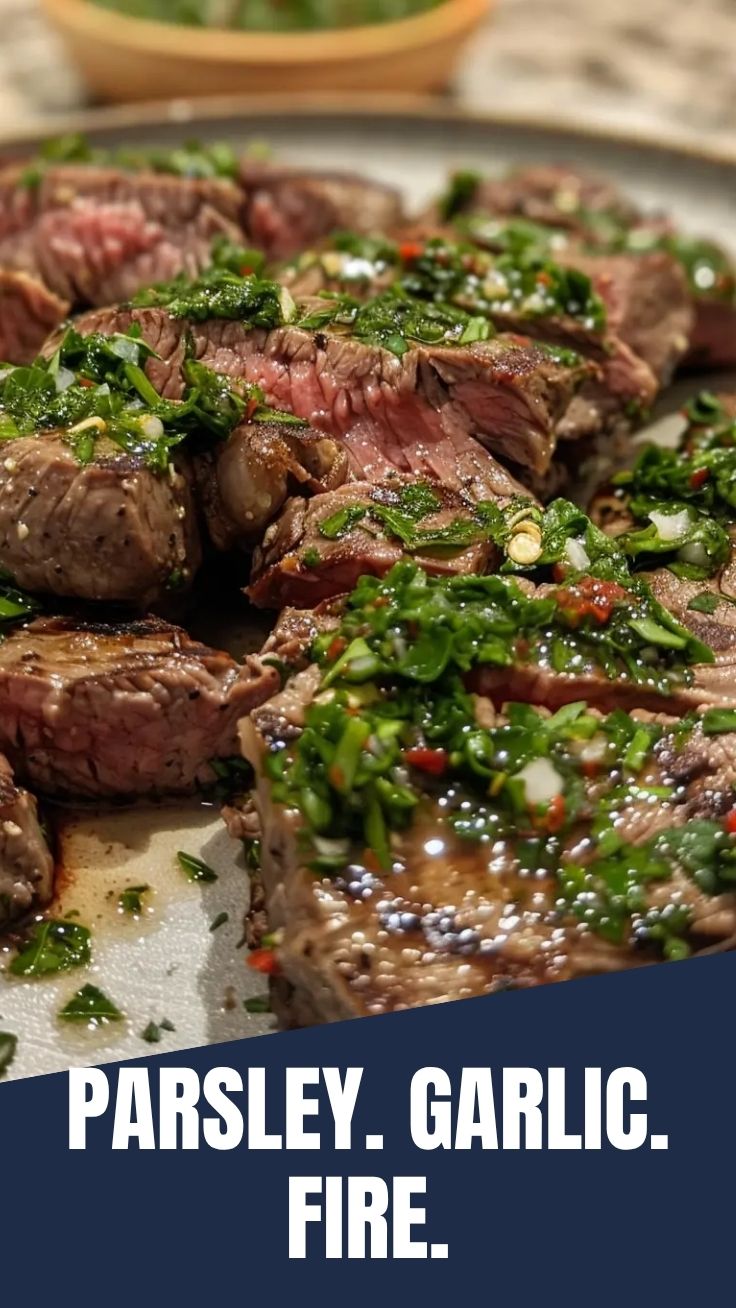
7. Serve – Arrange steak on a platter and spoon fresh sauce over the top. Drizzle extra sauce on the side. For a complete meal, pair with roasted potatoes or a crisp salad. This technique ensures a tender, juicy Chimichurri Steak every time.
Nutritional Benefits & Advantages
A single serving of this dish (6-ounce steak with 2 tablespoons sauce) provides approximately:
– Calories: 380–420 (depending on fat content)
– Protein: 38–42 grams – supports muscle repair and satiety.
– Healthy Fats: 25–30 grams – primarily from olive oil and beef tallow; monounsaturated fats are heart-friendly.
– Vitamins: Parsley is rich in vitamins A, C, and K. Oregano provides antioxidants like carvacrol.
– Iron: 3–4 mg from beef (15–20% daily value) – enhances oxygen transport.
– Low Carbohydrates: Less than 2 grams per serving – ideal for keto or low-carb diets.
The fresh herbs in the sauce offer anti-inflammatory compounds, while the high-protein steak promotes fullness. Choosing grass-fed beef further boosts omega-3 content. This balanced meal fits paleo, gluten-free, and whole-food approaches.
Tips Variations & Cooking Advice
– Herb Variations: Replace oregano with fresh basil or cilantro for a different flavor profile. For a spicier kick, add a minced jalapeño to the sauce.
– Cooking Methods: Grilling over charcoal adds smoky notes; cook over direct heat for 3–4 minutes per side. For sous vide, cook at 135°F for 1 hour, then sear for 1 minute per side.
– Portion Adjustments: For a family meal, double the recipe and cook steaks in batches to avoid overcrowding the pan.
– Dietary Adaptations: Use coconut aminos instead of red wine vinegar for a low-histamine version. For dairy-free, no adjustments needed (this dish is naturally dairy-free). To make it vegan, swap steak for portobello mushrooms and sear similarly.
– Flavor Boost: After searing, add a knob of butter and fresh rosemary to the pan for a baste-like finish.
Common Mistakes to Avoid
1. Skipping the Temper – Cold steak in a hot pan leads to uneven cooking and a gray band. Always temper for 30 minutes.
2. Overcrowding the Pan – Adding more than two steaks at once drops the pan temperature, causing steaming instead of searing. Cook in batches if needed.
3. Cutting Too Early – Cutting into steak immediately releases juices onto the cutting board. Always rest at least 5 minutes.
4. Oversoaking the Sauce – Refrigerating the sauce without oil layering can split the emulsion. Store with a thin oil layer on top.
5. Using Wet Herbs – Damp parsley adds water to the sauce, diluting flavor. Pat herbs dry before chopping.
Storage & Meal Prep Tips
– Refrigeration: Store leftover steak in an airtight container for up to 3 days. Keep sauce separate in a glass jar to prevent the herbs from wilting.
– Freezing: The sauce freezes well for up to 3 months. Freeze in ice cube trays for portioned use. Cooked steak can be frozen for up to 2 months, but texture may soften slightly. Thaw overnight in the fridge.
– Reheating: For steak, reheat in a low oven (275°F) for 10 minutes or sear in a hot pan for 1 minute per side. Avoid microwaving, which toughens the meat. For sauce, bring to room temperature (do not heat) to preserve herb color.
Conclusion
Mastering this dish hinges on two elements: a perfectly seared steak and a fresh, piquant sauce that cuts through the richness. By following the steps outlined above, you can recreate the restaurant experience in your own kitchen with confidence. The combination of a tender, juicy Chimichurri Steak and a vibrant, herbaceous Chimichurri sauce recipe offers a simple yet show-stopping meal. I encourage you to try this recipe this week—adjust the spice level to your liking, experiment with herb swaps, and share your results in the comments below. For more steak-cooking guides and sauce variations, explore our related articles on pan-searing techniques and marinade science.
FAQs
1. Can I use a different cut of beef for this recipe?
Yes. Sirloin strip or New York strip works well; adjust cooking time slightly (strip steaks are leaner, so cook to medium-rare). Flank steak benefits from marinating in a portion of the sauce for 30 minutes before cooking.
2. How do I prevent the sauce from turning brown?
The herbs oxidize over time. To slow browning, add a tablespoon of lemon juice or chilling water. Store with a thin layer of oil on top and consume within 2 days for brightest color.
3. What if my steak is thicker than 1.5 inches?
Increase searing time to 5–6 minutes per side. Finish in a preheated oven at 350°F for 5–8 minutes if needed. Always use a meat thermometer for accuracy.
4. Can I make this recipe gluten-free?
Absolutely. All listed ingredients are naturally gluten-free. Avoid any pre-made spice blends that may contain additives.
5. My sauce tastes too acidic—how do I fix it?
Balance acidity by adding a teaspoon of honey or maple syrup, or increase the olive oil by 1 tablespoon. Let sit for 10 minutes to meld before adjusting further.
Best way to grow tender Chimichurri Steak
Ingredients
Equipment
Method
- Finely chop fresh parsley and oregano, then mince the garlic cloves.
- Combine all chimichurri ingredients in a small bowl and mix well. Allow it to sit for at least 10 minutes to let the flavors meld.
- Pat the sirloin steak dry with paper towels and season generously with salt and black pepper on both sides.
- Heat olive oil in a cast-iron skillet over medium-high heat until shimmering. Carefully place the steak in the hot skillet.
- Sear the steak for 3-4 minutes per side for medium-rare, or adjust time for desired doneness. Use a meat thermometer to ensure proper internal temperature.
- Remove the steak from the skillet and let it rest on a cutting board for 5-10 minutes. This allows the juices to redistribute, ensuring a tender steak.
- Slice the steak against the grain into thin strips. Serve immediately with the prepared chimichurri sauce spooned over the top.