The Ultimate Guide to Making a Perfect Dutch Baby Pancake at Home
Have you ever wondered why some breakfast dishes look like they belong in a five-star restaurant but are surprisingly simple to make at home? If you’ve scrolled through social media and seen a puffy, golden, oven-baked pancake that seems to defy gravity, you’ve likely encountered a Dutch Baby Pancake. This stunning dish, often compared to its cousin the German Pancake, is a showstopper that requires minimal effort. Preparing it at home is not only cost-effective but also allows you to control the ingredients, ensuring a fresher, healthier start to your day. Whether you are a seasoned cook or a complete beginner, mastering this recipe will elevate your breakfast game instantly.
Ingredients & Kitchen Tools
Ingredients
– 3 large eggs: Room temperature is crucial for maximum puffiness.
– ½ cup all-purpose flour: Provides structure; can substitute with gluten-free 1:1 flour.
– ½ cup whole milk: Adds richness; oat milk or almond milk work well for dairy-free versions.
– 2 tablespoons granulated sugar: Adds a touch of sweetness; honey or maple syrup can be used.
– 1 teaspoon vanilla extract: Enhances flavor profile.
– ½ teaspoon salt: Balances sweetness.
– 2 tablespoons unsalted butter: Melted into the pan; use vegan butter for dairy-free.
Kitchen Tools
– 10-inch cast-iron skillet: Preferred for even heat distribution; an oven-safe non-stick pan works too.
– Blender or whisk: For smooth batter.
– Measuring cups and spoons: Precision matters.
– Rubber spatula: For scraping batter.
– Oven mitts: The pan gets very hot.
Prep Time & Cooking Schedule
> 
– Prep Time: 5 minutes
– Resting Time: 10 minutes (optional but recommended for gluten relaxation)
– Cook Time: 18–22 minutes
– Total Time: Approximately 30 minutes
Plan to preheat your oven and skillet simultaneously. This recipe works beautifully for a lazy weekend brunch or a quick weekday breakfast if you prep the batter the night before.
Step-by-Step Instructions
1. Preheat the Oven and Skillet: Place your cast-iron skillet inside the oven and preheat to 425°F (220°C). This is a critical step – the hot skillet creates the dramatic puff that defines a Dutch Baby Pancake.
2. Prepare the Batter: In a blender, combine the room-temperature eggs, flour, milk, sugar, vanilla extract, and salt. Blend on low for 10 seconds. Scrape down the sides and blend again for another 5 seconds. Avoid over-blending, which can deflate the eggs.
3. Rest the Batter: Pour the batter into a measuring cup and let it rest for 10 minutes. This allows gluten to relax and air bubbles to settle, resulting in a lighter texture.
4. Melt the Butter: Carefully remove the hot skillet from the oven. Add the butter and swirl until it melts completely, coating the bottom and sides. This prevents sticking and adds flavor.
5. Bake: Immediately pour the prepared batter into the hot, buttered skillet. Return to the oven and bake for 18–22 minutes until puffed and golden brown. Do not open the oven door during the first 15 minutes to avoid collapse.
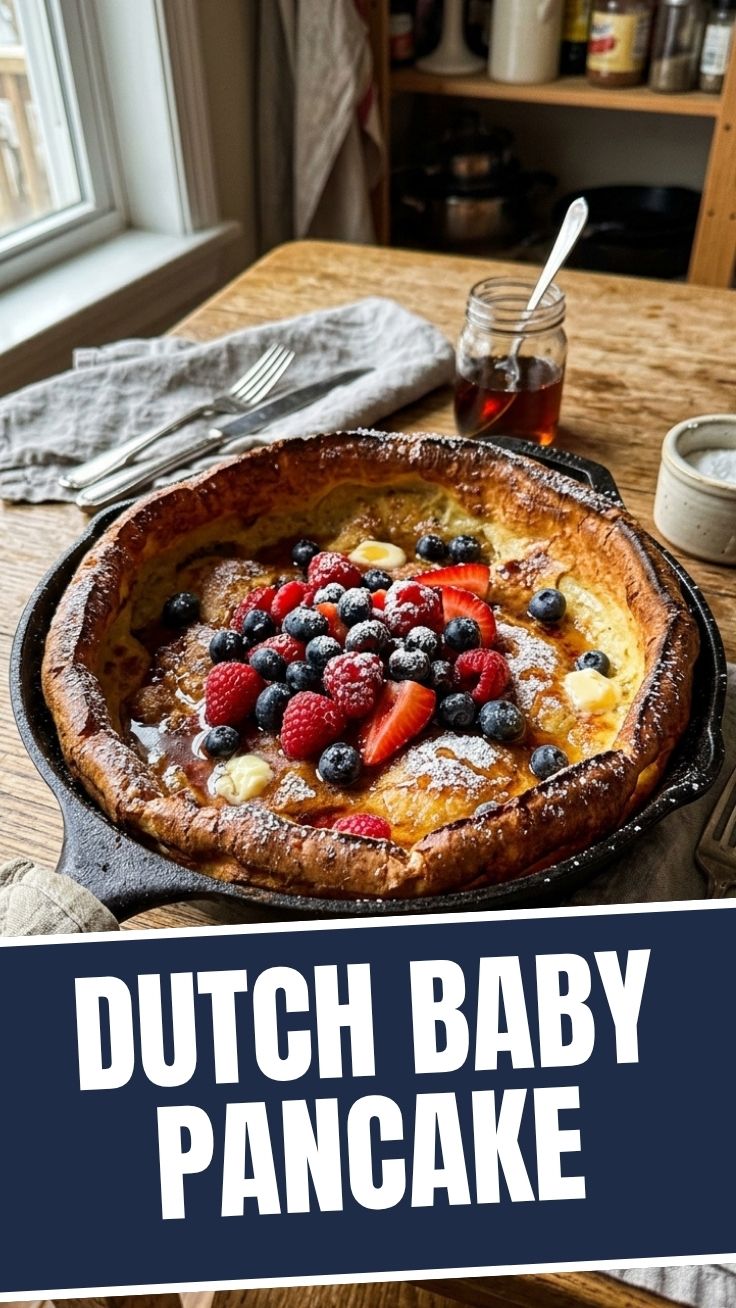
6. Serve Immediately: The pancake will begin to deflate as it cools. Dust with powdered sugar, squeeze fresh lemon juice, or top with berries and maple syrup. For a savory twist, consider the German Pancake style, which is often served with sautéed mushrooms and fresh herbs.
Temperature Control Tip: For consistent results, ensure all wet ingredients are room temperature. Cold eggs or milk will hinder the rise.*
Nutritional Benefits & Advantages
This classic breakfast dish offers surprising nutritional value. Eggs provide high-quality protein and choline, which supports brain health. Whole milk offers calcium and vitamin D. By preparing at home, you eliminate preservatives and control sugar levels. A single serving (¼ of the pancake) contains approximately 180 calories, 8g protein, and 10g fat, making it a balanced breakfast that keeps you full longer.
Tips, Variations & Cooking Advice
– Flavor Variations: Add cinnamon and nutmeg to the batter for a warm spice profile.
– Ingredient Swaps: Use almond flour for a low-carb version, but add an extra egg for structure.
– Alternative Cooking Methods: Try using a 9-inch pie plate if you don’t own a skillet.
– Dietary Adaptations: For a vegan version, use flax eggs, plant-based milk, and vegan butter.
– Portion Changes: Halve the recipe for a single serving using a 6-inch skillet.
Common Mistakes to Avoid
– Opening the Oven Too Early: This lets out steam and prevents the pancake from rising. Wait at least 15 minutes.
– Using Cold Ingredients: Cold eggs and milk will result in a dense, flat pancake.
– Over-mixing the Batter: Creates too much gluten and a rubbery texture.
– Insufficiently Preheating the Pan: A lukewarm pan won’t create the initial steam needed for puffing.
– Skipping the Rest Time: Batters used immediately often spread unevenly and lack airy texture.
Storage & Meal Prep Tips
– Refrigeration: Store leftovers in an airtight container for up to 2 days.
– Freezing: Wrap individual slices in plastic wrap and freeze for up to 1 month.
– Reheating: To maintain crispiness, reheat in a 350°F (175°C) oven for 5 minutes. Avoid microwaving if you want to preserve texture.
– Meal Prep: Prepare the batter the night before and store it in the refrigerator. Let it come to room temperature for 15 minutes before baking.
Conclusion
Mastering the Dutch Baby Pancake is a rewarding experience that brings incredible flavor and visual appeal to your table. Its versatility shines whether you serve it sweet or savory, and its simple ingredient list makes it accessible to everyone. By understanding the critical role of heat and room-temperature ingredients, you can consistently create a showstopping meal. Don’t forget that the German Pancake variation, with its slightly thicker profile and savory possibilities, is equally worth exploring. We encourage you to try this recipe this weekend, share your results with friends, and discover why this dish has become a global favorite.
FAQs
1. Can I use a glass baking dish instead of a cast-iron skillet?
Yes, but reduce the oven temperature by 25°F to avoid glass breakage. The pancake may not puff as dramatically.
2. Why did my Dutch Baby Pancake not rise?
This is usually caused by cold ingredients or opening the oven door too early. Ensure eggs and milk are at room temperature, and resist the urge to peek.
3. Can I make this recipe dairy-free?
Absolutely. Substitute the whole milk with oat or almond milk, and use vegan butter. The texture will be slightly less rich but still delicious.
4. How do I prevent the pancake from sticking?
Generously coat the hot skillet with butter before pouring the batter. Also, ensure the skillet is well-seasoned if using cast iron.
5. Can I add fruit directly to the batter?
Yes, but avoid adding too much liquid. Place sliced apples or berries in the skillet before pouring the batter for even distribution.
Quick way to grow a 6-inch Dutch Baby Pancake
Ingredients
Equipment
Method
- Preheat oven to 425°F (220°C) and place a 6-inch cast-iron skillet inside to heat up.
- In a blender, combine flour, eggs, milk, sugar, and salt; blend until smooth.
- Carefully remove the hot skillet from the oven and add butter, swirling to coat the bottom as it melts.
- Pour the batter into the hot skillet and immediately return it to the oven.
- Bake for 15-20 minutes, or until the pancake is puffed and golden brown.
- Remove from the oven and serve immediately with your favorite toppings, such as powdered sugar, fruit, or syrup.