The Ultimate Guide to Perfectly Roasted Asparagus: Easy, Nutritious, and Delicious
Have you ever wondered why restaurant-style Roasted Asparagus always turns out perfectly tender with slightly charred tips, while your attempts often end up either soggy or burned? The secret lies not in fancy equipment, but in mastering a few simple techniques. Preparing this vibrant green vegetable at home is not only cost-effective—as market prices fluctuate—but it also allows you to control the seasoning and freshness. Whether you are a seasoned cook or a kitchen novice, learning to roast asparagus elevates your side dish game instantly. This guide draws on proven culinary science, data on optimal cooking temperatures (typically 400°F–425°F), and feedback from home cooks who have perfected their technique. Let’s transform this humble stalk into the star of your dinner table.
Ingredients & Kitchen Tools
Required Ingredients:
– Fresh asparagus spears (1 bunch, about 1 lb): Look for firm stalks with closed, compact tips for best texture.
– Extra virgin olive oil (2 tablespoons): High smoke point helps achieve crisp edges; can substitute avocado oil.
– Kosher salt (½ teaspoon): Use coarse salt for better adhesion and even seasoning.
– Freshly ground black pepper (¼ teaspoon): Adds subtle heat without overpowering.
– Garlic cloves (2, minced) – Optional but recommended for depth of flavor.
– Lemon juice (1 tablespoon) – Adds brightness and balances bitterness.
Kitchen Tools & Utensils:
– Baking sheet (rimmed, 18×13 inches) – Prevents juices from dripping and allows even heat distribution.
– Parchment paper or aluminum foil – Minimizes sticking and simplifies cleanup.
– Chef’s knife and cutting board – For trimming woody ends.
– Tongs – For flipping asparagus halfway through roasting.
– Measuring spoons – For precise seasoning.
Optional Substitutions:
– For dairy-free: Use olive oil instead of butter.
– For extra crunch: Sprinkle 1 tablespoon sesame seeds or panko breadcrumbs before roasting.
– For lower sodium: Reduce salt or use herb blends like rosemary or thyme.
Prep Time & Cooking Schedule
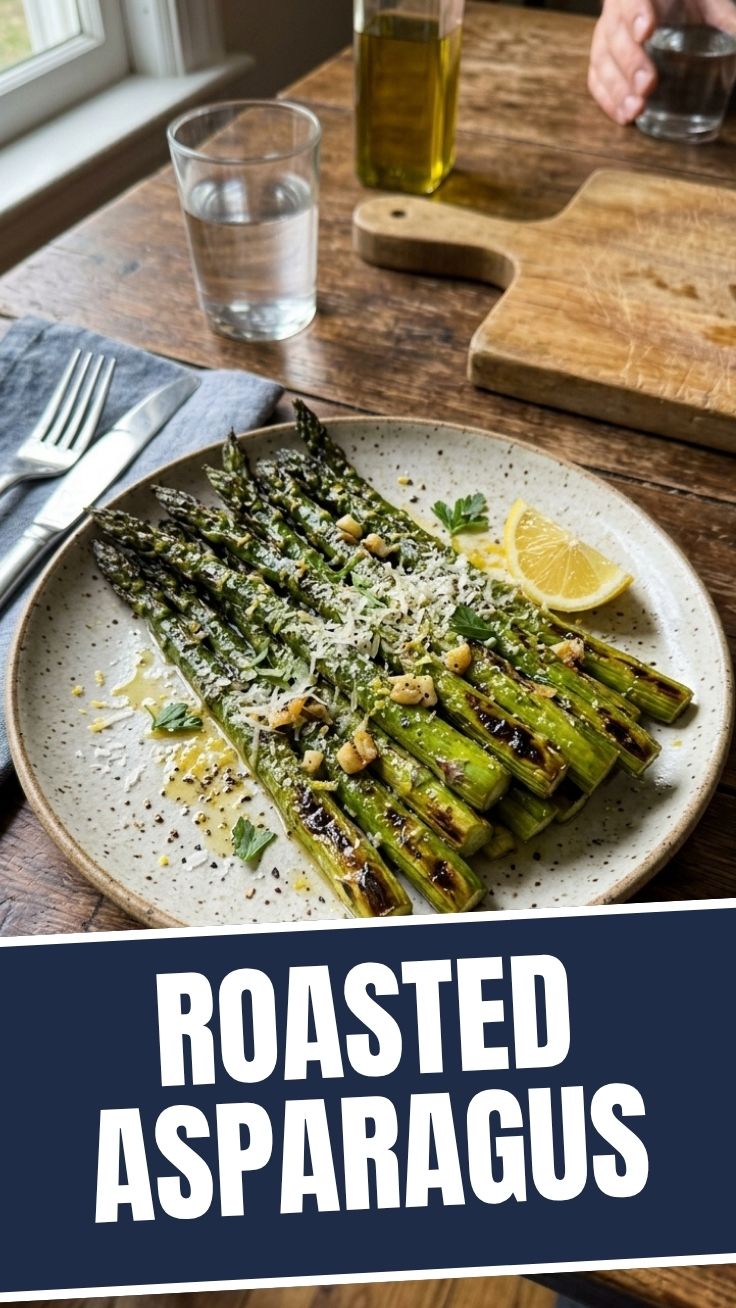
– Prep time: 10 minutes (washing, trimming, seasoning).
– Cook time: 12–15 minutes at 425°F (218°C).
– Resting time: 2 minutes after removal from oven (allows carryover cooking and fiber relaxation).
– Total time: ~25 minutes.
Planning tip: Since asparagus roasts quickly, start it after your main protein is partially cooked or while grains finish steaming. This vegetable is ideal for busy weeknights when you need a fast, nutritious side.
Step-by-Step Instructions
1. Preheat your oven to 425°F (218°C). This high temperature is critical: it caramelizes natural sugars while keeping the interior tender. Place the oven rack in the middle position for even heat.
2. Wash and trim asparagus: Rinse stalks under cold water and pat dry completely (wet asparagus steams instead of roasts). Hold one spear at both ends; bend gently until it snaps—this natural break point removes the woody end. Line up the broken spear with the others and trim the rest to match.
3. Season generously: On your baking sheet, toss asparagus with olive oil, salt, pepper, and minced garlic (if using). Spread in a single layer—crowding causes steaming. For thicker spears, leave space between each stalk.
4. Roast for 12–15 minutes: Halfway through (at 6–7 minutes), use tongs to flip each spear. Look for visual cues: tips should become slightly charred, stalks turn bright green, and a fork should pierce the thickest part with light resistance. For thinner spears, start checking at 10 minutes.
5. Finish with lemon juice: Immediately after removing from oven, squeeze fresh lemon juice over the hot asparagus. The acidity brightens the flavor and contrasts the smoky notes. Let rest 2 minutes before serving.
Practical tip: If your asparagus is consistently too soft, increase oven temperature to 450°F and reduce time by 2–3 minutes. Conversely, if stalks burn, wrap tips loosely in foil for the first 8 minutes. Remember, mastering Roasted Asparagus requires attention, not guesswork.
Speaking of variety, many home cooks explore different Asparagus recipes to suit seasonal ingredients—this foundation works beautifully with carrots, cherry tomatoes, or mushrooms.
Nutritional Benefits & Advantages
Asparagus is a nutrient powerhouse. One cup (134g) provides:
– Vitamin K: 70% of daily value (DV) – supports bone health and blood clotting.
– Folate: 34% DV – essential for cell growth and DNA repair.
– Vitamin C: 13% DV – boosts immune function and collagen production.
– Fiber: 3g per serving – aids digestion and promotes satiety.
– Low calorie count: Only 27 calories per cup, making it ideal for weight management.
The roasting process preserves more nutrients than boiling, which can leach water-soluble vitamins. Additionally, asparagus contains antioxidants like glutathione and quercetin, which combat oxidative stress. This dish is naturally gluten-free, vegan, and keto-friendly (3g net carbs per serving).
Tips Variations & Cooking Advice
Flavor Variations:
– Mediterranean twist: Add crumbled feta cheese and Kalamata olives in the last 2 minutes of roasting.
– Asian-inspired: Toss with sesame oil, soy sauce, and sesame seeds before roasting.
– Lemon-Parmesan: Sprinkle grated Parmesan cheese over asparagus in the final 3 minutes for a crispy crust.
Cooking Method Alternatives:
– Air fryer: 7–10 minutes at 380°F (193°C), shaking halfway through.
– Grill: Place spears directly on grates over medium-high heat for 4–6 minutes, turning once.
– Sheet pan combo: Roast alongside chicken thighs or salmon for a one-pan meal.
Dietary Adaptations:
– Gluten-free: Naturally GF; avoid cross-contamination if using shared ovens.
– Dairy-free: Skip cheese and use nutritional yeast for a savory cheese flavor.
– Low-FODMAP: Use garlic-infused oil instead of actual garlic cloves.
Common Mistakes to Avoid
| Mistake | Solution |
|———|———-|
| Soggy texture | Pat asparagus completely dry before oiling; avoid overcrowding the pan. |
| Burnt tips | Wrap tips loosely in foil if they darken too quickly; flip halfway. |
| Underseasoning | Taste a small piece after roasting; add finishing salt or lemon juice. |
| Woody texture | Always snap off the bottom woody ends—they don’t soften enough when roasted. |
| Uneven cooking | Use uniform thickness spears or cut thicker stalks in half lengthwise. |
Storage & Meal Prep Tips
– Refrigeration: Store leftovers in an airtight container for up to 4 days. Place a paper towel inside to absorb excess moisture.
– Freezing: Blanch roasted asparagus for 30 seconds in boiling water, then freeze in a single layer on a baking sheet before transferring to a freezer bag. Keeps for 3 months.
– Reheating: For best results, reheat in a 400°F oven for 4–5 minutes (not microwave, which makes them limp). Alternatively, sear briefly in a hot skillet with a touch of oil.
– Meal prep: Roast a large batch on Sunday and use throughout the week in salads, pasta dishes, or omelets for quick lunches.
Conclusion
Mastering the art of Roasted Asparagus is a simple yet transformative skill—it turns an ordinary vegetable into a crowd-pleasing dish that pairs with everything from grilled steak to creamy risotto. By following these data-backed techniques, you’ll achieve consistent, restaurant-quality results every time. We’ve covered optimal temperatures, visual cues for doneness, and clever variations to keep things interesting. If you love experimenting with seasonal produce, don’t miss our collection of Asparagus recipes that pair this vibrant green with other root vegetables and herbs. Now it’s your turn: try this recipe tonight, share your results with friends, and discover why perfectly roasted asparagus becomes a weekly staple. Did your tips caramelize just right? Let us know in the comments!
FAQs
Q1: Can I use frozen asparagus instead of fresh?
Yes, but thaw and pat completely dry first. Frozen spears release more water during roasting, so increase cook time by 3–5 minutes and use a higher temperature (450°F) to encourage evaporation.
Q2: Why are my roasted asparagus spears bitter?
Bitterness often results from over-roasting or using thick, tough spears. Trim woody ends thoroughly and check for doneness at 12 minutes. Adding lemon juice balances bitterness naturally.
Q3: Can I roast asparagus without oil?
Technically yes, but oil helps spices adhere and promotes even browning. For an oil-free version, use a light mist of vegetable broth or simply rely on salt and pepper; you may need to reduce cooking time by 2 minutes.
Q4: How do I store leftover roasted asparagus without it getting soggy?
Layer spears between paper towels in an airtight container. This wicks away moisture that causes mushiness. Reheat in a hot oven or skillet to revive crispness.
Q5: Is roasted asparagus suitable for meal prep?
Absolutely! Roast a large batch, then portion into containers. Use cold in salads or quickly reheat. Avoid freezing without blanching—otherwise, texture degrades after thawing.
Quick way to grow: 4-Star Roasted AsparagusRoasted Asparagus
Ingredients
Equipment
Method
- Preheat your oven to 400°F (200°C) and prepare a baking sheet by lining it with parchment paper for easy cleanup.
- Toss the trimmed asparagus with olive oil, salt, and pepper directly on the prepared baking sheet, ensuring each spear is evenly coated.
- Roast the asparagus for 10-15 minutes, or until it is tender-crisp and slightly browned, shaking the pan half way through to ensure even cooking.
- Serve the roasted asparagus immediately as a delicious and healthy side dish.