The Ultimate Guide to Making a Fresh Greek Salad at Home
Have you ever wondered why a simple bowl of chopped vegetables can taste so much better when you’re dining by the Aegean Sea? The secret lies in the quality of ingredients and the balance of flavors. Making a Greek Salad at home isn’t just about saving money—it’s about recreating that sun-drenched, herbaceous experience any day of the week. With just a few high-quality items and a little know-how, you can transport your taste buds straight to a taverna in Crete. Plus, this recipe aligns perfectly with the Mediterranean diet, which is consistently ranked as one of the healthiest eating patterns in the world. Let’s dive into how you can build a crisp, tangy, and utterly satisfying Greek salad right in your own kitchen.
Ingredients & Kitchen Tools
For the salad (serves 4):
– 4 large ripe tomatoes (preferably vine-ripened) – cut into wedges, not cubes; they hold their shape better.
– 1 English cucumber – halved lengthwise, then sliced into half-moons.
– 1 medium red onion – thinly sliced into rings; soak in cold water for 10 minutes to mellow the bite.
– 1 green bell pepper – sliced into thin rings (seeds removed).
– 200 g (7 oz) quality feta cheese – block, not crumbled; the best Greek feta is creamy and salty.
– 100 g (about 1 cup) Kalamata olives – whole, with pits for more flavor.
– 2 tablespoons capers (optional) – rinsed to remove excess salt.
– 2 tablespoons fresh oregano – leaves only, or 1 teaspoon dried.
For the dressing:
– 4 tablespoons extra-virgin olive oil – use a robust, fruity variety.
– 1 tablespoon red wine vinegar.
– ½ teaspoon dried oregano.
– Salt and freshly ground black pepper to taste.
Kitchen tools:
– Large mixing bowl.
– Chef’s knife and cutting board.
– Small jar or bowl for dressing.
– Serving platter or individual bowls.
Optional substitutions:
– Feta → vegan feta made from tofu or cashews (for dairy-free).
– Olives → any brine-cured olive, or omit for low-sodium.
– Red wine vinegar → lemon juice for a brighter tang.
Prep Time & Cooking Schedule
– Prep time: 15 minutes
– Resting time: 10 minutes (for dressing to meld)
– Total time: 25 minutes
– Cook time: None (no-cook recipe)
This salad is best assembled just before serving, but you can prep the vegetables up to 2 hours ahead and refrigerate them separately. Toss with dressing and feta only when ready to eat. The resting time allows the flavors to marry without turning the vegetables soggy.
Step-by-Step Instructions
1. Prepare the vegetables. Wash and dry all produce. Cut the tomatoes into wedges (about 6–8 per tomato). Slice the cucumber into half-moons about ½-inch thick. Thinly slice the red onion into rings, then soak them in a bowl of cold water for 10 minutes to reduce pungency. Slice the bell pepper into thin rings.
2. Arrange the base. In a large mixing bowl, combine the tomato wedges, cucumber slices, drained onion rings, and bell pepper rings. Add the Kalamata olives and capers (if using). Gently toss with your hands or a spatula to distribute evenly.
3. Make the dressing. In a small jar, combine the olive oil, red wine vinegar, dried oregano, salt, and pepper. Close the lid and shake vigorously for 15 seconds. Taste and adjust acidity or salt as needed. This dressing is the cornerstone of a classic Greek Salad and should be bright and herb-forward.
4. Dress and rest. Pour the dressing over the vegetables and toss gently once more. Let the salad sit at room temperature for 10 minutes. This short rest allows the tomatoes to release their juices and the oregano to infuse. While you wait, you can prep the feta.
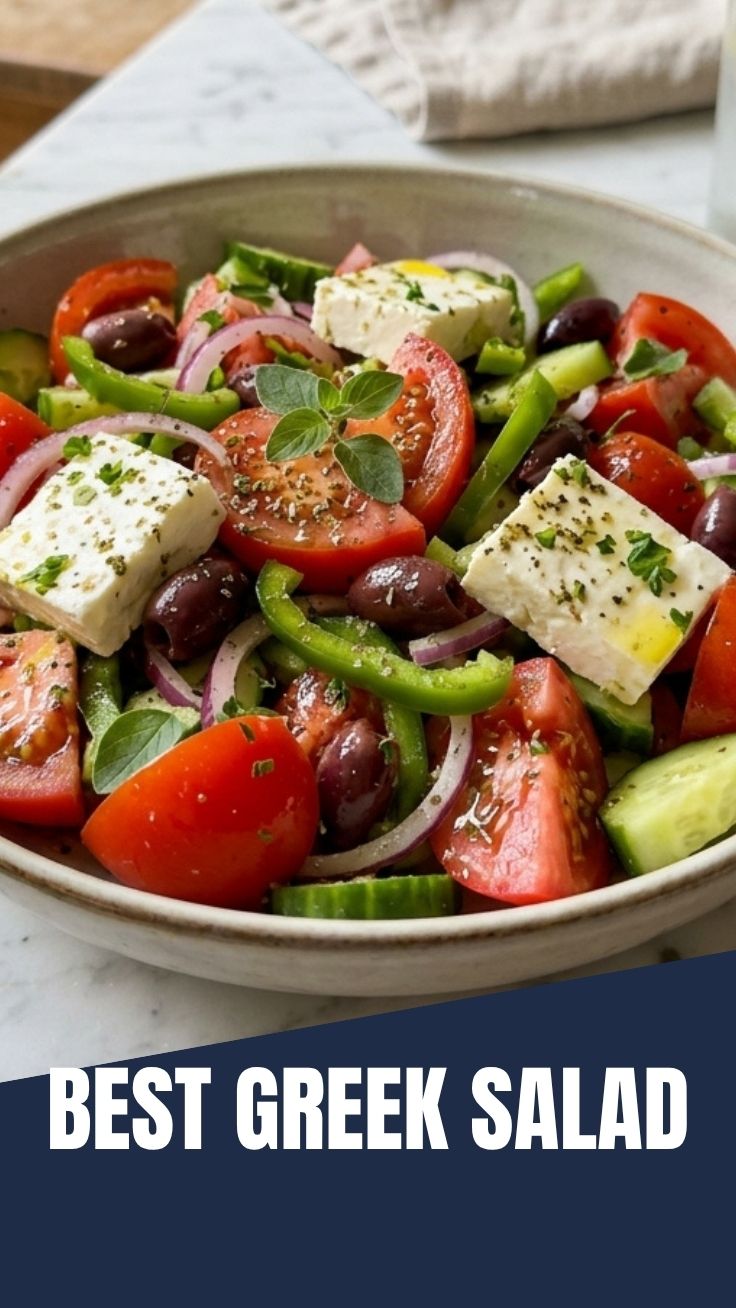
5. Top with feta. Place the block of feta on top of the salad whole, or cut into thick slabs. Do not crumble it—keeping it in large pieces preserves its creamy texture and prevents it from dissolving into the dressing. Sprinkle a few fresh oregano leaves over the top. This finishing touch aligns with the principles of the Mediterranean diet, where whole foods are celebrated in their simplest form.
6. Serve immediately. Transfer the salad to a serving platter or individual bowls. For the best texture, eat within 30 minutes of dressing.
Nutritional Benefits & Advantages
This Greek salad is a powerhouse of nutrients. Tomatoes provide lycopene, a potent antioxidant linked to heart health and reduced inflammation. Cucumbers are hydrating and low in calories, while olives and olive oil supply monounsaturated fats that support brain function and lower bad cholesterol. Feta cheese adds calcium and protein with a fraction of the calories of aged cheeses. The combination of vegetables, healthy fats, and herbs makes this dish a perfect example of the Mediterranean diet’s emphasis on plant-based eating. It’s also naturally gluten-free and can be easily adapted to a dairy-free or low-carb lifestyle.
Tips, Variations & Cooking Advice
– Flavor variations: Add a handful of fresh mint or basil for a different herbaceous note. For a bit of heat, toss in a pinch of red pepper flakes.
– Ingredient swaps: Swap cucumber for chopped celery for extra crunch. Replace feta with halloumi (grill it first for a warm salad).
– Portion changes: Serve as a side (makes 4 portions) or double the recipe for a main dish. For a heartier meal, add chickpeas or grilled chicken.
– Dietary adaptations: Dairy-free? Use a vegan feta alternative. Low-sodium? Rinse olives and capers, and skip added salt.
– Temperature: This salad is best at room temperature. If the ingredients are chilled, the olive oil will thicken and the flavors will be muted.
Common Mistakes to Avoid
– Overcooking or over-handling: This is a no-cook salad, so the only “cooking” is the dressing rest. Do not massage the vegetables too aggressively—they should stay crisp.
– Using pre-crumbled feta: It’s often coated in anti-caking agents and lacks the creamy texture of block feta. Always buy a block.
– Skipping the onion soak: Raw onion can be harsh. The 10-minute soak in cold water transforms it into a mild, sweet addition.
– Dressing too early: Dress the salad no more than 10 minutes before serving. Otherwise, the vegetables will weep water and become watery.
– Forgetting the salt: Tomatoes need salt to bring out their flavor. Season the dressing adequately, but remember that feta and olives are already salty.
Storage & Meal Prep Tips
– Refrigeration: Store undressed vegetables in an airtight container for up to 2 days. Keep the dressing and feta separate.
– Freezing: Not recommended—the vegetables will become mushy upon thawing.
– Leftovers: If already dressed, consume within 24 hours. The texture will soften, but the flavor remains good. To refresh, drain excess liquid and add a splash of fresh olive oil.
– Reheating: Do not reheat. Serve cold or at room temperature. If the salad has been in the fridge, let it sit out for 15 minutes before eating.
Conclusion
Making a fresh Greek Salad at home is a simple yet rewarding way to bring the vibrant flavors of the Mediterranean to your table. The key is to use high-quality ingredients, let the dressing rest for a few minutes, and keep the feta in one piece. This dish is not only delicious but also a cornerstone of the Mediterranean diet, which has been proven to support heart health, longevity, and overall well-being. Whether you serve it as a light lunch or a side to grilled fish, this salad delivers on taste and nutrition. Give it a try, and don’t forget to share your creation—tag us in your photos or leave a comment below. For more Mediterranean-inspired recipes, explore our collection of grain bowls and roasted vegetable dishes.
FAQs
1. Can I use lemon juice instead of red wine vinegar?
Yes, lemon juice adds a brighter, more citrusy tang. Use 1½ tablespoons of fresh lemon juice in place of 1 tablespoon vinegar. This is common in many Greek island versions.
2. How do I make this salad more filling for a main course?
Add protein like grilled chicken, shrimp, or chickpeas. You can also serve it with warm pita bread or a side of quinoa. A scoop of hummus on the side works well too.
3. My feta always crumbles when I cut it. What’s the trick?
Use a sharp knife dipped in cold water between cuts. Cut the feta while it’s still cold from the fridge, and slice cleanly rather than sawing. Alternatively, place the block on top whole and let guests break off pieces.
4. Can I prepare this salad a day ahead?
Only if you keep the dressing, feta, and vegetables separate. Combine them no more than 30 minutes before serving. Dressed leftovers will be soggy the next day.
5. Why does my Greek salad taste watery?
Tomatoes release water when salted. To prevent this, salt the tomatoes lightly and let them sit in a colander for 10 minutes before adding to the bowl. Also, avoid over-dressing—use just enough to coat the vegetables.
7-Ingredient Greek Salad
Ingredients
Equipment
Method
- Dice the cucumber and tomatoes, then thinly slice the red onion.
- In a large mixing bowl, combine the diced cucumber, tomatoes, sliced red onion, and Kalamata olives.
- Crumble the feta cheese directly over the mixed vegetables.
- Drizzle the salad with olive oil and red wine vinegar.
- Season generously with salt and freshly ground black pepper, then toss gently to combine and serve immediately.