Hoisin Garlic Noodles: A Quick, Flavor-Packed Dinner That Beats Takeout
Have you ever craved those glossy, savory-sweet noodles from your favorite takeout spot, only to find yourself staring at a half-empty fridge and a dwindling bank account? You’re not alone. The good news is that [Hoisin Garlic Noodles](https://homecookedrecipe.com/mongolian-ground-beef-noodles/) deliver that exact restaurant-quality flavor in under 20 minutes, using pantry staples you likely already have. By making this dish at home, you control the sodium, skip the preservatives, and save money—all while impressing your family with a meal that tastes like it came from a wok in Chinatown. In fact, this recipe is one of the most versatile asian noodle recipes I’ve ever tested, and once you try it, you’ll wonder why you ever ordered delivery.
—
Ingredients & Kitchen Tools
Ingredients (serves 4)
– 8 oz dried lo mein or udon noodles – Thick wheat noodles hold the sauce best. Substitute: spaghetti or ramen.
– 3 tbsp hoisin sauce – The star; look for a brand without high-fructose corn syrup.
– 2 tbsp soy sauce – Low-sodium works; tamari for gluten-free.
– 1 tbsp oyster sauce – Adds deep umami. Omit or use mushroom sauce for vegan.
– 1 tbsp rice vinegar – Balances sweetness. Apple cider vinegar works.
– 1 tbsp brown sugar – Or honey/maple syrup.
– 3 tbsp vegetable oil – Avocado or peanut oil preferred for high heat.
– 6 cloves garlic, minced – Fresh is non-negotiable for punch.
– 1 tsp sesame oil – Finish with this for nutty aroma.
– Optional garnish: sliced green onions, sesame seeds, chili flakes.
Kitchen Tools
– Large pot (for boiling noodles)
– Colander
– Wok or large nonstick skillet
– Mixing bowl (for sauce)
– Whisk
– Chef’s knife and cutting board
– Tongs or chopsticks (for tossing)
—
Prep Time & Cooking Schedule
– Prep time: 10 minutes (mince garlic, make sauce, measure noodles)
– Cook time: 8–10 minutes total (5 for noodles, 3–4 for stir-fry, 1 for final toss)
– Resting time: 1–2 minutes before serving (allows sauce to cling)
Planning tip: Set all ingredients near the stove before you begin—once the noodles hit the wok, it’s a fast race. This dish is perfect for weeknights when you need dinner on the table in under 20 minutes.
—
Step-by-Step Instructions
1. Boil the noodles according to package directions until al dente. Drain, rinse under cold water to stop cooking, then toss with 1 tsp vegetable oil to prevent sticking. Set aside.
2. Make the sauce: In a small bowl, whisk together hoisin sauce, soy sauce, oyster sauce, rice vinegar, and brown sugar until smooth. Set aside.
3. Heat your wok or skillet over high heat until a drop of water sizzles instantly. Add remaining 2 tbsp vegetable oil, then swirl to coat.
4. Stir-fry the garlic for 15–20 seconds—watch closely; burnt garlic ruins the sauce. Immediately pour in the prepared sauce. It will bubble vigorously.
5. Add the drained noodles and use tongs to toss constantly for 1–2 minutes until every strand is glossed with the sauce. The noodles should be hot, not steaming wet.
6. Finish: Drizzle sesame oil, toss once more, then plate immediately. Garnish with green onions and sesame seeds.
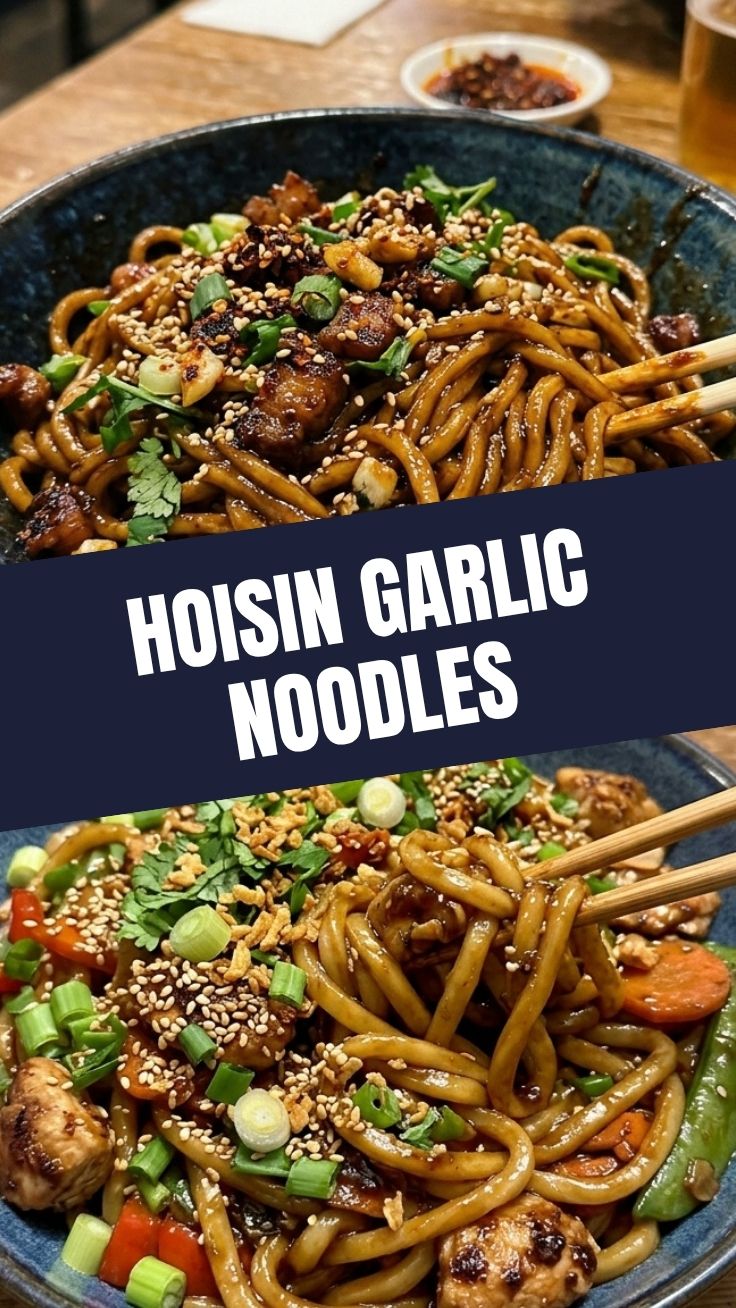
> Texture cue: When the sauce starts to cling to the noodles rather than pool in the wok, you’ve nailed it. These Hoisin Garlic Noodles rely on that perfect glaze, a signature move in many asian noodle recipes, to deliver restaurant-style mouthfeel.
—
Nutritional Benefits & Advantages
Hoisin Garlic Noodles offer a satisfying balance of carbs, fat, and protein (if you add a protein like chicken or tofu). Hoisin sauce contains fermented soybeans, which provide small amounts of probiotics, while garlic offers allicin, a compound linked to heart health and immune support. Using a full tablespoon of sesame oil adds healthy polyunsaturated fats. Compared to takeout versions, home-cooked noodles typically have 30–40% less sodium and far fewer additives. Plus, the dish is naturally dairy-free and can be made gluten-free with tamari and rice noodles.
—
Tips Variations & Cooking Advice
– Vary the protein: Stir-fry sliced beef, shrimp, or tofu in step 4 before adding garlic. Remove protein, cook garlic in same pan, then return protein with noodles.
– Make it spicy: Add 1 tbsp sriracha or 1 tsp chili oil to the sauce.
– Go gluten-free: Use rice noodles or soba (check buckwheat soba is 100% buckwheat) and swap soy sauce for tamari.
– Add vegetables: Toss in shredded carrots, bell pepper strips, or snap peas after garlic. Cook 1 minute before adding sauce.
– Meal prep hack: Store sauce separately from noodles; toss fresh when reheating to avoid mushiness.
—
Common Mistakes to Avoid
| Mistake | Solution |
|———|———-|
| Overcooked, soggy noodles | Cook 1 minute less than package directions; rinse with cold water. |
| Burnt garlic | Use medium-high heat, not screaming high; stir constantly. |
| Sauce too thin | Cook 30 seconds longer to reduce; or add ½ tsp cornstarch slurry. |
| Bland result | Taste sauce before adding—it should be boldly salty-sweet. Adjust with extra hoisin or soy. |
| Noodles clump together | Toss with oil after draining, and work quickly when stir-frying. |
—
Storage & Meal Prep Tips
Refrigeration: Store leftovers in an airtight container for up to 3 days. The noodles will absorb sauce and soften, so consider adding a splash of water when reheating.
Freezing: Not recommended—noodles become mushy upon thawing. However, you can freeze the sauce alone for up to 3 months.
Reheating: Best in a hot skillet with 1 tbsp water or broth. Microwave is fine but will be softer—add a drizzle of sesame oil before serving to revive flavor.
Meal prep: Parboil noodles and make sauce up to 2 days ahead. Keep them separate. When ready, stir-fry garlic, add sauce, then toss with noodles for a 5-minute dinner.
—
Conclusion
There’s a reason Hoisin Garlic Noodles have become a weeknight cult classic: they deliver explosive flavor with minimal effort. By mastering this dish, you’ll not only have a go-to dinner in your back pocket but also a foundation for countless asian noodle recipes—you can swap proteins, adjust spice, or add vegetables without ever losing that core umami punch. I encourage you to try this recipe tonight; taste the sauce before adding the noodles, tweak the garlic level to your liking, and share your results (or questions) in the comments below. Happy wokking!
—
FAQs
1. Can I use a different noodle variety?
Absolutely. Lo mein, udon, or even spaghetti work. Just aim for a thick, chewy noodle that can hold sticky sauce. Thin vermicelli may become overwhelmed.
2. How do I make this dish vegan?
Replace oyster sauce with mushroom oyster sauce or hoisin + a splash of soy sauce. Skip any animal-based protein. The rest is naturally plant-based.
3. Why is my sauce too salty?
Check your soy sauce and hoisin labels—some brands are far saltier. Use low-sodium versions or cut soy sauce to 1 tbsp, then add a pinch more sugar to balance.
4. Can I double the recipe?
Yes, but use a larger wok or cook in two batches. Overcrowding steams the noodles instead of stir-frying, leading to a mushy result.
5. What’s the best way to keep noodles from sticking while cooking?
After draining, rinse with cold water, then toss with a small amount of oil (vegetable or sesame). This creates a non-stick barrier before the hot wok.
Best way to grow Hoisin Garlic Noodles
Ingredients
Equipment
Method
- Cook noodles according to package directions, then drain and set aside.
- Whisk together hoisin sauce, soy sauce, sesame oil, rice vinegar, and brown sugar (if using) in a small bowl until smooth.
- Heat vegetable oil in a large skillet or wok over medium heat, then add minced garlic and grated ginger and cook until fragrant, about 30 seconds.
- Add the cooked and drained noodles to the skillet with the aromatics, pour the sauce over, and toss to coat everything evenly.
- Cook for another 1-2 minutes until heated through, then garnish with sliced green onions and sesame seeds before serving hot.