Perfectly Spiced Pumpkin Cookies: Your Ultimate Guide to Soft, Chewy Autumn Treats
Have you ever bitten into a pumpkin cookie that was dry, crumbly, or worse—tasted nothing like the warm, comforting flavors of fall? You’re not alone. The quest for that perfectly soft, bakery-style Pumpkin Cookies recipe can feel endless. But here’s the truth: preparing these at home not only fills your kitchen with an irresistible aroma of cinnamon, nutmeg, and cloves, but it also gives you complete control over the texture and sweetness. No more disappointing store-bought versions. This guide will walk you through every step, from selecting the right pumpkin purée to mastering the bake time, ensuring you finally achieve that coveted cloud-like crumb with a slightly crisp edge. Let’s transform your baking game with this definitive Pumpkin cookie recipe.
Ingredients & Kitchen Tools
Before diving in, gather everything you need. Proper preparation prevents frustration and ensures consistent results.
For the Cookies:
– 1 cup (226g) unsalted butter, softened: The foundation of a tender cookie. Make sure it’s at room temperature but not melted.
– 1 cup (200g) granulated sugar: Adds sweetness and helps with spreading.
– 1/2 cup (100g) packed light brown sugar: Provides moisture and a deeper, caramel-like flavor.
– 1 large egg, room temperature: Binds the dough and adds richness.
– 1 teaspoon vanilla extract: Enhances the warm spices.
– 1 cup (245g) pumpkin purée: Not pumpkin pie filling! Canned or homemade pure pumpkin works best. Drain excess liquid by pressing it with a paper towel if it looks watery.
– 2 cups (250g) all-purpose flour: Spoon and level to avoid dense cookies.
– 1 teaspoon baking soda: Helps the cookies rise.
– 1/2 teaspoon baking powder: Adds extra lift.
– 1/2 teaspoon salt: Balances sweetness.
– 2 teaspoons ground cinnamon: The star spice.
– 1/2 teaspoon ground nutmeg: For warmth.
– 1/2 teaspoon ground ginger: A subtle kick.
– 1/4 teaspoon ground cloves: Earthy depth.
For the Cinnamon-Sugar Coating:
– 1/3 cup (67g) granulated sugar
– 1 tablespoon ground cinnamon
For the optional Cream Cheese Frosting:
– 4 oz (113g) cream cheese, softened
– 2 tablespoons (28g) unsalted butter, softened
– 1 cup (120g) powdered sugar
– 1/2 teaspoon vanilla extract
Kitchen Tools:
– Large mixing bowls (2), hand mixer or stand mixer, rubber spatula, baking sheets (2), parchment paper or silicone baking mats, medium cookie scoop (about 1.5 tablespoons), cooling rack, measuring cups and spoons.
Optional Substitutions:
– Gluten-free: Use a 1:1 gluten-free baking flour blend (like Bob’s Red Mill). Add 1/4 teaspoon xanthan gum if your blend doesn’t include it.
– Dairy-free: Substitute butter with vegan butter or coconut oil (solid state). Use dairy-free cream cheese for frosting.
– Egg-free: Replace the egg with a flax egg (1 tablespoon ground flaxseed + 3 tablespoons water, let sit for 5 minutes).
Prep Time & Cooking Schedule
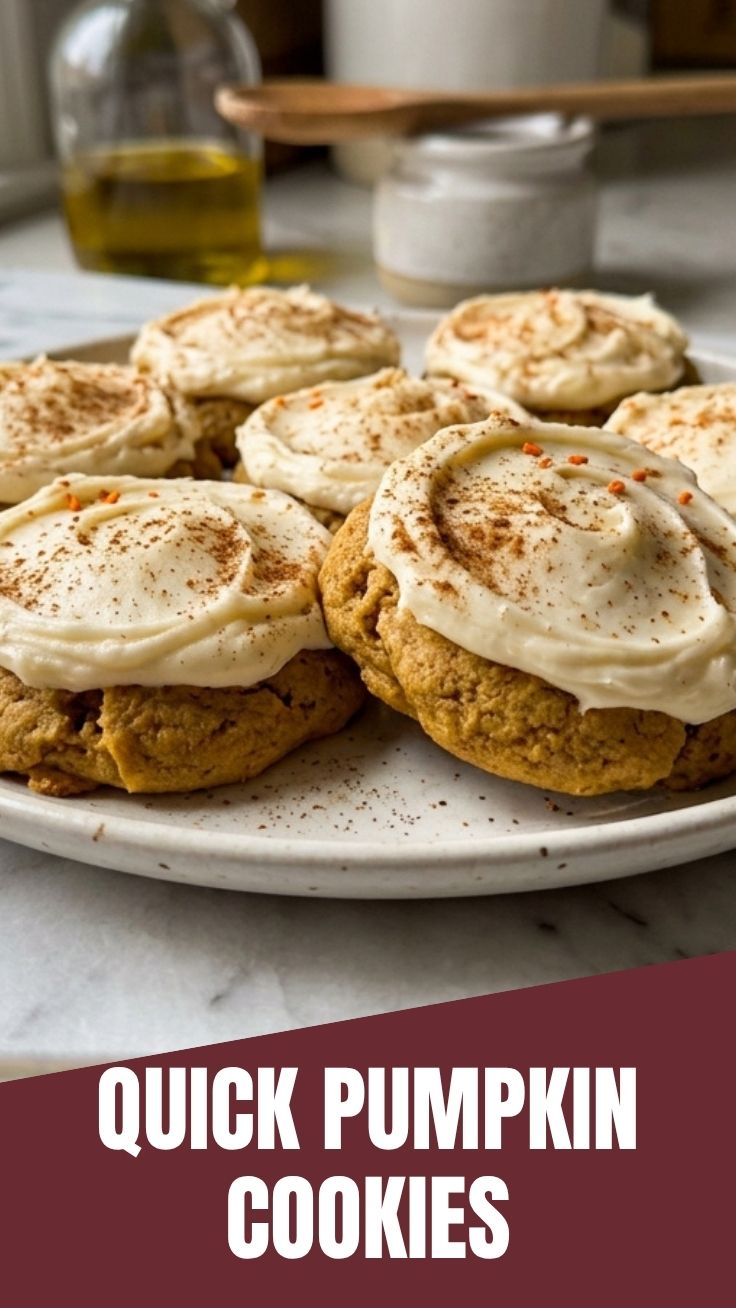
Planning your time is crucial for stress-free baking. Here’s a realistic timeline:
– Prep Time: 20 minutes – This includes measuring ingredients, softening butter, and mixing the dough.
– Chilling Time: 30 minutes (minimum) – Crucial! Chilling prevents the cookies from spreading too thin and develops flavor.
– Bake Time: 10-12 minutes per batch – Depending on your oven and cookie size.
– Cooling Time: 15 minutes on the baking sheet, then transfer to a wire rack to cool completely.
– Total Time: Approximately 1 hour 15 minutes.
Context for Planning: Start this recipe about 1.5 hours before you want to serve the cookies. The chilling time is non-negotiable for the best texture, so factor that in. You can also make the dough a day ahead and refrigerate it overnight—the flavor actually improves!
Step-by-Step Instructions
Follow these steps carefully for perfectly soft, chewy pumpkin cookies every time.
Step 1: Prepare the Dry Ingredients
In a medium bowl, whisk together the flour, baking soda, baking powder, salt, cinnamon, nutmeg, ginger, and cloves. Set aside. This ensures even distribution of the leavening agents and spices.
Step 2: Cream the Butter and Sugars
In a large bowl using a hand mixer or stand mixer with the paddle attachment, beat the softened butter, granulated sugar, and brown sugar together on medium speed until light and fluffy, about 2-3 minutes. Scrape the sides of the bowl as needed.
Step 3: Add Wet Ingredients
Beat in the egg and vanilla extract until well combined. Then, add the pumpkin purée and mix on low speed until just incorporated. The mixture may look slightly curdled—that’s normal.
Step 4: Combine Wet and Dry
Gradually add the dry ingredient mixture to the wet mixture, mixing on low speed until just combined. Do not overmix. Overmixing develops gluten, which leads to tough, dense cookies. Stop when you no longer see streaks of flour.
Step 5: Chill the Dough
Cover the bowl with plastic wrap and refrigerate for at least 30 minutes. While the dough chills, preheat your oven to 350°F (175°C) and line two baking sheets with parchment paper.
Step 6: Shape and Coat
In a small bowl, mix the 1/3 cup sugar and 1 tablespoon cinnamon for the coating. Using a cookie scoop or a tablespoon, scoop 1.5-tablespoon-sized portions of dough. Roll each portion into a smooth ball between your palms. Then, roll each ball generously in the cinnamon-sugar mixture.
Step 7: Bake
Place the coated dough balls on the prepared baking sheets, spacing them about 2 inches apart. Bake for 10-12 minutes, or until the edges are set and the tops look slightly cracked. The centers will appear soft and slightly underdone—that’s what gives you that perfect chewy texture. The key to mastering this Pumpkin cookie recipe is knowing that overbaking is the enemy. For a soft, cake-like cookie, pull them when they still look slightly puffy.
Step 8: Cool and Frost
Let the cookies cool on the baking sheet for 5 minutes. This allows them to firm up. Then, transfer them to a wire rack to cool completely. If using the cream cheese frosting, prepare it while the cookies cool: beat the cream cheese and butter until smooth, then gradually add powdered sugar and vanilla, beating until fluffy. Frost the completely cooled cookies.
Nutritional Benefits & Advantages
Pumpkin isn’t just for flavor—it’s a nutritional powerhouse! One cup of cooked pumpkin purée contains more than 200% of your daily recommended intake of Vitamin A, which is crucial for eye health and immune function. It’s also rich in fiber, which helps with digestion and keeps you feeling full. Compared to a standard butter cookie, these Pumpkin Cookies (without frosting) have about 30% fewer calories per serving thanks to the moisture from the pumpkin, which allows you to use slightly less fat. The cinnamon and ginger add anti-inflammatory properties, making this treat a more wholesome indulgence. Plus, the natural sweetness of the pumpkin means you can often reduce the added sugar by 1/4 cup without sacrificing taste.
Tips, Variations & Cooking Advice
– Pumpkin Purée Trust Factor: Always blot your pumpkin purée with a paper towel to remove excess moisture. This is a game-changer for preventing soggy, flat cookies.
– Spice it Up: Add 1/2 teaspoon of pumpkin pie spice or a pinch of cardamom for a more complex flavor profile.
– Mix-in Magic: Fold in 1/2 cup of white chocolate chips, chopped pecans, or dried cranberries for a different texture.
– Make it a Sandwich: Use the cream cheese frosting to create pumpkin cookie sandwiches. They’re a hit at parties.
– Freeze the Dough: Scoop the dough balls, place them on a tray, and freeze until solid. Transfer to a freezer bag. Bake from frozen, adding 2-3 minutes to the bake time. Fresh cookies anytime!
– Dietary Adaptation: For a dairy-free version, the cookies themselves work well with vegan butter. The frosting is trickier, but a simple powdered sugar glaze (1 cup powdered sugar + 2 tablespoons dairy-free milk + 1/2 teaspoon vanilla) works beautifully.
Common Mistakes to Avoid
– Skipping the Chill: This is the #1 mistake. Warm dough = flat, greasy, spreading cookies. Never skip the 30-minute chill.
– Overmixing the Dough: As mentioned, once you add the flour, mix only until combined. Gluten develops quickly, and overmixing leads to tough cookies.
– Using the Wrong Pumpkin: Do not use pumpkin pie filling, which contains added sugar and spices. You need pure pumpkin purée. The texture and sweetness will be completely off if you use the wrong one.
– Baking Too Long: The cookies will look slightly underdone when you pull them out. They will continue to bake on the hot sheet. Overbaking results in dry, hard cookies.
– Not Draining the Pumpkin: If your pumpkin purée is watery, the dough will be too wet, and the cookies will spread and turn out gummy. Always blot it.
Storage & Meal Prep Tips
Refrigeration: Store unfrosted cookies in an airtight container at room temperature for up to 5 days. Place a slice of bread in the container to absorb excess moisture and keep them soft—replace the bread slice every other day. Frosted cookies should be stored in the refrigerator in a single layer (or between layers of parchment paper) for up to 4 days.
Freezing: Baked, unfrosted cookies freeze beautifully. Place them in a single layer on a baking sheet and freeze for 1 hour, then transfer to a freezer-safe bag or container. They will last for up to 3 months. To thaw, let them sit at room temperature for 15-20 minutes. Frost them after thawing and before serving.
Reheating: For that “just-baked” taste, microwaving a single cookie for 10-15 seconds works wonders. If you have a batch, place them on a baking sheet in a 300°F oven for 3-5 minutes. This revives the softness and the spices become more aromatic.
Conclusion
Mastering the perfect Pumpkin Cookies is all about balancing moisture, spice, and technique. From chilling the dough to blotting the pumpkin, each small detail builds towards a cookie that is soft, flavorful, and truly satisfying. We’ve covered everything you need to confidently execute this Pumpkin cookie recipe, avoiding common pitfalls and exploring delicious variations. The reward is a batch of warm, fragrant treats that capture the essence of autumn in every bite. So, preheat your oven, gather your ingredients, and give this recipe a try. We’d love to hear how they turned out—share your results in the comments below, or tag us in your photos on social media. Happy baking!
FAQs
Q: Can I use fresh pumpkin instead of canned?
A: Yes, but you must cook and puree the pumpkin first, then strain it through a cheesecloth or a fine-mesh sieve to remove as much water as possible. Fresh pumpkin has a higher water content than canned, so draining is absolutely critical for the texture.
Q: Why did my cookies spread too much?
A: The most common reasons are: (1) the dough wasn’t chilled long enough, (2) the butter was too soft or melted, or (3) you used too much pumpkin purée or didn’t blot it. Also, ensure your baking soda is fresh—it should bubble when mixed with vinegar.
Q: Can I make these cookies without the cinnamon-sugar coating?
A: Absolutely. The coating adds a lovely crunchy exterior, but the cookies are delicious on their own. You can skip the roll or swap it for a dusting of powdered sugar after baking.
Q: My cookies came out too cakey, not chewy. What happened?
A: This usually means there’s too much pumpkin or you overmixed the batter. Try reducing the pumpkin purée by 2 tablespoons next time, and be very gentle when combining the wet and dry ingredients. Also, pulling them a minute earlier can help retain a chewier center.
Q: How can I make these cookies vegan?
A: Use flax eggs (1 tablespoon ground flaxseed + 3 tablespoons water per egg), vegan butter, and a dairy-free milk glaze instead of cream cheese frosting. The recipe works wonderfully with these substitutions.
Quick way to grow 7 Perfect Pumpkin CookiesPumpkin Cookies
Ingredients
Equipment
Method
- Preheat your oven to 375°F (190°C) and line a baking sheet with parchment paper.
- In a medium bowl, whisk together the flour, baking soda, baking powder, cinnamon, nutmeg, cloves, and salt; set aside.
- In a large bowl, cream together the softened butter and granulated sugar until light and fluffy.
- Beat in the egg and vanilla extract until well combined, then mix in the pumpkin puree.
- Gradually add the dry ingredients to the wet ingredients, mixing until just combined.
- Fold in any optional additions like chocolate chips, nuts, or raisins.
- Drop rounded tablespoons of dough onto the prepared baking sheet, leaving some space between each cookie.
- Bake for 10-12 minutes, or until the edges are lightly golden and the centers are set.
- Let the cookies cool on the baking sheet for a few minutes before transferring them to a wire rack to cool completely.